
How Sediment Damages a Whole-House RO System
A whole-house RO system can handle a lot, but sediment wears it down faster than many homeowners expect. Tiny bits of sand, rust, silt, and pipe debris can clog filters, push pressure down, and strain parts that should last much longer.
That kind of wear often starts quietly. Water may still come out of the tap, but the system has to work harder to keep up, and that extra effort shows up later in repairs and replacement costs.
If you understand what sediment does at each stage, you can catch problems early and protect the membrane, the prefilters, and the rest of the system. That is where the real savings happen.
How sediment changes the way a whole-house RO system works
Sediment usually hits the system first at the prefilters. Those cartridges are built to trap dirt before it reaches the membrane, so they take the brunt of the load. When they fill up too fast, water flow slows and pressure drops across the entire system.
That pressure drop matters. A whole-house RO system needs steady feed pressure to move water through the membrane and into storage or distribution. When sediment keeps the filter packed, the system can't move water as easily, and it starts using more time and more energy to do the same job.
The membrane is where the bigger damage happens. If fine particles get past the prefilter, they can foul the membrane surface and block the tiny passages that separate clean water from dissolved material. Once that happens, the membrane may reject water less effectively and wear out sooner than it should.
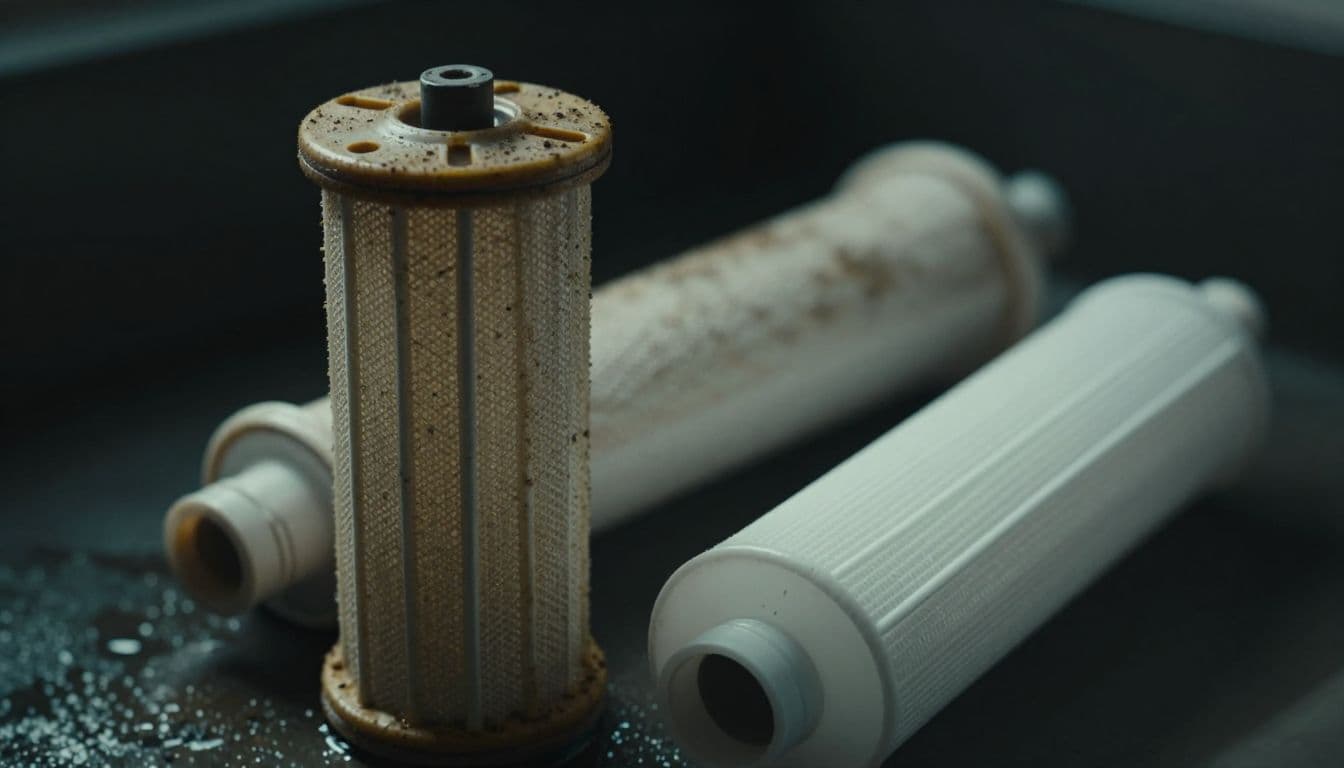
Meanwhile, the system may cycle more often. Pumps run longer, valves work harder, and flush cycles may happen more frequently. Each of those changes adds small amounts of wear. Over time, the system feels less efficient even if no single part has failed yet.
When sediment gets past the front end of the system, the membrane pays for it later.
The warning signs are usually easy to spot
Sediment problems don't always show up as a complete failure. More often, they show up as a pattern. Pressure changes first, then water quality, then service calls.
A quick comparison can help you narrow down what's happening.
| What you notice | What it often means | What to check first |
|---|---|---|
| Lower pressure at several fixtures | Prefilters may be clogged | Sediment cartridges and housings |
| Water that looks cloudy or gritty | Sediment is getting through | Prefilter fit and loading |
| System runs longer than usual | Flow is restricted | Pressure before and after filters |
| Filters need frequent changes | Incoming water has more debris | Source water and cartridge size |
| Water quality drops after a storm or plumbing work | Fresh sediment entered the line | Prefilters, flush cycle, and inlet water |
A dirty cartridge often feels heavy and uneven when you remove it. Some parts may be packed solid while others look less loaded. That tells you the water is carrying particles in a way the filter wasn't able to spread out evenly.
If the system starts making more noise, or if pressure keeps fading after new cartridges go in, the issue may have moved beyond a simple filter swap. At that point, it helps to compare symptoms with recognizing when to call for RO system repairs.
In short, sediment leaves a trail. The system rarely goes from healthy to broken in one step.
Why sediment costs more than a clogged cartridge
A clogged cartridge is only the first bill. The bigger expense comes from what happens after the clog starts stressing other parts.
First, you replace filters more often. That means more cartridges, more labor if service is involved, and more time spent checking the system. Then the membrane may need cleaning or replacement sooner than planned. Since the membrane is one of the most important parts in a whole-house RO setup, that repair carries more weight than a routine filter change.
Sediment also raises operating costs. A restricted system uses more pressure to move water, so pumps and valves work harder. If the system flushes more often to clear buildup, it can waste more water too. None of that looks dramatic on its own, but it adds up across a season or a year.
There's also the hidden cost of poor water performance. When pressure falls, showers feel weaker and faucets slow down. When the membrane fouls, water quality can drift. Homeowners often notice the symptoms before they know the cause.
A clean system is cheaper to run because it stays in balance. Once sediment starts pushing parts out of balance, every fix gets a little more expensive.
Where the sediment usually comes from
Home water can carry sediment for simple reasons. The source water may already contain grit, or the plumbing may add it along the way.
Common causes include:
- Well water : Wells can pull in sand, silt, and fine soil, especially after heavy rain or pump work.
- Older municipal lines : Water main repairs, hydrant flushing, and aging pipes can send rust and debris into the line.
- House plumbing : Corroded pipes or scale inside the home can break loose and travel downstream.
- Construction nearby : New digging and soil disturbance can stir up particles that make their way into the water supply.
- Seasonal changes : Storms and runoff can change water quality fast, which is why a system may suddenly clog faster than usual.
For homes that see frequent sediment load, timing matters as much as cartridge type. A filter that lasts well in one house may clog quickly in another. That is why a set schedule only works when it matches real water conditions.
If you already know the water carries a lot of grit, how often to change reverse osmosis sediment filters is a good place to start.
When to inspect prefilters versus the RO membrane
The prefilters should get checked first. They are the front line, and they usually show sediment problems before the membrane does. If they look dark, packed, or unevenly loaded, start there before assuming the membrane is failing.
Check the prefilters first
A prefilter check makes sense when pressure drops, flow slows, or the system has been exposed to dirty water. Replace cartridges if they are past their service window or look visibly loaded. After the change, watch whether pressure returns and whether water quality improves.
If the system recovers after new prefilters go in, the membrane may still be fine. That is good news. It means the sediment damage was caught early.
Move on to the membrane when symptoms stay
The membrane deserves attention when new prefilters don't fix the problem. If water still tastes off, pressure remains low, or the system keeps showing poor performance, the membrane may be fouled. In that case, the front end has done its job, but the load has already reached the core of the system.
This is also the point where records help. Note when filters were changed, what the incoming water looked like, and how the system behaved afterward. A short log makes patterns easier to spot, especially after storms, plumbing work, or a change in water source.
Maintenance habits that keep sediment in check
Good maintenance does not need to be complicated. It needs to be consistent.
A few habits go a long way:
- Check pressure at the same fixtures each month.
- Replace sediment cartridges before they are completely packed.
- Flush the system after plumbing work or major water changes.
- Inspect housings for leaks, cracks, or loose seals.
- Test incoming water when sediment problems keep returning.
It also helps to stay ahead of seasonal changes. After heavy rain, nearby construction, or a municipal line flush, look at the filters sooner than usual. A short inspection can save a membrane that would otherwise take the hit.
If the system has a pressure gauge, use it. A gradual pressure drop tells you more than a sudden problem does. It shows that sediment buildup is growing, not just appearing all at once.
The best time to check a filter is before it starts choking flow.
Conclusion
Sediment is small, but the damage is not. It lowers pressure, shortens membrane life, drives up service costs, and makes a whole-house RO system work harder than it should.
The clearest fix is simple: watch the prefilters first, then look at the membrane if the symptoms stay. That approach catches most RO sediment damage before it turns into a bigger repair.
When pressure falls, filter life shortens, or water quality shifts after a storm or plumbing work, the system is giving you a clear warning. Listen early, and the whole house benefits.
Latest posts
Read Our Blog
Tips, guides, industry best practices, and news.
Contact us
Get in touch
Our friendly team is ready to chat.