
Lake Fountain Installation Near Floating Docks
A successful lake fountain installation near a floating dock starts with a layout that gives both structures room to move. The fountain also needs a reliable anchor plan, protected electrical service, and safe access for maintenance.
For a homeowner or community association, the most attractive spot may not be the most practical one. Plan for changing conditions , including wind, fluctuating water levels, and the way people use the dock.
A site plan brings those decisions together before equipment is installed.
Key Takeaways
- Choose a fountain location that keeps spray, equipment, and mooring lines away from dock activities.
- Account for movement of both the dock and fountain as water levels and weather change.
- Use a qualified electrician for the fountain circuit, controls, and electrical safety measures.
- Plan how technicians will reach and retrieve the fountain before selecting its final location.
Position the Fountain Around the Dock's Uses
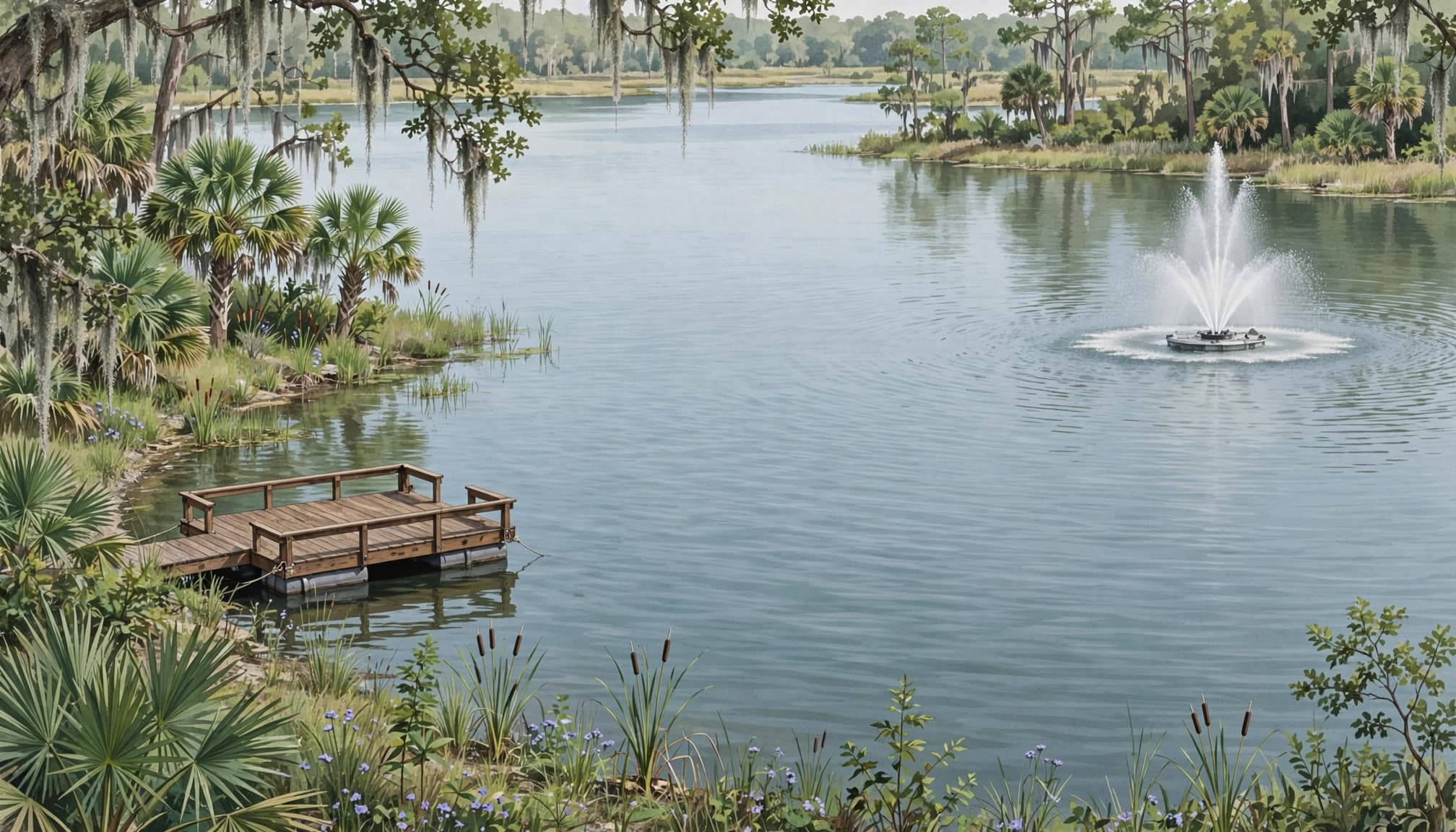
Start by marking the dock, shoreline, nearby homes, and common areas on a site plan. Add swimming areas, fishing spots, boat paths, and drainage structures. The goal is to identify a location where the fountain can operate without interfering with activities around the pond.
Leave room for people and equipment
A fountain near a dock should be far enough away to discourage contact with its float, spray, and underwater equipment. Keep swimmers, pets, boats, and fishing lines away from the fountain and its moorings.
Consider the area around the dock when it is in use. A boat may need room to turn, and people fishing need space for their lines. A fountain that looks well placed on an empty pond may crowd those activities.
Account for spray and wind
Compare the fountain's spray height and width with the available open water. Wind can carry droplets onto dock surfaces, seating, sidewalks, and electrical equipment. Wet walking surfaces can become slippery, while persistent spray can make a dock unpleasant to use.
A lower or tighter pattern may suit an exposed pond better than a tall plume. Look at the view from the dock and nearby homes, but give the spray room to fall back into the lake.
Allow for Floating Dock Movement
A floating dock does not stay in one fixed position. It can rise and fall with the water and move with wind, waves, or boat activity. A floating fountain also responds to conditions on the lake.
The installation plan needs to account for both. If the fountain is positioned too close to the dock's normal range of movement, the available space can shrink when water levels change. Wind can also shift the fountain within the area allowed by its mooring system.
Look beyond the conditions on installation day. Heavy rain, dry weather, and seasonal changes can alter the water level and the relationship between the dock, shoreline, and fountain. The fountain's location should remain workable throughout those changes.
This is also a reason to consider how the dock is used over time. If a community plans to add a boat launch or rearrange dock space, include that planned use in the layout before the fountain is anchored.
Give the Fountain Its Own Mooring Plan
Floating fountains are commonly anchored in the lake and powered from shore. Their moorings need to hold the equipment in its intended area while accommodating normal changes in water level.
Account for wind and water levels
The anchoring design depends on the fountain, water depth, bottom conditions, and exposure to wind and waves. An anchor that cannot hold the unit in place can allow it to drift toward a dock, shoreline, or shallow area.
A qualified installer can select an approach suited to the equipment and property. The plan should also account for any restrictions on disturbing the lake bottom or placing anchors in maintenance areas.
Keep lines separate from dock activity
Mooring lines need space away from boat traffic, fishing areas, and dock equipment. They should not create an obstacle for people using the water or for crews maintaining the pond.
Avoid tying the fountain to a dock rail, tree, fence, or lightweight landscape feature. Those items may move or fail under loads they were never designed to carry. After installation, the fountain's position and visible lines should be included in routine inspections.
Match the Fountain to the Pond
A fountain that fits the view also needs to fit the pond's operating conditions. Compare the proposed spray pattern with the available water surface, then consider the intake location and the equipment's operating depth.
Shallow shelves, vegetation, and debris can limit placement choices. An intake close to the bottom may draw in sediment, while a location near a drainage inlet may collect floating debris. The pond's geometric center isn't always the most suitable position.
For community properties, our guide to sizing a lake fountain for an HOA pond covers the relationship between display size, pond conditions, and power needs.
Remember that a fountain improves movement near its operating area. It doesn't remove excess nutrients or replace a pond's algae and vegetation management plan. Choose a system for the property's goals rather than assuming one fountain will circulate every part of an irregular pond.
Plan the Electrical Setup Before Installation
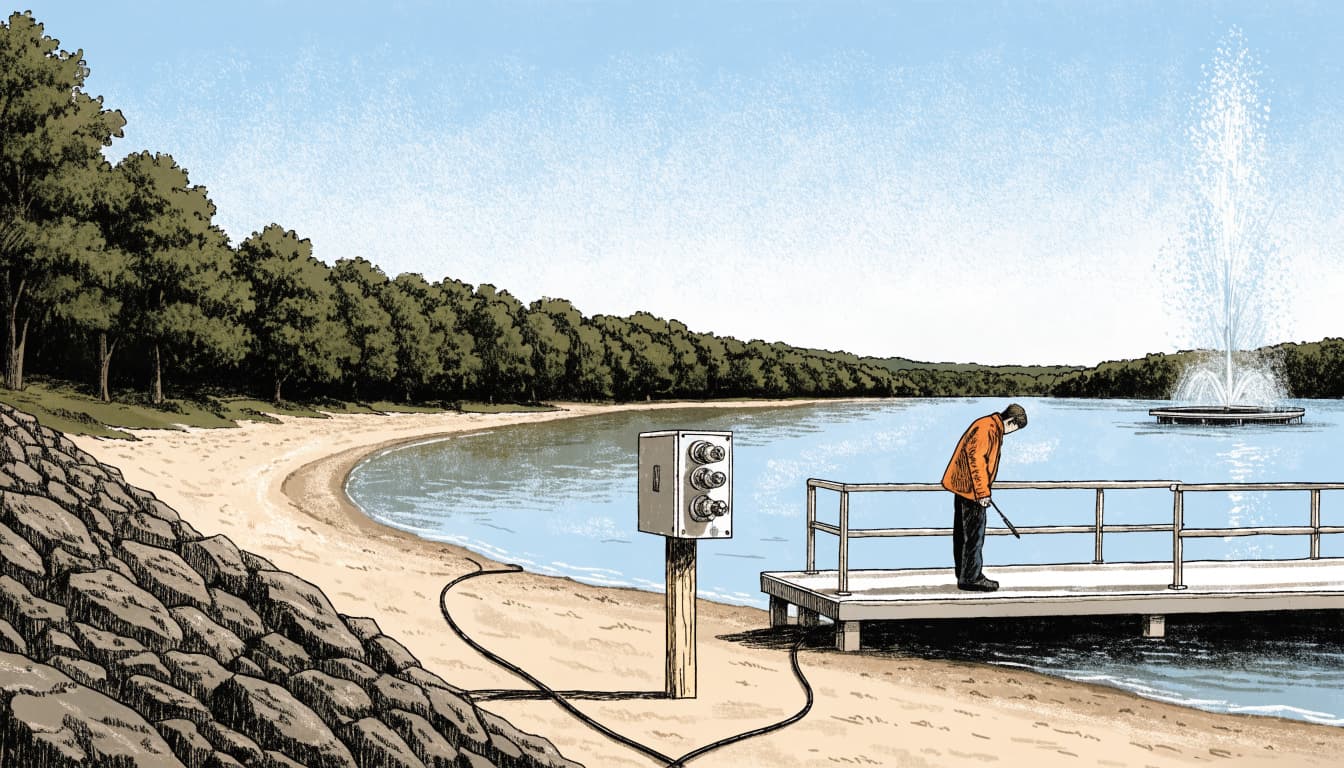
Water and electricity require a coordinated plan. A qualified electrician should handle the fountain's electrical work and apply the manufacturer's instructions and local requirements.
Choose a suitable power source
An electric fountain typically provides a more consistent display because it draws power from the property's electrical supply. It can also operate on a timer or after dark when the system includes appropriate controls.
Solar equipment may appeal to properties with different operating priorities. Our comparison of solar and electric lake fountains explains the differences in operation and display.
For an electric unit, the plan should cover circuit capacity, wiring, grounding, required ground-fault circuit-interrupter protection, and a readily accessible disconnect. Lighting and timers may add electrical work to the project.
Protect cables and controls
Electrical components must be rated for their intended conditions. The route should protect cables and connections from abrasion, tension, weather, and damage during property maintenance.
Place controls where service personnel can reach them without walking through standing water. Keep them away from the fountain's splash zone and areas prone to flooding. A loose extension cord across a lawn or shoreline is not a substitute for an appropriate permanent installation.
GFCI protection is an important safety layer, but it doesn't repair a damaged cable or a flooded enclosure. Never handle electrical equipment while standing in water.
Make Service Access Part of the Design
A fountain will eventually need cleaning, adjustment, or repair. Decide how a technician can reach the unit and how it can be retrieved before it goes into the pond.
Some locations allow access from shore. Others require a service boat and an approved access plan. A floating dock may provide a useful starting point, but its presence alone doesn't make every service task safe.
Keep a clear route to the control equipment and provide access for the people responsible for service. On a community property, record the fountain location and the people authorized to arrange maintenance. That information helps future crews avoid guessing about the equipment or its surroundings.
Before anyone handles the fountain or submerged components, power must be disconnected and the equipment secured against restarting. A qualified person should establish that it is safe to work. Residents should never enter the water or handle the fountain while it is energized.
Maintain the Fountain Through Florida Weather
Routine maintenance helps protect the equipment and keeps a small performance issue from becoming a larger repair. Florida heat, rain, algae, minerals, and storm debris all place demands on a fountain.
Watch for changes in performance
Record the normal spray pattern after installation. A lower display, uneven spray, unusual noise, or vibration can point to a problem that needs attention.
With the system safely shut down, service personnel can clean the intake screen and nozzle and inspect the float, pump, moorings, and visible cable. The frequency depends on the pond and equipment. A property with heavy leaf fall or algae buildup may need attention more often.
Our lake fountain maintenance checklist offers a closer look at routine care for Florida properties.
Prepare for storms
Create a shutdown plan before hurricane season, including who is responsible for acting and where the disconnect is located. Follow the equipment manufacturer's instructions for shutdown or removal when severe weather threatens.
After a storm, wait until conditions are safe. Look from shore for a shifted fountain, damaged lines, debris, or signs of flooding around electrical equipment. Don't restart a unit with suspected cable damage, loose anchors, or water inside an enclosure. Electrical concerns need a qualified electrician; submerged equipment may also need professional inspection.
Address Approvals and Installation Costs Early
A community lake may involve an HOA, drainage restrictions, or other property rules. A plan showing the fountain, dock, proposed power route, and service access gives the parties involved a clearer basis for approval.
Rules vary by location. For example, the South Broward Drainage District has published fountain and aerator rules for certain lake systems. Those local requirements aren't statewide standards. Our guide to Florida lake fountain permits covers the documents and project details useful during planning.
When comparing installation proposals, look at the full scope rather than the fountain price alone. Electrical work, controls, anchoring, access, and removal of existing equipment can affect the total. Ongoing expenses may include electricity, cleaning, and repairs.
For an operating-cost estimate, use the fountain's listed electrical input, planned operating hours, and utility rate. Motor horsepower alone doesn't account for all electrical losses.
Frequently Asked Questions
Can a fountain go next to a floating dock?
A fountain can be installed in a pond with a floating dock when the layout provides appropriate separation for movement, spray, recreation, and service. The suitable location depends on the property and equipment.
Can residents swim near the fountain?
Keep residents and pets away from the fountain and its anchored equipment. Never enter the water or handle submerged components while the fountain is powered.
What should an HOA do if the fountain shifts toward the dock?
Keep people away from the equipment and arrange professional service. If an electrical or mechanical problem is suspected, shut the system down using the proper disconnect when it is safe to do so.
Does a fountain eliminate the need for pond maintenance?
No. A fountain can improve local water movement, but it doesn't remove excess nutrients or replace algae and vegetation management.
Plan for the Fountain's Full Life
A fountain near a floating dock needs more than an attractive view. Its location, moorings, electrical supply, and service access should work together as water levels and conditions change.
At Trademark Water Systems, we provide lake fountain services in Naples and Southwest Florida. A well-planned installation gives your property a display that can be reached and maintained as well as enjoyed.
Latest posts
Read Our Blog
Tips, guides, industry best practices, and news.

Contact us
Get in touch
Our friendly team is ready to chat.
