
How to Measure Dissolved Oxygen Near a Lake Fountain
A fountain can look healthy while nearby lake water tells a different story. Dissolved oxygen testing helps you assess oxygen conditions, but one reading beside the spray can't describe the entire lake.
For an HOA board or property owner, the goal is representative measurements that support sensible maintenance decisions. Start with the question you need answered, then choose equipment and sampling locations that match it.
Key Takeaways
- A reading near a fountain describes that sampling location, not oxygen conditions throughout the lake.
- Use an instrument designed for dissolved oxygen, and follow its manufacturer's preparation, measurement, and maintenance instructions.
- Record sampling locations, measurement depths, fountain operation, and water conditions so you can compare results meaningfully.
A useful assessment connects the readings to the lake's shape and the fountain's intended job. Spray height alone doesn't establish whether the equipment provides adequate circulation.
Decide What Your Oxygen Test Should Answer
Before collecting readings, identify the decision behind the test. You might need to investigate poor circulation, assess a fountain after repairs, or understand differences between parts of the pond.
Those questions require different comparisons. A repair assessment focuses partly on equipment operation, while a broader water-quality investigation considers areas the fountain may not reach.
Trademark Water Systems describes its lake fountain aeration services as supporting aeration and circulation. However, the company's site-survey guidance also explains that equipment, lake shape, water depth, and placement affect a fountain's influence.
That distinction matters in Southwest Florida retention ponds. An impressive display near a clubhouse doesn't establish good oxygen conditions in a separate cove or deeper water.
Define the question in your service request. For example, ask whether the assessment will examine circulation beyond the fountain area, rather than requesting an isolated oxygen reading.
Also separate equipment performance from water quality. A functioning pump confirms that the fountain operates; oxygen measurements describe conditions in the water. Understanding both gives your board a stronger basis for deciding whether cleaning, repairs, or a broader assessment is appropriate.
Choose Equipment for Dissolved Oxygen Testing
Use a meter designed for oxygen measurements
A dissolved oxygen meter measures oxygen in water through a compatible sensor. A pH meter, conductivity meter, or pool test strip can't substitute for that measurement.
Optical and electrochemical oxygen sensors use different technologies and have different care requirements. Choose equipment suited to fieldwork and the locations your assessment needs to cover.
Also check whether the instrument can capture the supporting information your technician needs. Water temperature, sensor condition, and instrument settings affect how readings should be evaluated.
For occasional HOA assessments, professional testing may be more practical than owning equipment. The purchase also creates responsibilities for storage, upkeep, and training.
Follow the instructions for your instrument
Use the manufacturer's operating manual for preparation and measurement procedures. Don't borrow instructions from a different meter simply because its display looks similar.
Before a field visit, check the sensor, cable, power supply, and maintenance records. Damaged equipment or overdue sensor care can undermine a neatly documented set of results.
The U.S. Geological Survey's National Field Manual for the Collection of Water-Quality Data includes technical guidance on dissolved oxygen measurement. It provides a recognized reference for field professionals.
Ask your testing provider which instrument they use and how they document its readiness. A credible report should identify the equipment and explain any measurement limitations.
Plan Locations That Represent the Lake
Compare the fountain area with other locations
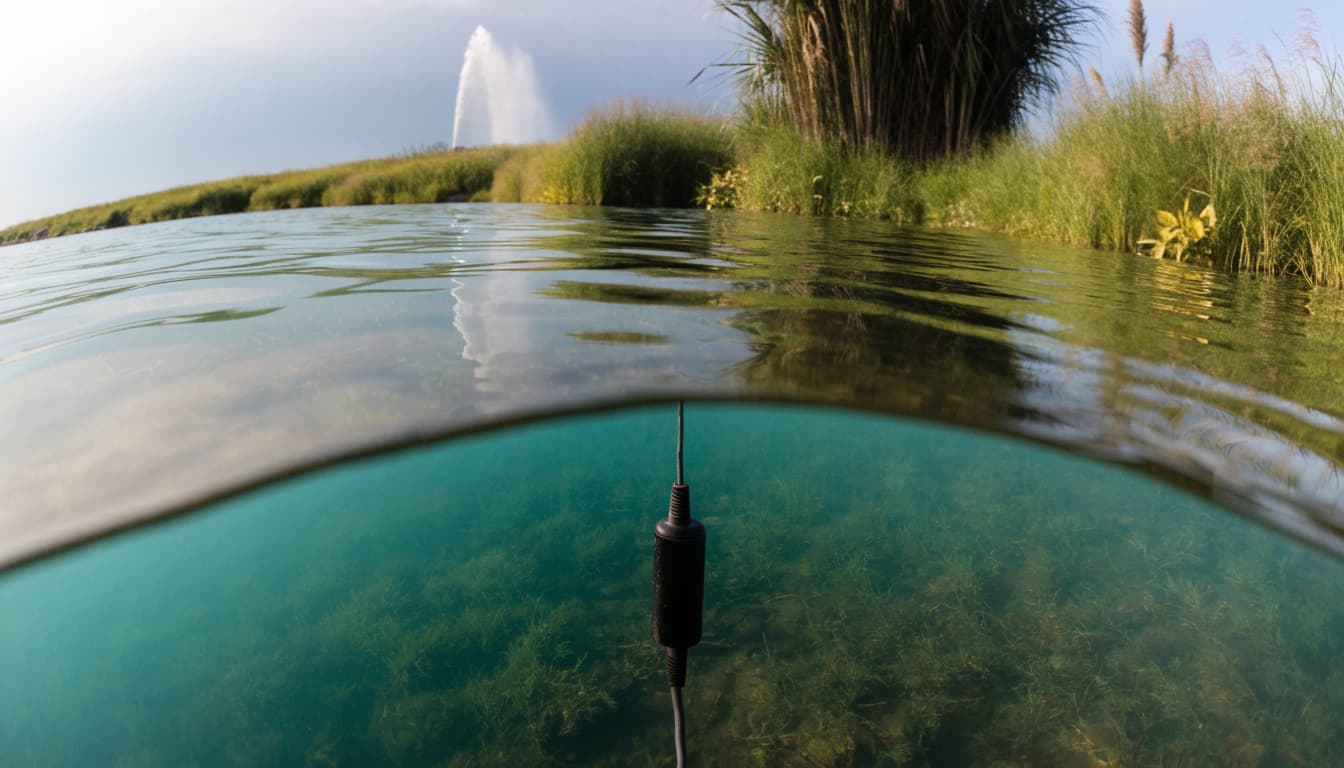
A useful sampling plan distinguishes the fountain area from other parts of the lake. Include locations relevant to the concern, such as a separate pond arm or an area with limited visible circulation.
The appropriate locations depend on access, pond geometry, and the purpose of the assessment. There isn't a universal sampling distance that fits every fountain installation.
Mark each location on a property map or aerial image. Consistent location names make future reports easier to compare and prevent confusion between nearby sampling points.
Trademark Water Systems' guidance on lake fountain placement and equipment checks explains why the surrounding site matters alongside the fountain itself.
Include depth in the assessment
Water near the surface may differ from water deeper in the lake. Therefore, a surface-only assessment can leave an important part of the question unanswered.
Ask the technician how the sampling plan addresses the lake's depth and the fountain's intake location. The plan should fit the actual pond rather than assume that all water mixes equally.
Record the measurement depth for each result. Without that information, differences between readings may reflect different sampled layers rather than a change in fountain performance.
If safe access limits the assessment, document the untested areas. A clear limitation is more useful than a report that implies complete coverage.
Document the Field Visit Carefully

Keep the instrument procedure separate from the documentation process. The meter manual governs measurement; the field record preserves the context needed to interpret it.
First, record the fountain's operating condition. Note whether it runs, whether the spray looks uneven, and whether visible debris obstructs the intake area.
Next, identify each sampling location and its measurement depth. Capture the reading exactly as the instrument reports it, along with its display mode and any instrument warnings.
Also document water temperature, weather, water appearance, and visible surface conditions. Record the date and time as part of the observation, without treating unlike field visits as automatically comparable.
These details belong beside the readings, not in someone's memory:
| Record item | Why it matters |
|---|---|
| Sampling location and depth | Identifies the water actually assessed |
| Fountain operating condition | Connects results with equipment status |
| Temperature and weather | Provides context for differences |
| Instrument identification | Makes the measurement traceable |
| Access or equipment limitations | Defines what the assessment couldn't establish |
The strongest record lets another technician understand what happened without reconstructing the visit.
Keep people safely away from electrical equipment, mooring lines, and unstable banks. Don't enter the lake or handle a running fountain to obtain a sample. Arrange appropriate professional access when the sampling plan requires more than safe shoreline work.
Interpret Patterns Before Judging the Fountain
Look for meaningful differences
Begin by comparing locations and depths within the assessment. A difference between the fountain area and another pond section may justify closer investigation.
However, a single difference doesn't establish the cause. Lake shape, plant activity, water temperature, and mixing can all affect oxygen conditions.
Likewise, one favorable reading doesn't demonstrate satisfactory conditions everywhere. Keep the conclusion proportional to the area and conditions actually measured.
A reading beside the fountain can't establish oxygen conditions in an untested cove or deeper layer.
For repeat assessments, check whether the location, depth, equipment, and fountain operation are comparable. Otherwise, an apparent improvement may partly reflect a changed measurement setup.
Interpret oxygen alongside the lake's condition
Fish species and other aquatic organisms have different oxygen requirements. Therefore, avoid treating one universal cutoff as a complete diagnosis.
Ask the qualified assessor to explain the results in relation to the pond's purpose and aquatic life. The report should also identify whether additional investigation is warranted.
Dissolved oxygen testing doesn't identify every water-quality problem. It won't, by itself, explain nutrients, identify algae, or determine whether water is safe to drink.
If fish show distress or a fish kill occurs, seek prompt help from a qualified lake-management professional. Preserve the field observations and equipment records rather than trying to diagnose the event from one number.
Connect Results With Fountain Maintenance
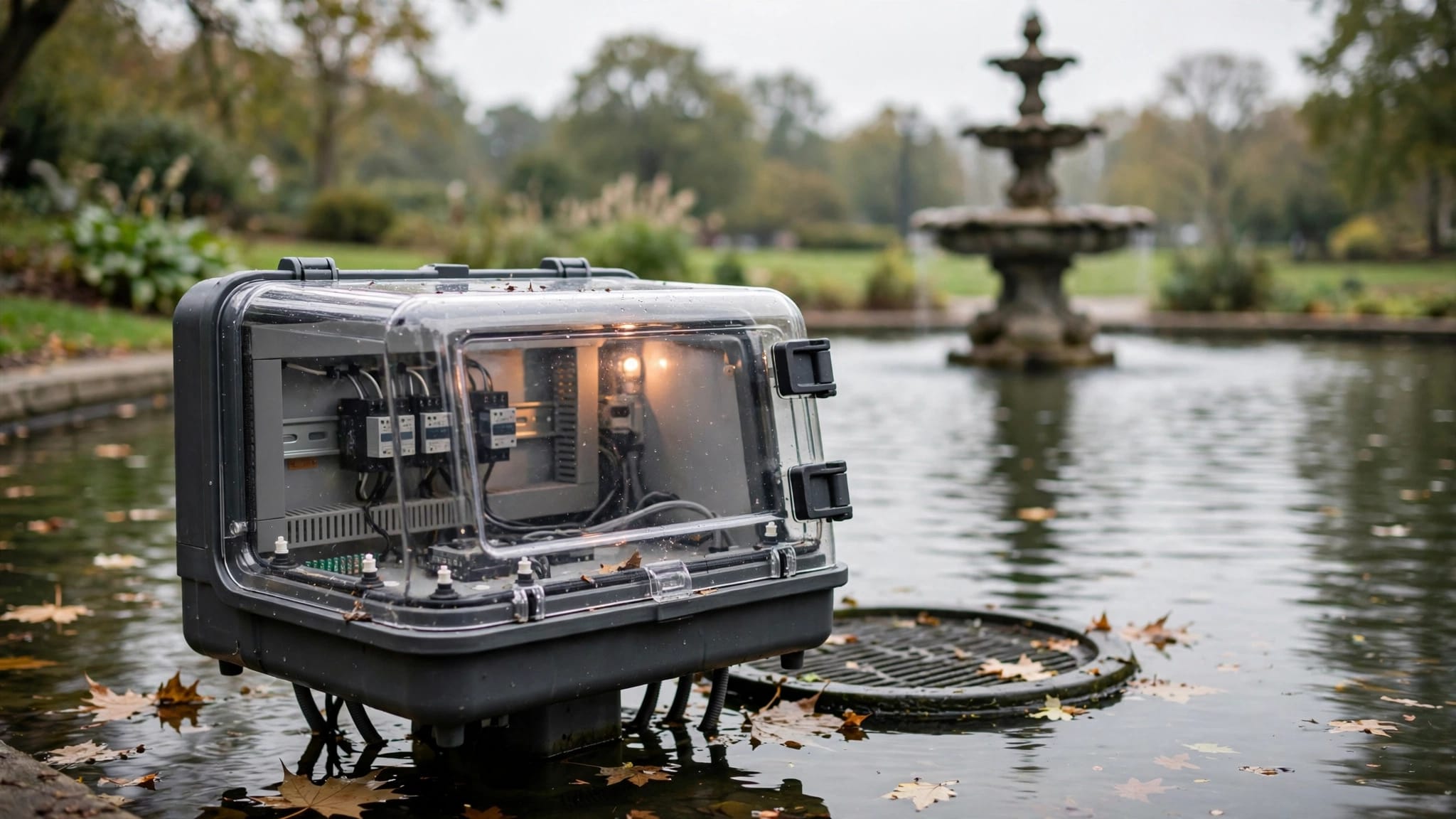
Once the measurements establish a concern, inspect the equipment and the site together. A blocked intake, uneven spray, or interrupted operation deserves attention, but none automatically explains every oxygen difference.
Trademark Water Systems' fountain-repair guidance identifies low flow, clogs, pump wear, and electrical issues as possible equipment problems. Keep those observations separate from the measured water-quality findings.
A technician can then assess whether cleaning or repair addresses the problem. If poor circulation extends beyond the fountain area, the review may need to consider placement and equipment suitability.
The company's guidance on how pond depth affects fountain pump choice cautions that a larger spray doesn't guarantee better circulation throughout a pond.
For HOA boards, request a written recommendation that connects each proposed action to an observed condition. That makes budgeting clearer and avoids replacing equipment solely because the water looks disappointing.
Keep the measurements, inspection findings, and completed repairs in the same maintenance file. Future assessments can then compare the lake's condition with a documented equipment history rather than rely on recollections.
Frequently Asked Questions
Can I test dissolved oxygen myself?
You can use a suitable meter if you understand its manual and maintenance requirements. However, difficult access, uncertain results, or a lake-wide assessment may call for professional help.
Buying a meter doesn't establish a sampling plan. Decide what you need to learn before choosing equipment, and document the limits of any shoreline-only assessment.
Does a strong fountain spray prove good aeration?
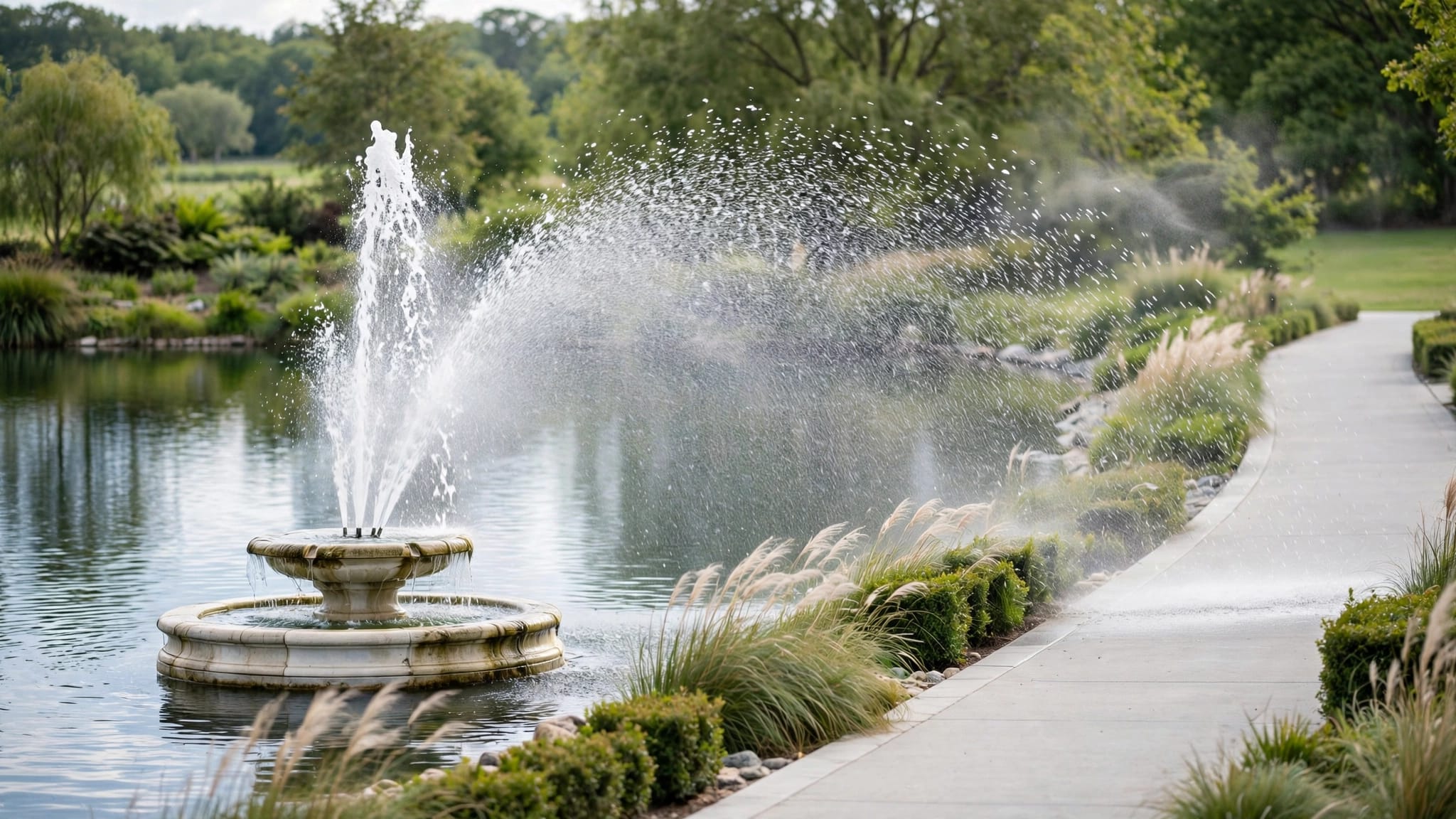
A strong spray shows visible water movement. It doesn't establish oxygen conditions throughout the pond.
The fountain's influence depends on the equipment and site. Compare the display with inspection findings and representative measurements before deciding whether performance is adequate.
Does lake oxygen testing assess drinking water?
No. Lake oxygen measurements answer a different question from household water testing.
Hardness, well-water contaminants, and filtration concerns need appropriate tests and treatment advice. Trademark Water Systems offers water treatment and fountain services, but the assessment should match the water source and the problem. Don't use a lake oxygen result to judge the safety of water entering your home.
Make the Measurement Useful
A fountain's appearance can't replace a documented assessment. Useful dissolved oxygen testing connects readings with sampling locations, depths, instrument condition, and equipment operation.
Focus on representative evidence before deciding that a fountain needs repair or replacement. For your next assessment, ask for a clear sampling plan and a report that states its limitations.
That gives your community a sound basis for maintenance decisions, beyond how the spray looks from shore.
Latest posts
Read Our Blog
Tips, guides, industry best practices, and news.
Contact us
Get in touch
Our friendly team is ready to chat.