
How to Choose a Pond Fountain Pump for Your Pond Depth
A deeper pond doesn't automatically need a bigger fountain pump. If you choose a pond fountain pump by depth alone, you could end up with a weak spray, an unsuitable intake, or equipment that struggles as the water level changes.
Pond depth and pumping head are different measurements. Depth tells you where equipment can sit safely. Head describes the resistance the pump must overcome to deliver water through the fountain. Start by separating those two jobs.
Why pond depth can't size a pond fountain pump
Pond depth matters because a pump needs enough water around its intake. It also needs clearance from bottom sediment, even during dry weather. In a shallow pond, a fountain may stir up debris or draw air if its intake sits too close to the surface.
Depth does not, by itself, tell you how much water the pump can send through a nozzle. The fountain head, tubing, fittings, and intake protection all affect performance. A pump that works with an open discharge may produce a disappointing spray through a restrictive decorative nozzle.
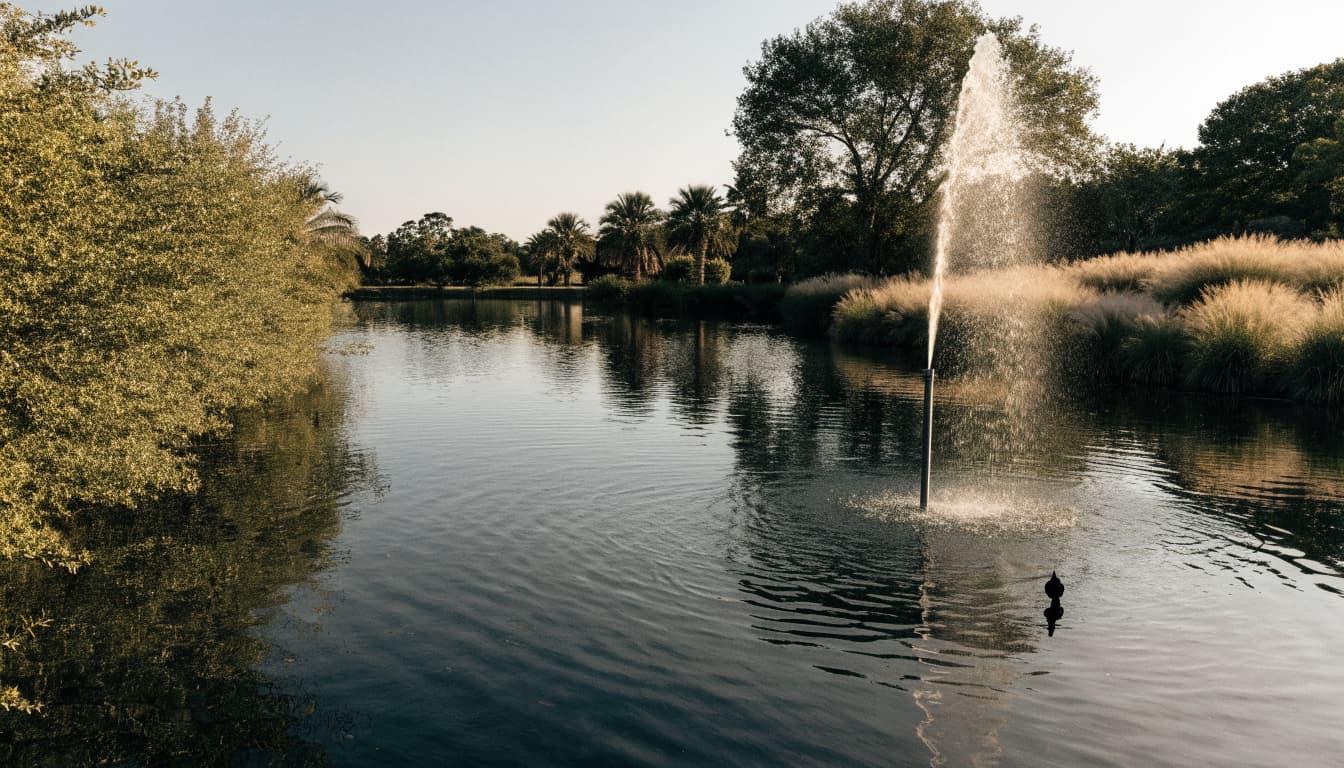
For a shallow installation, check the manufacturer's limits for minimum water depth and intake clearance. Match those limits to the intake and fountain head as a system. Trademark Water Systems offers more detail on pump and intake matching for shallow ponds.
A depth measurement helps you place the equipment. The pump's flow-versus-head chart helps you decide whether it can produce the spray you want.
Measure the pond where the equipment will operate
A survey should describe the fountain's actual location, not only the deepest point on a pond map. Sediment, sloping banks, and changing water levels can make those measurements quite different.
Check the lowest likely water level
Measure the water depth at the planned intake or floating-fountain position. Then consider the lowest level the pond normally reaches. In Southwest Florida, a measurement taken after heavy rain may give a misleading picture of dry-season clearance.
Note the bottom material, too. An intake just above soft sediment can pull in silt as soon as the fountain starts. Where leaves or algae collect, the pump may also need an intake screen or protective cage that remains accessible for cleaning. Follow the equipment manufacturer's clearance instructions rather than guessing at a safe distance.
Map the route and service access
Record where the nozzle will sit, how the tubing will travel, and where electrical power is available. Measure the proposed tubing run along its real route, including bends around rocks or landscaping.
For a community lake, also consider how a crew will retrieve the fountain. A pump positioned far from a safe access point may be difficult to clean or repair. Anchors, cable routes, and a practical electrical shutoff belong in the plan before installation.
Find the lift without confusing it with pond depth
People often add the pump's underwater depth to the nozzle's height above the surface and call the total "lift." That can overstate the static lift for a submerged pump in an open pond.
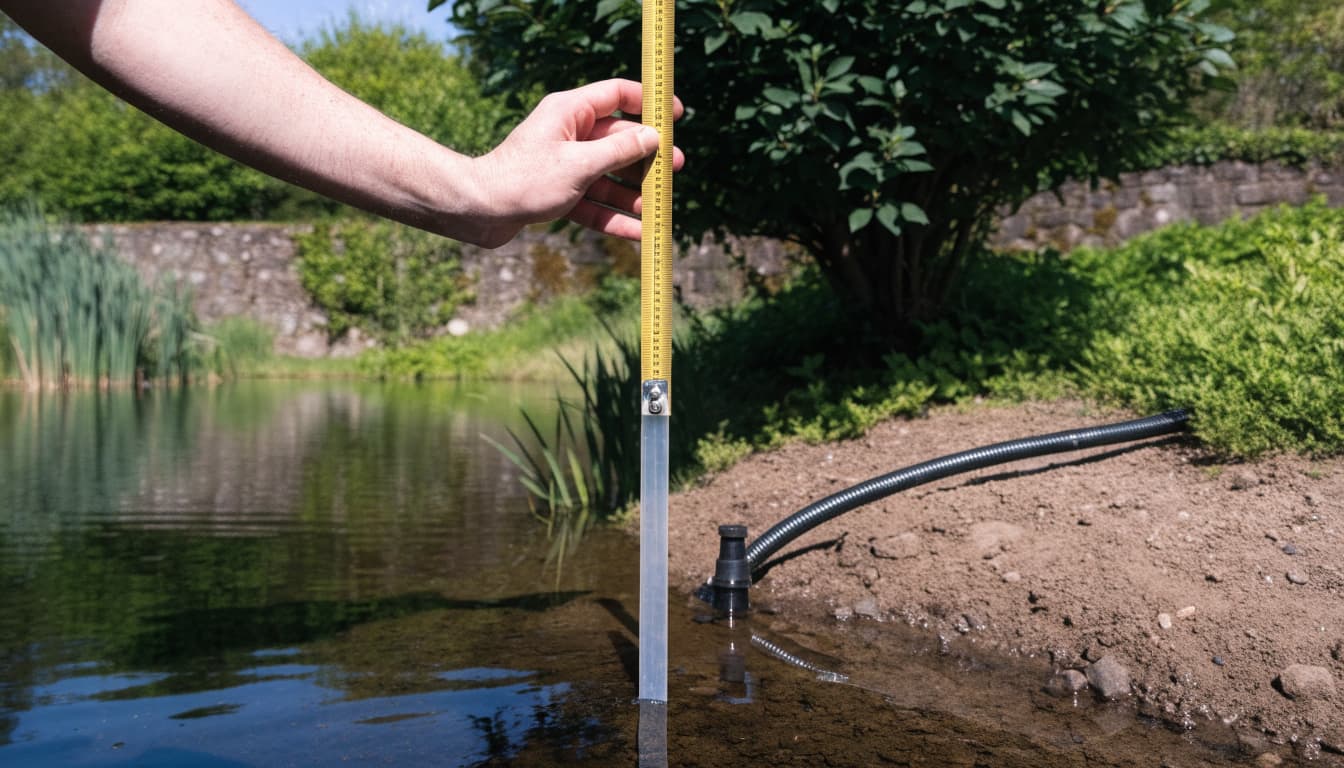
Start at the water surface
For water discharged into the air, static lift is generally the height of the outlet above the pond's water surface. The water surrounding a submerged pump already supplies pressure at its intake.
For example, consider a pump four feet below the surface feeding an open outlet two feet above it. The static rise is about two feet, not six. The four-foot underwater distance still matters for pipe length, equipment placement, and intake clearance.
If the outlet is at water level, static lift may be small. That does not mean the pump faces no resistance.
Add the work the spray requires
A nozzle needs pressure to shape and project water. Tubing, elbows, valves, screens, and filters consume pressure as water flows through them. Together with static lift, these demands determine the head the pump must handle at the desired flow.
A tall spray requires more than placing an outlet high above the pond. The jet itself needs pressure, even when the nozzle sits near the water surface. Use the fountain-head manufacturer's flow and pressure requirements when calculating the total load.
Choose the spray before estimating required flow
The fountain head sets the useful flow target. Pick the intended display first, then find a pump that can supply it under the installed conditions.
Use the nozzle's stated operating range
Check the nozzle instructions for its required flow range and pressure or head. Some fountain heads also specify a compatible pump or plumbing arrangement. Stay within those instructions, especially if you want a broad pattern rather than a narrow vertical jet.
If an existing display looks weak, inspect it before buying a larger pump. A partially blocked nozzle, fouled intake, or restricted tube can reduce spray height. Replacing the motor without correcting the restriction may leave the same problem in place.
Account for every attachment
Sketch the complete water path: intake, pump, tubing, fittings, valves, and fountain head. Include a protective cage or filter if the installation uses one. Longer runs and narrower tubing generally increase friction loss, and that loss grows as flow rises.
If one pump feeds both a fountain and another water feature, each branch needs enough flow at its operating pressure. Don't assume the pump's advertised maximum flow can be split between them unchanged. A separate filtration circuit may be easier to size and maintain when its operating needs differ from the fountain's.
Check the pump curve at the flow you need
A box may advertise a maximum flow and a maximum head. Those figures describe different ends of the pump's operating range. Neither tells you, alone, what will reach the nozzle.
Find the operating point
Look for the manufacturer's flow-versus-head chart . Choose the flow required by the fountain head, then find how much head the pump can provide at that flow. Compare it with the estimated static lift, tubing and fitting losses, and nozzle pressure requirement.
As flow increases, friction losses also rise. That means a change in nozzle or tube size can move the system to a different operating point. If the chart does not show adequate flow at the estimated head, choose another pump or change the plumbing design.
Avoid a universal rule based on pond depth, acreage, or pump horsepower. It cannot account for both a short, open water path and a long run feeding a demanding spray head.
Leave room for real-world conditions
An intake screen will collect debris between cleanings. Seasonal water-level changes can alter outlet height, while additions such as lighting, valves, or a new nozzle may change the installation plan.
Leave a sensible performance margin, but don't oversize blindly. Too much flow can distort a spray pattern or exceed a fountain head's limits. Ask the equipment supplier or installer to check the complete pump, nozzle, and plumbing combination if the chart and nozzle specifications use different units or don't clearly match.
Match the equipment style to the pond
The right arrangement depends on where the intake can stay clear, where the spray belongs, and how people will service the equipment.
Submersible pumps suit accessible placements
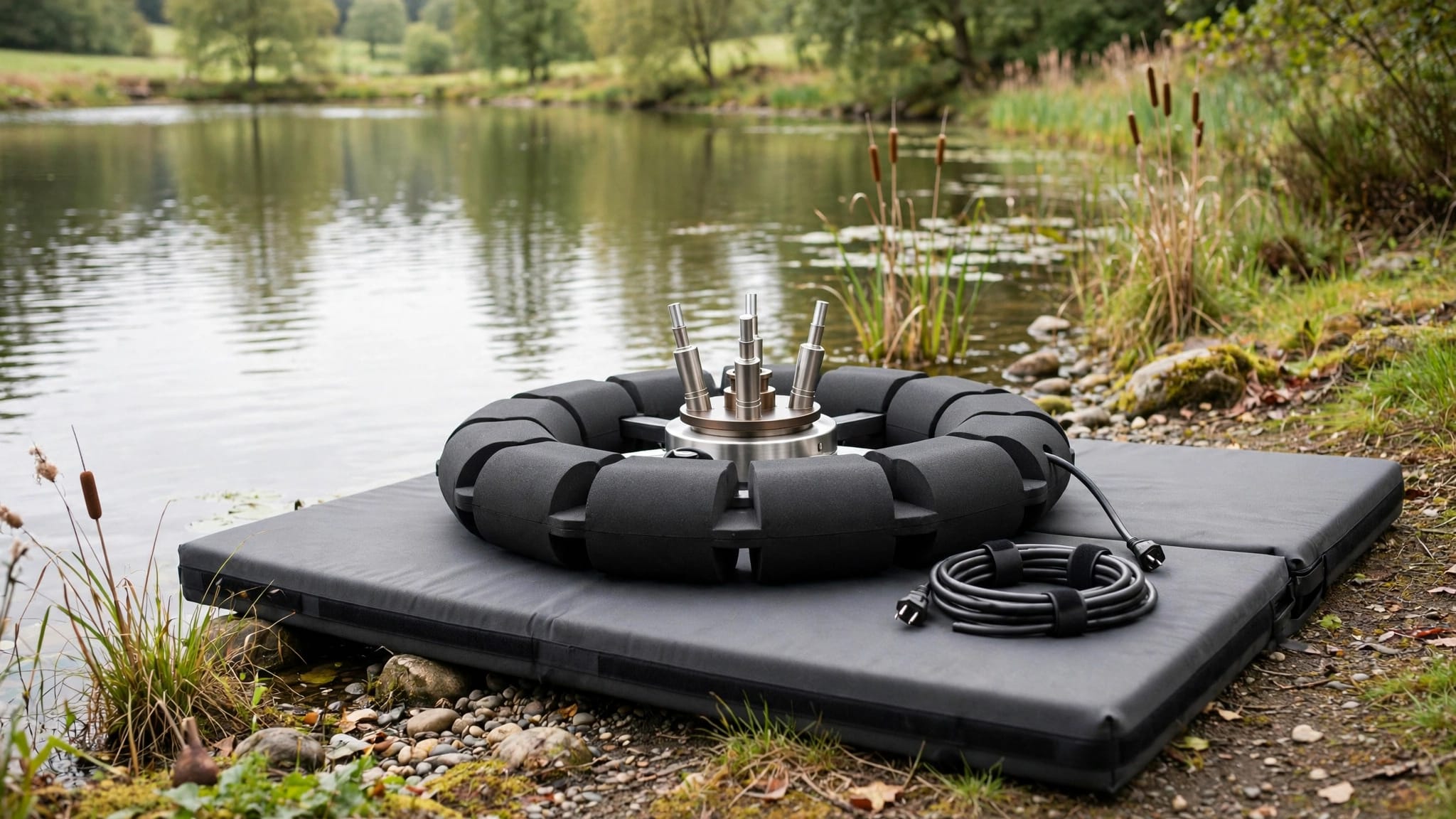
A submerged pump can work well in a small pond when its intake remains underwater and above sediment. A stable platform or suitable protective intake may help with positioning, subject to the manufacturer's instructions.
Consider retrieval before placing it. You'll need to reach the pump for cleaning without pulling on its power cable or damaging tubing. A shoreline installation may be easier to maintain than one placed in the pond's deepest spot.
Floating fountains follow the water level
A floating unit moves with changing water levels, but it still needs enough water beneath its intake. Check its anchoring, bottom clearance, and cable movement across the pond's normal range of levels.
For HOA retention ponds, acreage alone is a poor equipment guide. Pond shape, sediment, depth, and the board's goals affect fountain placement and selection. A fountain site assessment can identify access and service issues before the community commits to an installation.
Plan for electrical safety and routine service
A well-matched pump still needs safe power and a clear maintenance plan. Those details matter especially for larger fountains in public or community water.
Have the electrical setup checked
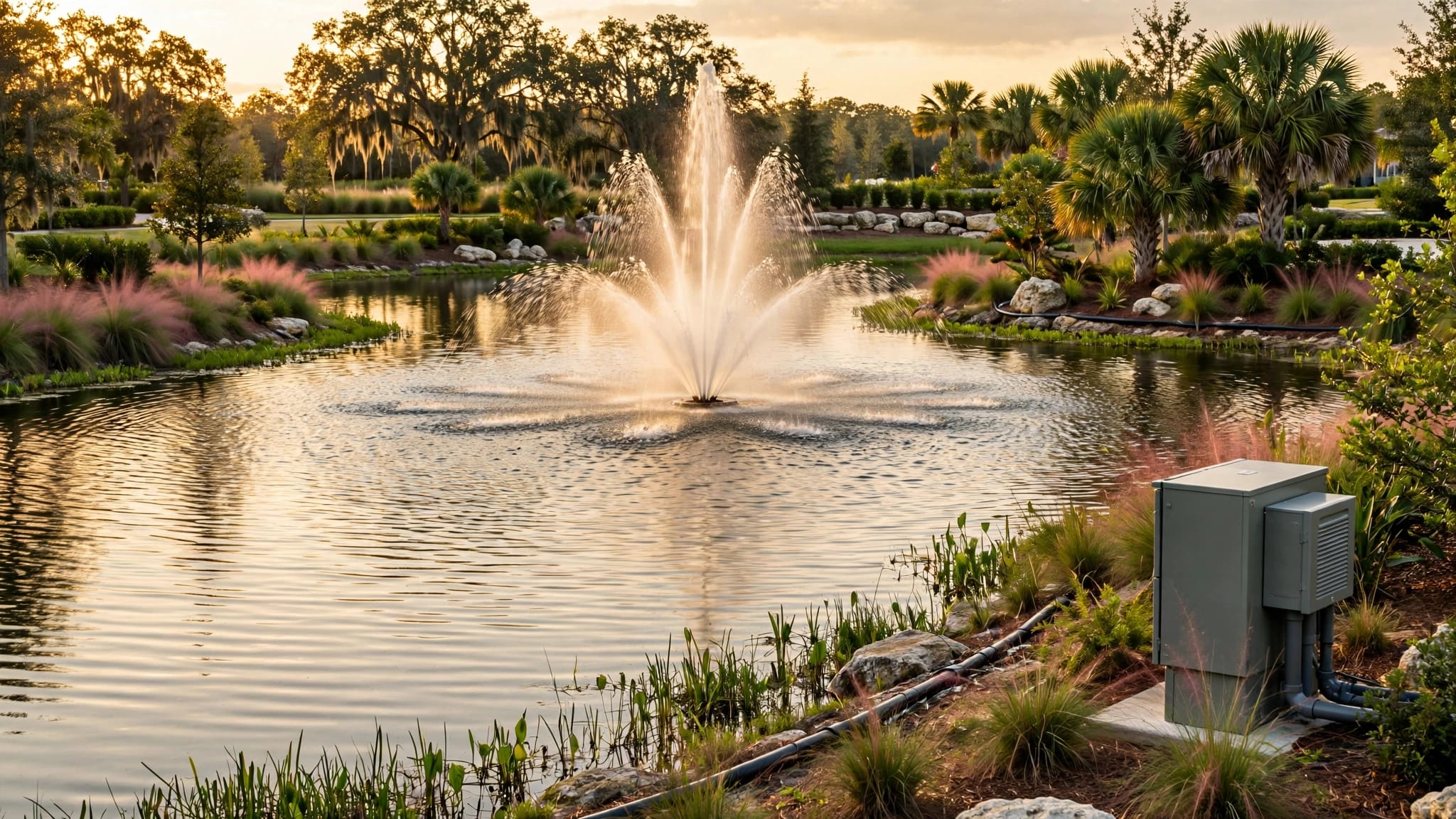
Use equipment rated for the intended installation and follow its electrical instructions. Have a qualified electrician review the circuit, required protection, disconnect, and cable route under applicable local requirements. Long runs from a control panel to a lake fountain also warrant a voltage-drop check.
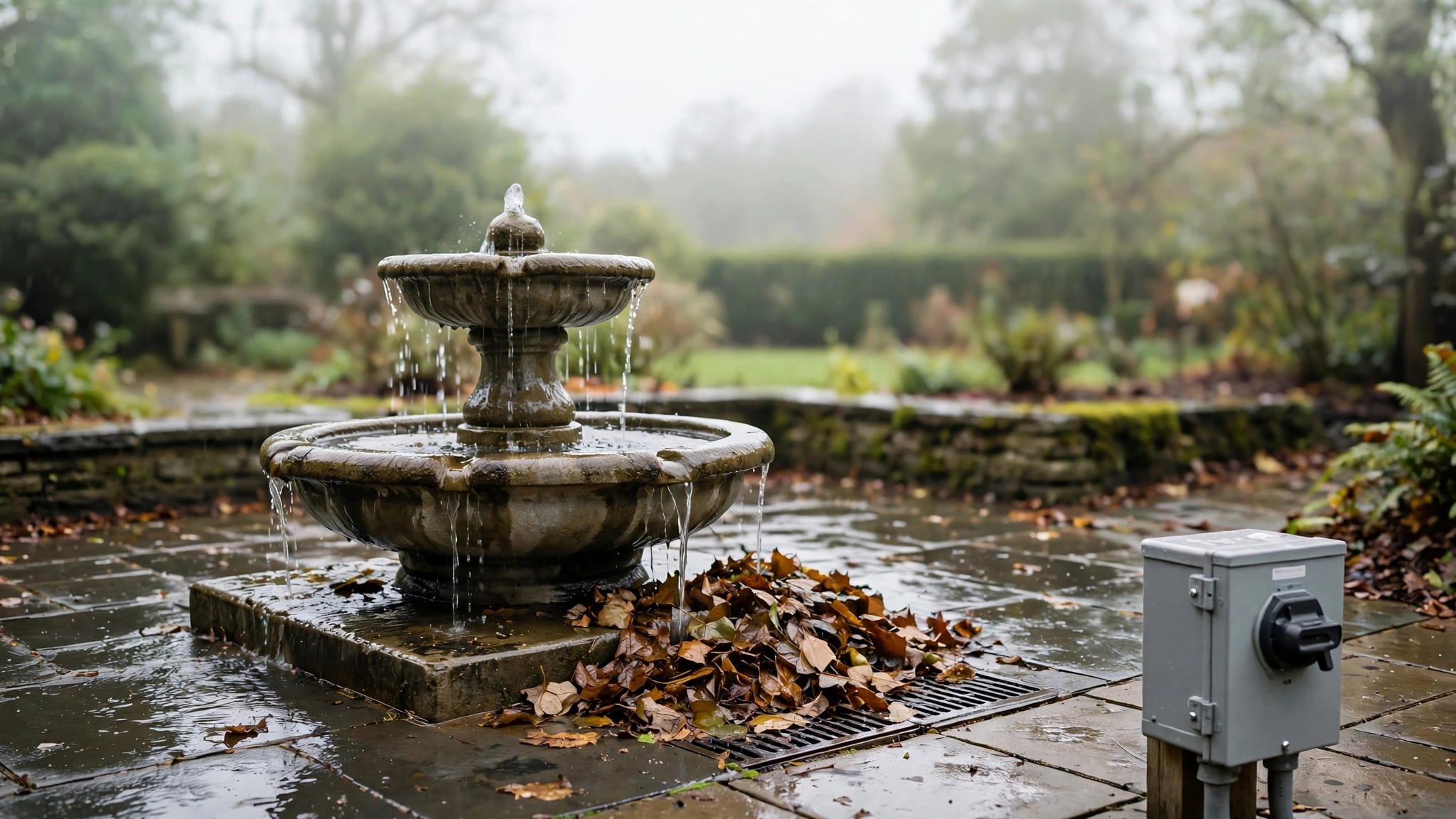
Keep connections out of the water unless the components are expressly designed and installed for that use. Never handle a pump or reach into the water while its circuit is energized. For Florida community installations, pond fountain electrical planning should happen before trenching or selecting a control panel.
Clean restrictions before replacing the pump
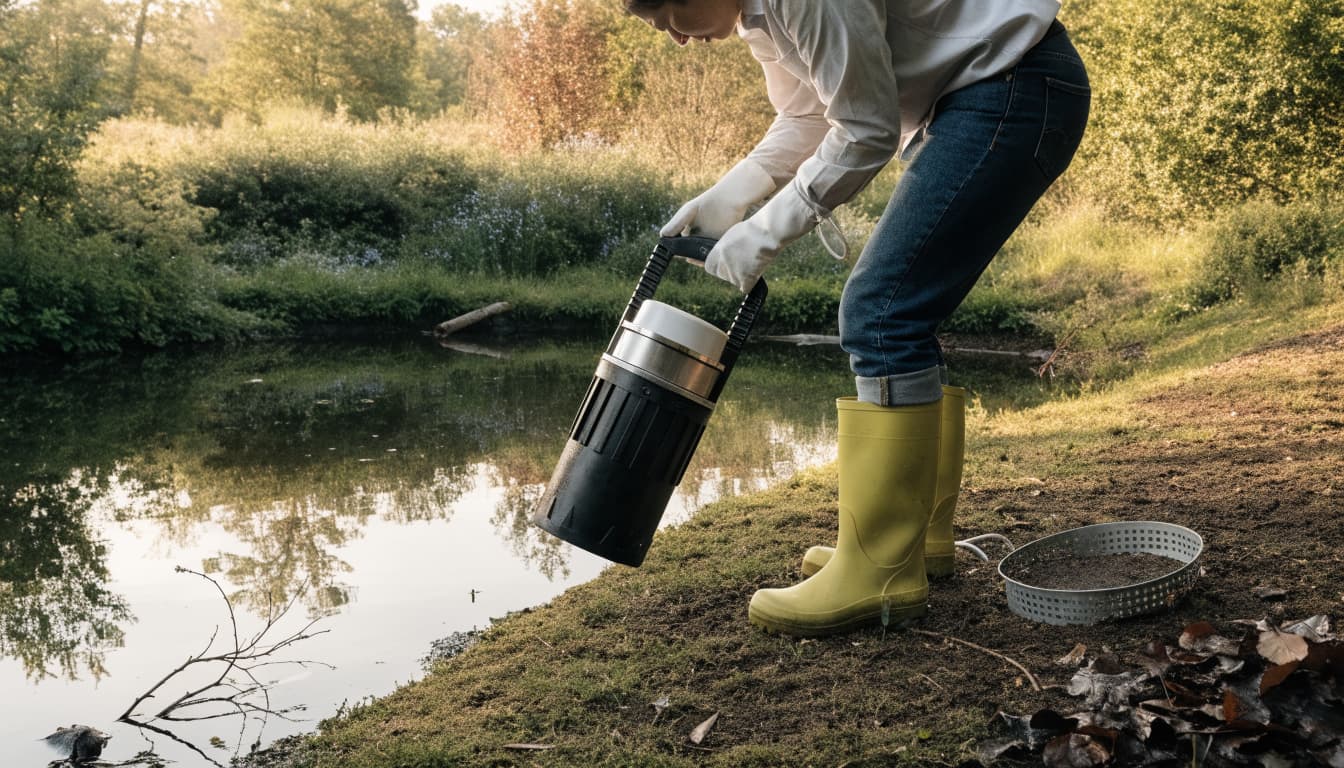
Turn off and disconnect power before retrieving equipment. Remove leaves and algae from accessible intake screens, and clean the nozzle according to its instructions. Inspect for worn parts, damaged cables, loose anchors, and unusual vibration.
If flow stays low after safe cleaning, the pump or impeller may need professional attention. A breaker that trips repeatedly, grinding noise, or visible cable damage calls for service rather than repeated restarts. Florida property managers can use a lake fountain maintenance checklist to track these warning signs.
Key Takeaways
- Pond depth determines whether the intake can sit safely below the water and clear of sediment. It does not set pump size on its own.
- Match the nozzle's required flow and pressure to the pump's flow-versus-head chart after accounting for lift and plumbing losses.
- Check performance at the lowest likely water level, and plan for safe power, retrieval, and cleaning before installation.
Frequently Asked Questions
Does a deeper pond need a more powerful fountain pump?
Not automatically. A deeper pond may affect pump placement, intake protection, and the length of tubing. Pump selection depends on the required fountain flow and the total head the system must overcome. Compare those requirements with the manufacturer's pump curve.
Can I choose a pump using its maximum flow rating?
Maximum flow usually describes performance with little or no head. Once water passes through tubing and a nozzle, delivered flow will be lower. Check the chart at your estimated operating head instead of treating the headline rating as the flow you'll get at the fountain.
Will a larger fountain pump improve pond aeration?
A larger spray does not guarantee better circulation throughout a pond. Fountain placement, intake location, pond shape, and the equipment's intended purpose all matter. If aeration is the main goal, ask an installer to assess the pond rather than sizing the system by visual spray height alone.
Conclusion
The depth of your pond is the starting measurement, not the final answer. Check intake clearance at low water, define the spray you want, and compare its full plumbing load with a pump's performance chart.
That approach turns a depth reading into a workable fountain setup , with fewer surprises after the pump is in the water.
Latest posts
Read Our Blog
Tips, guides, industry best practices, and news.
Contact us
Get in touch
Our friendly team is ready to chat.