
Lake Fountain Lightning Protection for Florida Ponds
A fountain that runs normally after a thunderstorm can still have damaged electrical components. For Florida communities, protecting lake fountains from lightning requires attention to the pump, shoreline controls, wiring, and surrounding property.
The priority is people's safety , followed by reducing equipment damage and service interruptions. Grounding, bonding, surge protection, and a professionally designed lightning-protection system have different jobs, and none eliminates lightning risk.
Start by understanding how storms can affect the entire fountain installation.
Key Takeaways for Pond Owners
- Equipment grounding and bonding address electrical safety, but they don't establish lightning protection.
- Protection needs a site-specific assessment by qualified electrical and lightning-protection professionals.
- When thunder is audible, leave the shoreline and seek safe shelter.
- After suspected storm damage, keep questionable equipment out of service until a qualified professional evaluates it.
Why Florida Retention-Pond Fountains Face Lightning Risks
A retention-pond fountain connects equipment in water to an electrical supply on land. Its installation may include submerged cables, shoreline junction boxes, lighting, timers, and motor controls. Lightning can affect more than the floating unit.
A direct strike can cause severe damage. However, a nearby strike can also create damaging voltage differences or surges that reach equipment through power and control connections.
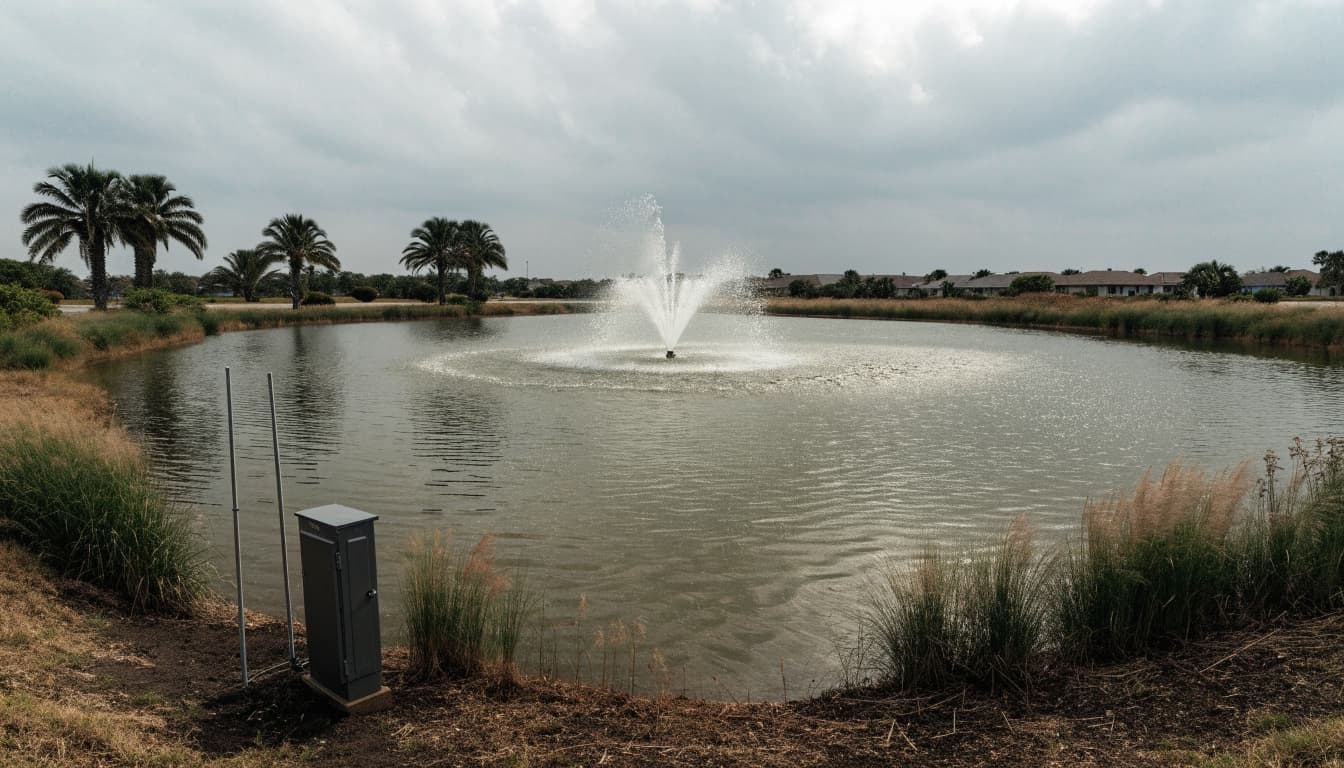
The exposure varies with cable routing, nearby structures, electrical connections, and the site's grounding arrangement. Pond water doesn't make an installation lightning protected, and a nearby building doesn't automatically protect a fountain.
Florida weather also brings heavy rain, changing water levels, and wind. Those conditions can damage anchors or allow moisture into electrical enclosures, even without a lightning strike.
Because several problems can follow one storm, a stopped fountain doesn't prove lightning caused the failure. A technician needs to distinguish surge damage from water intrusion, cable damage, and ordinary mechanical faults.
Grounding and Bonding Have Different Jobs
Equipment grounding supports fault protection
Equipment grounding connects designated conductive equipment parts to the electrical system's grounding path. If an electrical fault energizes those parts, a properly installed fault-current path helps protective devices operate.
This protection matters where electricity and water meet. However, an equipment-grounding conductor isn't a substitute for a designed lightning-protection system.
The electrician must assess the fountain circuit, protective devices, wiring condition, and manufacturer instructions. Ground-fault protection, where required, addresses leakage-current hazards; it doesn't provide lightning protection.
Owners shouldn't select conductor sizes or connection points without professional design and applicable code review.
Bonding connects conductive parts
Bonding joins specified conductive parts to reduce hazardous voltage differences under the conditions the electrical design addresses. It isn't the same as adding a ground rod near the pond.
The required connections depend on the installation. A qualified electrician must determine which fountain components and associated metal parts need bonding under applicable requirements.
Adding a ground rod doesn't replace the equipment-grounding conductor or turn a fountain installation into a lightning-protection system.
Lightning can still create dangerous voltage differences across a site. Therefore, properly grounded and bonded equipment never makes the shoreline safe during a thunderstorm.
Keep drawings and inspection records available so future repairs don't accidentally alter these connections.
What Lake Fountain Lightning Protection Should Include
A coordinated assessment of the whole site
A lightning-protection professional should evaluate the pond installation and relevant nearby structures alongside the electrician. The review needs to consider possible current paths and connections between electrical systems.
Depending on the site, a designed system may involve strike-termination components, conductors, grounding electrodes, bonding, and surge protective devices. Their arrangement requires professional judgment rather than a standard pond-side kit.
NFPA 780 is the Standard for the Installation of Lightning Protection Systems. Its 2023 edition provides a recognized installation reference, but the designer must confirm the appropriate edition and application.
Don't attach a rod to a fountain float or improvise connections between shoreline equipment and a building's lightning-protection system.
Surge protection matched to the equipment
Surge protective devices limit transient overvoltages within their ratings. They can reduce exposure for motor controls, timers, lighting, and other connected equipment.
However, their effectiveness depends on selection, placement, connections, and coordination. A device at one panel doesn't automatically protect every cable or component.
Ask the electrician to consider both incoming power and any connected control or communication wiring. Outdoor equipment also needs suitable enclosures and installation methods.
Surge protection has limits, especially during severe events. Ask how to recognize device failure, when replacement is necessary, and what inspections should follow a suspected strike.
Site Conditions and Florida Codes Shape the Plan
Inspect more than the fountain float
A useful assessment follows the installation from the electrical supply to the equipment in the pond. It should document cable routes, disconnect locations, enclosure condition, service access, and nearby conductive features.
Changing pond levels matter because equipment that stays dry during ordinary weather may face flooding later. Corrosion and damaged seals also deserve attention.
Trademark Water Systems' lake fountain site survey outlines practical installation and repair considerations, including shoreline access and electrical arrangements.
For an existing fountain, provide its model information and service history. Records of breaker trips or storm-related failures can help professionals identify what needs investigation.
Confirm permits and applicable editions
Collier County's code information identifies the Florida Building Code, 8th Edition (2023), as effective December 31, 2023. Confirm the currently applicable edition and local requirements before starting work.
Electrical installation or alteration may require permits and inspections. The relevant building or electrical authority should determine requirements for your property.
Don't assume fountain maintenance, new wiring, and a lightning-protection installation follow the same approval process. Also confirm ownership permission and any restrictions affecting shoreline work.
Have qualified professionals document the applicable electrical and lightning-protection requirements. Avoid accepting a proposal that promises compliance without identifying the scope of work and required inspections.
Keep People Away From the Pond During Thunderstorms
Storm safety needs a written plan that residents, landscapers, and maintenance teams can follow. Prepare it before storm season, including who can authorize shutdowns and arrange inspections.
Use these steps when thunder or lightning interrupts outdoor work:
- Stop shoreline work and leave the water immediately.
- Move into a substantial enclosed building. If none is available, use a hard-topped metal vehicle with its windows closed.
- Stay sheltered for at least 30 minutes after the last thunder , following National Weather Service and OSHA guidance.
- Resume work only when weather conditions and the site's safety procedures allow it.
Don't shelter beneath an isolated tree or in an open-sided pavilion. Also, don't approach a control cabinet simply to switch off the fountain while lightning threatens.
Turning off a timer or switch doesn't establish an electrically safe work condition. Remote shutdown features can support an operating plan, but they don't replace shelter or proper electrical isolation.
Prepare hurricane arrangements early as well. Any retrieval, securing, or electrical work should follow the manufacturer's instructions and a professional plan completed before conditions become dangerous.
Maintenance and Post-Storm Repairs Need Different Responses
Routine checks catch developing problems
Between storms, owners can observe spray changes, unusual noise, displaced floats, or visibly damaged shoreline enclosures from a safe location. Report concerns rather than opening equipment.
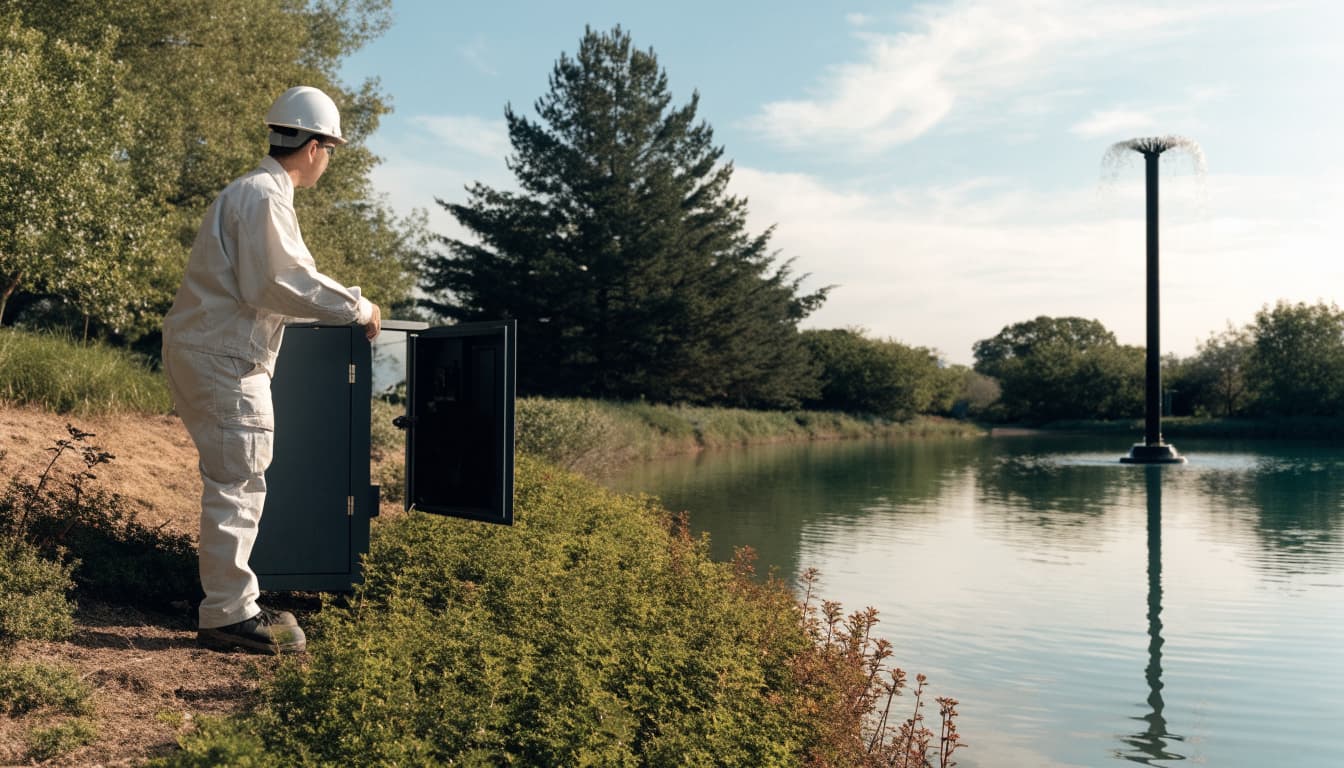
Florida heat, algae, mineral deposits, and corrosion can affect fountain performance. These maintenance issues need attention, but they shouldn't be confused with electrical storm protection.
Use a lake fountain maintenance checklist to organize observations and scheduled service. Have professionals inspect cable condition, electrical enclosures, protective devices, and required connections at appropriate intervals.
Keep inspection reports with equipment manuals and warranty records.
Storm-related faults require caution
Repeated breaker trips are warnings. Moisture, damaged insulation, motor faults, or other electrical problems can cause them.
Don't repeatedly reset a breaker or bypass protection to restore the display. Instead, have an authorized person follow the established shutdown procedure and request qualified service.
After a suspected strike, burning odors, damaged controls, or visible cable deterioration justify keeping equipment out of service. A normal spray pattern doesn't confirm electrical safety.
Professional evaluation may include electrical testing and inspection of controls, surge protective devices, and the pump. The lake water fountain repair guide describes common performance problems that also warrant service.
Choose Professionals With Clearly Defined Responsibilities
Fountain service experience and lightning-protection expertise are separate qualifications. Your project may need a fountain technician, a licensed electrical contractor, and a qualified lightning-protection designer or installer.
Ask who is responsible for each part of the work, including permits, inspections, testing, and documentation. Verify relevant licenses and experience with outdoor, water-adjacent electrical installations.
Organizations such as the Lightning Protection Institute and UL offer credentials or inspection programs. However, a credential isn't automatically a government license or a requirement for your particular project.
Compare written proposals by scope rather than a single installed price. Assessment, electrical repairs, surge protection, and lightning-protection work may involve different costs. There isn't one reliable price for every retention pond.
Trademark Water Systems provides lake fountain installation and maintenance in Southwest Florida. Discuss fountain needs while separately confirming who will handle specialized electrical and lightning-protection work.
Frequently Asked Questions
Can a solar-powered fountain avoid lightning risk?
Solar power doesn't remove lightning exposure. Panels, pumps, controllers, and connected wiring can still suffer damage. Have qualified professionals evaluate the actual system, including any batteries, shore-mounted components, and connections to other equipment.
Should the fountain restart automatically after an outage?
Automatic restart settings need professional review. After suspected storm damage, the operating plan should allow authorized personnel to keep equipment off until inspection. Restored power alone doesn't confirm that the fountain is safe to operate.
Will insurance cover lightning-related fountain damage?
Coverage depends on the policy, cause of damage, exclusions, and deductible. Ask your insurer before a loss occurs. Maintain equipment records, photographs, and service reports, and document suspected damage without approaching unsafe equipment.
Protect the Installation Without Overlooking People
Lake fountain lightning protection works best as a coordinated, site-specific plan with clear responsibilities . Grounding, bonding, surge protection, and lightning-protection design each address different risks.
Have qualified professionals evaluate the installation under applicable local requirements. Maintain the equipment and treat storm-related faults seriously.
Above all, a working fountain never proves the pond is safe during a thunderstorm. People should leave the shoreline and seek shelter before anyone considers equipment recovery.
Latest posts
Read Our Blog
Tips, guides, industry best practices, and news.


Contact us
Get in touch
Our friendly team is ready to chat.