
How to Measure RO Feed Pressure Across Your System
To measure RO feed pressure, take a reading at the membrane inlet while the system is producing water. Then compare it with readings at the supply inlet and around pretreatment filters to see where pressure is being lost.
The useful number is operating pressure , not just the pressure shown when everything is at rest. For a whole-house system, it also helps to separate feed-side pressure from the pressure that delivers treated water to your faucets.
Start by locating the measurement points along your system's plumbing.
Where to Measure Pressure in a Whole-House RO System
A whole-house RO system has several places where pressure readings can answer different questions. The equipment may include sediment filtration, carbon treatment, a softener, and a feed pump, but their arrangement varies.
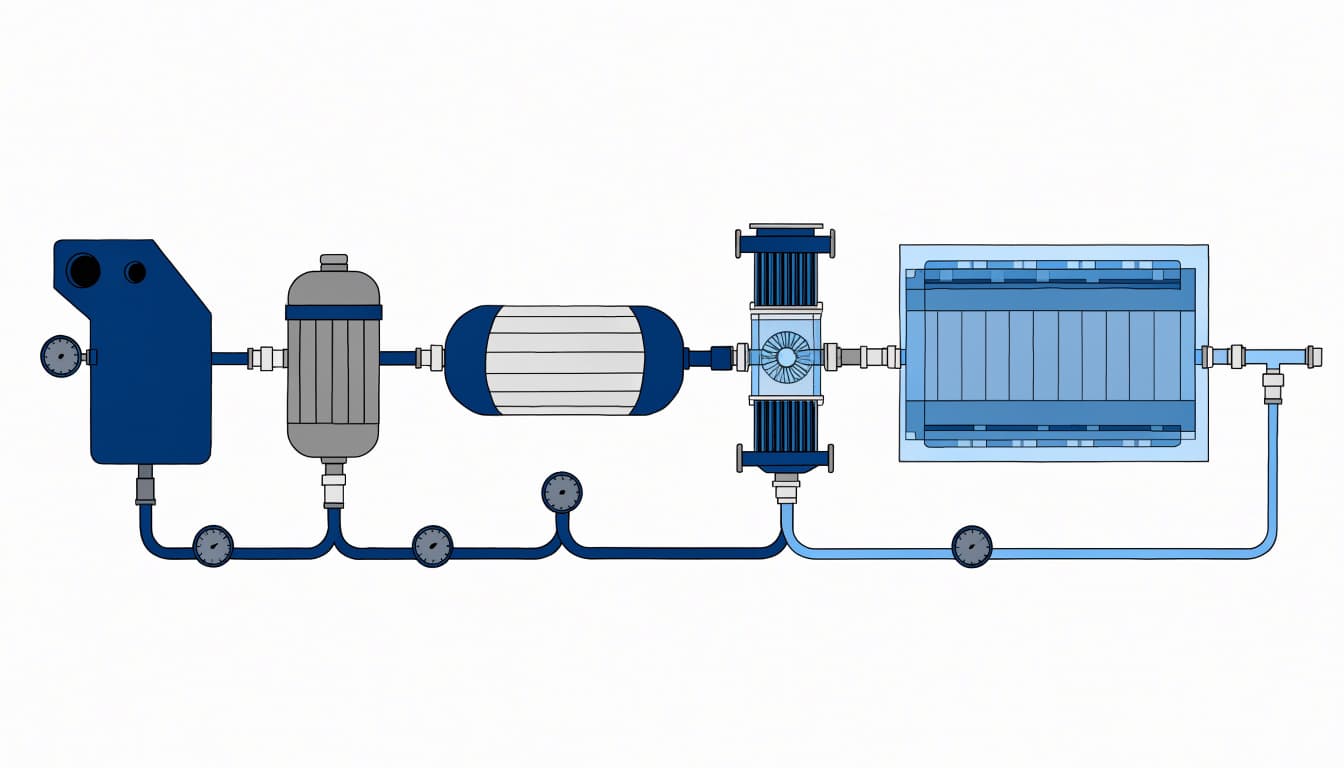
The illustration shows the general sequence of treatment stages. Your system may have a different layout or additional equipment.
At the Feed Inlet
The feed inlet is where source water enters the treatment system. A gauge here shows the pressure available before water passes through pretreatment.
For a private well, that reading can change as the well pump cycles or other fixtures use water. Record it while the RO system is running so you can compare it with downstream readings taken under the same conditions.
Before and After Pretreatment
Measure immediately before and after each accessible pretreatment stage. Those stages can include sediment filters, carbon filters, softeners, or other equipment selected for the water supply.
A pair of readings can show how much pressure a stage uses during operation. If several filters are grouped together with no ports between them, readings at the group's inlet and outlet show the combined loss, not which individual filter caused it.
At the Membrane and Its Outlets
Measure at the membrane feed inlet, after the feed pump if your system has one there. This reading shows the pressure reaching the membrane and is the one to compare with the RO equipment's operating range.
Some systems also have a pressure port on the concentrate outlet, before the concentrate control valve. The difference between that reading and membrane feed pressure describes the pressure drop along the membrane's feed-to-concentrate path.
The permeate, or treated-water, outlet is a separate stream. Its pressure is not the same measurement as pressure at the concentrate outlet.
Choose Gauges That Fit the System
A useful gauge must be suitable for the water, the connection, and the pressure at its location. Whole-house systems can have different pressure conditions before and after a feed pump.
Gauge Range and Materials
Use a gauge with a range that covers the pressure it may encounter at its installed location, including potential pressure surges. Its pressure rating and fittings must also be suitable for that part of the system.
Choose materials compatible with potable water wherever the gauge contacts the water supply. A gauge that's easy to read makes small changes easier to track. For comparisons, use gauges with matching units, such as pounds per square inch (psi).
Placement and Access
Place gauges or approved test ports close to the inlet and outlet of the component you're evaluating. That helps keep unrelated piping losses out of the measurement.
Permanent gauges are convenient for routine monitoring. A service technician can also use an appropriate test gauge at accessible ports. If the system lacks ports, a qualified installer can add them without compromising the plumbing or pressure rating.
Take Consistent Readings While Water Is Moving
A static reading, taken when the system isn't producing water, can describe available pressure at rest. It doesn't show the pressure reaching the membrane under flow.
For a useful comparison, observe the system during a normal production cycle, after readings have settled. Record the supply inlet, pretreatment, and membrane feed pressures as close together in time as practical.
Keep Operating Conditions Comparable
Compare readings during the same type of cycle. A flush cycle, startup, or shutdown can produce different pressures from normal production.
Note whether the well pump is running and whether major water uses, such as irrigation, are operating. Those details help explain a low inlet reading that doesn't appear every time. Also record the position of any operating controls without changing them.
Record Flow and Temperature
Pressure makes more sense alongside production. Record how much treated water the system produces over a measured period, if your equipment has a flow meter or another suitable way to measure it.
Feed-water temperature matters, too. Cooler water can reduce membrane output even when pressure appears normal. Comparing production at similar temperatures gives you a more useful picture of whether performance has changed.
For more on the role of pressure during operation, see our guide to whole-house RO booster pump requirements.
Calculate Pressure Drop Across a Stage
Pressure drop is the inlet pressure minus the outlet pressure across a component while water is flowing through it. Use readings taken under the same operating conditions.
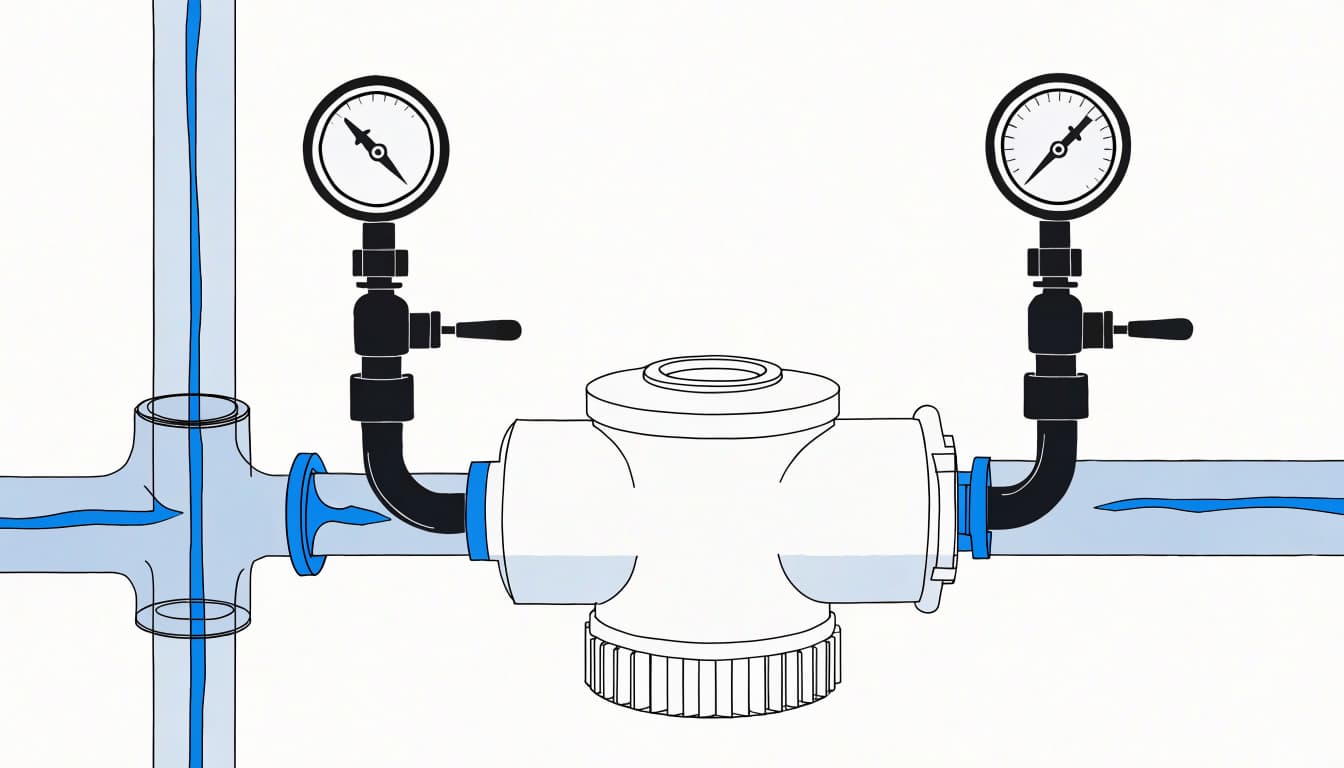
Compare the Two Sides of a Filter
For a simple calculation, suppose a filter reads 60 psi at its inlet and 50 psi at its outlet during the same production cycle. Subtract 50 from 60, and the pressure drop is 10 psi.
Those numbers illustrate the math; they aren't a target or replacement threshold. The useful comparison is between that filter's current drop and its clean-filter baseline under similar flow conditions.
If the difference grows over time, the filter may be collecting material and restricting flow. Other causes, including an undersized filter or a partially closed valve, can also affect the reading.
Read the Membrane Differently
If your system has feed and concentrate pressure ports, subtract concentrate pressure from membrane feed pressure to find the drop along that path. A change can be a reason to investigate the membrane or flow conditions.
Don't subtract permeate pressure and call the result the membrane's inlet-to-outlet pressure drop. Permeate exits through a separate path, so it answers a different pressure question.
Also, don't treat a pressure increase across a pump as filter loss. The pump adds pressure between its inlet and outlet.
Compare Readings With the System's Normal Range
There's no single feed-pressure number that fits every whole-house RO installation. The membrane, pump, controls, water chemistry, and system design all affect the intended operating conditions.
Use the operating range in your equipment documentation for the measurement point it describes. The pressure at the system's incoming supply and the pressure at the membrane feed inlet may have different requirements, especially when a feed pump sits between them.
Look for a Change From Baseline
A record taken when the system is clean and working normally gives later readings context. Compare it with the current reading at the same location, during the same kind of production cycle.
For example, a larger pretreatment pressure drop paired with lower membrane feed pressure can point toward a restriction before the membrane. A normal inlet reading by itself doesn't rule that out.
Stay Within Equipment Limits
Operating below the intended range can reduce production and affect dissolved-solids rejection. Pressure above a component's rated limit can damage equipment or create a safety hazard.
Don't increase a pump setting simply to compensate for a dirty filter. If membrane feed pressure falls outside the system's range, have a water-treatment professional identify the cause and assess the equipment.
Use Pressure Readings to Narrow Down Problems
Pressure readings point you toward a section of the system. They don't, on their own, prove that a particular filter, pump, or membrane has failed.
Low Pressure Before Pretreatment
If pressure is already low at the system inlet during production, investigate the source side. The well pump, pressure tank, supply piping, or competing water use may be limiting the pressure available to the RO equipment.
A normal pressure reading with weak flow can also indicate that the supply isn't delivering enough water volume. Our guide to well pressure tank settings explains more about that part of the system.
A Growing Drop Across a Filter
A larger drop across a sediment or carbon filter can indicate loading, especially if the reading has risen since the filter was clean. Service the stage according to its requirements rather than assuming the membrane needs replacement.
Pressure drop is only one maintenance clue. Carbon can lose its ability to reduce disinfectants before it causes an obvious restriction, so its replacement schedule still matters.
Normal Feed Pressure but Slow Production
If membrane feed pressure is within range and production remains low, pressure alone won't explain the problem. Water temperature, membrane fouling, feed-water quality, or a flow-control issue may need attention.
Weak pressure at household fixtures can have a separate cause after treated water reaches storage. A delivery pump, postfilter, tank, or downstream plumbing restriction may affect the faucets even when the RO membrane is operating normally.
Keep a Pressure and Maintenance Record
A short log makes it easier to spot gradual changes before the storage tank starts taking much longer to fill. Include the date, operating cycle, gauge locations, pressure readings, and any calculated pressure drops.
Add production rate, feed-water temperature, and permeate total dissolved solids (TDS) when those measurements are available. Record filter changes and other service alongside them. That history gives a technician a better starting point than a single reading taken after a problem appears.
Water quality matters as well. Sediment, iron, hardness, and other substances can affect pretreatment and membrane performance. Our guide to protecting RO membranes from high silica covers why the full water profile belongs in the maintenance plan.
If a housing leaks, a gauge exceeds its rated range, or electrical equipment is near a leak, stop using the affected equipment and call a qualified professional. Don't loosen a fitting or open a filter housing while it's under pressure.
Make Feed Pressure Part of Routine RO Care
The most useful RO feed pressure reading is the one taken at the membrane inlet during normal production. Readings around pretreatment add context and help locate a restriction before you make equipment changes.
A consistent baseline turns those numbers into a maintenance tool. At Trademark Water Systems, we help Southwest Florida homeowners with whole-house water treatment installation and repair when readings or performance call for service.
Latest posts
Read Our Blog
Tips, guides, industry best practices, and news.

Contact us
Get in touch
Our friendly team is ready to chat.
