
Floating vs Fixed Pond Fountains: How to Choose the Right Setup
A pond fountain can make water look alive, but its real value depends on where and how it operates. The choice between floating vs fixed fountains affects spray height, circulation, upkeep, and the condition of the water below the surface.
For a community lake, retention pond, or backyard water feature, the right design fits the site instead of forcing the pond to fit the equipment. Start by looking at the pond itself, then match the fountain to its depth, access, electrical layout, and goals.
Start With the Job You Need the Fountain to Do
A fountain may be installed for appearance, water movement, or both. Those priorities guide every later decision.
A display fountain puts the water feature on view
Many homeowners want a spray pattern that creates a focal point from the patio, clubhouse, entry road, or nearby homes. A broad, stable pond often suits a high-visibility display. The pattern should look balanced from the places people use most.
Communities may also use a fountain to give a retention pond a cared-for appearance. In that case, the unit needs enough height and width to be visible without spraying into walkways, docks, or landscaping.
Aeration supports healthier water conditions
Aeration means adding oxygen to water. A fountain does this by lifting water into the air and returning it to the pond as droplets. The movement can reduce stagnant surface areas and may help limit conditions that support algae growth and odor.
However, a decorative fountain doesn't replace a full aeration plan in every pond. Deep water can form layers with little oxygen near the bottom. A bottom-diffused aeration system may better address that issue because it circulates water through the depth of the pond.
A tall spray can improve surface movement, but pond depth and water quality determine whether it can meet your aeration needs.
Floating vs Fixed Fountains: The Core Difference
The most visible distinction is also a practical one. Floating fountains rest on buoyant floats and remain near the water surface. Fixed fountains attach to a stable base, structure, or shoreline-mounted pump system.
How floating fountains work
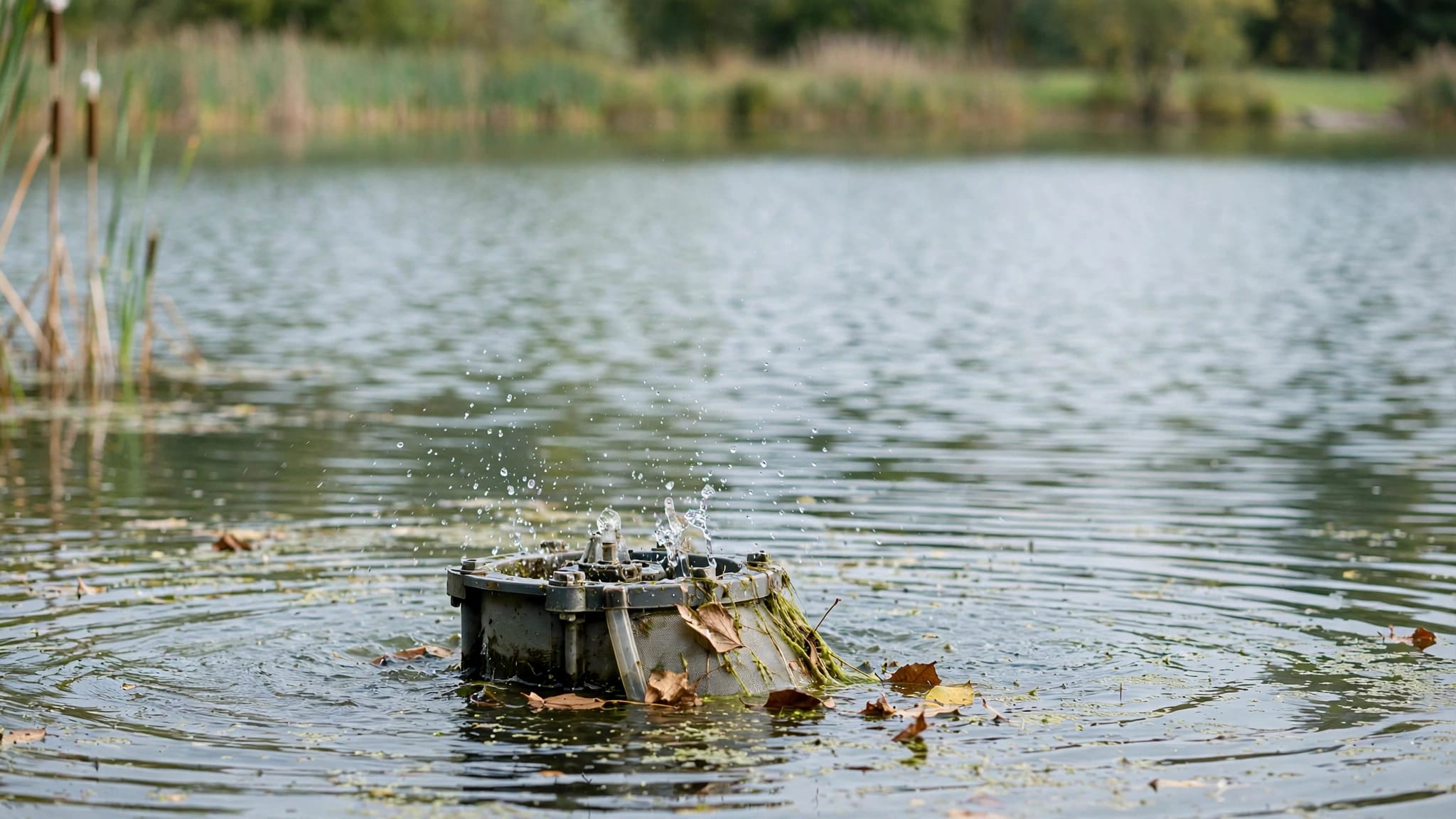
A floating unit contains a submersible pump that draws water from beneath the float and sends it through a nozzle. Mooring lines and anchors hold it in position while allowing the fountain to rise and fall with changing water levels.
This setup works well in larger ponds and lakes with adequate open water. Because the unit sits away from shore, its spray can become a strong central feature. It also avoids the need for a permanent foundation in the pond bottom.
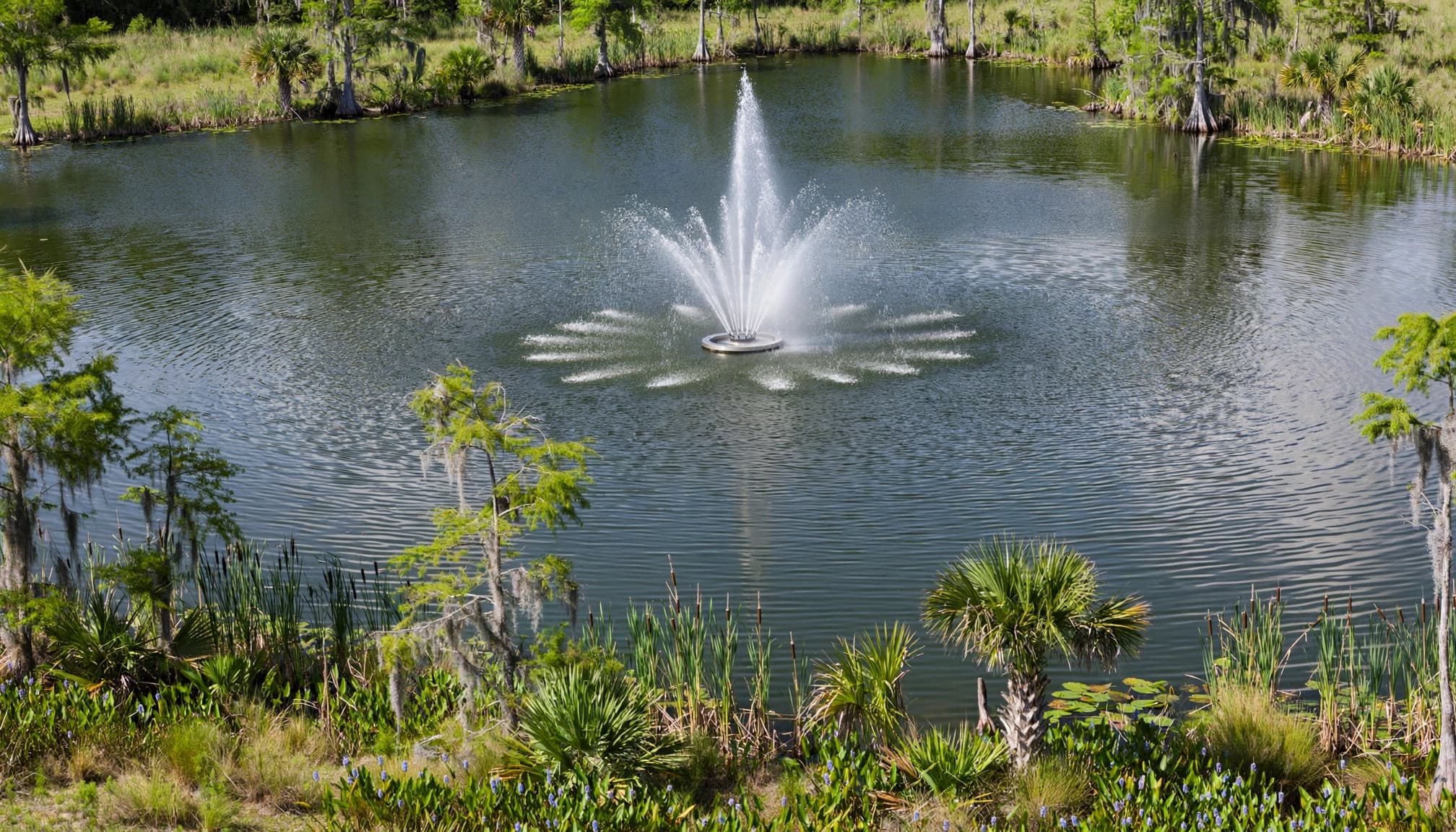
Still, floating equipment needs enough depth to protect the pump intake and keep the motor submerged. It also needs clear water around it, free from thick weeds, fallen branches, and boat traffic.
How fixed fountains work
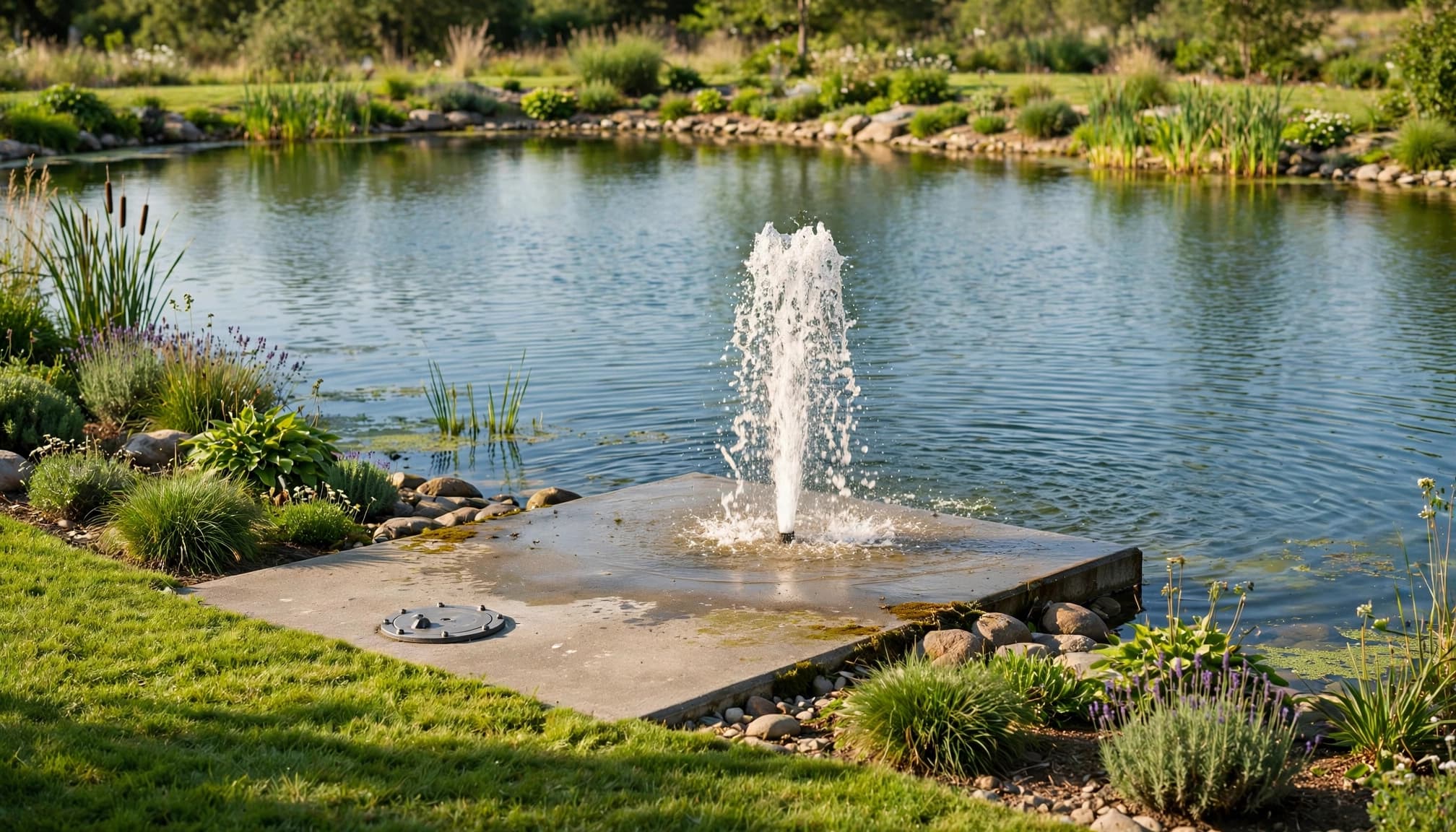
A fixed fountain stays in one position. Some models sit on a weighted or secured base in shallow water. Others use a shoreline pump and plumbing that feeds a fountain head at a planned location.
That stability suits small ornamental ponds, formal landscapes, and narrow water features. The fountain's position won't drift, so you can aim the spray around plants, stonework, bridges, or seating areas.
A fixed setup can also simplify service when major components remain near the shoreline. Yet changing water levels matter more. If the pond drops too low, a fixed pump or intake may lose proper submersion.
Pond Size, Shape, and Depth Set the Limits
A fountain should have room to operate without creating problems at the bank. Spray that looks dramatic in an open lake can overwhelm a small pond.
Open water favors a floating display
A floating fountain often fits an open pond with a broad center and consistent depth. It can sit far enough from the bank to keep overspray off grass, walls, and paths. This helps when the water feature is viewed from several directions.
For a large community pond, central placement can make the fountain visible to more residents. It may also spread surface movement over a wider area than a shoreline fountain.
Before choosing a location, consider nearby trees, shallow shelves, fishing areas, drainage structures, and irrigation intakes. A Florida lake fountain placement guide can help property owners plan around shoreline access and seasonal water changes.
Tight shapes often suit a fixed unit
A kidney-shaped pond, narrow canal edge, or small courtyard pond may not have a safe central zone. In those settings, a fixed fountain gives you more control over where the water lands.
Measure the spray radius, not only the fountain's height. Wind can push fine droplets well beyond the normal splash zone. Leave room between the spray and any deck, window, roofline, or electrical equipment.
Depth matters, too. A floating fountain needs enough water under the intake. A fixed fountain needs a stable mounting area and dependable water level. Neither setup performs well when it sits in a shallow pocket that collects leaves and sediment.
Water Quality Goals Should Shape the Decision
A fountain improves circulation, but it doesn't solve every water problem. The best setup depends on what the pond needs most.
Surface circulation and visual clarity
When water seems still, smells stale, or develops a film near the edges, a fountain can help move the surface. That movement may discourage mosquito breeding in small stagnant areas and makes the pond look cleaner.
A floating unit usually creates broader surface agitation because it operates farther from shore. This can be useful in a large pond with a visible center. A fixed fountain works well when you need movement in a smaller, defined zone.
Neither option removes nutrients, sediment, or existing algae by itself. Runoff, lawn fertilizer, decaying leaves, fish waste, and warm temperatures can still feed algae blooms.
Deep-water oxygen needs more than a tall spray
In a deeper pond, the lower water may have limited oxygen even when the surface looks active. This often happens during hot weather, when warm water holds less dissolved oxygen. Dissolved oxygen is the oxygen available to fish and beneficial aquatic organisms.
A fixed or floating fountain can be part of the answer. However, a pond with recurring fish stress, heavy algae, or low bottom-water oxygen may need a diffuser system, water testing, or a more complete treatment plan.
| Pond condition | Fountain role | What may also be needed |
|---|---|---|
| Stagnant-looking surface | Adds visible circulation | Debris removal and intake cleaning |
| Decorative community pond | Creates a focal point | Spray pattern planning |
| Deep pond with low oxygen | Supports surface aeration | Bottom-diffused aeration |
| Frequent algae blooms | Improves movement | Nutrient control and pond treatment |
The strongest results come from matching equipment to the source of the problem, not only the pond's appearance.
Electrical Access and Weather Change the Installation Plan
Water and electricity demand careful planning. A convenient outlet is not a reason to run an unsuitable cord across a lawn or along the pond edge.
Plan the electrical route before choosing equipment
Floating fountains need a properly sized underwater cable from the unit to a protected shore-side power source. The cable route must avoid mower paths, sharp edges, foot traffic, and areas where shoreline work may disturb it.
Fixed fountains may use shorter cable runs when the pump sits near the bank. However, the location still needs outdoor-rated protection and ground-fault circuit interruption. A GFCI shuts power off when it senses an electrical fault.
Have a qualified professional inspect wiring, connections, grounding, and cable condition. This is especially important around shared community water, where residents, pets, and maintenance crews may approach the shoreline. Review underwater electrical safety for fountains before adding or moving any equipment.
Wind, rain, and storms test floating systems differently
Florida storms can shift a floating fountain if anchors, ropes, or cables are undersized. Water levels may rise quickly after heavy rain, while strong wind can push spray onto nearby land. A floating unit needs secure mooring with enough allowance for normal level changes.
Fixed fountains don't drift, but debris and floodwater can affect their intake or pump housing. A fixed spray also faces the same wind issue if it sits too close to a walkway or building.
After lightning, flooding, or a severe wind event, keep people away from the equipment until its electrical system has been checked.
Maintenance and Budget Go Beyond the Purchase Price
The fountain itself is only one part of the cost. Installation labor, electrical work, anchors, cable length, controls, and ongoing service all belong in the budget.
Floating systems need water-based service access
A floating fountain may require a boat, waders, or a retrieval plan for inspection. Technicians need to check the intake screen, floats, mooring lines, nozzle, motor housing, and underwater cable. In a pond with algae or leaf fall, those checks may need to happen more often.
Because the unit is offshore, cleaning can take more time than working on a bank-mounted system. On the other hand, it may avoid costs tied to constructing a permanent underwater base.
A lake fountain maintenance checklist helps property owners watch for weak flow, uneven spray, damaged cables, and algae buildup.
Fixed systems can be simpler to reach
When a fixed fountain's pump and controls sit near the shore, routine service is often easier. A technician can inspect fittings, clean an intake, and adjust a nozzle without traveling into open water.
That access can lower long-term labor costs. Still, a fixed installation may need a durable base, plumbing, or shoreline improvements at the start. In a decorative pond with rockwork or established plants, installation may also require careful site work.
Compare complete ownership costs instead of choosing by equipment price alone:
- A floating fountain often costs more to retrieve and service when it sits far from shore.
- A fixed fountain may require more preparation if the pond edge lacks a stable mounting location.
- Both setups need periodic cleaning, electrical checks, and repairs when pumps, nozzles, or cables show wear.
Visual Impact and Daily Use Matter
A fountain has to fit the way people experience the property. The right spray pattern supports the view instead of dominating it.
Match the pattern to the surroundings
A tall vertical plume suits a large open pond and can remain visible behind landscaping. In contrast, a lower, wider pattern may fit a residential pond where overspray could reach windows or patios.
Floating vs fixed fountains also create different sightlines. A floating fountain pulls attention toward the middle of the water. A fixed design can frame an entry, highlight a stone border, or complement a garden bed.
Consider noise, glare, and nearby activity
Falling water produces sound. That can mask traffic and add a pleasant background near a clubhouse, but it may bother residents if a powerful unit runs beside homes overnight. Timers let many properties set operating hours around community routines.
Also watch where sunlight hits the spray. In the morning or late afternoon, a fountain can create glare for drivers or people using a patio. Safe placement leaves room for maintenance access and keeps the fountain away from swimming areas, docks, and fishing spots.
Choosing the Setup That Fits Your Pond
A floating fountain is often the practical choice for a larger pond with open water, dependable depth, and a need for a central display. It adjusts naturally to changing water levels, although it needs secure anchors and a sensible retrieval plan.
A fixed fountain often fits a smaller or more formal pond where precise placement and shoreline access matter most. It can be easier to service, provided the water level and mounting point remain reliable.
For either type, professional lake fountain services can help match spray patterns, electrical requirements, placement, and maintenance to the property.
A Fountain Choice That Holds Up Over Time
The better fountain is the one that works with your pond's shape, depth, shoreline, and water conditions. Floating vs fixed fountains is less about picking a winner and more about choosing equipment that can operate safely and look right year after year.
A central floating display can bring a large pond to life. A stable fixed installation can give a small pond controlled movement and simpler access. When the setup matches the site, the fountain supports both the view and the water beneath it.
Latest posts
Read Our Blog
Tips, guides, industry best practices, and news.
Contact us
Get in touch
Our friendly team is ready to chat.