
Solar vs. Electric Lake Fountains for Florida Ponds
A lake fountain can make a community pond look cared for, but its real job goes beyond a pleasing spray pattern. It moves water, adds oxygen near the surface, and can help limit the stagnant conditions that favor algae.
For Florida property owners and managers, choosing between solar lake fountains and electric models comes down to operating consistency, site conditions, and long-term service needs. The right choice depends on more than the size of the pond or the look you want.
Why a Fountain Choice Matters in Florida
Florida heat warms shallow water quickly. Combined with nutrient runoff, bright sun, and frequent rainfall, that warmth can encourage algae and reduce water quality. A properly selected fountain supports circulation while giving residents and visitors a cleaner view.
However, a fountain is not a complete pond-treatment plan. It works best alongside sensible shoreline care, runoff management, and routine equipment service.
Surface aeration improves the view and water movement
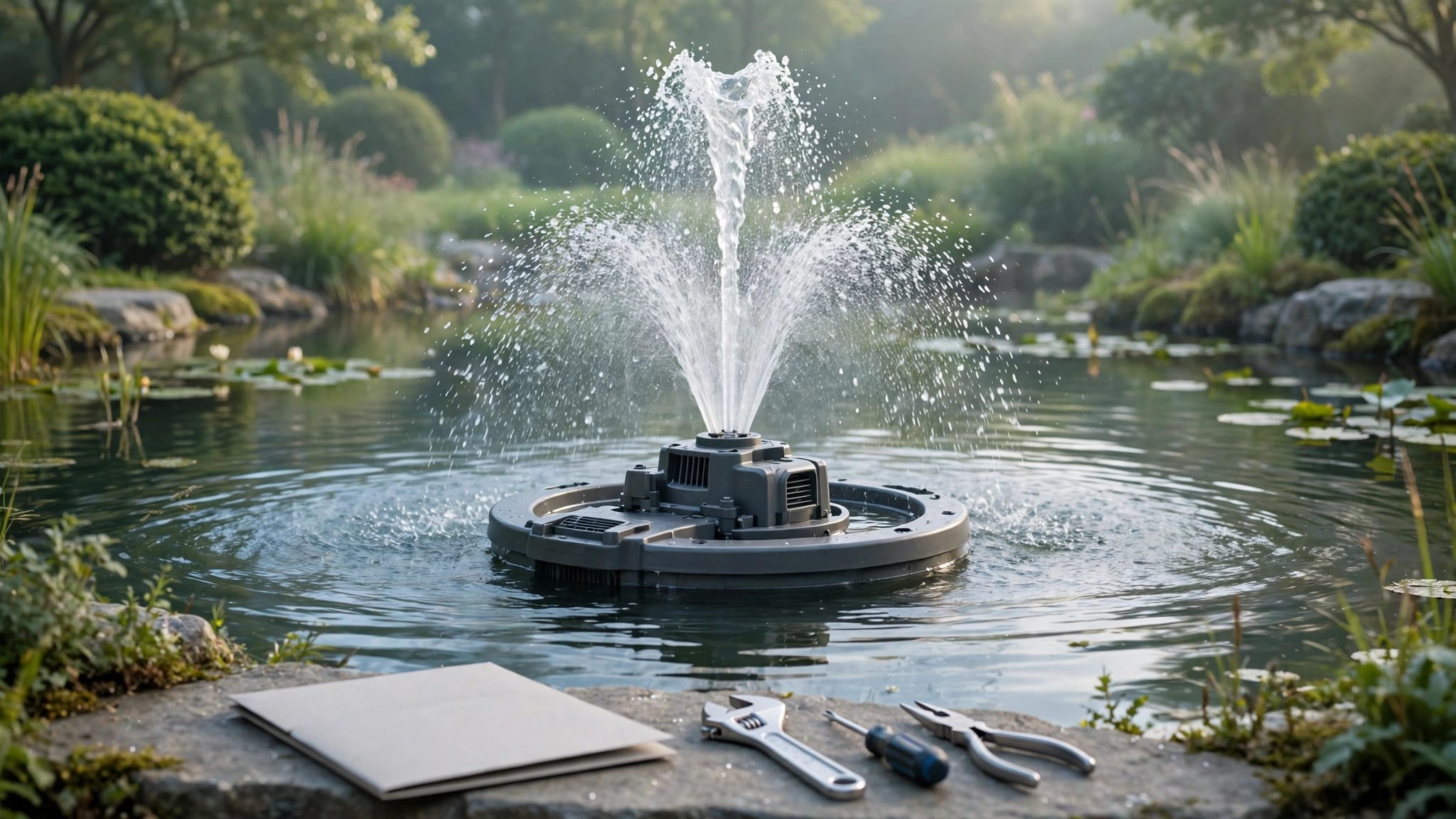
A floating fountain draws water through its pump and throws it into the air. That action creates surface agitation and adds oxygen as water droplets fall back into the pond.
The visible spray also breaks up a still pond, which matters for HOA entrances, apartment communities, golf course water features, and waterfront homes. Yet a fountain's aeration impact depends on its pump capacity, spray pattern, and water depth.
A decorative surface fountain may not circulate the deepest parts of a large or deep pond. Those sites may need a separate aeration plan.
Appearance still affects property value
An uneven spray, drifting float, or algae-coated nozzle can make an otherwise tidy property look neglected. Therefore, fountain selection should account for the equipment's durability and the service support available after installation.
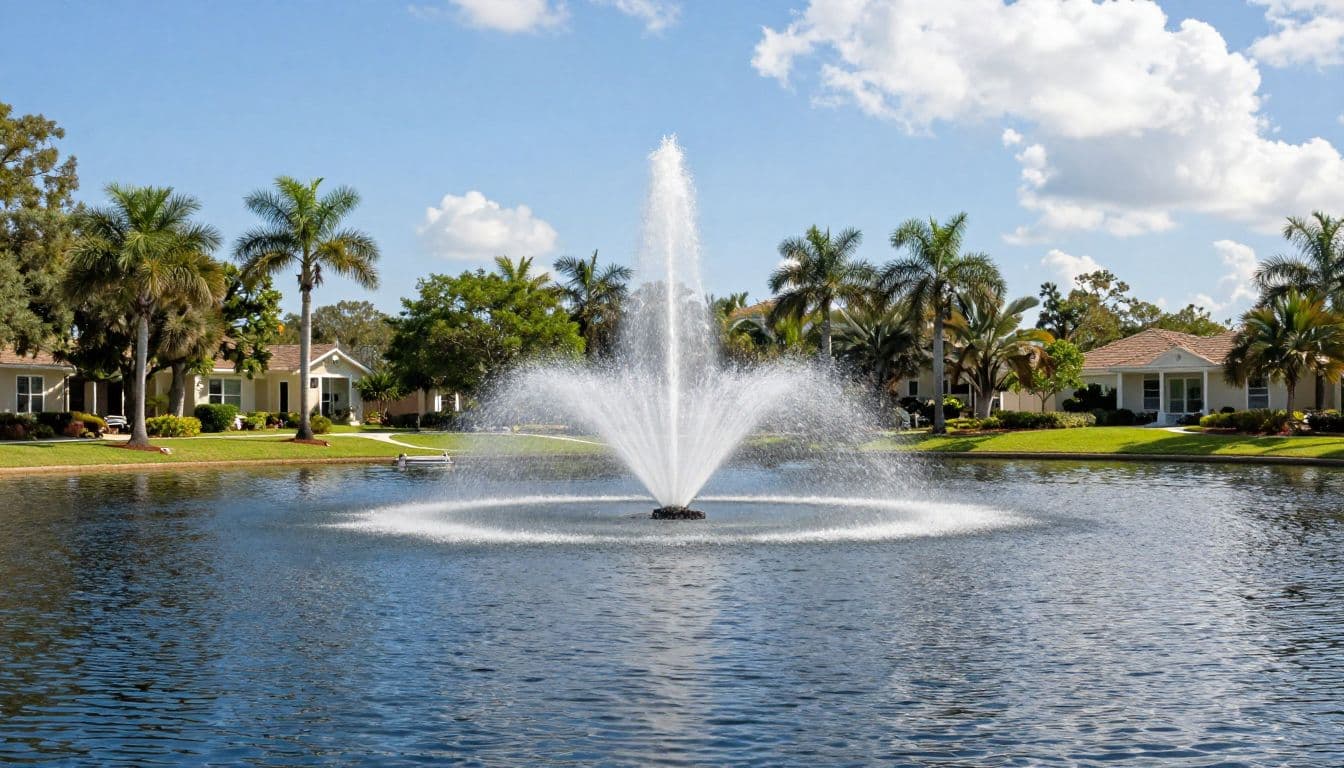
For larger ponds and managed communities, custom lake fountain systems can match pump capacity, display preferences, and shoreline conditions to the site.
Solar Lake Fountains Depend on Sun Exposure
Solar lake fountains appeal to owners who want to avoid running power across a long shoreline. They can be a practical choice for small ponds, remote sites, or places where trenching electrical service would be disruptive.
Still, solar output changes throughout the day. Florida gets plentiful sunshine, but a bright climate does not mean uninterrupted fountain operation.
Panel placement controls daily output
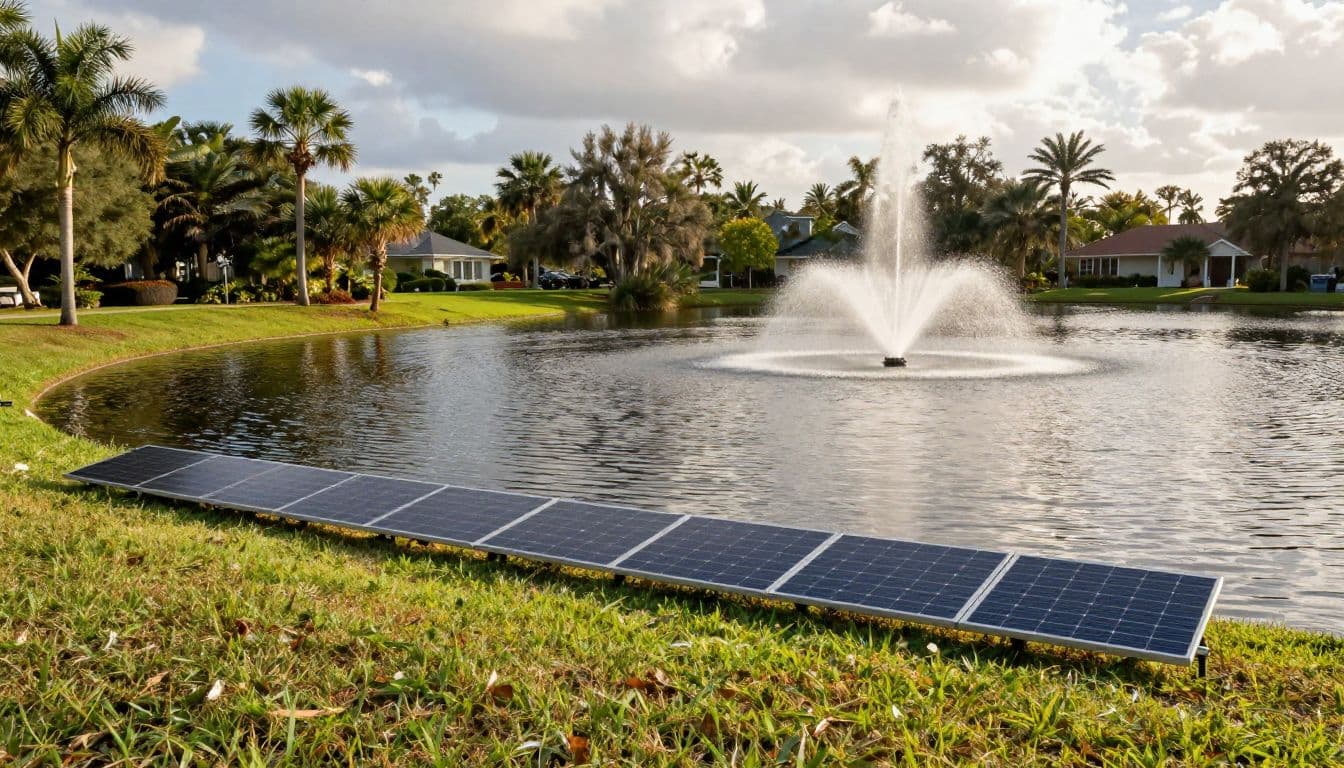
A panel needs direct sunlight for much of the day. Shade from mature live oaks, palms, nearby buildings, and even seasonal tree growth can reduce the pump's output. A shaded panel may produce a lower spray or stop the fountain entirely.
Placement also affects the installation itself. Panels need a secure location with a clear sun path, protection from lawn equipment, and practical cable routing to the fountain. A south-facing location may receive strong light, yet the best choice depends on site-specific shade patterns.
Batteries help, but they have limits
A battery bank can store energy and extend operating time after sunset or during passing clouds. However, its performance depends on battery capacity, charging conditions, age, and the pump's demand.
Cloudy weather can reduce charging for several days, especially during Florida's summer rain pattern. In addition, high heat can shorten battery life. Solar systems need an honest operating plan: how many hours of spray are needed, when those hours matter most, and whether reduced output is acceptable.
For a pond that needs a consistent display every evening, solar power may not meet expectations without a carefully sized panel and battery system.
Electric Fountains Deliver More Consistent Operation
An electric lake fountain usually gives a more stable spray pattern because it draws power from the property's electrical supply. It can run on a timer, operate after dark, and maintain output during cloudy weeks.
That consistency is valuable for entrances, amenity lakes, and ponds where steady circulation is part of an ongoing algae-control program. Electric equipment also supports larger pumps and more dramatic nozzle patterns than many solar units.
Safe wiring is part of the fountain system
Electric fountain installation requires much more than placing a pump in the water. The system needs correctly sized wiring, weather-rated components, secure connections, grounding, and GFCI protection. A qualified professional should plan the circuit, control panel, cable routing, and disconnect access.
Water and electricity demand careful installation. A damaged underwater cable, loose connection, or improperly protected circuit can shut down the fountain and create a serious safety concern.
Florida's rain and humidity add another layer of stress. Equipment enclosures need to resist moisture, while the control system should remain accessible for inspections and service.
Higher capacity brings more site flexibility
Because electric fountains do not rely on real-time sunlight, managers can choose pump size based on pond needs and display goals. Timers can reduce run time during low-use hours without sacrificing a reliable schedule.
Electricity costs should factor into the decision, yet a lower-priced solar purchase is not always the less expensive option over time. Battery replacement, solar panel mounting, and lower output can change the equation. A site assessment gives a clearer comparison than a generic price estimate.
Compare Solar and Electric Fountain Needs
The best option is the one that fits the pond's operating demands, access to power, and maintenance plan. A fountain that looks impressive on day one should also work after a rainy week and through a hot August afternoon.
| Consideration | Solar fountain | Electric fountain |
|---|---|---|
| Daily run time | Changes with sun, shading, and battery storage | Can follow a timer or continuous schedule |
| Pump output | Often limited by available solar power | Supports a broader range of pump sizes |
| Site work | May avoid trenching power, but needs panel space | Requires electrical planning and protected wiring |
| Storm recovery | Panels and mounts need inspection after severe weather | Cables, controls, and connections need inspection |
| Best fit | Sunny, smaller, remote ponds with flexible run times | Communities needing dependable output and larger displays |
Solar lake fountains make sense when direct sun is dependable and a variable spray pattern won't create a problem. Electric systems suit properties where the fountain must operate on schedule and provide stronger circulation.
Start with the pond, not the product
Measure the pond's approximate surface area and depth. Then consider water quality concerns, nearby trees, shoreline access, electrical distance, desired spray height, and whether residents expect nighttime operation.
A small sunny retention pond may work well with solar equipment. In contrast, a community lake with heavy shade and a visible entrance fountain usually benefits from electric power. The waterbody sets the requirements, not a catalog photo.
Florida Weather, Hurricanes, and Shoreline Planning
Florida fountains operate in punishing conditions. High temperatures, UV exposure, lightning, heavy rain, and storm winds all affect equipment. Choosing corrosion-resistant components and a serviceable design reduces avoidable downtime.
Prepare for rain and hurricane season
Heavy rain can raise water levels, move floating debris, and wash nutrients into the pond. After storms, inspect the fountain's float, mooring lines, intake screen, cable condition, and spray pattern before returning it to normal use.
Hurricane preparation should be part of the property's written maintenance plan. Depending on the system and site, a professional may recommend shutting down power, securing equipment, or removing certain components before a major storm. Never enter the water to adjust a fountain during unsafe weather.
Check local requirements before installation
Ponds may sit within HOA-controlled common areas, drainage systems, conservation zones, or waterfront parcels with special restrictions. Permits, electrical code requirements, and approval processes can vary by county, municipality, community rules, and the nature of the waterbody.
Confirm site requirements before ordering equipment or altering the shoreline. A Florida lake fountain placement guide can also help managers identify issues such as tree debris, mooring clearance, and protected shoreline vegetation.
Maintenance Keeps Aeration and Displays Working
Neither power source eliminates maintenance. Florida's heat and sunlight speed algae growth, while leaves, seed pods, and floating debris can clog an intake or nozzle. Mineral buildup may also change the shape and height of the spray.
Control algae without treating the fountain as the cure
A fountain can help disrupt still surface water, but it will not remove the nutrients that feed algae. Fertilizer runoff, grass clippings, pet waste, and decaying vegetation can keep fueling blooms.
Regularly remove debris around the intake. Keep shoreline vegetation maintained without stripping protected areas. If algae keeps returning, assess the pond's nutrient sources and water conditions rather than relying on a larger fountain alone.
Watch for early signs of repair needs
A weaker spray, uneven pattern, unusual vibration, breaker trips, or a fountain that drifts from position all call for attention. Continuing to run an obstructed pump can strain the motor and reduce circulation.
Routine inspection should include floats, anchors, cables, screens, nozzles, pump performance, and electrical components. For recurring problems, these lake fountain maintenance and repairs can help property managers recognize the issues that need professional service.
Choose the Power Source That Fits the Property
Solar lake fountains can work well on sunny Florida ponds where flexible operating hours are acceptable. Their performance depends on panel placement, shade, cloud cover, and battery capacity.
Electric fountains cost more to install when a power connection is not nearby, but they offer steady operation and greater pump options. Consistent aeration and a realistic maintenance plan matter more than choosing the power source with the lowest initial price.
A fountain should look good on a clear day, then keep working safely through Florida's heat, rain, and seasonal storms.
Latest posts
Read Our Blog
Tips, guides, industry best practices, and news.
Contact us
Get in touch
Our friendly team is ready to chat.