
Lake Fountain Water Loss: Evaporation or a Leak?
Lake water loss can come from evaporation, windblown spray, seepage, or a leak, and a falling shoreline alone won't identify the cause. The most useful first step is a controlled comparison of water levels, weather, and fountain operation.
For homeowners and HOA managers, the challenge is separating normal changes from a problem that needs repair. Start with what happens around the lake, then narrow the investigation before replacing equipment or disturbing the shoreline.
Key Takeaways
- Heat, humidity, wind, splash, and fountain run time all affect water loss, so there's no universal evaporation rate.
- Consistent measurements help reveal patterns, but a water-level comparison alone can't prove a leak or locate it.
- Persistent loss, shoreline erosion, damaged equipment, or electrical trouble calls for professional attention.
A fountain's appearance provides useful clues, too. An uneven spray, unusual vibration, or sudden change in flow deserves attention even when the cause of the falling water remains unclear.
Why Lake Water Loss Changes With the Weather
Weather affects both evaporation and where fountain droplets land. Several conditions can change together, which makes a single day's observation unreliable.
Heat, humidity, and wind affect evaporation
Warm water and strong sunlight can increase evaporation. Dry air also accepts moisture more readily than humid air, while wind carries moist air away from the water's surface.
Florida humidity doesn't stop evaporation. However, two equally hot days can produce different losses because wind, cloud cover, and humidity differ.
Rain complicates the picture further. A lake can receive rain and still fall if its combined losses exceed incoming water. Record rainfall alongside water levels rather than treating every rainy day as a reset.
Spray, splash, and operating hours add another variable
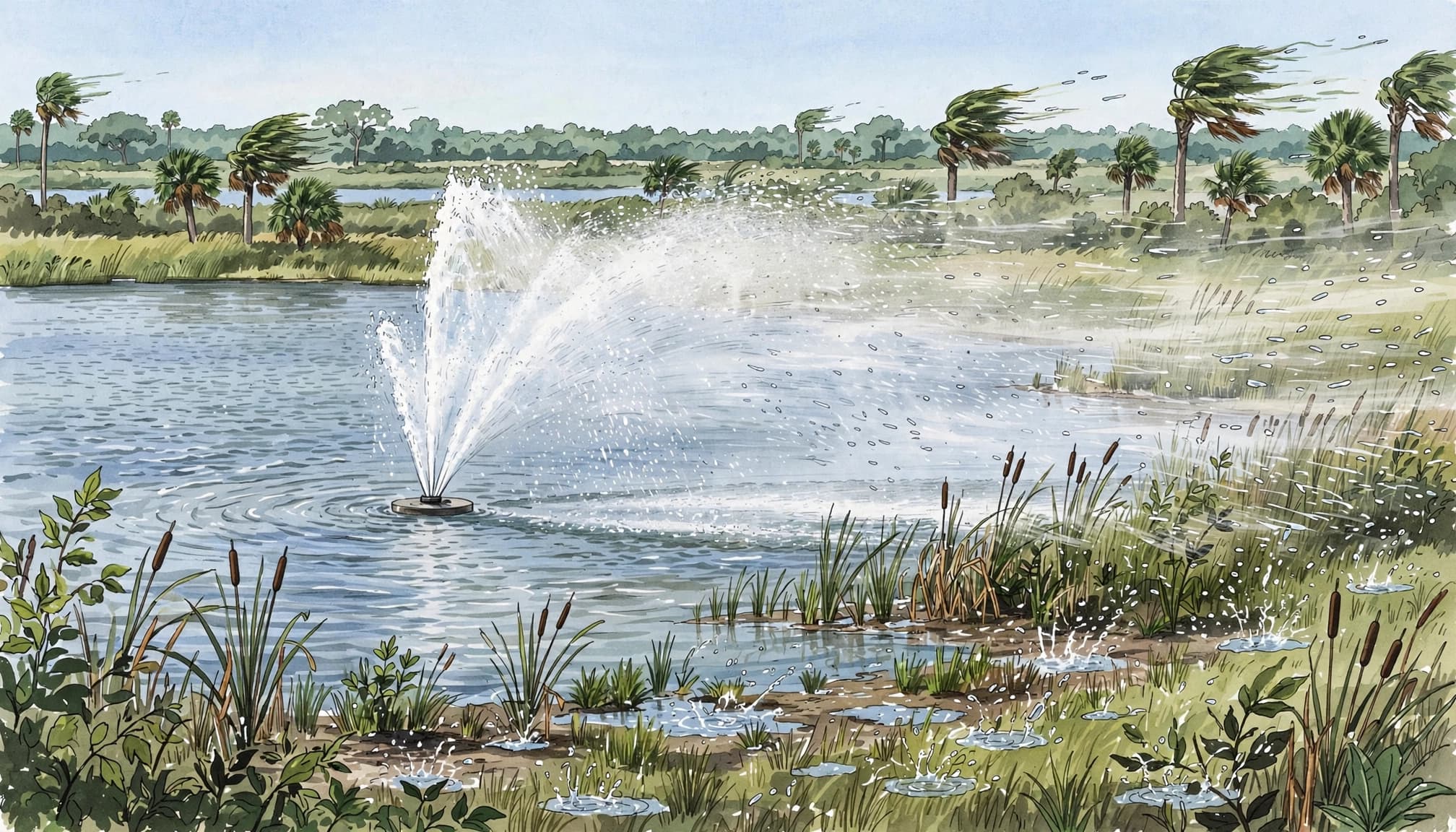
Water that lands on grass, pavement, or nearby landscaping may never return to the lake. Wind can carry fine spray beyond the shoreline, especially when a fountain sits close to an edge.
Longer operating hours create more opportunities for that loss. A tilted fountain or distorted nozzle pattern can also send water outside its intended area.
Our lake fountain placement guide covers wind exposure, shoreline clearance, and other placement concerns. Spray that repeatedly wets a path or bank deserves attention even without a confirmed leak.
Other Causes That Can Resemble a Leak
The fountain is only one part of the lake's water balance. Before blaming the pump, consider how water enters, leaves, and moves through the property.
Groundwater, drainage, and withdrawals change lake levels
An unlined lake exchanges water with surrounding soil and groundwater. Its level can change even when the fountain is off and the weather seems mild.
Retention ponds also receive runoff and release water through drainage structures. Irrigation withdrawals or reduced inflow can contribute to a decline.
For community properties, include known irrigation schedules and drainage activity in the observation log. These details help distinguish equipment-related losses from changes affecting the whole waterbody. A fountain technician may need a pond or drainage specialist's input when the problem extends beyond the equipment.
Lined ponds and external plumbing have different risks
Constructed ponds may lose water through damaged liners, basin cracks, failed joints, or plumbing that carries water outside the pond. Waterfalls and decorative channels can also spill water beyond their containment.
However, many floating lake fountains draw water directly from the lake and return it there. A loose submerged fitting may reduce spray performance without removing water from the lake.
A fountain component can leak internally without lowering the lake if the escaping water stays inside the waterbody.
That distinction helps prevent unnecessary pump replacement while an unrelated water-loss problem continues.
Run a Controlled Water-Level Comparison
A consistent observation period helps you identify whether fountain operation coincides with greater loss. It also gives a technician better information than photographs taken at changing angles.
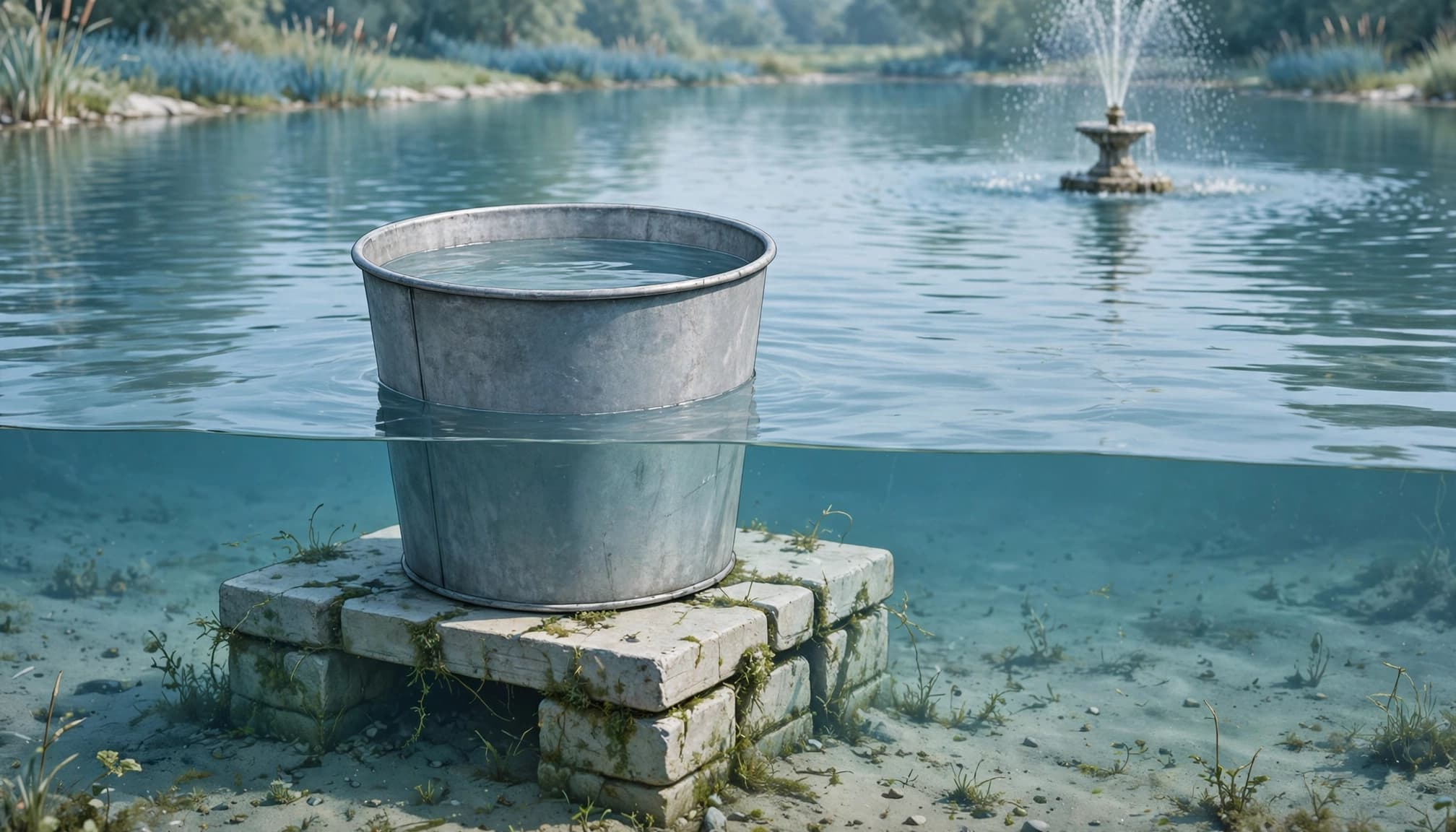
Use a fixed, safely accessible reference point, such as an existing dock piling or stable gauge. Avoid floating objects, loose rocks, and the sloping wet edge of the bank.
- Record the starting level at a set time. Photograph the reference point and note wind, rainfall, fountain hours, and any automatic refill or irrigation activity.
- Observe a consistent operating period. Keep the fountain's schedule and settings unchanged, and record the ending level at the same time the following day.
- Compare with an equal fountain-off period, only when a shutdown is appropriate. If the fountain provides needed aeration, have a pond professional plan the interruption.
- Repeat when conditions are reasonably similar. Flag rain, strong wind, withdrawals, or refill activity because they can distort the comparison.
Don't enter the water to place a marker or handle equipment. On a shared lake, coordinate operating changes with the responsible property manager.
This is a screening comparison , not a leak diagnosis. Weather and groundwater rarely remain identical between observation periods. The goal is a repeatable pattern that directs the next inspection, not a single reading that settles the question.
What the Comparison Can Tell You
Look at the measurements together with weather, spray behavior, and site activity. A difference between operating periods helps narrow the investigation, but several causes can produce the same pattern.
Greater loss while running points toward operational factors
Start by watching where the spray lands. Look for wet pavement, repeated splashing beyond the edge, or a plume that shifts toward shore during afternoon wind.
Then note whether the fountain sits level and holds its usual position. Algae, sediment, and mineral deposits can change nozzle performance, while damaged floats or loose mooring lines can affect orientation.
If the installation includes external plumbing, its fittings and discharge route also deserve inspection. Our lake water fountain repair guide describes common flow, nozzle, and electrical symptoms.
Continued loss while off broadens the investigation
A falling level during shutdown doesn't automatically prove a liner or bank leak. Evaporation, groundwater exchange, drainage, and withdrawals can continue without the fountain.
However, persistent unexplained loss warrants a wider site inspection. Record damp areas outside a contained pond, fresh erosion, exposed liner, or visible damage to accessible plumbing.
Photographs and dated measurements help a professional connect those observations. Avoid digging into banks or applying sealants before identifying the affected structure and likely escape route.
Inspect Safely and Know When to Call
Water-loss troubleshooting should never put someone near energized equipment or an unstable shoreline. Keep owner inspections visual unless the equipment is safely isolated and accessible.
Make shoreline observation part of routine care
During Florida's hottest and wettest months, a weekly visual review from shore helps establish what's normal. Also inspect visually after major storms or whenever the spray changes.
Compare the fountain's position, spray shape, and sound with earlier records. Note low water, floating debris, algae buildup, unusual movement, or newly exposed equipment.
Keep the pump submerged to the depth its manufacturer requires. A pump that runs dry can suffer permanent damage. Our lake fountain maintenance checklist covers routine observations and maintenance needs.
Stop operation for equipment or safety warning signs
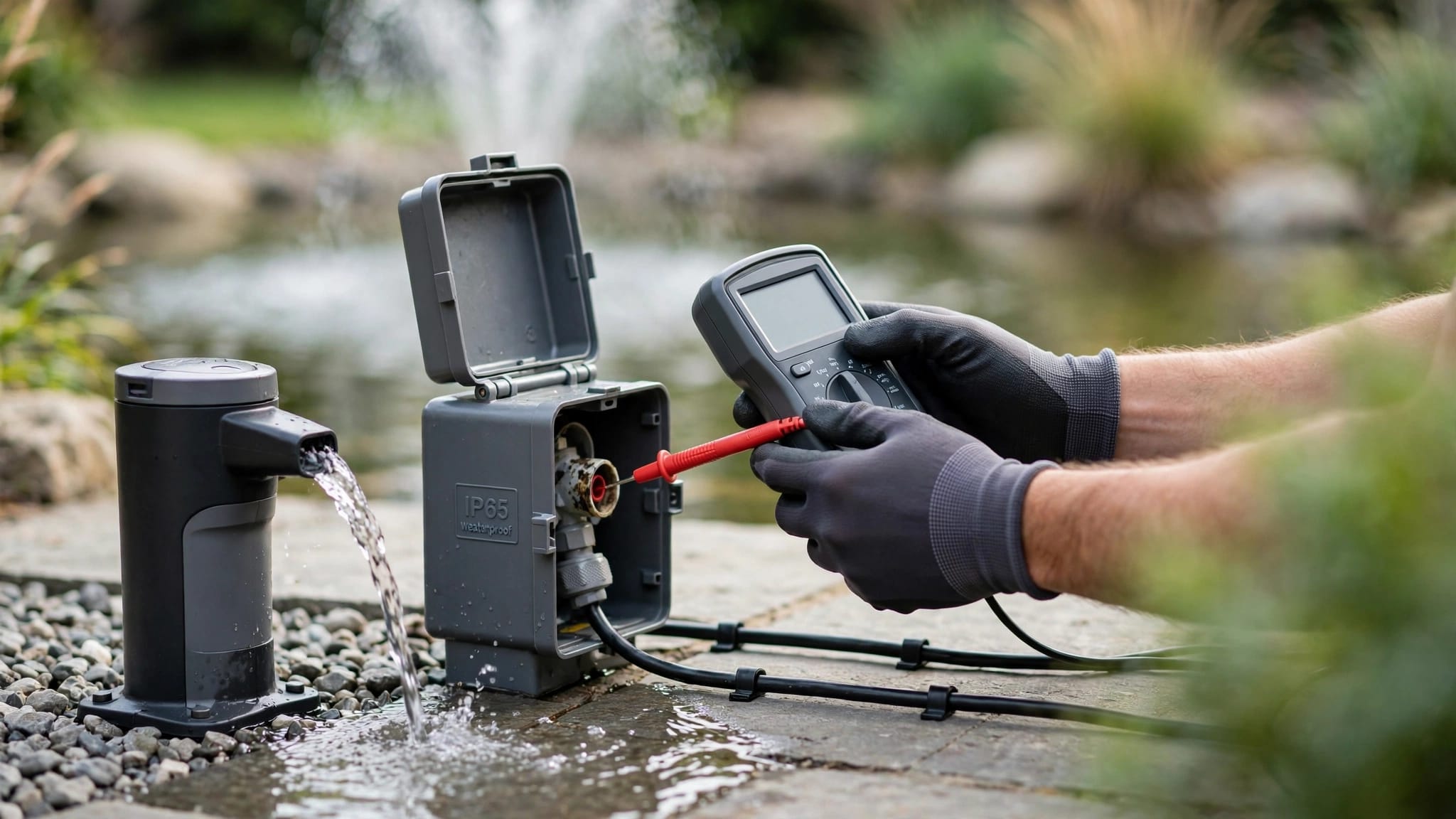
Shut down the fountain and arrange service for repeated breaker trips, damaged wiring, grinding sounds, unusual vibration, or recurring flow loss. Never repeatedly reset a tripping breaker.
Disconnect power before equipment inspection, and never enter the water to handle a powered fountain. Electrical repairs and difficult lifting belong with qualified professionals.
Movement, loose supports, or bank deterioration also require attention. Our fountain support and stability guidance explains related warning signs.
We provide lake fountain installation, repair, and maintenance in Naples and Southwest Florida. Bring your observation log to the service visit so we can assess the fountain alongside the reported water-loss pattern.
Frequently Asked Questions
How much evaporation is normal for a lake fountain?
There's no single rate that applies to every lake. Water temperature, sunlight, humidity, wind, exposed surface area, spray behavior, and operating hours all matter. Compare consistent measurements under similar conditions rather than using a universal daily allowance. Rain, drainage, refilling, and withdrawals also affect the level you observe.
Does an uneven spray mean the fountain is leaking?
An uneven spray can result from nozzle deposits, algae, intake debris, a tilted float, or pump trouble. Those symptoms don't establish that water is escaping the lake. They do justify inspection because a distorted pattern can send spray onto the bank or indicate a developing equipment problem.
Should we keep adding water while investigating?
Record any added water because refilling can hide the pattern you're trying to understand. However, protecting equipment takes priority over completing a test. Don't run a fountain below its required operating depth. If levels keep falling or the pump approaches unsafe conditions, shut it down and arrange professional help.
Follow the Pattern Before Choosing a Repair
A falling lake level deserves attention, but the right response depends on where the water goes . Consistent measurements and safe observation help separate weather-related changes from fountain problems and broader pond issues.
Address equipment hazards promptly. For persistent unexplained loss, use the recorded pattern to guide a professional inspection before replacing parts or attempting shoreline repairs.
Latest posts
Read Our Blog
Tips, guides, industry best practices, and news.
Contact us
Get in touch
Our friendly team is ready to chat.
