
Why Your Whole-House RO Drain Line Keeps Running
A whole-house RO drain line keeps running while the system makes treated water, refills storage, or completes a programmed flush. Continuous flow after storage is full, with no household demand or scheduled flush, may point to a valve, pressure, membrane, or control problem.
The distinction is whether the system reaches its normal stopping point . Before assuming a part has failed, separate routine operation from a system that can't finish its production cycle.
Key Takeaways
- Drain flow is expected during water production, tank refilling, and certain flushing cycles.
- A full tank with ongoing production may indicate a shutoff or control fault, although inspection is needed.
- Low pressure, restricted filters, and membrane problems can extend production.
- Never block the drain, bypass safety controls, or open pressurized equipment to stop the flow.
When Drain Flow Is Normal
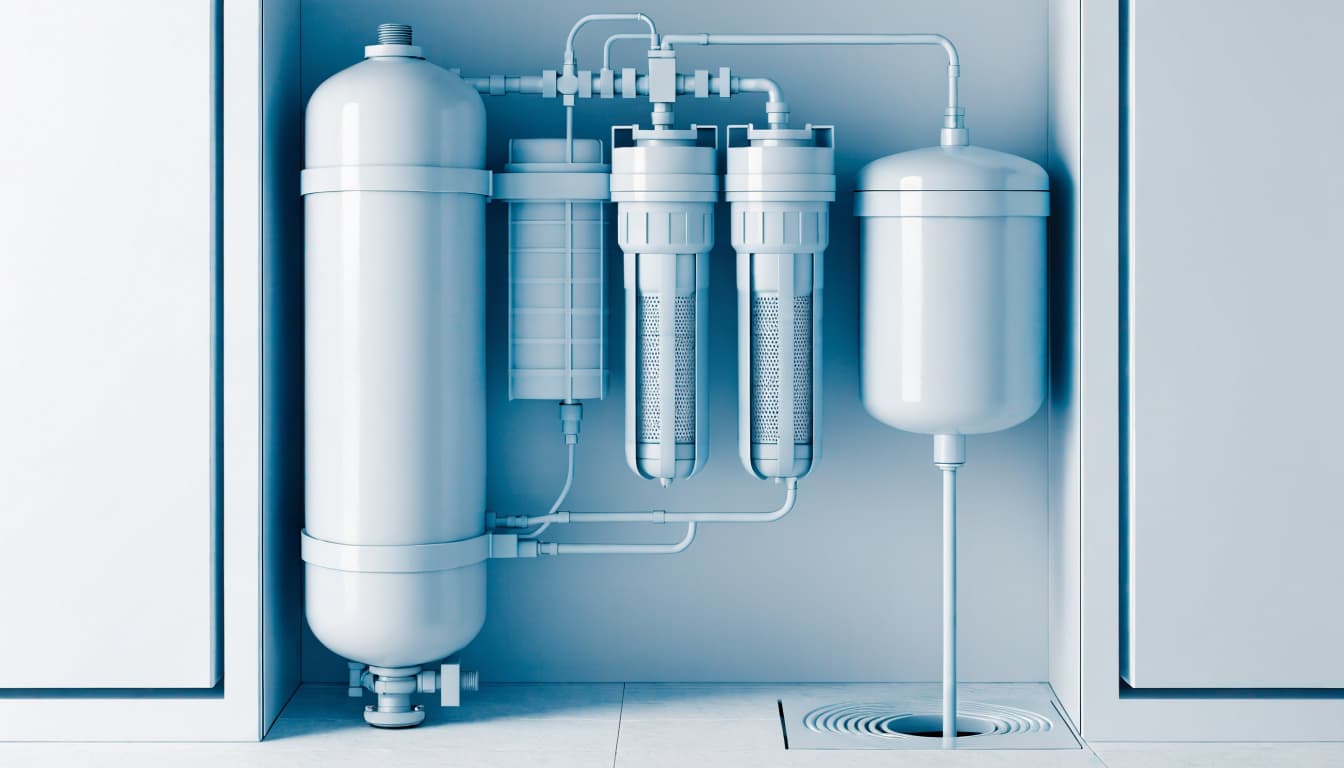
Reverse osmosis separates incoming water into treated water and concentrate. The concentrate carries rejected dissolved substances to the drain, so discharge during production is necessary.
Startup, flushing, and tank refilling
After installation, service, or a restart, an RO system may flush before settling into normal production. An empty storage tank also takes longer to refill than a partly depleted tank.
Meanwhile, household use can keep drawing down storage as the membrane replaces that water. Laundry, showers, and leaking toilets can extend the production cycle.
There isn't a universal acceptable runtime. Membrane capacity, tank volume, feed-water temperature, pressure, and demand all affect how long production lasts. Compare the behavior with the system's established operating pattern.
Regeneration may belong to another treatment stage
RO membranes don't regenerate like water-softener resin. However, a softener installed before the membrane may regenerate, and a backwashing filter may discharge water during cleaning.
These stages can share a nearby drain, making their discharge sound like continuous RO wastewater. A scheduled RO flush may add another discharge period.
Identify which piece of equipment is running before blaming the membrane. Drain flow during a programmed cleaning cycle differs from production that continues after storage reaches its stopping level.
Shutoff Valves and Controls Can Keep Production Going
The stopping mechanism depends on the installation. Some systems respond to pressure; others use tank-level sensors, electrical controls, and inlet valves.
A shutoff valve may fail to close
A worn or obstructed inlet valve can allow feed water through after the system should stop. On installations with a pressure-operated automatic shutoff, inadequate closing pressure can also prevent normal shutdown.
That means ongoing discharge doesn't prove the valve itself is defective. The problem could involve pressure, a check valve, or another component affecting the shutoff signal.
A technician can distinguish a valve receiving the wrong signal from a valve that receives the correct signal but still passes water.
Float switches and controllers may miss a full tank
Atmospheric storage tanks commonly use a float switch or level sensor to request production. A stuck float, damaged sensor, wiring fault, or controller problem may keep that request active.
A full tank combined with a controller that still indicates "production" deserves attention. Water entering an overflow is a stronger warning that the filling controls aren't working correctly.
Observe an accessible level indicator, but don't open electrical panels or move floats by hand. Changing a float position can defeat overflow protection or alter the operating levels.
Pressure and Tank Problems Can Extend Runtime
Whole-house installations may combine atmospheric storage, pressurized tanks, and delivery pumps. Those differences affect both troubleshooting and whole-house RO system maintenance.
Low pressure can slow membrane production
The membrane needs adequate operating pressure to produce treated water. Clogged pretreatment filters, a partly closed valve, restricted plumbing, or a struggling booster pump can reduce available pressure.
Also, a normal gauge reading while the system is idle doesn't show pressure during production. Pressure can fall once water starts moving.
Cooler feed water can reduce output, while higher dissolved-solids concentrations can increase pressure requirements. These conditions may lengthen refill cycles without identifying a failed component. Raising pressure settings without understanding the system can damage equipment.
Storage and household demand can prevent shutdown
A leaking toilet, irrigation connection, or other ongoing demand can keep the tank below its stopping level. Undersized storage or insufficient membrane output can also make production appear constant.
A bladder-style pressure tank adds other possibilities, including incorrect air charge or internal bladder damage. However, an atmospheric tank doesn't use the same air-charge arrangement.
Frequent starts from the delivery pump may point to a distribution-side problem rather than continuous membrane production. A standard well pressure tank also can't replace properly sized RO storage and repressurization equipment.
Membrane and Drain-Flow Problems Need Different Repairs
Slow treated-water production and excessive drain flow can occur together. Still, the cause may be outside the membrane itself.
Fouling can reduce useful water production
Scale, iron, sediment, and other deposits can reduce membrane output. As production falls, the system may run longer to replace the same amount of stored water.
Pretreatment matters because a new membrane can develop the same problem if incoming contaminants remain uncontrolled. Our guidance on protecting RO membranes from silica explains one source-water concern.
For homes using whole-house RO for arsenic removal, water-quality testing remains important alongside flow observations. Drain behavior alone can't establish contaminant-removal performance.
Flow controls can upset the operating balance
Depending on the design, concentrate flow may use a restrictor or an adjustable regulating valve. A damaged restrictor, incorrect replacement part, or wrong valve setting can alter drain flow and operating pressure.
A restriction can also reduce concentrate discharge, which may increase fouling risk. Therefore, less drain water doesn't automatically mean better operation.
Never pinch, cap, or partly close the drain line to reduce wastewater. Concentrate flow is part of the membrane's operating requirements.
Replacing parts or changing concentrate settings without measurements can create another problem instead of correcting the original one.
Safe Checks You Can Make Without Opening Equipment
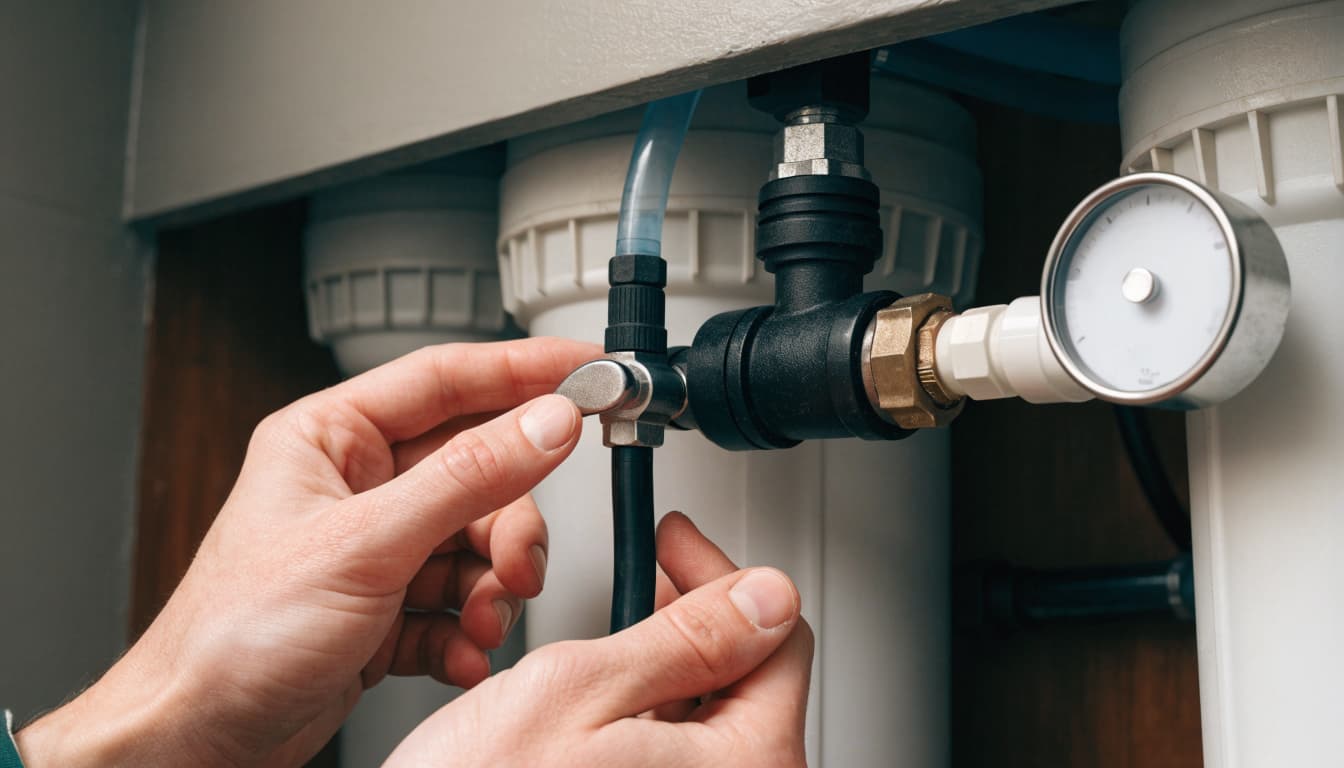
You can gather useful information through observation. Keep filter housings, tubing connections, tank fittings, and electrical covers closed.
- Stop ordinary household water use briefly. Look for running toilets, active appliances, or outdoor demand that could keep storage depleted.
- Read the controller display. Record whether it shows production, flushing, regeneration, standby, or an alarm.
- Observe an existing tank-level indicator. Note whether storage is rising, staying low, or already at its normal full level.
- Record accessible pressure and flow readings during production. Compare them with previous readings rather than changing settings.
- Inspect visible tubing and the drain area. Look for kinks, damp fittings, overflow, or a drain that can't accept the discharge.
Also, note whether the behavior began after a filter change, power interruption, or plumbing work. A photo of the display and gauge readings can help during service.
If you have an under-sink unit as well, keep its symptoms separate. Faucet gurgling may require RO air gap troubleshooting, which differs from diagnosing a whole-house storage or production fault.
When to Shut the System Off and Call for Service
Shut down the equipment if you see active flooding, a cracked housing, tank overflow, a pump running without water, or damaged wiring. Burning smells and repeated breaker trips also require prompt attention.
Use the system's designated shutdown procedure, including the identified feed-water isolation valve and pump controls. Don't close unidentified valves or leave a booster pump running against an interrupted supply. Stay away from wet electrical equipment.
Arrange professional service if production continues at a full tank, storage won't recover despite reduced demand, or drain behavior changes alongside pressure or water quality.
A qualified water-treatment professional can measure feed pressure, treated-water output, and concentrate flow. They can also test valve operation, tank controls, and pump performance before recommending repairs.
We install, repair, and maintain reverse osmosis systems, filters, and pumps throughout Naples and Southwest Florida. Observations from the checks above help us narrow the inspection without assuming which component has failed.
Frequently Asked Questions
Should a whole-house RO drain run when nobody uses water?
It can run while replacing water used earlier or completing an automatic flush. However, continuous production after storage reaches its stopping level deserves investigation. No current faucet use doesn't necessarily mean the tank is full.
Does constant drain flow mean the membrane needs replacement?
No. Low feed pressure, restricted pretreatment, leaking valves, ongoing demand, and faulty controls can produce similar symptoms. Membrane replacement should follow performance measurements and inspection. A drain sound alone isn't enough to identify the failed part.
Can I adjust the tank air pressure myself?
Avoid changing it as an initial troubleshooting step. Only certain tanks have an air charge, and meaningful testing requires proper isolation and depressurization. Adding air to the wrong tank or using the wrong setting can worsen cycling and water delivery.
Focus on Whether the System Finishes Its Cycle
Normal RO operation includes drain water, especially during refilling and flushing. The useful warning sign is a system that no longer reaches its expected stopping point .
Observe the tank level, controller status, and operating readings before replacing parts. If continuous discharge comes with overflow, leaks, poor production, or pump trouble, shut the equipment down safely and arrange professional service.
Latest posts
Read Our Blog
Tips, guides, industry best practices, and news.
Contact us
Get in touch
Our friendly team is ready to chat.
