
Manganese Well Water Removal for Florida Homes
Black or brown stains around sinks, toilets, and laundry fixtures can point to manganese in your well water. The right manganese well water removal system depends on the amount present, the water's pH, and other conditions that a staining problem alone can't reveal.
Florida wells may also contain iron, hydrogen sulfide, hardness minerals, sediment, or bacteria. Each one can change the treatment plan. A complete laboratory water test gives you a safer starting point than choosing equipment based on color or odor.
Key Takeaways
- Test the well water before selecting a manganese filter or whole-house system.
- Manganese can create dark stains, metallic taste, sediment, and plumbing problems.
- Oxidizing filters, chemical injection, softeners, and reverse osmosis each fit different conditions.
- pH, iron levels, flow rate, and manganese concentration determine system performance.
- Regular backwashing, filter changes, salt, or membrane care may be required.
How Manganese Well Water Removal Starts With Testing
Manganese is a naturally occurring mineral that can enter groundwater as water moves through soil and rock. In well water, it may appear as a dissolved substance or attach to sediment. The water can look clear at the tap and still leave dark deposits after exposure to air.
Staining often appears on white fixtures, inside toilet tanks, and on clothing. Some homeowners also notice a metallic taste. These are water-quality and plumbing concerns, but they don't tell you the manganese concentration or reveal every contaminant in the well.
A comprehensive test should check manganese along with:
- Iron
- pH
- Hardness
- Total dissolved solids
- Hydrogen sulfide
- Turbidity and sediment
- Nitrate
- Coliform bacteria
- Other contaminants recommended for private wells
The test should also identify whether manganese is dissolved or attached to particles. That distinction affects filter selection. A sediment filter may catch particles, but it won't remove dissolved manganese.
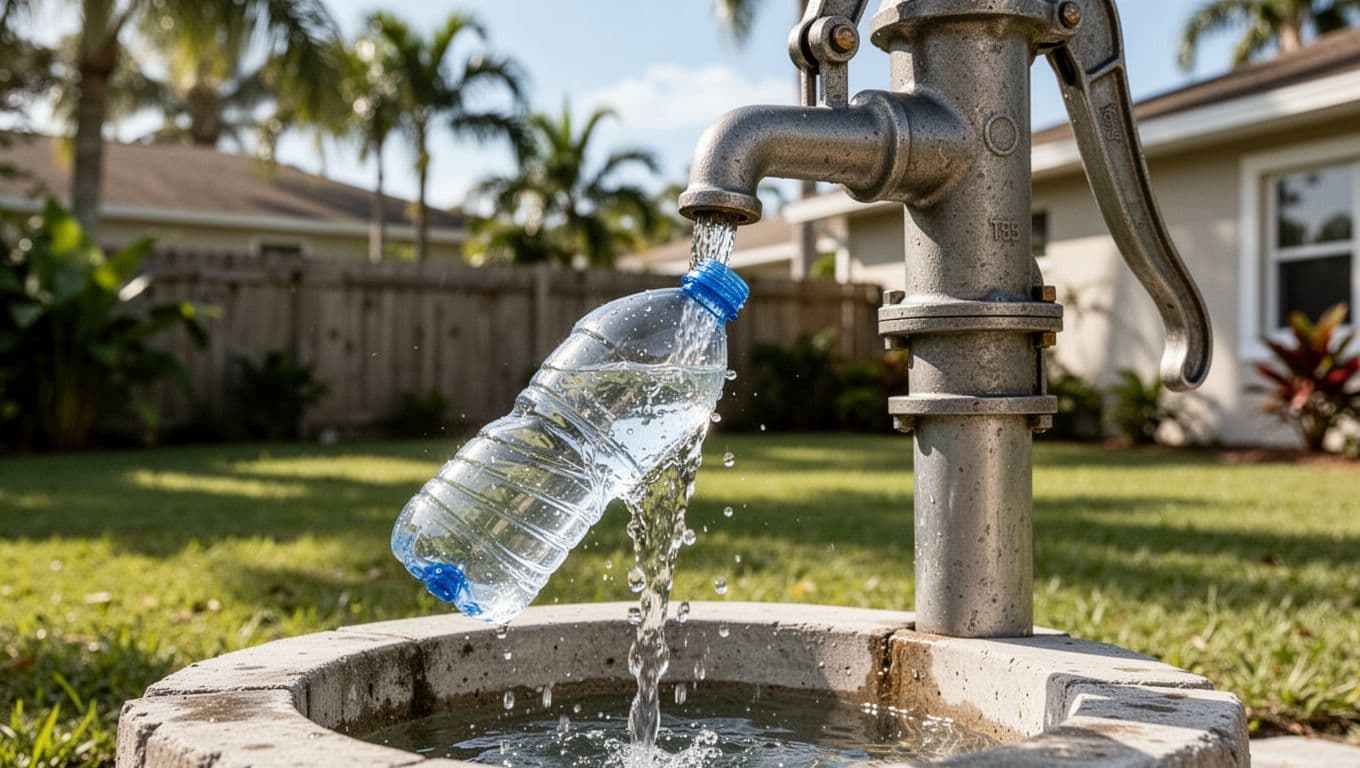
Testing the source water before installation helps prevent an undersized or mismatched system. It also gives a service professional the information needed to account for household water use, well flow, and available drain space.
Staining is a warning sign, not a treatment specification. The laboratory report should guide the equipment choice.
How Manganese Affects Florida Plumbing and Water Use
Manganese often causes visible problems before a homeowner notices other changes. When it oxidizes, it can form dark brown or black particles. Those particles may collect in aerators, valves, toilet tanks, water heaters, and appliance screens.
Laundry is another common frustration. Light-colored clothing can develop gray or brown marks, especially when manganese combines with detergent and heat. Regular cleaning may reduce deposits, but it won't stop new staining while the mineral remains in the supply.
Manganese can also affect taste and appearance. Health considerations depend on the concentration and the length of exposure, so homeowners shouldn't assume that clear water is automatically safe or that stained water proves a specific health risk. Private well owners should test their water and discuss concerning results with the Florida Department of Health or another qualified water professional.
Plumbing impacts deserve attention as well. Deposits can restrict small passages and increase maintenance for fixtures. If iron or hydrogen sulfide is present, the combined water chemistry may create stronger odors and more difficult staining.
A treatment system should address the full water profile. Removing manganese while ignoring high iron, low pH, or heavy sediment can lead to poor results and shorter equipment life.
Manganese Removal Methods Compared
Several treatment methods can remove manganese from residential well water. The best choice depends on the test results and the home's water demand.
| Removal method | Ideal conditions | Limitations | Maintenance |
|---|---|---|---|
| Oxidizing media filter | Dissolved manganese with suitable pH and enough contact time | May need pH adjustment or pre-treatment; requires backwashing | Backwash on schedule and replace media as needed |
| Air injection or aeration | Manganese combined with iron or odor problems that respond to oxidation | Performance depends on pH, contact time, and filtration afterward | Inspect air components and service the filter |
| Chemical oxidation and filtration | Higher concentrations or difficult water chemistry | Needs chemical storage, controls, and careful dosing | Refill chemicals, check pumps, and backwash |
| Water softener | Low manganese with hardness that also needs treatment | May foul or lose capacity with higher manganese or iron | Add salt and maintain resin and controls |
| Reverse osmosis | Drinking and cooking water at a point of use | Usually treats a limited number of taps and needs pre-treatment | Replace filters and membrane; manage storage and reject water |
| Cartridge filtration | Small amounts of particulate manganese or final polishing | Often cannot handle dissolved manganese or high flow | Replace cartridges before they clog |
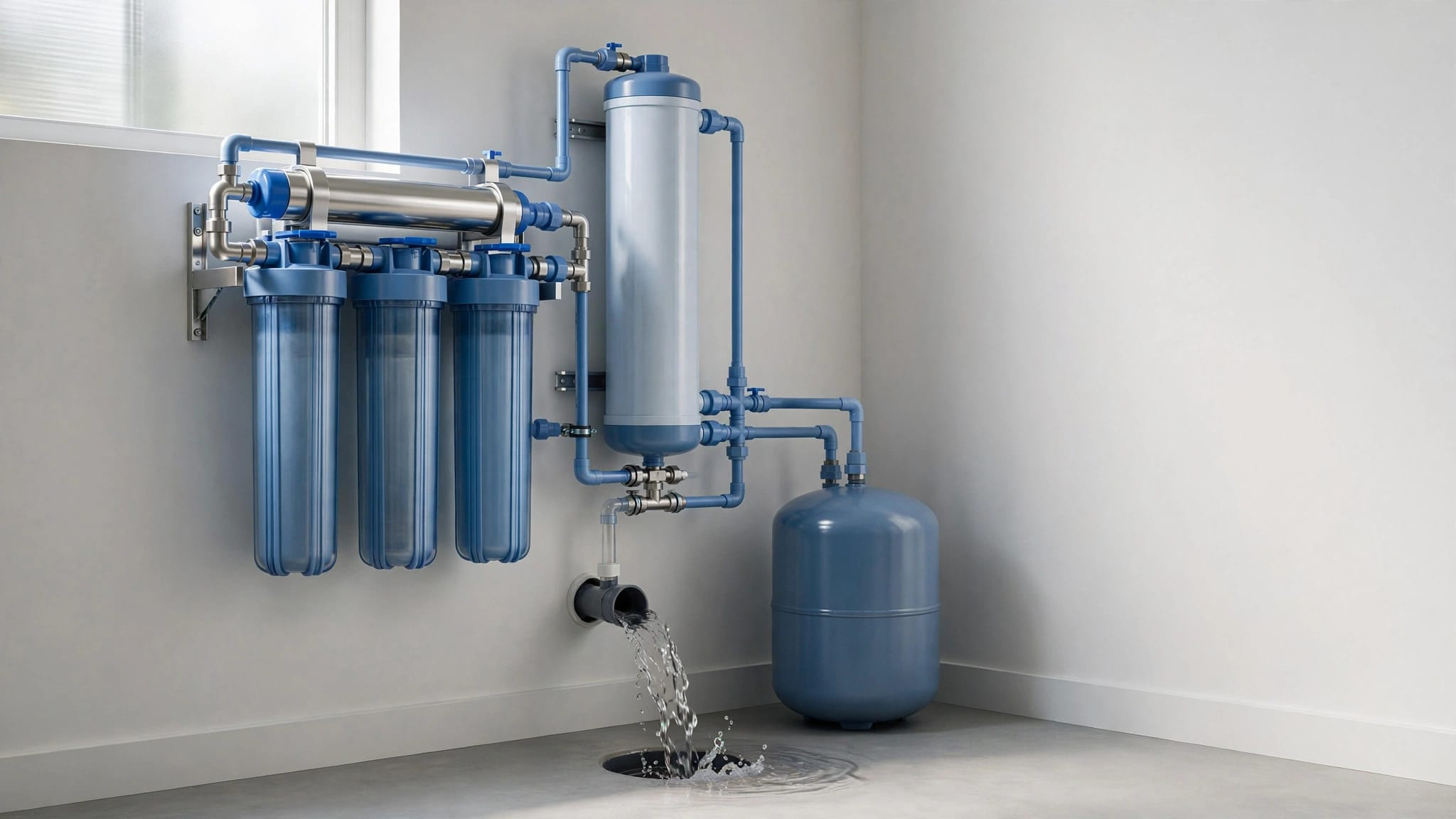
Oxidizing filters convert dissolved manganese into particles that the media can capture. These systems may use catalytic media, air, or another oxidizing process. The water's pH and oxidation conditions matter. A filter that works well on one Florida well may fail on another.
Chemical systems can handle challenging concentrations when properly designed. They add more equipment and service requirements, so dosing must match the water test and household flow.
A softener may help when manganese is low and the well also has hardness. However, manganese and iron can reduce resin performance. A water-treatment professional should confirm that the softener is suitable before using it as the main removal method.
Reverse osmosis is often a strong option for a kitchen drinking-water faucet. It isn't automatically the best whole-house answer because it needs pre-treatment, storage, drain planning, and regular filter care.
Choosing Between Whole-House and Point-of-Use Treatment
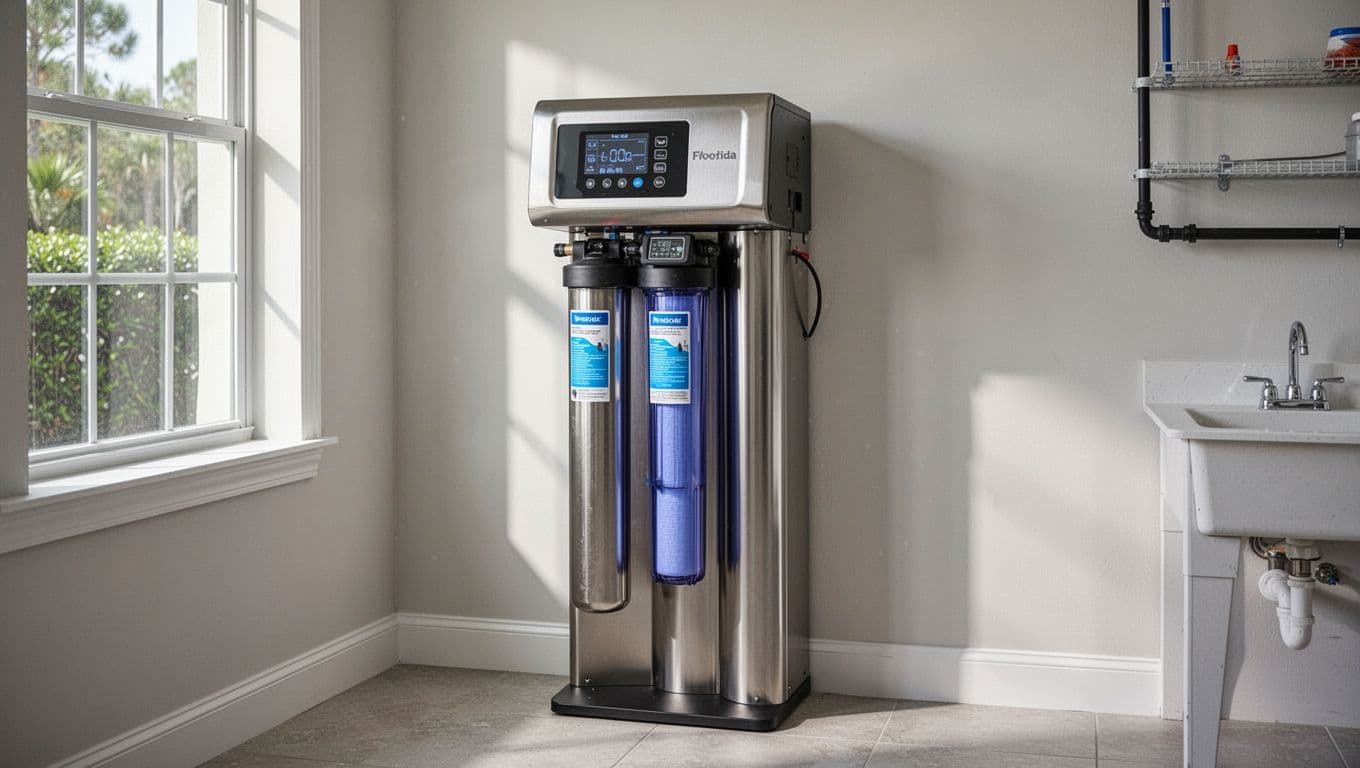
Whole-house treatment is appropriate when manganese affects bathing, laundry, fixtures, and every water outlet. The system connects near the main water entry point, so treated water reaches the house plumbing.
This approach can reduce staining throughout the home. It may also protect fixtures and appliances from ongoing deposits. The equipment needs enough flow capacity for showers, toilets, irrigation demands, and other simultaneous uses. A system that handles only a kitchen faucet won't perform well as whole-house equipment.
Point-of-use reverse osmosis treats water at one faucet, usually in the kitchen. It can provide treated water for drinking and cooking without treating every gallon used for laundry or bathing. However, untreated water still reaches the rest of the home.
Some homes need both approaches. For example, a whole-house oxidation filter may address manganese and iron, while reverse osmosis provides an additional treatment stage for drinking water. The right layout depends on the test results and the household's priorities.
Homeowners considering reverse osmosis should also account for pre-treatment. High sediment, hardness, iron, manganese, or other dissolved minerals can shorten membrane life. A whole-house reverse osmosis system sizing guide can help explain why water chemistry and daily demand affect system design.
Why pH and Iron Change the Treatment Plan
pH is one of the most important factors in manganese treatment. Many systems remove manganese more effectively when the water has a suitable pH for oxidation and filtration. If the pH is too low, the system may need a neutralizing or pH-adjustment stage.
Iron often appears with manganese in private wells. The two minerals can respond differently to treatment, even when they create similar stains. A filter designed for iron may not remove manganese reliably unless the media and operating conditions support both.
Hydrogen sulfide creates a rotten-egg odor and can also affect oxidation equipment. Sediment may clog valves or media beds. Hardness can cause scale and interfere with some treatment components.
Because these conditions interact, a professional should review the complete report rather than focus on one line item. The well pump's output, plumbing size, pressure tank, drain location, and available electrical service also affect installation.
The result should be a treatment train that matches the water. That might include sediment filtration, pH adjustment, oxidation, a softener, or reverse osmosis. Adding equipment without a clear reason increases cost and maintenance.
Maintenance After Manganese Treatment
Manganese removal systems work only when homeowners maintain them. Backwashing clears captured particles from filter media. If the system misses its backwash cycle, pressure can drop and performance can decline.
Maintenance varies by equipment type. Oxidizing filters may need periodic media service and control-valve checks. Chemical injection systems require chemical refills, pump inspections, and dose verification. Softener systems need salt, resin care, and occasional cleaning.
Reverse osmosis systems need filter replacements on a schedule based on water use and source conditions. The membrane may also require replacement when production slows or water quality changes. A service technician can test the treated water and confirm whether the system still meets its design goals.
Keep records of filter changes, salt use, service visits, and new water tests. Test again if the well pump changes, construction affects the property, flooding occurs, or staining returns after treatment.
A professional water conditioning service can inspect the existing setup, review the laboratory report, and match maintenance to the equipment installed.
Common Mistakes Florida Well Owners Should Avoid
Choosing a filter because it promises to remove "all contaminants" can lead to disappointment. No single device fits every well, and broad claims don't replace water analysis.
Another mistake is treating only the visible symptom. A cartridge may catch black particles while dissolved manganese continues through the plumbing. Likewise, a softener may reduce some minerals but struggle with a higher manganese load.
Skipping flow-rate calculations creates another problem. Treatment media needs enough contact time, but the house still needs adequate pressure and volume. A system designed without the well pump's capacity may cause pressure complaints or incomplete treatment.
Homeowners should also avoid placing sensitive equipment after heavy sediment without pre-filtration. Sediment can clog valves, restrict flow, and shorten the life of downstream filters.
Finally, don't assume the system is working because stains disappear temporarily. Confirm performance with follow-up water testing. The treated result matters more than the appearance of one fixture.
Conclusion
Manganese well water removal starts with a complete test, not a guess based on black stains. The report should guide decisions about oxidation, filtration, softening, reverse osmosis, pH adjustment, and pre-treatment.
Florida homeowners also need to consider well flow, household demand, plumbing protection, and maintenance. A properly matched system can address manganese while accounting for iron, hardness, sediment, odor, and other conditions found in the same well.
Clear water at the tap is useful, but verified water quality is the stronger measure. Test first, choose equipment for the actual chemistry, and maintain it according to the system's needs.
Latest posts
Read Our Blog
Tips, guides, industry best practices, and news.

Contact us
Get in touch
Our friendly team is ready to chat.