What Happens to a Whole-House RO System During a Power Outage

Trademark Water Systems • July 27, 2026

Share this article

When the lights go out, a whole-house reverse osmosis system usually stops making new purified water. During a whole-house RO power outage , the booster pump, well pump, or electronic controls may lose the power needed to move water through the membrane.

You may still have water for a short time if the system has a full storage tank and usable pressure. The amount depends on your tank size, plumbing layout, pump setup, and whether your home uses a private well. Understanding what stops first helps you protect the system and plan for the outage.

Key Takeaways

  • RO production normally stops when the booster pump, well pump, or control system loses power.
  • Existing storage and pressure may provide limited water after the outage begins.
  • A private well usually loses household water when its well pump cannot run.
  • Don't bypass safety controls or restart equipment against the manufacturer's instructions.
  • Check for normal pressure, leaks, and proper operation after power returns.

Whole-House RO Power Outage: What Stops First

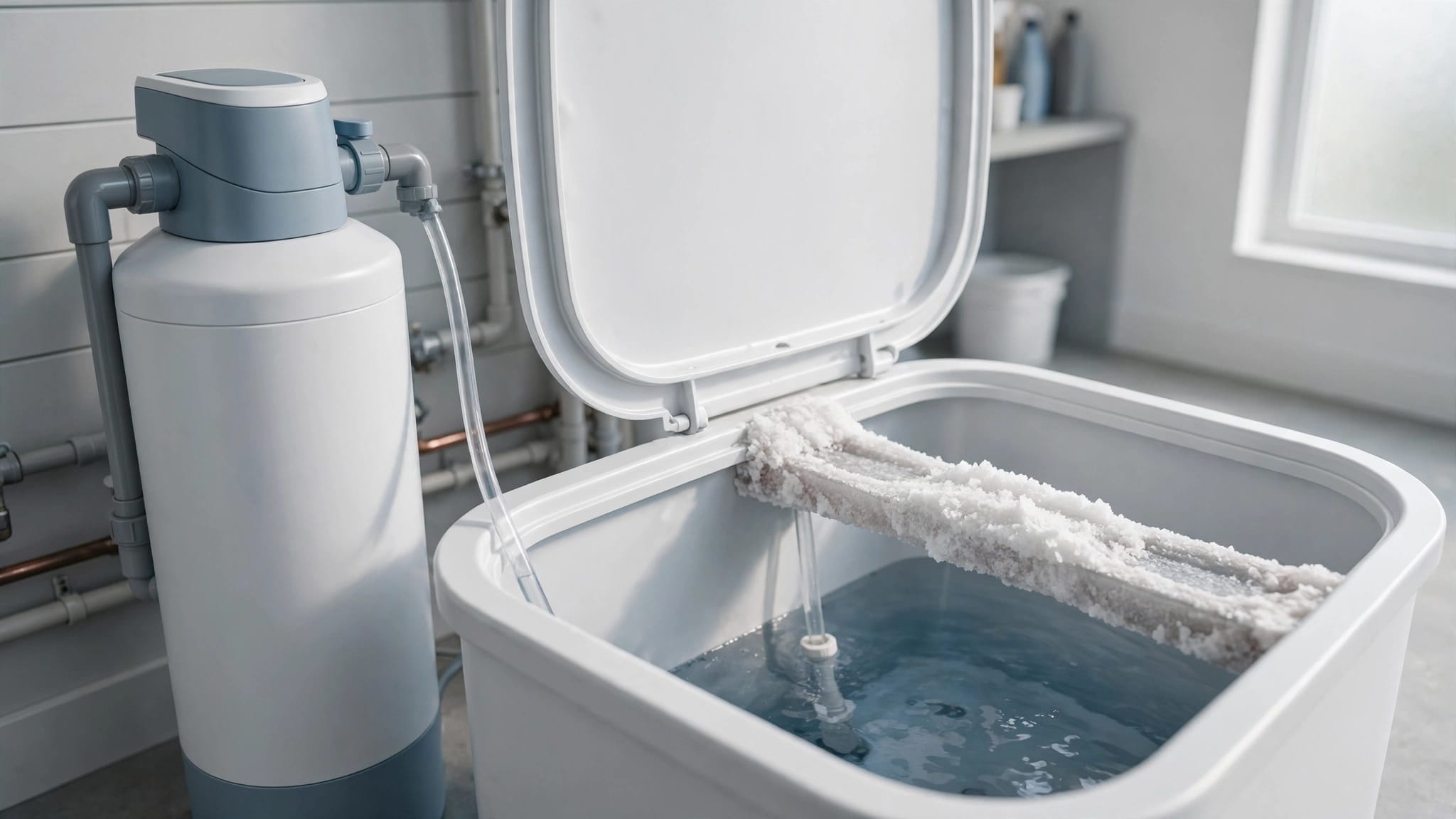
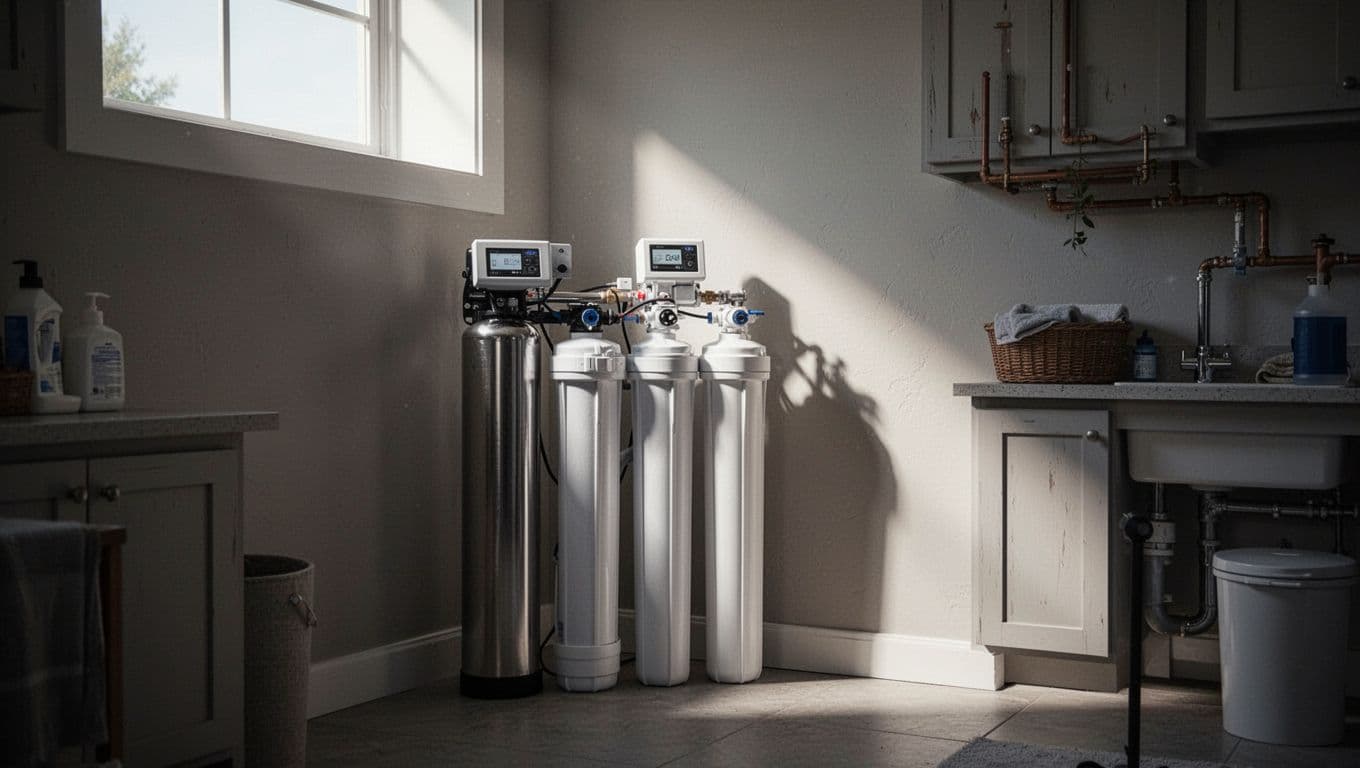
Reverse osmosis removes dissolved solids and other contaminants by pushing water through a semipermeable membrane. Most whole-house systems need more than incoming water pressure to complete that process. They may use a booster pump, electronic valves, pressure switches, storage tanks, and a repressurization pump.

When the power fails, the system's production cycle usually stops. The booster pump can't raise pressure, the control valve may not complete its programmed sequence, and the membrane produces no new treated water. If your home uses a private well, the well pump also stops. That can interrupt the home's entire water supply, not only the RO system.

Municipal water customers may have a different experience. City water can continue entering the home if the utility maintains pressure. However, a powered RO system may still stop producing water because its pump or controls are offline.

Existing water in the storage tank may remain available. A pressurized tank can supply some fixtures until its pressure falls below the level needed for useful flow. Other systems depend on a separate delivery pump, so the tank may contain water but still provide little or no water at the faucets.

Whole-house RO equipment varies by design. If you're comparing system layouts, this guide to whole-house reverse osmosis system size covers storage, pressure support, daily demand, and pretreatment.

How Long Will RO Water Last?

There isn't one outage duration that applies to every home. The available supply depends on the usable tank capacity, current tank level, pressure settings, and how many fixtures draw water at once.

A tank rated for a certain number of gallons won't always deliver that full amount. Part of its volume may remain unavailable as pressure drops. In addition, a whole-house system can use water faster than a drinking-water RO unit because showers, toilets, laundry, and other fixtures draw from the same supply.

Your water may last longer when everyone limits use. A few toilet flushes or a short handwashing session may be possible, while a shower or washing machine can consume a large portion of the remaining supply. With a well system, pressure in the home's plumbing may also fall as the pressure tank empties.

Home setup What you may notice during an outage
Municipal water with RO storage City pressure may remain, but RO production and treated-water delivery can stop
Private well with RO system Well pump, household supply, and RO production may stop
RO tank with pressure support Limited water may remain available until pressure falls
RO system without usable storage Little or no treated water may be available

The safest assumption is that stored RO water is limited . Save it for drinking, cooking, and essential hygiene until you know how long the outage will last.

What To Do During the Outage

Start by identifying what has lost power. If the whole house is without electricity, the RO system is probably offline. If only the water system has tripped a breaker, leave the equipment off until you can identify the cause.

Use this short preparedness checklist:

  1. Limit water use. Avoid laundry, long showers, irrigation, and other high-demand activities.
  2. Check the pressure gauge. A rapid drop can indicate an empty tank, a stopped pump, or a leak.
  3. Keep electrical parts dry. Don't touch controls, plugs, or breakers with wet hands.
  4. Don't bypass controls. Never force a valve open or connect a pump directly to power.
  5. Protect stored water. Keep tank water for essential household needs.
  6. Follow the system manufacturer's instructions. Shutoff procedures differ between models.

If you smell burning, see water near electrical components, or hear a pump repeatedly trying to start, turn off the equipment's circuit if it is safe to do so. Contact a qualified water-treatment technician or electrician rather than opening powered components.

A portable generator can support some equipment, but it must match the system's electrical requirements. Never operate a generator indoors, in a garage, or near doors and windows. Have a licensed professional evaluate permanent generator connections.

What Happens When Power Returns?

Power restoration doesn't always mean the RO system immediately delivers water. A well pump may need time to rebuild pressure. The RO controls may begin a startup, refill, or membrane-flushing cycle. Some systems also need the storage tank to refill before household pressure returns.

Wait for the manufacturer's recommended restart sequence. If the system has a dedicated shutoff, confirm its normal position before restoring power. Then check the area around the tank, filters, pump, drain connection, and tubing for leaks.

Listen for unusual sounds. A brief startup cycle may be normal, but constant cycling, loud vibration, no drain flow during production, or a pressure gauge that never rises can indicate a problem. Don't keep resetting a tripped breaker. Repeated trips may point to a failed pump, damaged wiring, or another electrical fault.

After a long outage, some homeowners choose to discard the first water produced and allow the system to complete its normal flush cycle. Only do this if the manufacturer recommends it. For model-specific procedures, professional water conditioning services can help inspect the pump, controls, filters, and membrane.

When to Call for RO Service

Call for service if the system doesn't produce water after power returns, the well pump won't recover pressure, or treated water has an unusual taste or odor. A technician can test inlet pressure, booster-pump operation, storage-tank pressure, electrical controls, and automatic shutoff functions.

Service is also appropriate when a power event causes a leak or a system repeatedly trips its breaker. These problems can worsen if the equipment keeps cycling without proper pressure.

Conclusion

A whole-house RO system generally stops producing water when a booster pump, well pump, or control system loses power. Existing storage and pressure may provide a limited supply, but that water can disappear quickly during normal household use.

During a whole-house RO power outage , conserve stored water, keep away from wet electrical components, and follow the manufacturer's restart instructions. Once power returns, check pressure, leaks, and system behavior before relying on the equipment again.

Latest posts

Read Our Blog

Tips, guides, industry best practices, and news.

By Trademark Water Systems July 26, 2026
A high total dissolved solids reading can turn a basic filtration project into a pressure, pretreatment, and wastewater problem. Whole-house RO design must account for more than the number on a handheld TDS meter, because dissolved minerals affect membrane performance and syst...
By Trademark Water Systems July 25, 2026
A reverse osmosis membrane can produce exceptionally clean water, but it usually can't make water as quickly as a busy home uses it. Whole house RO storage tanks solve that timing problem by storing treated water before the home needs it. The tank is only one part of the desig...
By Trademark Water Systems July 24, 2026
A positive coliform bacteria well water test can make every glass, meal, and shower feel uncertain. The result deserves prompt attention, but it doesn't automatically mean your water contains dangerous fecal bacteria. Total coliform and E. coli results mean different things. U...

Contact us

Get in touch

Our friendly team is ready to chat.

Black outlined envelope icon on a white background

Email

Our friendly team is here to help.

Black outline of a telephone handset icon on a white background

Phone

Office Hours: Mon-Fri from 8am to 5pm.

Black location pin icon with a circular center on a white background

Office

Locally owned and operated.