
Whole House Filter Housing Size: 10-Inch vs 20-Inch
Water pressure can drop quickly when a whole-house filter is too small for the home. The right whole house filter housing gives the cartridge enough room to collect sediment or treat water without restricting flow during normal use.
The choice between 10-inch and 20-inch models depends on more than the housing length. Household demand, cartridge media, micron rating, plumbing size, water quality, and available service space all affect the result. Start by understanding what each size changes, then match the housing to the home's actual water conditions.
Whole House Filter Housing: What the Size Means
The 10-inch and 20-inch labels usually refer to the nominal length of the cartridge that fits inside the housing. A 20-inch cartridge has roughly twice the length of a 10-inch cartridge in the same diameter format. That extra length can provide more media area and more space for collected sediment.
Housing diameter matters, too. A narrow 10-inch cartridge and a wide 10-inch cartridge don't have the same capacity or flow characteristics. Port size also affects the finished installation, so the length alone can't predict performance.
How a 10-inch housing works
A 10-inch housing is shorter and usually easier to fit in a cramped utility area. It can accept sediment, carbon, or specialty cartridges, depending on the model and the manufacturer's specifications.
Because the cartridge has less media area, it often reaches its service limit sooner than a comparable 20-inch cartridge. The difference becomes more noticeable when the home has several occupants, high water use, or sediment-heavy water.
What the 20-inch size adds
A 20-inch housing generally offers greater media capacity , which gives the cartridge more room to hold sediment or adsorb contaminants. With the same cartridge type and a comparable flow demand, that larger media bed often produces a lower pressure drop.
The added capacity can also support longer service intervals. However, the actual replacement schedule still depends on water quality, cartridge rating, household use, and the manufacturer's capacity information.
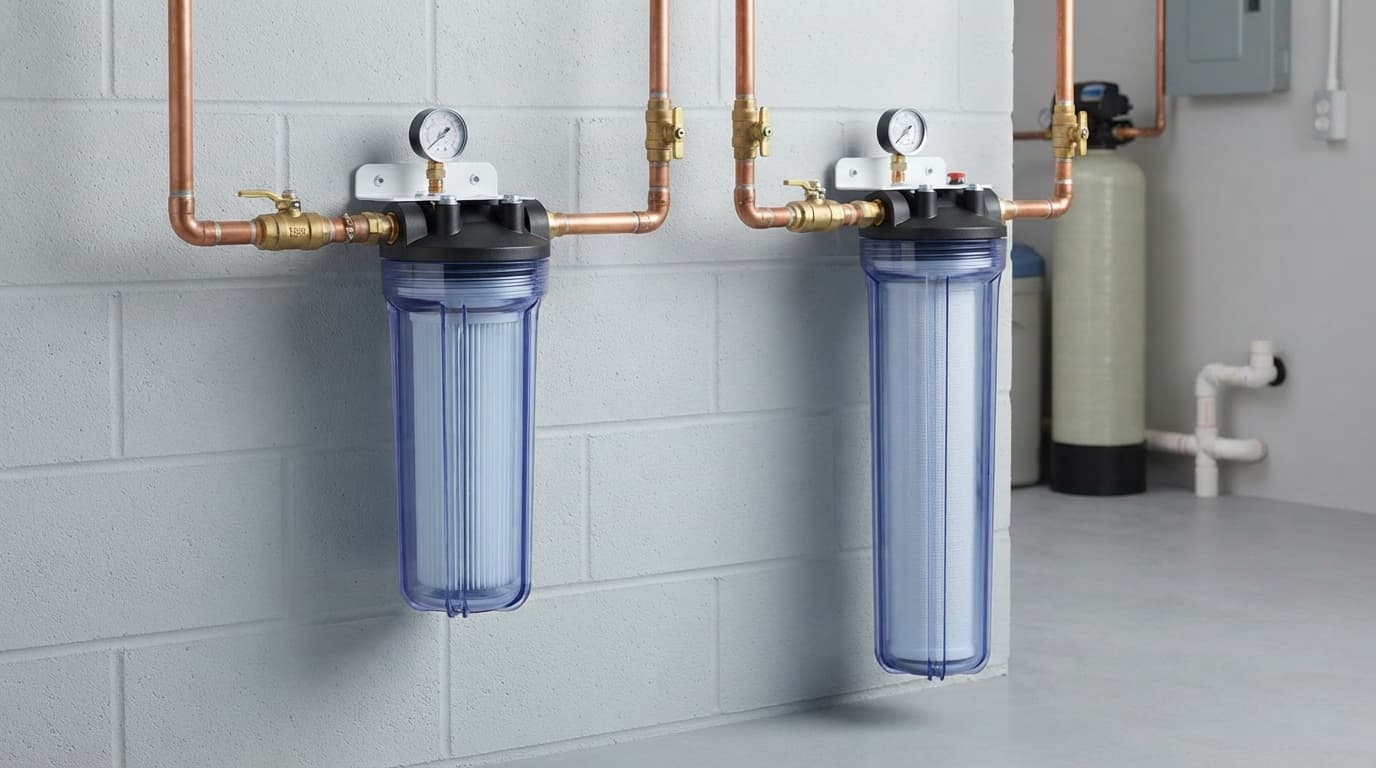
10-Inch vs 20-Inch: Quick Comparison
This table gives a practical starting point, but it doesn't replace the cartridge data for a specific system.
| Factor | 10-inch housing | 20-inch housing |
|---|---|---|
| Physical footprint | Shorter and easier to fit | Taller and needs more clearance |
| Media capacity | Lower in the same diameter | Generally greater |
| Service interval | Often shorter | Often longer |
| Pressure drop | More likely to rise at higher flow | Generally lower at the same flow |
| Best fit | Smaller homes or modest demand | Larger homes or heavier demand |
| Cartridge cost | Often lower per cartridge | May cost more, with longer use potential |
| Maintenance access | Usually simpler in tight spaces | Requires room below the housing |
A 10-inch model prioritizes compact installation. A 20-inch model prioritizes capacity and flow. Neither size automatically produces cleaner water because the cartridge determines what the system can remove.
Size the Housing for Peak Household Flow
A filter must handle the home's highest expected flow, not only the average flow at a single faucet. A household may use a shower while a toilet refills and a washing machine runs. The housing and cartridge should handle that demand without creating an uncomfortable pressure loss.
Match the filter to simultaneous use
Count the fixtures that may run together, then check the cartridge's rated flow and pressure-drop data. A large housing with a restrictive cartridge can still reduce pressure. Likewise, a small housing with a high-flow cartridge may work for light use but struggle during peak demand.
Plumbing size matters as well. A housing with small inlet and outlet ports can become a restriction even when the cartridge has plenty of media. Use fittings that match the existing pipe size where the manufacturer's design permits it, and avoid unnecessary reductions before or after the filter.
Private wells need another check. The well pump must deliver enough sustained water for the home and the treatment equipment. Review the home's well pump flow rate for water treatment before selecting a larger filter.
Account for the water source
City water and private-well water can create different filter-loading patterns. Well water may carry sand, rust, iron, manganese, or other material that loads a sediment cartridge quickly. Plumbing work or a disturbed well can also send a temporary surge of sediment into the filter.
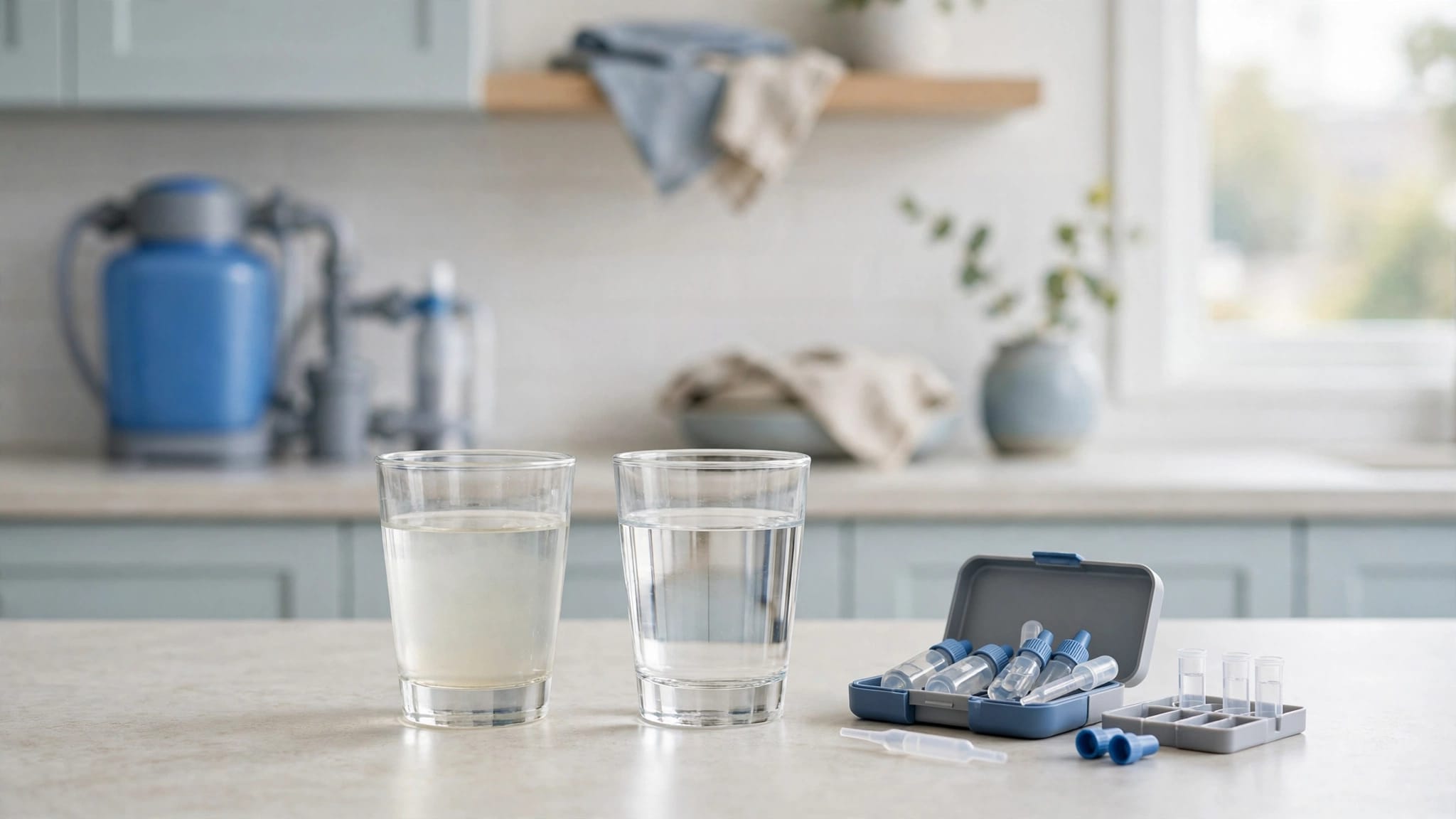
A current water test helps identify the treatment problem. Sediment filtration, carbon filtration, softening, iron treatment, and disinfection address different issues. A larger housing can extend cartridge life, but it can't make the wrong cartridge effective.
When a 10-Inch Housing Makes Sense
A 10-inch whole house filter housing is often a reasonable fit for a smaller home, guesthouse, apartment, or property with modest water demand. It can also work when the incoming water is relatively clean and the cartridge doesn't need to capture a large sediment load.
Choose compact equipment when demand is modest
A 10-inch unit may suit a home with one or two occupants, limited simultaneous fixture use, and enough water pressure to support the selected cartridge. It can also make sense when the main goal is basic sediment protection before a water softener or another treatment stage.
The lower height helps when the filter must fit beneath shelving or inside a narrow utility enclosure. Cartridge replacement is usually easier because the housing is lighter and needs less vertical room to remove.
Still, confirm the cartridge rating before buying. A small housing may look convenient, but frequent clogging can turn a lower purchase price into a maintenance problem.
Watch for signs that it is undersized
A 10-inch unit may be too small when pressure falls during showers, the cartridge discolors quickly, or the filter requires frequent replacement. A pressure gauge before and after the filter can help identify a loaded cartridge. A growing difference between the two readings points to increasing restriction.
Other warning signs include reduced flow at multiple fixtures and a filter that clogs soon after well service or plumbing repairs. Those problems may require better pretreatment, a different cartridge, or a larger housing.
Why a 20-Inch Housing Often Performs Better
A 20-inch whole house filter housing is usually the better starting point for a larger household or a home that needs higher flow. The longer cartridge provides more contact area for carbon and more surface area for sediment collection.
Greater capacity can lower maintenance
A 20-inch cartridge generally holds more contaminant before it becomes restrictive. That can mean longer service intervals when the cartridge, water conditions, and flow demand are properly matched.
The larger media bed can also reduce pressure drop compared with a shorter cartridge of the same type. That doesn't mean pressure loss disappears. A fine-micron cartridge, dense carbon block, undersized port, or heavy sediment load can still restrict flow.
Extra size comes with practical costs
The larger housing costs more to purchase and may require a stronger mounting bracket. It also needs more space above and below the sump. The sump must come down far enough for cartridge removal, so a tall installation under a low ceiling can be difficult to service.
A 20-inch unit is a poor choice if it barely fits. A filter that cannot be opened safely will eventually become a maintenance problem. Measure the available space before ordering, including the room needed for a wrench, bucket, and replacement cartridge.
Plan Installation Clearance Before You Buy
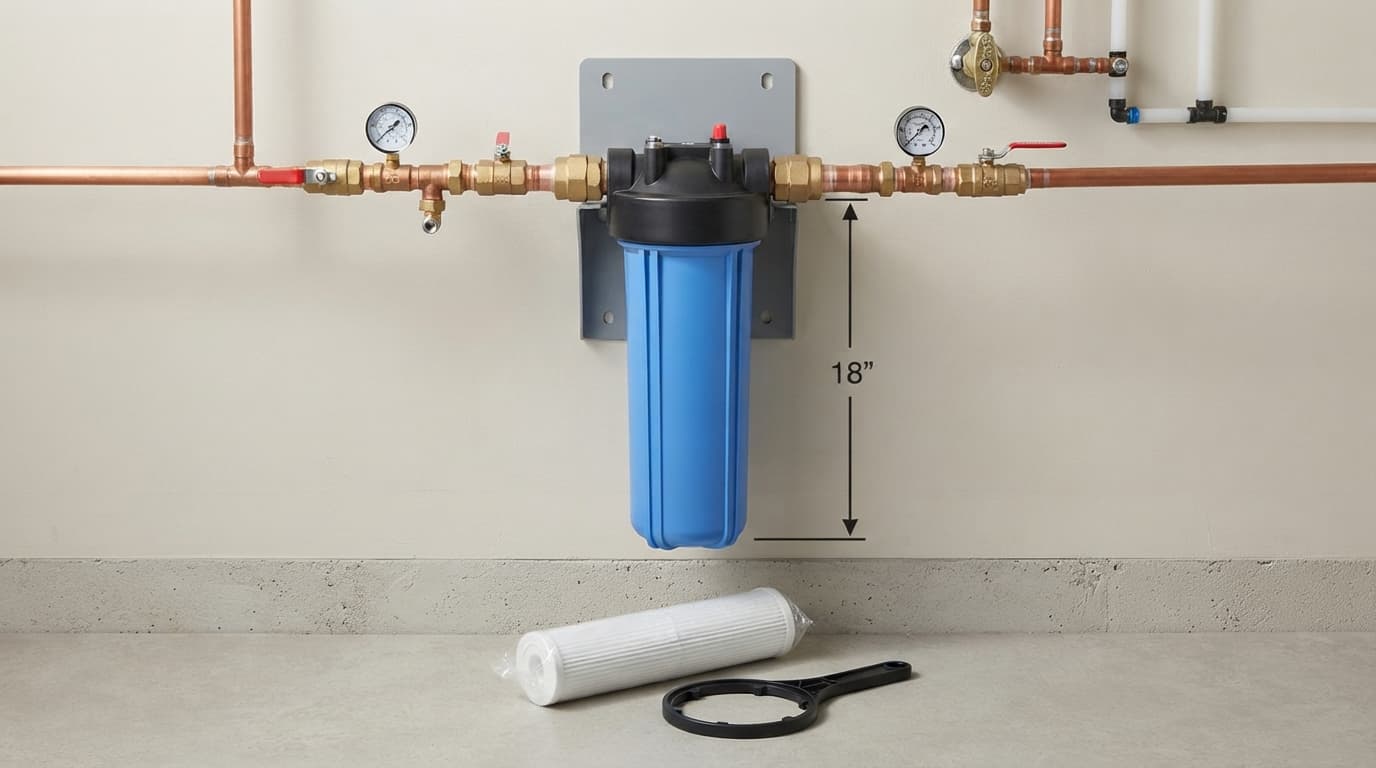
Good sizing includes the service area, not only the water demand. The filter should sit on a secure bracket and connect with shutoff valves that let you isolate the housing without shutting off water to the entire property.
Include valves and pressure relief
Install an inlet shutoff valve so water can stop before the housing. A valve on the outlet can make maintenance easier, especially when the filter sits near other treatment equipment. A bypass arrangement may help keep water available during service, but it must be installed correctly.
The housing should include or connect to a pressure-relief feature. Pressurized water can make the sump difficult to remove and can cause a sudden release when the housing opens. A pressure gauge before and after the filter also helps track restriction over time.
Leave enough room to reach the relief button, turn the valves, loosen the sump, and remove the cartridge. Keep electrical equipment and stored items away from possible leaks.
Replace cartridges safely
Before changing a filter, close the inlet valve and outlet valve if the system has both. Open a nearby faucet briefly to release downstream pressure, then press the housing's relief button according to the manufacturer's instructions.
Place a bucket beneath the sump before loosening it. Remove the used cartridge, clean the sump, and inspect the O-ring for flattening, cracks, or debris. Apply only the lubricant recommended for that seal, then install the new cartridge and tighten the housing with the supplied wrench or by hand as directed.
Open the water slowly after reassembly. Check every connection for leaks, and flush the new cartridge for the period listed by the manufacturer. Carbon cartridges often release initial fines, while some specialty cartridges have different flushing requirements.
Choose the Cartridge, Not Only the Housing
The housing size sets the available space, but the cartridge controls the treatment. A sediment cartridge catches particles. A carbon cartridge targets chlorine, taste, and odor. Specialty media may address a narrower contaminant, while a softener handles hardness through a different process.
Micron rating changes flow
A lower micron rating can capture smaller particles, but it may also create more resistance and load faster. A coarse prefilter may protect a finer cartridge downstream. Water with visible sand or rust often needs staged treatment rather than a single fine filter.
Don't assume a 20-inch housing can use any cartridge with the same nominal length. Check the cartridge's outside diameter, core design, end-cap style, temperature limits, chemical compatibility, and rated flow.
Use the right treatment for the problem
Standard sediment and carbon filters don't disinfect water. If a private-well test finds bacteria, the treatment plan may need disinfection equipment such as ultraviolet treatment, along with appropriate pretreatment.
Hardness also requires a softener or another scale-control method. A filter housing can protect equipment from particles, but it doesn't replace water conditioning. For a broader system plan, professional water conditioning services can help match equipment to the water test and plumbing layout.
A Clear Recommendation Framework
Use this decision process before choosing between the two sizes:
- Start with water testing. Identify sediment, chlorine, hardness, iron, manganese, bacteria, or other concerns before selecting media.
- Estimate peak flow. Consider fixtures that may operate at the same time, then compare that demand with the cartridge's published flow rating.
- Check the plumbing. Confirm inlet and outlet sizes, available pressure, well pump output, and any existing softener or treatment equipment.
- Measure service clearance. Account for housing height, bracket placement, sump removal, valve access, pressure relief, and leak control.
- Choose the smallest size that meets the data. Select 10 inches when demand and water quality support it. Choose 20 inches when greater media capacity, longer service intervals, or lower pressure drop justify the added space.
If the numbers are unclear, a larger housing isn't automatically the answer. A professional can check flow, pressure, water quality, and installation access together.
Conclusion
The 10-inch option fits smaller spaces and often handles modest household demand. The 20-inch option generally provides greater media capacity, longer service intervals, and lower pressure drop when the cartridge and plumbing are properly matched.
Choose based on peak flow, water quality, cartridge specifications, and maintenance access. A well-sized whole house filter housing should protect water quality without turning routine filter replacement into a difficult repair.
Latest posts
Read Our Blog
Tips, guides, industry best practices, and news.

Contact us
Get in touch
Our friendly team is ready to chat.