
Whole-House RO for Shared Wells: Sizing and Testing
A whole-house reverse osmosis system on a shared well must meet household demand without exceeding the well's sustainable supply. The design has to balance peak use , membrane production, recovery, storage, and the water chemistry entering treatment.
Your neighbors' showers, irrigation, and treatment equipment can affect the water available to your system, even when each home has separate filtration. Start with the shared supply and laboratory results before choosing equipment.
Key Takeaways
- Size around daily consumption and simultaneous fixture use, rather than square footage.
- Include RO feed water, neighboring demand, and pretreatment backwashing when assessing the shared well.
- Use source-water testing to select treatment, then test finished water to measure performance.
How Shared Use Changes the Calculation
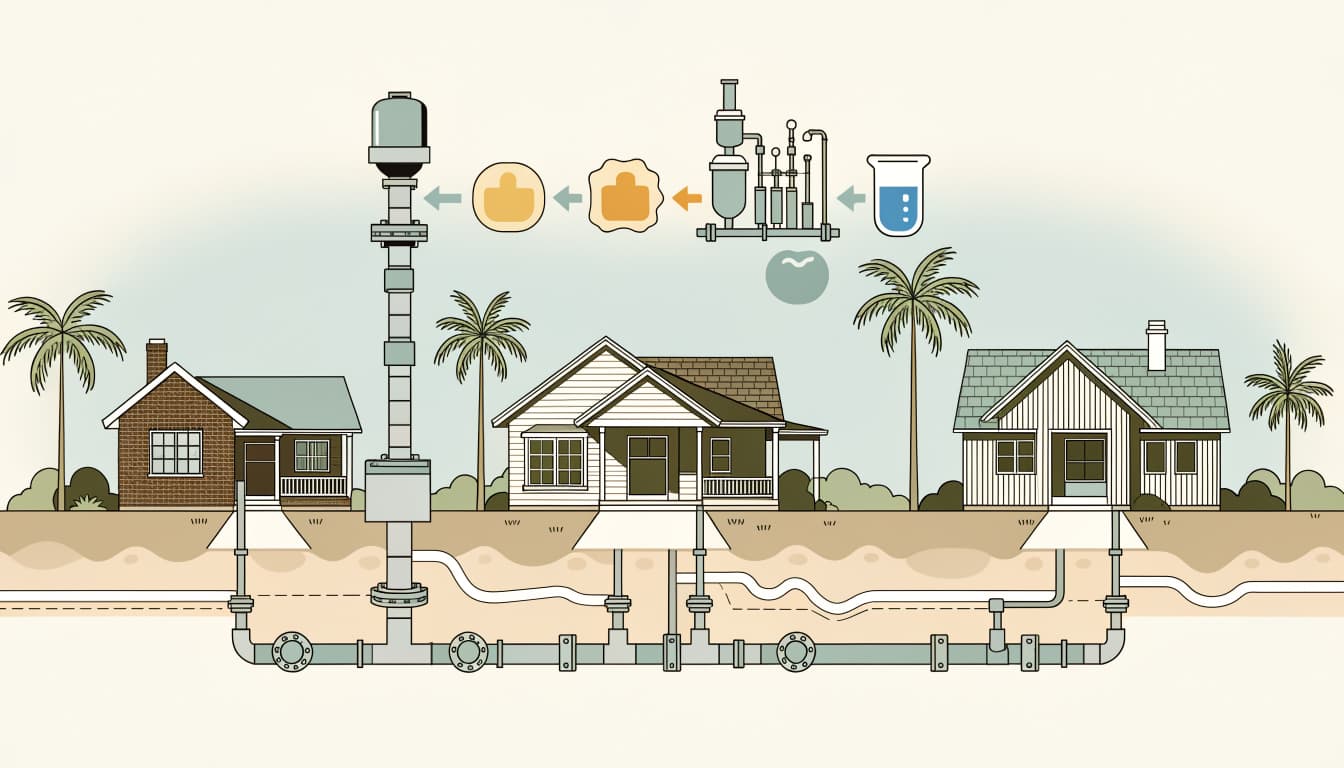
Separate household needs from shared supply
First, establish whether one central RO installation will serve every home or individual systems will draw from the same untreated supply. Central treatment must cover the community's combined demand. Individual systems still compete for well water whenever they operate together.
Each household's requirements depend on occupancy, fixtures, appliances, and usage patterns. Seasonal guests and rental occupancy also affect demand. Irrigation and pool filling need separate accounting, even when those uses bypass RO.
Keep three measurements distinct: household consumption, treatment-system feed requirements, and the well's sustainable yield.
Coordinate operation and responsibility
Neighbors should agree on equipment access, electricity costs, maintenance responsibilities, and procedures for low-water conditions. A central installation also needs clear responsibility for sampling, alarms, and service interruptions.
Scheduling backwashing, regeneration, or tank refilling outside busy periods can reduce overlapping demand. However, scheduling can't compensate for a well that cannot supply the total daily requirement.
Our water treatment survey guide covers the site information behind equipment planning, including plumbing, pressure, drainage, and available space.
Water Testing Sets the Treatment Plan
Test the source and identify treatment targets
Use a certified laboratory to assess untreated well water before selecting equipment. Testing should address both drinking-water concerns and conditions that affect treatment performance.
A useful assessment includes total coliform bacteria and E. coli, nitrate, pH, hardness, alkalinity, total dissolved solids (TDS), iron, and manganese. Chloride, sulfate, silica, and other locally relevant contaminants can add important design information. Nearby land use or a previous contamination finding may justify additional testing.
Sample before existing treatment to establish the source-water baseline. Where individual homes have different plumbing or treatment, additional samples can help separate shared-source problems from household problems.
Read beyond the TDS number
TDS measures the overall dissolved load, but it doesn't identify the individual substances present. Similar TDS readings can conceal different nitrate, chloride, hardness, or sulfate concentrations.
The laboratory report helps establish the desired finished-water quality and whether whole-house treatment fits that goal. A concern limited to drinking and cooking water may call for a different approach than a problem affecting fixtures throughout the property.
Mineral combinations also matter. Our guide to RO for high-sulfate water explains why sulfate, hardness, silica, iron, and alkalinity belong in the design discussion.
Whole-House Reverse Osmosis Capacity Has Separate Jobs
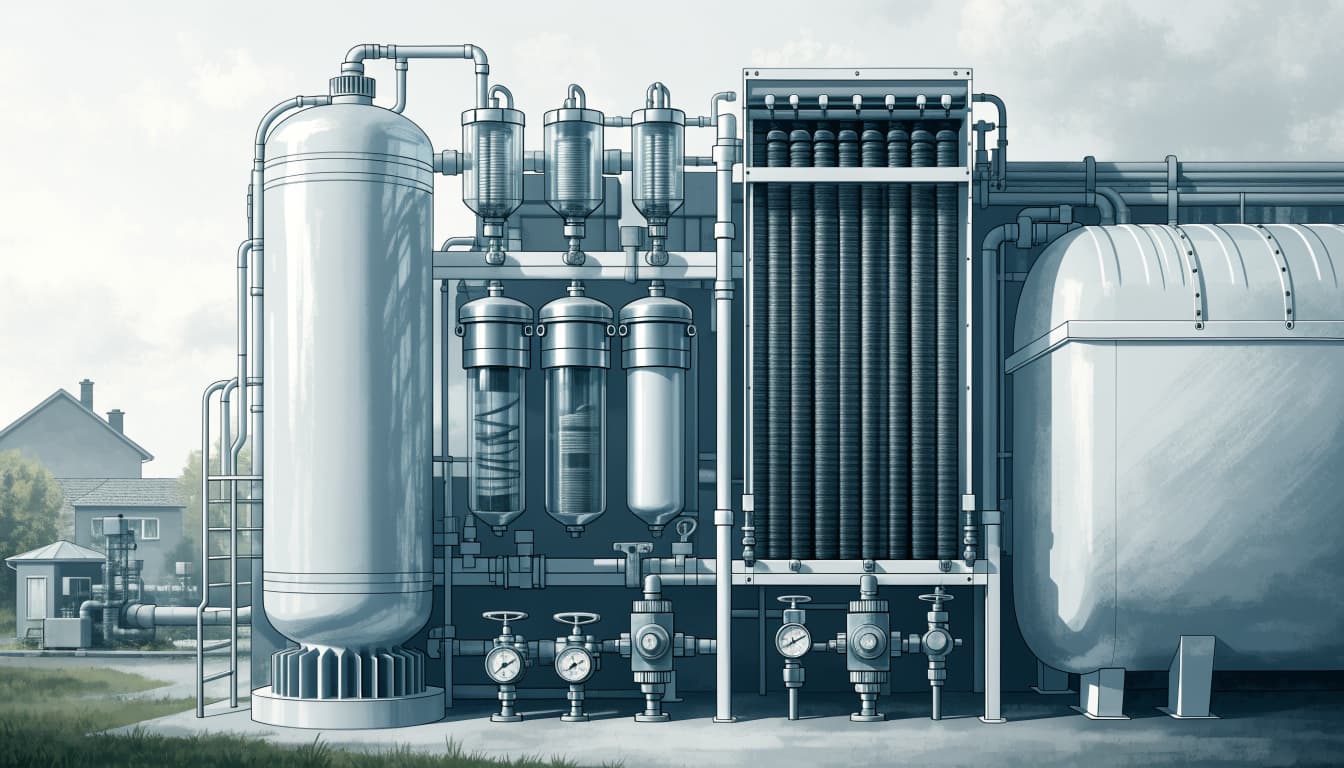
Match production to daily demand
Membrane production is the amount of treated water the RO equipment can make over time. Household demand is the amount residents actually use. Those numbers must balance over the available operating period.
Published production ratings reflect defined operating conditions. Feed pressure, temperature, dissolved-solids concentration, and membrane condition affect actual output. Therefore, equipment selection needs a production estimate based on the well's chemistry and operating conditions.
At Trademark Water Systems, we offer custom-built RO systems for well-water users in Naples and Southwest Florida. Capacity selection includes the supporting equipment, not just the membrane.
Use storage to meet simultaneous demand
Showers and appliances can draw water faster than membranes produce it. Storage supplies that temporary difference, while a repressurization pump delivers water through the plumbing.
Tank sizing should account for the busiest usage period, ongoing RO production, refill time, and an operating reserve. Usable storage matters more than the tank's nominal volume because controls and pump protection limit how much water can be withdrawn.
Our whole-house RO storage tank sizing guide explains that relationship. The delivery pump must also support simultaneous fixtures at the required pressure. A larger pump cannot replace missing water or inadequate storage.
Recovery Links Well Demand With Reject Water
RO separates incoming feed water into treated water, called permeate, and a more concentrated reject stream. Recovery describes the share of feed water that becomes permeate.
For sizing, divide the required treated-water volume by the recovery fraction to calculate RO feed demand. The difference between feed and product water becomes concentrate, before allowing for flushing or other equipment use.
That feed requirement belongs in the shared-well calculation alongside neighboring consumption, irrigation, filter backwashing, and softener regeneration. Well yield describes sustainable source supply; it differs from RO recovery and from the pump's delivery capacity.
Raising RO recovery reduces concentrate volume, but it also concentrates scale-forming minerals more strongly inside the equipment.
A qualified well professional can assess sustained yield and drawdown. Membrane selection and recovery settings must then fit both that supply and the water chemistry.
Reject-water planning must address discharge flow while RO operates, total discharge volume, and concentrate chemistry. A drain that handles an occasional trickle may not handle sustained operation. Septic disposal or landscape reuse isn't an automatic solution, especially when the concentrate contains elevated salts or contaminants. The installation needs a lawful disposal route, adequate drainage capacity, and protection against backflow.
Pretreatment Protects Output and Membrane Life
Remove particles and control fouling
Sediment can clog cartridges and restrict feed flow. Iron and manganese can foul treatment equipment, while hydrogen sulfide and biological growth may require additional treatment.
The laboratory results determine which stages belong ahead of RO. Adding filters without identifying the problem can increase pressure loss while leaving the main concern untreated.
Pretreatment also consumes water. Backwashing filters need sufficient flow to clean their media, and a shared well must support that demand without starving neighboring homes. Treatment capacity and backwash requirements need to fit the same supply.
Manage scale, disinfectants, and bacteria
Hardness can create membrane scale, particularly as minerals become more concentrated in the reject stream. Depending on the chemistry, softening or professionally selected scale control may be appropriate.
Many thin-film composite membranes are sensitive to chlorine. If the shared supply uses chlorination, the design must protect the membrane while maintaining an appropriate disinfection strategy.
Bacterial contamination requires source investigation and suitable disinfection. Ordinary RO equipment shouldn't be the only microbiological safeguard.
Our guide to pretreatment for high-chloride well water connects source chemistry, pressure, membrane protection, and concentrate planning. Poor pretreatment can make adequate equipment appear undersized because fouling reduces production.
Test Finished Water Under Real Operating Conditions
After startup and the required flushing and sanitizing, sample treated water for the contaminants that prompted installation. Use comparable laboratory methods so the results show whether treatment reached its intended targets.
Testing at the membrane outlet measures one part of performance. Samples after storage and at household taps also assess water after it passes through tanks and distribution plumbing. Central systems need a sampling plan that accounts for the homes they serve.
Conductivity or TDS monitoring can reveal changes in membrane performance. However, a low TDS reading doesn't establish microbiological safety or prove that a particular health-related contaminant reached its target.
Keep the source report, startup results, production records, pressure readings, and maintenance history together. Investigate declining output alongside water quality, rather than assuming the membrane needs replacement.
Retesting is also appropriate after flooding, well repairs, unexplained changes, or extended inactivity. Seasonal homes need a stagnation-management plan, which may include flushing and sanitizing before regular use resumes. Periodic testing should continue to address the original treatment goals.
Shared-Well RO Questions
Does every home need whole-house RO?
No. The decision depends on each home's treatment goals and the shared source-water results. Central pretreatment with household drinking-water treatment can be appropriate in some arrangements, while other properties need treatment at every fixture.
Our comparison of whole-house and under-sink nitrate treatment explains why the intended water use matters. A shared well doesn't automatically require identical equipment in every house.
Can a larger tank solve a low-yield well?
Storage can bridge short periods when demand exceeds production, provided the system has enough time and source water to refill afterward.
It cannot correct a continuing daily shortage. If neighboring consumption and treatment feed requirements exceed sustainable well supply, increasing storage only delays depletion. The solution must address demand, operating schedules, treatment recovery where chemistry permits, or the available water supply.
Build Around the Well and the Busiest Hour
The right shared-well RO design balances sustainable supply, membrane production, and the water residents need during peak use. Storage connects steady production with short bursts of demand, while pretreatment and drainage keep the system operating properly.
Start with source-water results and measured demand . Then size the membrane, tanks, pumps, controls, and reject-water handling together. Finished-water testing completes the process by showing whether the installation delivers the treatment it was designed to provide.
Latest posts
Read Our Blog
Tips, guides, industry best practices, and news.

Contact us
Get in touch
Our friendly team is ready to chat.