
Whole-House Reverse Osmosis vs Deionization in Florida
Florida water can leave white scale on fixtures, add a metallic taste, or carry sulfur odors from a private well. When comparing whole house reverse osmosis vs deionization, the right choice depends on what your water test finds and how much water your household uses.
Reverse osmosis and deionization treat water in different ways. RO uses pressure and a membrane, while DI uses ion-exchange resin. One can support a whole-home drinking-water system, while the other is usually better suited to specialty applications or final polishing.
Florida water conditions affect the right system
Florida's limestone aquifers often produce hard water with calcium and magnesium. Municipal water can also contain disinfectant residuals, while private wells may have iron, sulfur, sediment, or elevated total dissolved solids (TDS).
Clear water isn't necessarily problem-free. Hardness can create scale inside plumbing and water heaters. Iron may stain sinks and laundry. Sulfur compounds can produce a rotten-egg odor. A well can also show bacteria, nitrate, chloride, or other concerns that require testing and treatment beyond a standard filter.
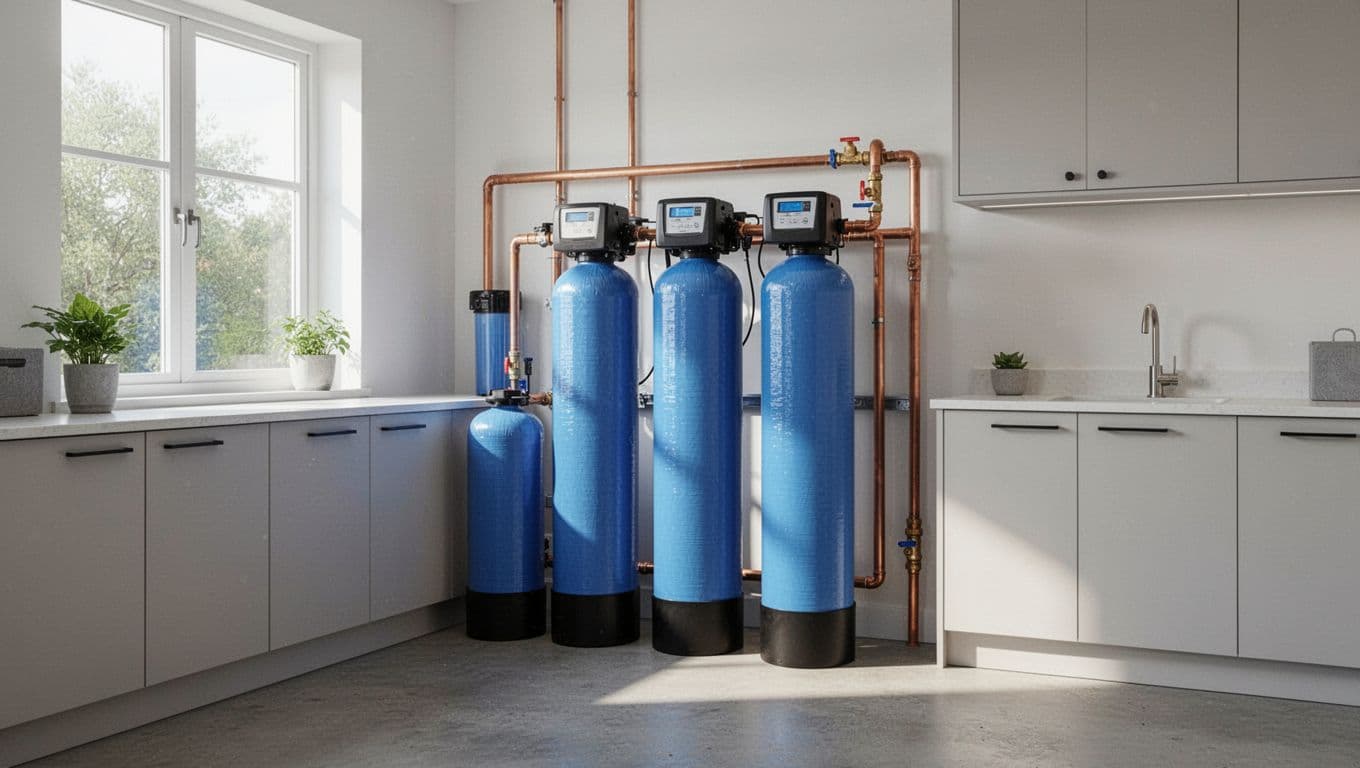
A whole-house RO system may reduce many dissolved substances, but it doesn't automatically solve every water problem. Sediment, chlorine, hardness, iron, and biological concerns can affect membrane life and finished-water quality.
A softener may be the better first step when hardness is the main issue. Homeowners comparing these options can also review the differences between well water softeners and whole-home RO systems, since the two systems handle different problems.
Whole house reverse osmosis vs deionization: What actually changes
Reverse osmosis and deionization are both capable of lowering dissolved mineral content, but their treatment methods and practical uses differ.
RO sends pressurized water across a semipermeable membrane. The membrane allows some water molecules through while reducing many dissolved salts, metals, and other contaminants. The exact reduction depends on the membrane, pressure, temperature, feedwater chemistry, and maintenance.
DI water passes through resin that exchanges positively and negatively charged ions. The resin captures minerals such as calcium, magnesium, sodium, chloride, sulfate, and other charged substances. Once the resin reaches capacity, it must be regenerated or replaced.
| Feature | Whole-home RO | Deionization |
|---|---|---|
| Main process | Pressure-driven membrane filtration | Ion-exchange resin |
| Primary result | Reduced TDS and many dissolved contaminants | Very low ionic content while resin remains active |
| Water production | Creates treated water and concentrate | Produces treated water without an RO membrane |
| Main design needs | Pretreatment, pressure, storage, and flow planning | Resin capacity, monitoring, and frequent service at high demand |
| Typical use | Potable water treatment when testing supports it | Specialty water or polishing after other treatment |
RO doesn't remove every contaminant, and DI doesn't remove every type of contaminant. Neither method is a complete disinfection system. If a private well has bacteria, the treatment plan may require disinfection, such as ultraviolet treatment or another method selected for the test results.
The whole house reverse osmosis vs deionization decision should therefore focus on water chemistry and household use, rather than the lowest reported TDS number.
Why DI usually isn't a whole-home drinking-water solution
Deionization can produce water with extremely low conductivity, which makes it useful for laboratories, manufacturing, equipment rinsing, and other applications that need minimal mineral content. It can also polish water after RO has already removed much of the dissolved load.
For a home, however, DI resin can become expensive and inconvenient when every shower, toilet flush, load of laundry, and kitchen use passes through it. Resin consumption rises with both water volume and the amount of dissolved ionic material in the source water. A private well with high TDS can exhaust resin much faster than a lower-TDS supply.
A DI system also has a narrower treatment scope. It targets ions, but it doesn't act as a sediment filter, carbon filter, broad organic contaminant filter, or pathogen treatment. Water can leave a DI tank with very low mineral content while still requiring other treatment steps.
A DI unit is generally not a standalone whole-home drinking-water solution. Low-mineral water isn't automatically unsafe, but the system must provide appropriate treatment for the full range of contaminants found in the source water. Deionized water also has little buffering capacity and can interact with plumbing materials, so system design matters.
For most homes, DI makes more sense as a post-treatment stage for a specific purpose. Whole-home RO or point-of-use RO is usually more practical when the goal is better-tasting drinking water and reduced dissolved contaminants.
Pretreatment protects a whole-house RO system
RO performance depends heavily on the water entering the membrane. A professional installer may recommend one or more pretreatment stages after reviewing the water test.
Sediment filtration and carbon treatment
A sediment filter catches sand, rust particles, silt, and other suspended material. This protection matters for private wells and older plumbing systems. Without it, particulate matter can clog valves, foul filters, and reduce flow.
Carbon filtration can reduce chlorine and some taste- and odor-causing compounds. Many RO membranes use thin-film composite materials that chlorine can damage, so carbon pretreatment may be required for chlorinated municipal water. The correct carbon media and contact time depend on the disinfectant and water conditions.
Softening, iron removal, and sulfur treatment
Hardness can form scale on an RO membrane. A water softener may reduce the calcium and magnesium load before the membrane, although it doesn't remove TDS as a whole. An antiscalant program may fit another design.
Iron and manganese can stain fixtures and foul equipment. Sulfur can create odors and may require oxidation, filtration, or specialized media. The treatment choice depends on the concentration, chemical form, pH, and other water characteristics.
A softener, iron filter, sulfur system, and RO unit don't perform the same job. Combining them without testing can add cost without solving the actual problem.
Test the water before choosing equipment
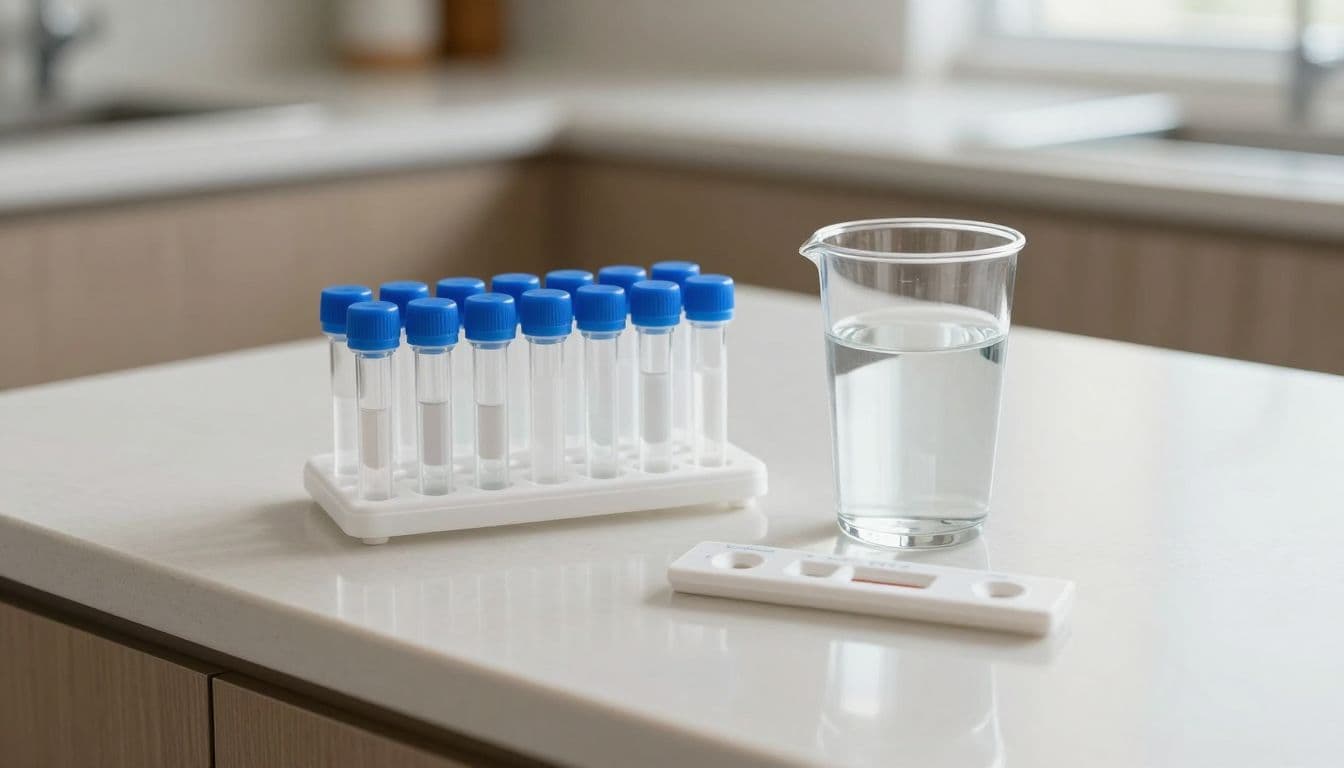
A useful water test may include TDS, hardness, pH, iron, manganese, sulfur-related compounds, chloride, nitrate, and bacteria when a private well is involved. Municipal customers should review the local water quality report, then test at the home if taste, staining, or plumbing concerns continue.
The test should also account for the intended treatment location. Water for the entire home has different flow demands than water supplied to one kitchen faucet.
High TDS changes membrane selection, recovery, concentrate handling, and storage needs. Review how high TDS affects whole-house RO design before selecting equipment based on a basic TDS reading alone.
Sizing, installation, and maintenance matter
A whole-home RO system must supply enough treated water during peak demand. The design may include a storage tank, booster pump, controls, prefilters, post-treatment, and a drain connection for concentrate. Available space in a garage or utility room also affects the installation.
RO systems don't produce water instantly at the same rate a municipal line delivers it. Storage helps meet short periods of heavy use, such as morning showers or several appliances running at once. Recovery and concentrate ratios vary by system and source-water conditions, so installers should explain how much water the system will produce and how it will manage concentrate.
DI sizing centers on resin capacity and flow. A small polishing cartridge may work for a drinking-water application, but high whole-home demand can consume resin quickly. Conductivity or TDS monitoring helps identify when the resin is nearing exhaustion.
Maintenance usually includes replacing sediment and carbon filters, checking pressure, inspecting tanks and valves, and servicing the membrane according to water quality and usage. DI systems need resin replacement or regeneration. Private wells may need additional testing when water conditions change.
Use household occupancy, peak flow, source chemistry, and available space when determining whole-house reverse osmosis capacity. Square footage alone doesn't determine the correct system size.
Which treatment path fits your Florida home?
The whole house reverse osmosis vs deionization choice becomes clearer when you match the system to the water problem.
- Whole-home RO may fit when testing shows high TDS or several dissolved-water concerns, and the home can accommodate storage, pressure equipment, pretreatment, and concentrate management.
- A softener with point-of-use RO may fit when hardness affects the house but only drinking and cooking water need broader purification.
- DI may fit after RO when a particular appliance, process, or specialty use requires lower ionic content.
- Sediment, carbon, iron, sulfur, or disinfection treatment may need to come before either RO or DI.
- Municipal homes may need less treatment than private-well homes, especially when the main complaint is taste or chlorine odor.
For drinking water, ask for performance information tied to the exact model and your tested water chemistry. Confirm what the system reduces, what it doesn't reduce, how often components need service, and how treated water will reach each fixture.
A water treatment system should be designed around the water entering your home, not around a product label or a single TDS reading.
Conclusion
Whole-house RO and deionization solve different problems. RO is generally the more practical foundation for broad residential water treatment, while DI is usually a specialty or polishing stage rather than a complete whole-home drinking-water system.
Florida homeowners should test the source water first, then plan pretreatment for sediment, hardness, chlorine, iron, sulfur, or bacteria when the results call for it. The best choice in the whole house reverse osmosis vs deionization comparison is the system that matches the chemistry, flow demands, and maintenance expectations of your home.
Latest posts
Read Our Blog
Tips, guides, industry best practices, and news.
Contact us
Get in touch
Our friendly team is ready to chat.