
Floating Fountain Water-Level Limits for Owners
A floating fountain can stay afloat while its pump operates in unsafe conditions. Your floating fountain water level affects more than the display: it also changes intake clearance, anchor tension, and access to electrical equipment.
The safest operating range comes from the manufacturer's manual , checked against your lake's actual conditions. There's no universal depth limit that works for every floating fountain.
Start by separating the fountain's minimum operating depth from the highest water level your installation can safely accommodate.
Understanding floating fountain water level limits
A floating unit follows the lake surface, but that movement doesn't remove its operating limits. The pump, float, mooring system, and electrical installation must all work throughout the expected water-level range.
Minimum operating depth protects the intake
The manufacturer's minimum operating depth describes the water depth needed for the specified equipment and configuration. Read the measurement instructions carefully, because depth and clearance aren't interchangeable.
Also check any required distance between the intake and the bottom. Soft sediment, submerged plants, or an uneven lakebed can reduce usable clearance even when a depth reading appears acceptable.
Use the manual for your exact model. Guidance on pond depth and fountain pump selection can help you prepare questions, but it doesn't replace those specifications.
Maximum permitted water level needs separate confirmation
Minimum depth doesn't establish a maximum permitted water level. A higher lake surface may affect mooring lines, cable slack, shoreline equipment, and the fountain's location.
Check whether the manual specifies upper-level restrictions or limits on water-level variation. If it doesn't, ask the manufacturer and installer to confirm the acceptable range.
Meeting the pump's minimum depth doesn't prove that the complete installation is safe at every lake elevation.
What low water does to the pump and float
Low water reduces the space beneath the fountain. Therefore, a lake that still looks substantial from shore may no longer provide adequate clearance at the installation point.

Restricted intake can weaken the spray
As the surface drops, the intake moves closer to sediment and vegetation. Debris can restrict flow, while suspended grit can increase wear inside the pump.
If the intake draws air, the spray may sputter or become irregular. Depending on the pump design, inadequate water supply can also interfere with cooling and damage components.
However, weak flow alone doesn't prove that water depth is responsible. A clogged screen, obstructed nozzle, worn impeller, or electrical problem may produce similar symptoms. Check the level and operating conditions before assuming a cause.
Grounding changes flotation and alignment
A float that touches bottom can tilt or stop following the water surface. That may change intake submergence and spray direction.
Meanwhile, falling water can alter mooring-line geometry and leave unwanted slack. The fountain may drift toward a shallow shelf or collect vegetation around its intake.
Watch for a newly tilted float, exposed components that normally stay submerged, or a spray pattern that pulses. These are reasons to stop and investigate, rather than wait for the pump to fail.
Why high water can also create problems
A properly floating fountain normally rises with the water. Higher lake levels don't automatically push its pump deeper beneath the surface.
The concern is whether the rest of the installation can accommodate that rise safely.
Tight lines and cables can restrict movement
Mooring lines need to accommodate the approved water-level range. If rising water makes them too tight, they can restrict movement or pull the fountain out of position.
An electrical cable also needs the routing and slack specified for the installation. It must never carry the fountain's anchoring load.
Look from shore for unusual tilt, movement toward the bank, or lines that appear under abnormal tension. A tilted float may change the nozzle's position and distort the spray. Don't enter the water to check tension or pull the unit by its cable.
Flooding can affect controls and water quality
Storm runoff can carry branches, leaves, and sediment toward the intake. As a result, a fountain can lose performance even though the lake has plenty of water.
Rising water may also reach equipment that must remain above the permitted flood exposure, including controls or connections. An enclosure's weather rating doesn't automatically make it suitable for submersion.
If floodwater reaches electrical equipment, leave the fountain off until a qualified professional evaluates the affected parts.
Monitor the level where the fountain operates
Useful monitoring combines a consistent shoreline reference with knowledge of conditions beneath the fountain. Neither a distant depth reading nor a photograph of a full lake tells the whole story.
Record changes against a fixed reference
Use an existing staff gauge or another approved, stable reference that you can read safely from shore. Record the date, level, and any change in spray or float position.
For communities, assign responsibility to a property manager or maintenance provider. Keep the fountain model, manual, electrical shutoff location, and service history in the same record.
A Florida lake fountain maintenance checklist can help connect water-level observations with intake cleaning, float inspection, and routine service.
Check seasonal depth and sediment
Increase observations during prolonged dry weather, heavy rainfall, and noticeable level changes. After a storm, wait until conditions are safe before inspecting from shore.
Have a qualified technician confirm depth and bottom conditions at the fountain's actual location. Water over a shallow shelf can behave differently from water in the pond's deeper center.
Sediment accumulation also changes clearance over time. Therefore, an installation that met requirements originally still needs periodic assessment.
A reliable floating fountain water level record should include both lake-surface changes and changes beneath the intake.
Adjust placement and settings without guessing
A safe adjustment starts with identifying the problem. Reducing spray height doesn't create more clearance beneath the intake, and changing the timer doesn't correct unsafe water depth.
If seasonal drawdown repeatedly leaves inadequate clearance, ask a technician about relocating the fountain within the permitted installation area. Review the dry-season depth before choosing a new position.
Guidance on planning fountain placement around water levels addresses shallow shelves, bottom conditions, and seasonal changes.
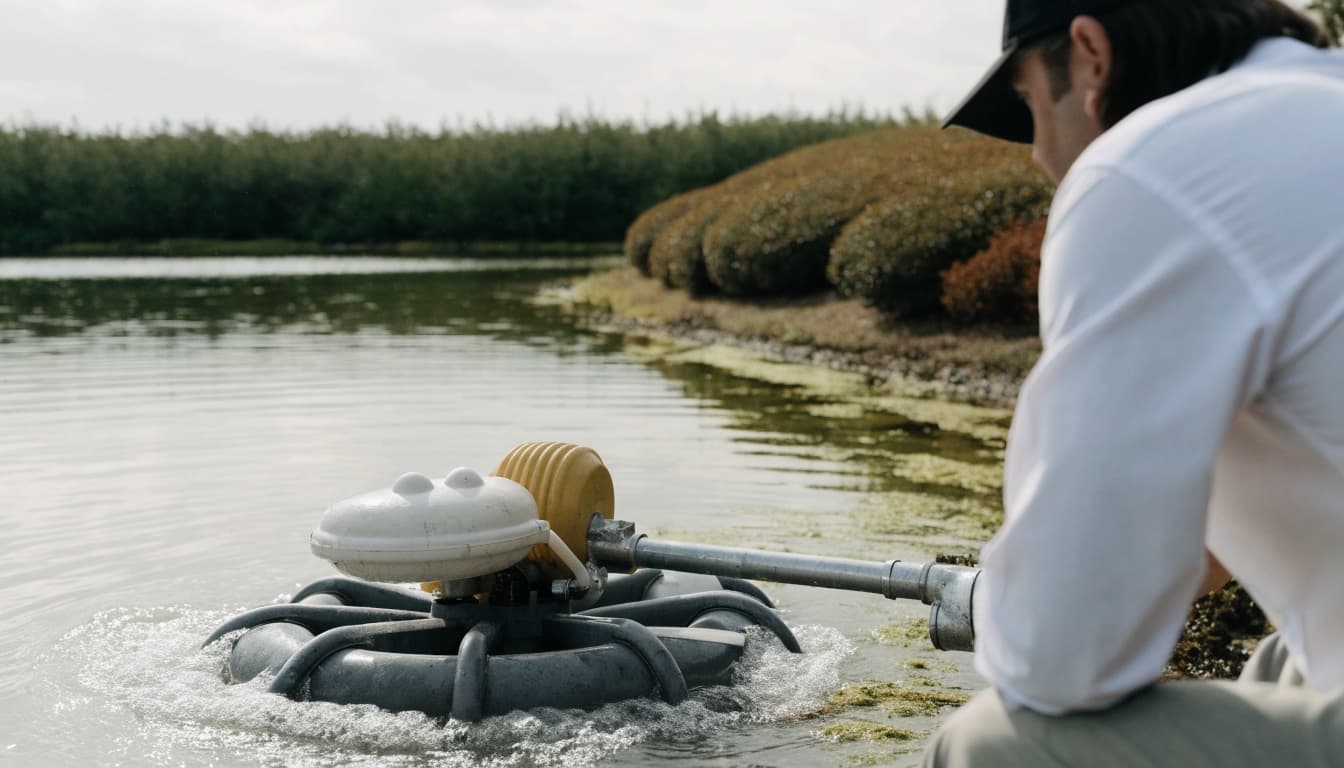
Any relocation should include checks of mooring geometry, cable routing, intake clearance, and service access. Don't add line extensions, modify the float, or substitute parts without manufacturer approval.
Also avoid changing a retention pond's water level solely to keep a fountain running. Obtain approval from the responsible owner or authority before altering drainage or adding water.
Shut down before unsafe conditions cause damage
Stop the fountain if the water falls below its documented operating requirement. Also shut it down for grounding, abnormal tilt, suspected intake exposure, or flood-affected electrical equipment.
Unusual grinding, strong vibration, repeated breaker trips, or a damaged cable require prompt attention. A breaker trip is a safety warning , so don't keep resetting it to restore the display.
Use the designated disconnect only when you can reach it safely from dry ground. Follow the manufacturer's shutdown procedure. Before hands-on service, a qualified person should isolate power and prevent automatic restart.
A timer setting or remote stop command may leave electrical power connected. Never enter the lake or handle the fountain based only on the absence of spray.
When tropical weather threatens, arrange shutdown or removal early according to the approved storm plan. Don't retrieve equipment during lightning, strong winds, or flooding.
Restart only after the level meets requirements and inspection confirms that the intake, float, moorings, cable, and controls are safe.
Know when to call the manufacturer or a technician
Contact the manufacturer when the manual doesn't clearly state minimum depth, required submergence, bottom clearance, or permitted level changes. Provide the exact model and details of the installed pump and float assembly.
A qualified service professional should investigate persistent low flow, unusual noise, leaning floats, damaged lines, and electrical faults. These symptoms may involve several components, so changing one setting may not resolve them.
Trademark Water Systems provides lake fountain installation and repair for property owners in Naples and Southwest Florida. Call (239) 455-9496 to discuss recurring level-related problems or an installation assessment.
Bring your water-level log, recent photographs taken safely from shore, and the service history. Those details help the technician separate seasonal changes from equipment failure.
Key takeaways for fountain owners
- Follow the exact model's manual, including minimum operating depth and intake-clearance requirements.
- Confirm upper-level restrictions separately, because flotation doesn't protect cables, moorings, or shoreline controls from every rise.
- Track seasonal changes and stop operation when documented limits or warning signs indicate unsafe conditions.
A floating fountain water level check works best alongside routine inspection, rather than as a stand-alone depth reading.
Frequently asked questions about fountain water levels
Can a floating fountain run in any depth?
No. Floating keeps the assembly near the surface, but the intake still needs the depth and bottom clearance specified by its manufacturer.
Measure conditions at the installation point, not elsewhere in the lake. A deep pond can still have a shallow fountain location. If the instructions don't clearly describe how to measure the required depth, get clarification before operating.
Should I restart after the lake refills?
Refilling may restore depth, but it doesn't confirm that the equipment is ready. The intake could remain clogged, the float may have shifted, or mooring lines may need inspection.
After flooding, electrical equipment needs particular attention. Follow the manual's restart procedure and arrange professional service if the fountain shows damage, abnormal positioning, or persistent performance problems.
Keep the operating range clear and documented
A fountain can remain afloat while its intake clearance or installation conditions become unsafe. Its safe operating range depends on the manufacturer's requirements and the conditions at its actual location.
Keep those limits accessible to everyone responsible for the equipment. Consistent monitoring, timely shutdown, and qualified service help prevent a changing lake level from becoming a damaged pump or an electrical hazard.
Latest posts
Read Our Blog
Tips, guides, industry best practices, and news.


Contact us
Get in touch
Our friendly team is ready to chat.