
HOA Fountain Service Agreement: What Boards Should Include
A fountain repair can stall when nobody knows who can approve the work or what the maintenance fee covers. An HOA fountain service agreement should define responsibilities and costs before an outage forces the board to make rushed decisions.
For Southwest Florida communities, the agreement also needs to address storms, electrical safety, and access to lakeside equipment. Clear terms help the property manager coordinate service without guessing what the vendor has promised.
Start with the equipment and tasks covered, then define how both parties will handle unexpected problems.
Key Takeaways
- Identify covered equipment, maintenance tasks, and exclusions instead of relying on a general promise of "full service."
- Separate routine visits, urgent safety concerns, and repairs that need additional approval.
- Put pricing, insurance, documentation, access, and cancellation terms in writing before signing.
Contract requirements and applicable laws vary by location. Have the agreement reviewed for your association's circumstances.
Define the Scope of Your HOA Fountain Service Agreement
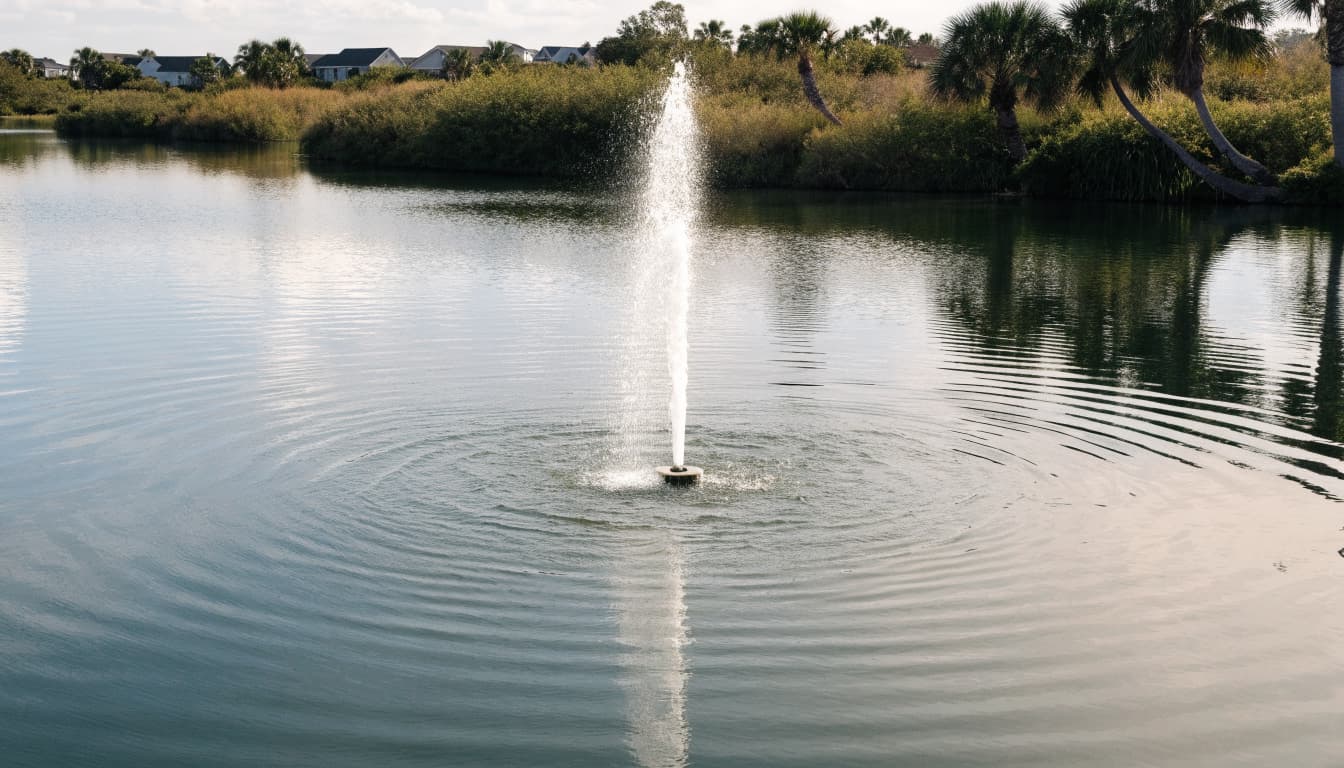
"Fountain maintenance" can describe anything from nozzle cleaning to inspecting the entire floating assembly. The agreement should identify what the vendor will inspect, maintain, and repair.
Record the equipment and existing condition
Attach an equipment inventory with manufacturer names, model numbers, serial numbers, and installation locations where available. Include pumps, motors, nozzles, floats, anchors, underwater cables, lights, timers, and control cabinets.
Document existing damage and operating problems before service begins. Otherwise, the board and vendor may disagree about whether a defect predates the contract.
A lake fountain site assessment can help identify shoreline conditions, electrical access, and future service needs. Also record the community's goals, including spray appearance, operating hours, and circulation.
Name included tasks and exclusions
Specify cleaning, debris removal, inspections, spray adjustments, and operational checks. Clarify whether retrieving the fountain from the lake or using lifting equipment costs extra.
List exclusions such as electrical supply repairs, dredging, shoreline work, storm damage, and lake-wide algae treatment when those services aren't included.
Fountains can support circulation and aeration, but results depend on pond depth, shape, placement, and equipment. Avoid treating an attractive spray as proof that the entire lake has adequate circulation.
Set a Maintenance Schedule With Defined Tasks
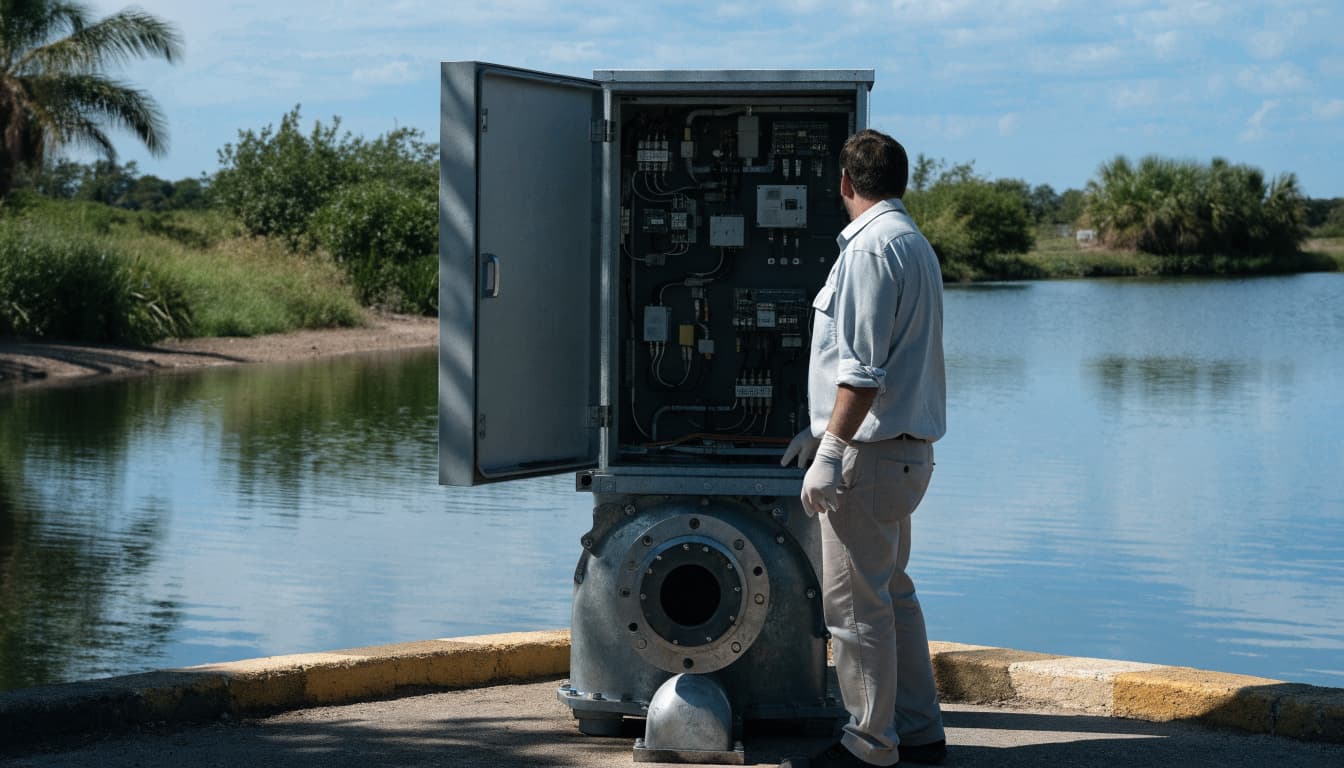
A calendar alone doesn't define maintenance. Each scheduled visit should have a clear purpose and a written record of completed work.
Match visits to equipment and site conditions
Ask the vendor to recommend a schedule based on manufacturer guidance, operating hours, debris, and observed wear. Florida heat, rainfall, algae, and mineral deposits can affect cleaning needs.
State the visit frequency and how the vendor handles missed appointments. Also explain whether additional cleaning between visits is included or separately billed.
Use a Florida lake fountain maintenance checklist to discuss recurring low flow, unusual vibration, uneven spray, drifting anchors, and corroded hardware.
Plan seasonal and storm-related work
Define who decides when storm preparation begins and who authorizes shutdown, securing, removal, storage, and reinstallation when appropriate for the equipment.
These tasks may require separate scheduling and charges. The contract should also explain weather-related delays and whether post-storm inspections require a new service request.
Don't assume the routine maintenance fee includes hurricane preparation or immediate restoration after widespread damage.
Separate Response Times From Repair Completion
The HOA fountain service agreement should distinguish acknowledgment, attendance, and completion . A vendor's promise to "respond promptly" leaves all three unclear.
Define how the property manager submits a request and when the response clock begins. Then establish separate expectations for ordinary outages and urgent safety concerns.
A reduced spray pattern may justify a routine visit. However, exposed wiring or suspected electrical leakage requires a different response. Recurring breaker trips also warrant professional evaluation, rather than repeated resets by residents or unqualified staff.
A callback doesn't mean a technician is on site, and a site visit doesn't guarantee that replacement parts are available.
For emergency repairs, identify the authorized contact and any backup approver. Define what the vendor may do to make equipment safe before receiving approval for a permanent repair.
Also address after-hours availability, dispatch fees, spending limits, and communication when parts delay restoration. Require an updated repair plan rather than leaving the board waiting indefinitely.
Weather, unsafe access, and regional storm damage can affect attendance. Any exceptions should explain how the vendor will notify the association and arrange the next safe visit.
Clarify Pricing, Parts, and Repair Approvals
A maintenance proposal should show what the recurring fee buys and how additional work reaches the invoice. Compare bids using the same scope, because a lower base price may exclude tasks another vendor includes.
Identify every category of extra charges
Specify billing frequency, payment terms, labor rates, minimum service charges, travel fees, and after-hours pricing. Clarify charges for retrieval, lifting equipment, disposal, or subcontracted work.
Parts terms should address markups, shipping, availability, and substitution approvals. Record applicable manufacturer warranties and any vendor workmanship warranty, including claim procedures and exclusions.
Water-treatment costs need separate attention. State whether testing, chemicals, application, and lake-management services are included. A fountain service contract shouldn't silently become an open-ended chemical-treatment commitment.
Establish written approval authority
Name who can approve estimates, additional visits, and replacement equipment. Set a spending limit for preauthorized work and require written approval above it.
Also explain how emergency authority differs from ordinary repair approval. The vendor should know which person can authorize necessary protective action when the usual contact is unavailable.
For major repairs, request an itemized estimate and discuss fountain repair versus replacement. Evaluate equipment condition, warranty coverage, parts availability, and expected downtime.
Require approval before the vendor substitutes a different pump or spray assembly. Such changes can affect electrical demand, appearance, and maintenance needs.
Review Insurance, Liability, and Local Requirements
Ask for evidence of insurance appropriate to the work, including general liability and workers' compensation coverage where applicable. Discuss coverage limits, subcontractors, and any additional-insured requirements with the association's insurance adviser and legal counsel.
A certificate of insurance summarizes coverage. It doesn't replace reviewing the policy terms or endorsements that matter to the board.
The contract should assign responsibility for property damage, injuries, and damage caused during retrieval or reinstallation. Have counsel review indemnification provisions, liability limits, and waivers rather than accepting broad language without understanding it.
Also identify who checks permits, licensing, electrical requirements, and any restrictions on chemical application. Requirements can differ by jurisdiction, lake ownership, work scope, and association governing documents.
Routine cleaning and a new electrical installation can involve different approval questions. The agreement should explain how the vendor handles work outside its qualifications or scope, including whether the HOA must hire a separate contractor.
Avoid assuming that every task falls under the same insurance coverage or authorization.
Put Vendor Access and Service Records in Writing
Reliable maintenance depends on access to the equipment and records the board can use after each visit.
Make site access practical and secure
Specify gate procedures, approved work hours, parking, shoreline access, and the location of electrical disconnects. Identify who provides keys or access codes and how credentials must be protected.
For floating units, discuss access for boats, retrieval equipment, or lifting equipment. Note soft shorelines, landscaping, irrigation lines, and other features workers must protect.
Explain who coordinates resident notices and temporary closures. Also state whether restricted access or a missed appointment creates additional charges.
Require useful reports after each visit
Request a dated report identifying the equipment serviced, tasks completed, observed defects, and recommended follow-up. Photographs can help document damaged anchors, corrosion, or changes in spray performance.
Repair records should identify parts installed, warranty information, and any outstanding issues. Itemized invoices should match approved work, so the treasurer can reconcile charges without reconstructing phone conversations.
Finally, specify when reports arrive and who receives them. Keep records in the association's files so future board members and replacement vendors can review service history.
Define the Contract Term and Exit Process
State the start date, initial term, renewal procedure, and notice deadline. If renewal is automatic, explain how the HOA can decline it and how the vendor must announce price changes.
Termination provisions should address unsatisfactory service, unpaid invoices, and cancellation without cause if the parties agree to allow it. Define notice methods, any opportunity to correct a breach, and applicable cancellation fees.
Also clarify what happens to prepaid charges, unfinished repairs, ordered parts, and warranty claims when service ends. An approval to order equipment may create costs even if the maintenance relationship ends shortly afterward.
Require a handoff of equipment records, outstanding recommendations, keys, and access credentials. The association should retain access to its maintenance history.
Before renewing, compare actual reports and response performance with the written promises. Use recurring problems to revise the next agreement rather than renewing unchanged terms.
Ask Vendors Questions Before Signing
Written answers help the board compare proposals and identify gaps before approving an HOA fountain service agreement.
Ask each vendor:
- Which components and tasks does the recurring fee cover, and what commonly costs extra?
- Who handles urgent electrical concerns, and what happens when your technicians aren't available?
- How do you recommend maintenance frequency and document completed visits?
- What approval do you need before ordering parts or starting emergency work?
- Who prepares the fountain for tropical weather, and how do you price that service?
Trademark Water Systems provides lake fountain installation and maintenance in the Naples area. When requesting a proposal, share equipment records, known problems, access restrictions, and the board's service priorities.
Ask the vendor to put agreed answers into the contract. Sales conversations are useful, but written terms give both parties a consistent reference.
Build an Agreement the Board Can Use
A useful fountain contract gives the board clear approval authority and a dependable process for routine care and unexpected repairs. It also makes costs, records, and responsibilities easier to track.
Before signing, confirm that the property manager and vendor interpret the terms the same way. When a fountain stops running, everyone should already know who to contact, what work is authorized, and how the next decision gets made.
Latest posts
Read Our Blog
Tips, guides, industry best practices, and news.

Contact us
Get in touch
Our friendly team is ready to chat.