
Choosing a Fountain Control Panel for Your Florida Property
A fountain that runs at the wrong time, trips after a storm, or suffers repeated electrical faults can become an expensive property headache. The right fountain control panel gives you safe power, predictable operating hours, and a practical way to protect the pump.
For Florida HOAs, apartment communities, golf courses, and waterfront homeowners, the panel must handle more than a motor start. It has to stand up to heat, rain, humidity, lightning, and sometimes salt air. Start with the fountain's electrical needs, then match the enclosure and control features to the site.
Know What a Fountain Control Panel Does
A fountain control panel is the protected electrical center for a fountain or aerator. It receives power from the property's electrical system and safely sends that power to the pump motor.
Most panels include a breaker, a disconnect, motor-starting components, and protection devices. A disconnect lets a technician shut off power at the equipment before service. The breaker protects the circuit from excessive current. A contactor is a heavy-duty switch that turns the motor on and off when a timer or sensor calls for it.
Some systems also include lighting controls, a lockable disconnect, alarms, or remote monitoring. The best fit depends on the fountain size and how the property uses the water feature.
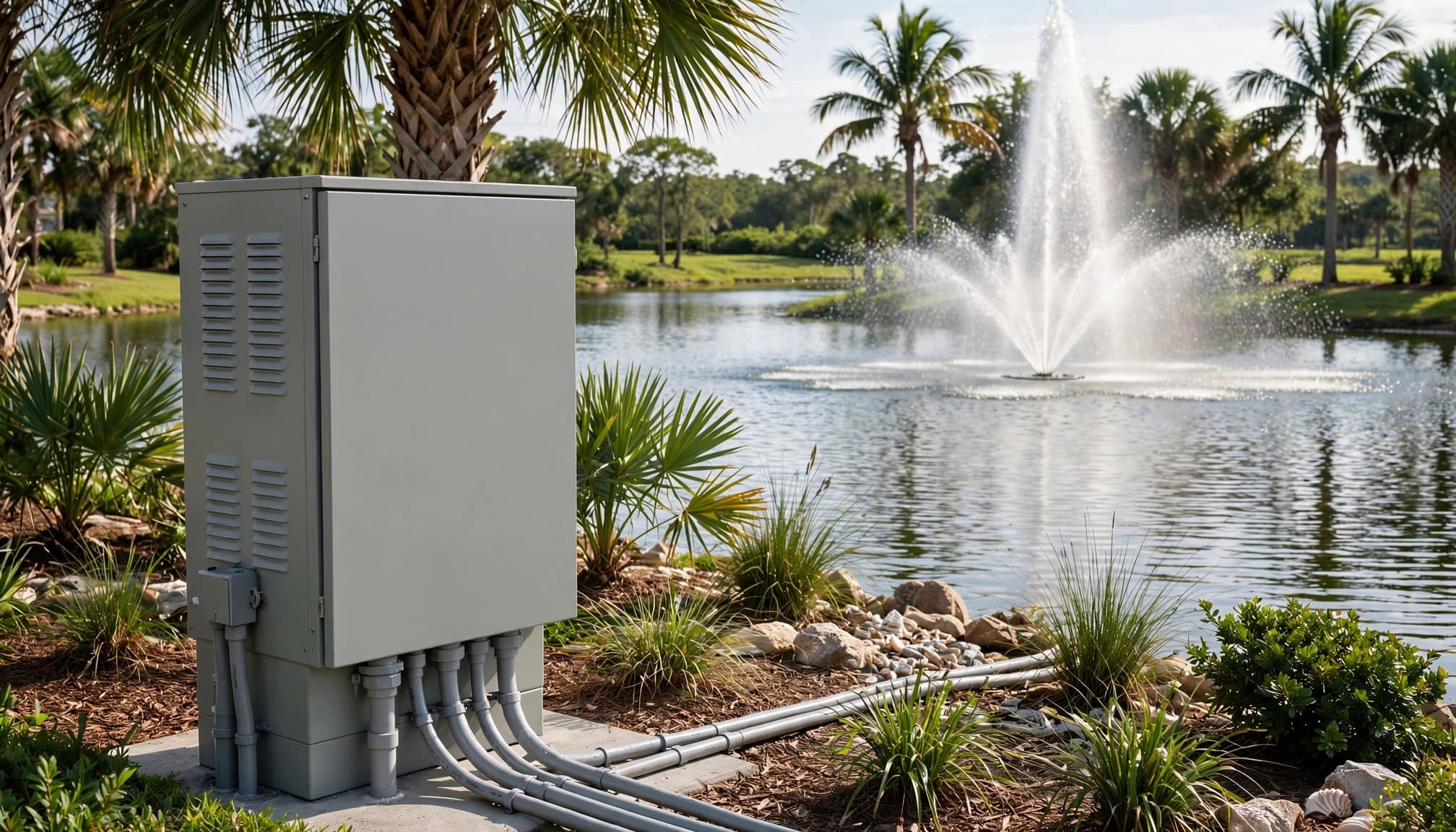
Separate the display from the electrical system
A fountain's spray pattern may look simple, yet the equipment behind it isn't. Pump horsepower, cable length, water depth, lighting, and daily run time all affect control-panel selection.
A small residential decorative fountain may use a 120-volt circuit. Larger lake fountains often need 208 to 240 volts. A panel that looks similar on the outside can have completely different internal ratings, so appearance should never guide the purchase.
Choose service access early
Place the panel where authorized staff can reach it without walking through wet ground, dense landscaping, or a shoreline hazard. A convenient location also makes routine checks more likely.
During lake fountain installation planning, consider the route for conduit and power cables, access for service vehicles, and the distance from the lake edge. The right panel location protects both the equipment and the people who maintain it.
Match the Fountain Control Panel to Available Power
The most important numbers are on the pump motor nameplate. This small metal label lists the motor's voltage, amperage, horsepower, and phase. A licensed electrician should confirm each item against the available site power before anyone orders equipment.
Amperage describes how much electrical current a motor draws. The panel, circuit breaker, wiring, and disconnect must safely handle that load. A motor that draws more current than the panel supports can trip breakers, overheat components, or damage the pump.
Common fountain panel configurations include 120-volt, 15-amp models for smaller units, plus 208 to 240-volt, 20-amp or 30-amp models for larger fountains. Those figures are examples, not a substitute for a nameplate review.
Check voltage, horsepower, and phase
Voltage is the electrical pressure supplied to the motor. A 120-volt motor cannot run correctly on a 240-volt connection, and a 240-volt motor won't operate properly from a standard 120-volt circuit.
Phase describes how electricity is delivered to the motor. Single-phase power is common at homes and smaller properties. Three-phase power is often available at larger commercial sites and can run larger motors efficiently. A single-phase panel cannot simply be substituted for a three-phase motor control system.
Before choosing a fountain control panel, provide the installer with:
- The motor nameplate photo, including volts, amps, horsepower, and phase.
- The electrical service available at the proposed panel location.
- The length and type of cable between the panel and fountain.
- Details about optional lighting, additional pumps, or future upgrades.
Motor horsepower alone does not identify the correct panel. Voltage, amperage, phase, cable length, and manufacturer requirements all matter.
Select an Enclosure Built for Florida Weather
Florida's weather tests outdoor electrical gear every day. Heat dries seals and plastics. Rain enters poorly protected cabinets. Humidity encourages corrosion, while coastal salt air can attack metal parts at a faster rate.
The enclosure rating tells you how well the cabinet resists its environment. A NEMA rating is a classification for electrical enclosures. For outdoor rain exposure, NEMA 3R is a common minimum. It is designed for outdoor use and helps keep out falling rain.
When NEMA 4X is the better choice
A NEMA 4 or 4X enclosure provides stronger protection against water exposure. NEMA 4X also addresses corrosion resistance, which matters near Florida's Gulf and Atlantic coasts, brackish water, or irrigated landscapes.
For coastal communities, look beyond the rating label. Fiberglass, thermoplastic, and suitable stainless-steel enclosures often hold up better than ordinary painted steel. Door hinges, latches, mounting hardware, and conduit fittings should also match the environment.
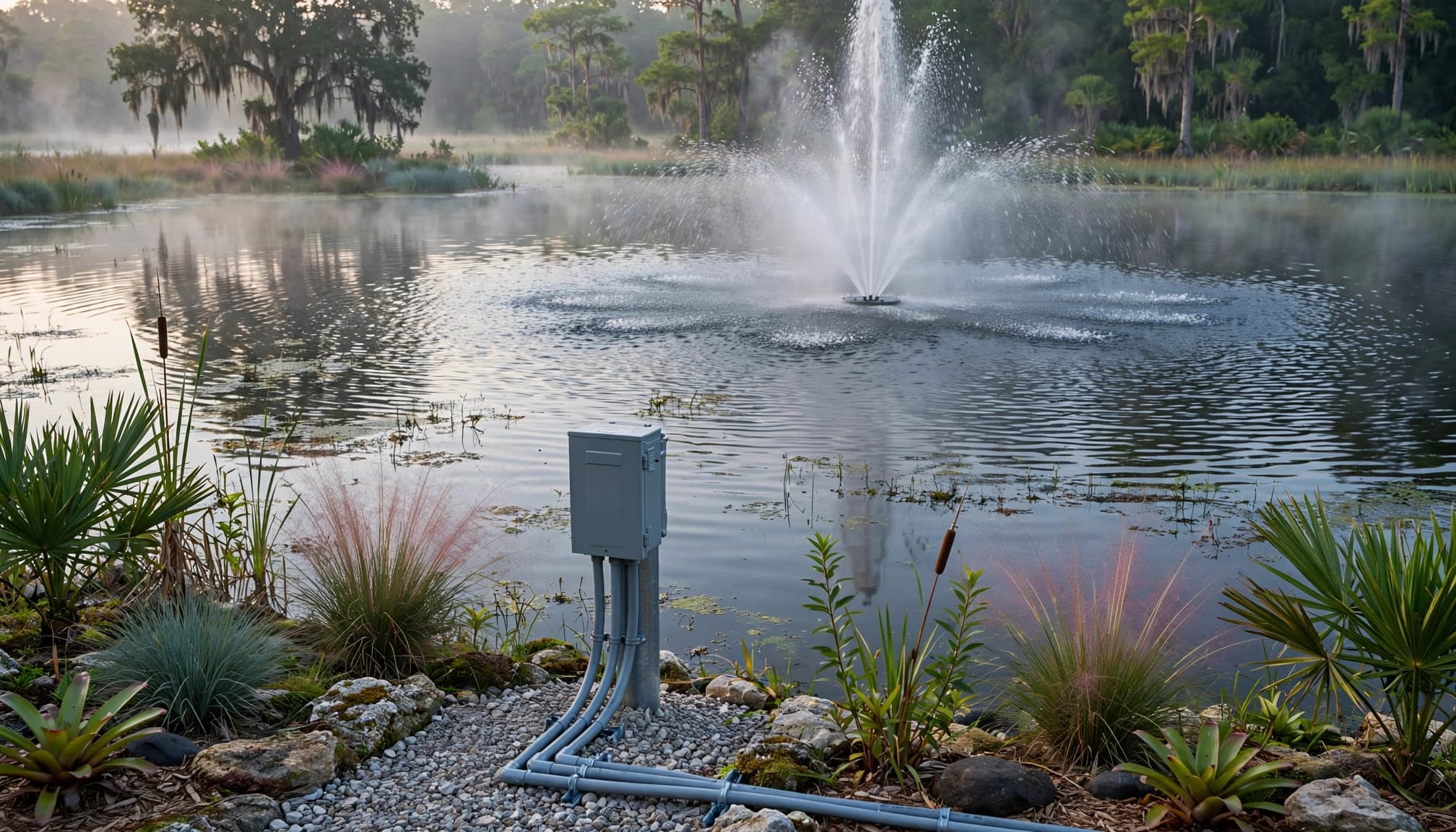
Do not skip GFCI and surge protection
GFCI protection shuts off electricity quickly when it detects current flowing where it should not, such as through water or a person. Some fountain panels use a ground-fault circuit breaker, often called GFCB protection, for the same safety purpose in this application.
Florida also has frequent lightning activity. Surge protection helps shield electronic controls and motors from sudden voltage spikes caused by nearby lightning or utility disturbances. It cannot prevent every lightning-related failure, but it adds a useful layer of defense.
Grounding and bonding matter as much as protective devices. Grounding provides a path for fault current. Bonding connects metal components so they remain at the same electrical potential. Fountain work near water has added code requirements, so a licensed electrician should verify the installation and local permit rules.
Set Operating Hours With Timers and Sensors
Running a fountain all day may suit a clubhouse lake or a highly visible entrance. In other settings, scheduled operation lowers energy use and reduces nighttime noise. Timers also prevent staff from relying on a manual switch.
A basic 24-hour timer turns the fountain on and off at set times. Some panels offer a second timer for lighting. That arrangement lets the fountain run during daylight while lights come on only after dark.
Add controls that fit how the property operates
A photocell senses daylight. It can switch landscape or fountain lights on at dusk and off at dawn. This is useful when sunset changes through the year and no one wants to adjust a timer every month.
A water-level sensor can stop a pump when water falls below a safe operating point. On a lake fountain, it may be part of a broader system rather than a standard feature. For a basin fountain, it can help prevent a pump from running dry.
Wind sensors can reduce a tall display or turn it off during strong gusts. They work best where spray drift reaches walkways, windows, vehicles, or nearby landscaping. Ask whether the selected panel accepts these accessories before assuming they can be added later.
Consider a Variable-Frequency Drive Carefully
A variable-frequency drive , or VFD, adjusts the frequency of electricity sent to a compatible motor. In plain terms, it can change the motor's speed instead of running it at one fixed speed.
For an approved system, a VFD can lower a fountain's spray height during off-peak hours or soften the display in windy conditions. It may also reduce energy use when the pump runs below full speed. However, it isn't a universal add-on.
Confirm motor and manufacturer compatibility
Many fountain motors and complete fountain packages need a particular control method. Using a VFD with a motor that the manufacturer has not approved may create overheating, nuisance trips, poor performance, or warranty problems.
A drive also needs proper programming, ventilation, grounding, and surge protection. It can add complexity where a simple timer-based panel would work better. Discuss the desired spray pattern and operating schedule with the fountain supplier before selecting a VFD.
For a community lake, a straightforward panel with dependable protection often beats a feature-heavy system that no one on staff knows how to operate.
Plan for Safe Installation and Long-Term Service
The panel is only as dependable as its installation. Keep electrical connections raised above standing water, protected from mowers, and accessible for inspection. Avoid routing exposed cables through areas where landscaping crews, foot traffic, or shoreline erosion can damage them.
A qualified installer should also size the circuit conductors, breaker, disconnect, and control panel for the actual load. Electrical requirements vary by installation, local jurisdiction, fountain design, and proximity to water. A licensed electrician should verify the final design, permits, grounding, bonding, and inspection requirements.
Keep a simple service record
Facility managers should log breaker trips, storm events, timer changes, spray changes, and repairs. Those details help a technician identify patterns instead of treating each outage as an isolated problem.
Check that the enclosure door closes securely, the timer holds the correct schedule, and the GFCI or GFCB test function works as intended. If a breaker repeatedly trips, a GFCI will not reset, or a cable looks worn, shut down the system and arrange professional fountain electrical repairs.
Regular lake fountain maintenance services can also catch clogged intakes, damaged cords, corroded hardware, and uneven spray before they lead to motor failure.
Common Fountain Control Panel Selection Mistakes
A low-cost panel can become costly when it does not match the site. These mistakes often lead to repeated service calls or early equipment replacement:
- Ordering by horsepower alone while ignoring voltage, amperage, and phase.
- Installing an indoor-rated cabinet outside or choosing NEMA 3R where salt air and direct water exposure call for NEMA 4X.
- Treating GFCI protection and surge protection as optional accessories.
- Selecting a panel without enough capacity for fountain lights, a second pump, or planned upgrades.
- Adding a VFD without confirming that the motor and fountain manufacturer permit it.
- Putting the panel where it is hard to access or exposed to mower damage, flooding, and irrigation spray.
- Letting unqualified personnel modify wiring near water.
A properly matched panel should make operation less dramatic. The fountain starts on schedule, runs consistently, and shuts down safely when a fault occurs.
A Quick Fountain Panel Decision Checklist
Use this short list when comparing options with an installer or electrician:
- Confirm the fountain motor's voltage, full-load amperage, horsepower, and phase from its nameplate.
- Verify whether the property has 120-volt, 208-volt, 240-volt, single-phase, or three-phase power at the site.
- Choose an outdoor enclosure rating that fits rain, irrigation, humidity, and coastal corrosion.
- Include GFCI or GFCB protection, correct grounding and bonding, and surge protection.
- Decide whether timers, photocells, water-level controls, wind sensors, lighting controls, or remote monitoring are needed.
- Confirm that the enclosure location stays dry, accessible, and protected from physical damage.
- Have a licensed electrician review the design before purchase and installation.
Final Thoughts on Choosing Fountain Controls
The best fountain control panel matches the motor and site first, then adds practical controls that staff can use without confusion. Florida weather makes enclosure quality, ground-fault protection, surge protection, and professional installation part of the basic specification.
A well-chosen panel keeps a fountain's visual appeal and aeration benefits from being interrupted by avoidable electrical problems.
Latest posts
Read Our Blog
Tips, guides, industry best practices, and news.

Contact us
Get in touch
Our friendly team is ready to chat.