
Fountain Repair vs Replacement: How to Make the Call
A fountain that loses its spray can look beyond saving, even when debris is the only problem. At the same time, another pump repair may make little sense if its cable is damaged or the rest of the system is failing.
For homeowners and community property managers, the cause of the failure matters more than the fountain's age alone. The decision on fountain repair vs replacement starts with an inspection of the whole system, followed by a comparison of what each option will fix.
How to assess fountain repair vs replacement
Start with the symptom you can observe. Then look for a pattern: a one-time drop in flow calls for a different response than repeated shutdowns after service.
Record what changed
Note whether the fountain has no spray, a weaker plume, an uneven pattern, a new noise, or a visible leak. For a lake fountain, photograph the spray from the same shoreline position you normally use. That gives a technician a useful comparison, especially if the problem comes and goes.
Also record when the issue began and whether it followed a storm, cleaning, or a change in water level. A pump running with little water movement could have a blocked intake, an impeller problem, or internal wear. The symptom alone won't tell you which.
Look beyond the failed part
A quote for one part answers only part of the repair-or-replace question. Ask whether the pump, power cable, controls, basin or float, and mounting hardware remain sound. Some of those components won't apply to every fountain.
For example, replacing a clogged or worn nozzle may restore a healthy system. Replacing a pump without addressing a damaged cable or shifting lake anchor could leave the underlying problem in place. A complete assessment helps you avoid paying for work that won't last.
Signs a fountain may be repairable
A repair is more promising when the problem is confined to a serviceable component and the surrounding equipment is in good condition. The first step is to identify that component, not to guess from the spray pattern.
Flow problems often have several possible causes
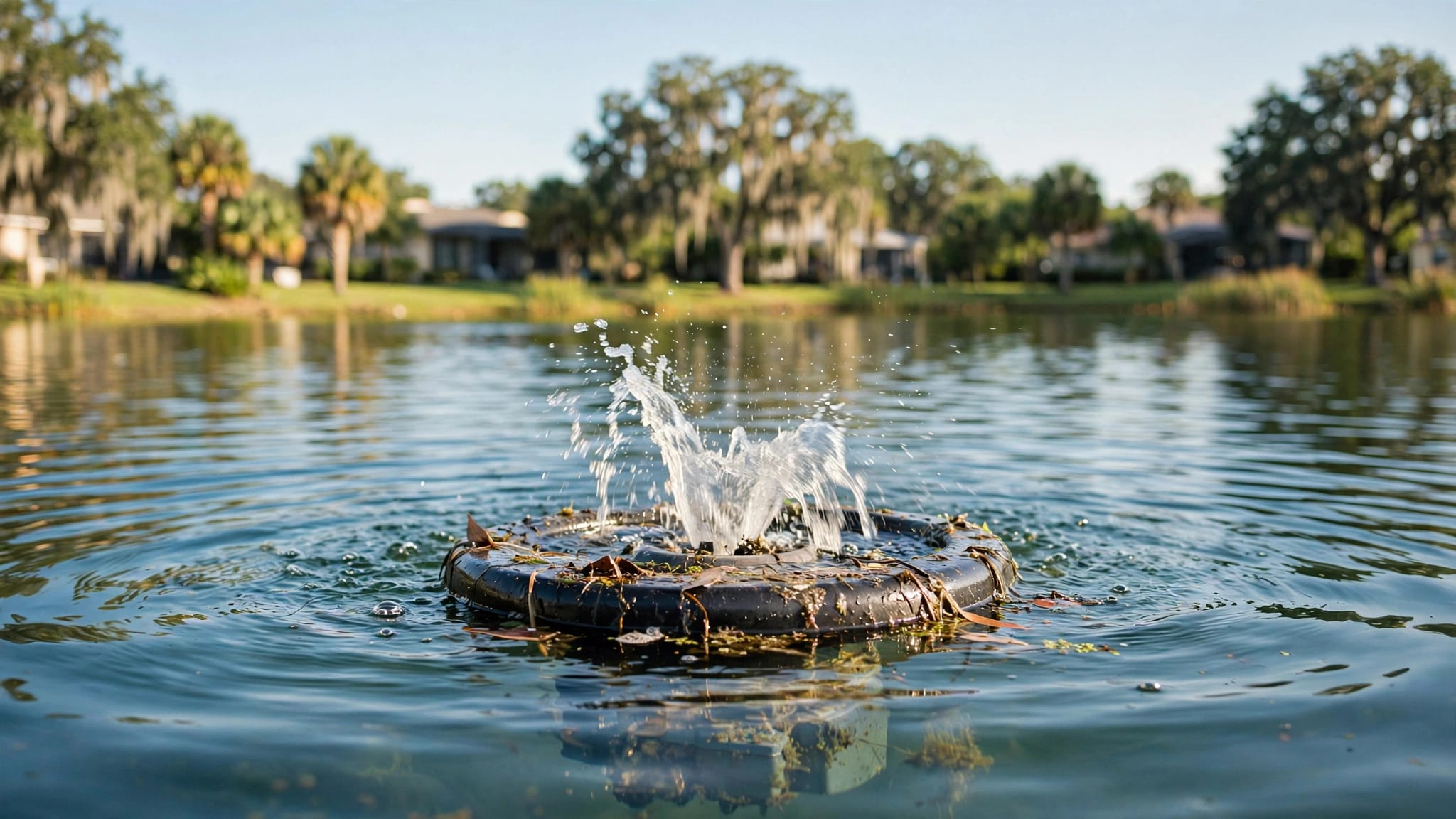
Leaves, algae, and sediment can restrict an intake or nozzle. A low water level can also affect some fountain pumps. These conditions deserve attention before you assume the motor has failed.
Trademark Water Systems' lake water fountain repair guide identifies clogs, wear, and electrical faults among the possible causes of weak or absent flow. It recommends checking the intake screen for debris. If flow stays poor after appropriate cleaning, a technician can inspect the pump and impeller.
Cosmetic wear is different from structural failure
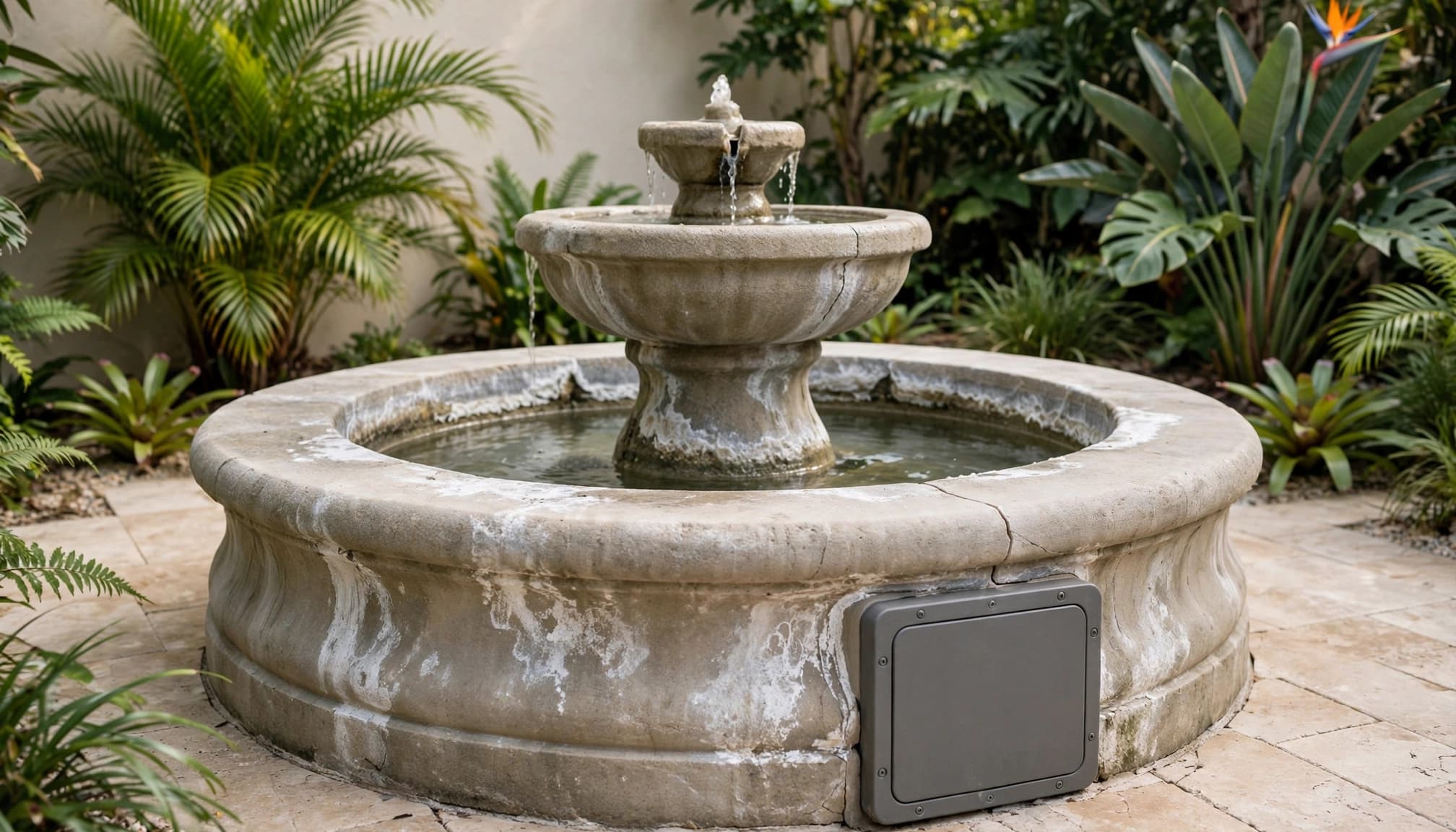
Mineral deposits or surface staining may look severe without affecting how a fountain operates. Likewise, an accessible fitting or replaceable nozzle may be repairable if the rest of the unit is sound.
Cracks need a closer look. Their location, material, and effect on water retention matter more than their appearance in a photo. A small surface flaw and a leaking basin call for different work. Have a professional assess significant cracking, movement, or persistent leaks before investing in a cosmetic fix.
When replacement deserves a closer look
Replacement becomes more compelling when a repair can't reliably address the cause, or when several major components need work together. That may mean replacing a pump, not necessarily removing the entire fountain.
Compare the scope of the work
Ask the technician to separate individual component replacements from a full-system replacement. A new pump can be a sensible repair if the cable, controls, and fountain structure are sound. On the other hand, repeated pump trouble alongside damaged wiring and deteriorated hardware may warrant a broader proposal.
Availability matters, too. If a manufacturer no longer supplies compatible parts, ask what a substitute would require and whether it would fit the existing system. Don't assume that a new motor alone will match the old fountain's plumbing, electrical supply, and desired spray.
Revisit what the fountain needs to do
An older installation may no longer suit its setting. A courtyard fountain might need a quieter display near a seating area. A community lake may need a different spray pattern or equipment arrangement to meet current circulation goals.
Still, a bigger or taller spray isn't automatically better. The replacement should suit the site, its electrical setup, and the owner's priorities. Compare those needs against the work required to keep the current fountain.
Garden fountains and lake fountains call for different decisions
The same symptom can lead to different recommendations depending on the fountain's size and purpose. For lake systems, fountain repair vs replacement also depends on how well the installation fits the waterbody.
At home, inspect the basin and access
For a small decorative fountain, check whether the basin holds water, the pump is accessible, and replacement parts can fit. A sound basin with a faulty pump may justify a targeted repair. If the basin leaks or has unstable sections, the project may extend well beyond a pump swap.
Consider access before accepting either quote. Built-in stonework and concealed plumbing can add labor even when the failed part is inexpensive. Materials and construction also affect whether a structural repair is practical.
At the lake, assess the installation as a system
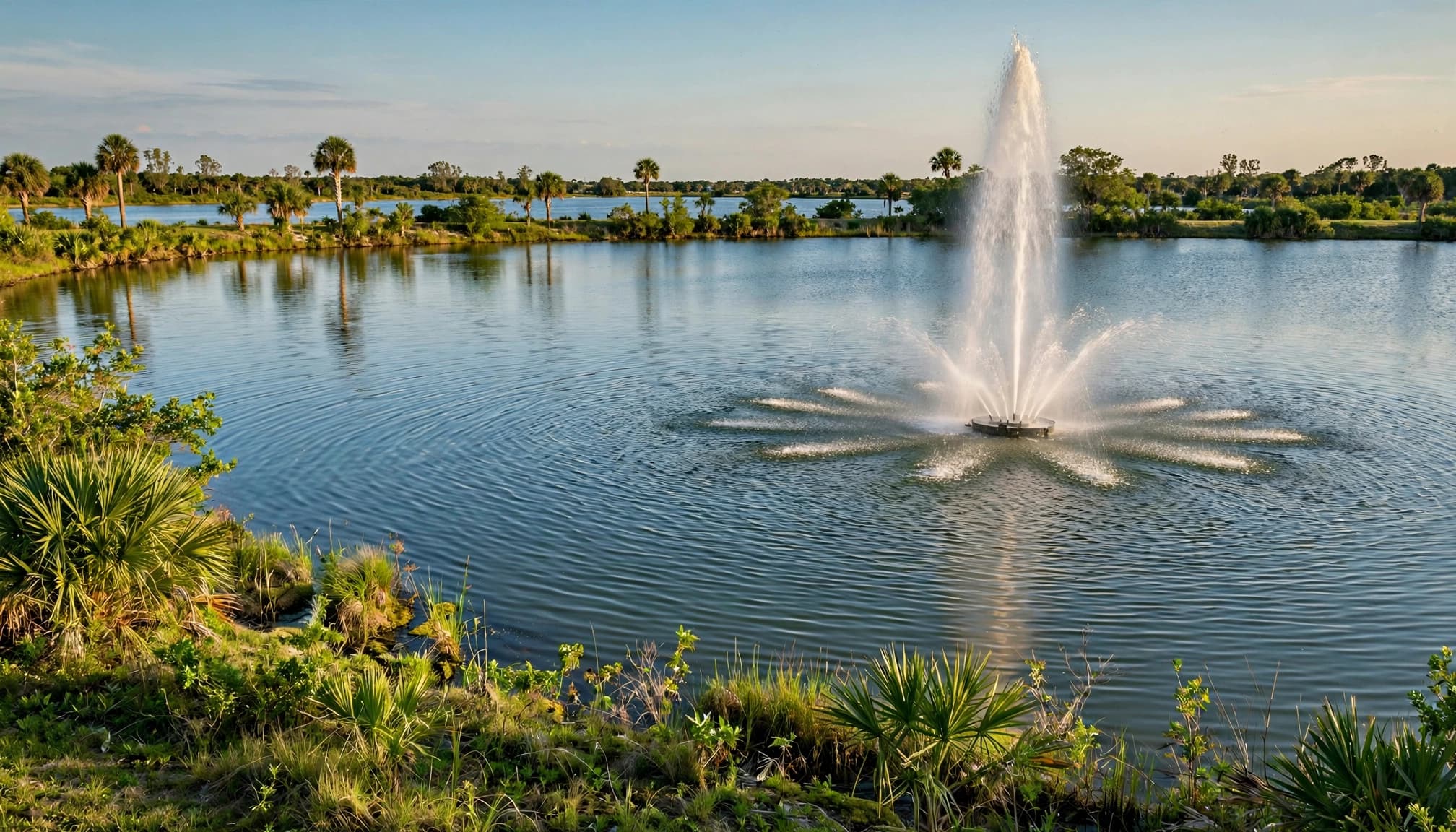
Floating fountains have additional points to inspect, including floats, anchors, underwater cables, and shoreline connections. A drifting unit or uneven spray can point to a problem outside the pump. Trademark Water Systems' Florida lake fountain maintenance checklist flags grinding, unusual vibration, recurring low flow, and persistent spray changes as reasons to seek service.
Lake fountains can support surface circulation and aeration, but appearance alone doesn't show how well a pond is mixing. Before replacing one for performance reasons, discuss pond shape, depth, and the property's goals with a fountain professional.
Electrical and structural faults need professional assessment
Water and electricity make some fountain problems unsuitable for homeowner troubleshooting. A structural failure can also affect more than the visible finish.
Treat repeat breaker trips as a stop sign
If a breaker trips more than once, a GFCI won't reset, or a cable shows damage, stop operating the fountain and call a qualified electrician or fountain service professional. The same applies if equipment was submerged during a storm or flood. Don't repeatedly reset the breaker or handle submerged components to test them.
A compromised pump or cable may need replacement even when other fountain parts remain usable. The discussion of lake fountain electrical troubleshooting explains why a trip calls for inspection rather than another restart.
Examine what supports and seals the fountain
A loose pedestal, shifting basin, damaged anchor, or persistent leak can affect the safety and durability of a repair. Patch work may be reasonable for some materials and damage, but it shouldn't conceal movement or an unresolved leak.
For lake installations, ask a professional to check cable routing as well as visible hardware. Shoreline abrasion and changes after storms can matter even when the spray looks normal. Keeping records of repairs and cable work makes future inspections more useful.
Compare repair and replacement quotes on the same basis
There is no universal cost or lifespan cutoff for fountain repair vs replacement. Prices and service life vary with fountain type, materials, damage, access, parts, and local labor. Get site-specific proposals rather than relying on a percentage rule.
Ask what each quote includes
A useful repair quote identifies the suspected cause, the parts and labor, and any related work that remains uncertain. A replacement quote should state what stays and what goes, including the pump, controls, cable, plumbing, basin or float, and anchors where applicable.
Use the same questions for both options:
| Compare | Repair proposal | Replacement proposal |
|---|---|---|
| Scope | Which faults and components will the work address? | Which existing components will remain? |
| Site work | Is removal or access work included? | Are removal and installation included? |
| Electrical work | Who will inspect or repair the electrical components? | Does the new unit suit the existing electrical setup? |
| Follow-up | What service might the current system still need? | What maintenance will the new system need? |
The lowest quote may exclude work the other proposal includes. Clarify those differences before comparing totals.
Consider downtime and future service
Ask how soon parts are available, how long the fountain will be out of use, and whether the proposed repair addresses recurring faults. For a community, a maintenance history can reveal whether breakdowns involve one component or several.
Trademark Water Systems provides lake fountain installation and maintenance in the Naples area. A site visit can help establish whether a focused repair will meet the property's needs or whether a new installation deserves consideration.
Key Takeaways
- Diagnose weak spray or shutdowns before ordering parts; several faults can produce the same symptom.
- A sound fountain with one serviceable failure may be a good repair candidate. Multiple failing components call for a wider comparison.
- Repeated breaker trips, damaged cables, major leaks, and structural movement need professional attention.
- Compare written scopes, not just totals. Pump replacement and full fountain replacement are different decisions.
Frequently Asked Questions
Is it better to replace an old fountain pump or repair it?
Age alone doesn't settle the question. A technician can check the pump's condition, parts availability, and whether a blockage or another component caused the poor performance. Replacing the pump may be sensible if it's damaged while the rest of the fountain remains sound. If the cable, controls, or structure also need major work, compare a broader replacement proposal.
Can I clean a fountain before calling for service?
You can note the water level and look for visible debris without touching electrical equipment or entering the water. Follow the manufacturer's instructions before any cleaning, and disconnect power as directed. Don't reach into a lake fountain or open electrical components yourself. If cleaning is safe and appropriate but flow remains weak, arrange an inspection rather than continuing to run a struggling pump.
Does replacing a lake fountain fix algae problems?
A lake fountain can help move water and add oxygen near the surface, but a new fountain isn't a guaranteed algae cure. Pond shape, depth, runoff, and the equipment's placement all matter. If algae is the main concern, explain that goal to the contractor before choosing a replacement. That conversation may change the recommended fountain design or maintenance plan.
Make the decision from the diagnosis
A weak spray doesn't automatically mean the fountain is finished. Likewise, a working pump doesn't make a damaged cable or leaking structure safe to ignore.
The strongest choice is the one that addresses the cause , fits the site's needs, and leaves you with a clear plan for maintenance. Get the system inspected, then compare the actual scope of repair with what replacement would solve.
Latest posts
Read Our Blog
Tips, guides, industry best practices, and news.


Contact us
Get in touch
Our friendly team is ready to chat.