
Fountain Vibration Troubleshooting for Floating and Fixed Systems
A fountain that suddenly rattles can leave you wondering whether to clean it, shut it down, or call for repair. A change from its usual sound matters more than noise alone. Fountain vibration troubleshooting starts by comparing what you hear with the spray, water movement, and position you normally see.
Floating and fixed fountains share possible pump and flow problems, but you can observe them differently. Start with a safe shutdown, then work through the clues you can check without electrical tools.
Fountain vibration troubleshooting starts with a baseline
A working fountain may produce a steady motor hum, flowing-water noise, and some spray impact. The sound depends on its pump, nozzle, water level, and surroundings. A fountain near a wall or patio may also sound louder than the same unit in an open lake.
Look for a change, not a particular volume
A new grinding, scraping, knocking, or irregular rattling sound deserves attention. So does a vibration that grows stronger after startup or travels into a fixed fountain's basin or nearby piping.
Listen from a safe, dry location. Note whether the noise occurs immediately, after the fountain has run for a while, or only during windy conditions. Wind can change where spray lands, but it won't explain every new mechanical sound.
Compare sound with water movement
Check the spray height and shape against a photo of normal operation, if you have one. An uneven pattern, reduced flow, or intermittent spray can help narrow the inspection to the intake, nozzle, or pump. None of those observations identifies a failed part on its own.
A loud splash with a steady spray may be a placement or spray issue. New mechanical noise paired with weak flow calls for a closer pump and intake inspection.
Shut off power before approaching equipment
Electricity and water make the order of operations important. You can observe a running fountain from a safe location, but turn it off before touching the water, pump, float, plumbing, or cable.
Isolate the fountain at its power source
Use the designated disconnect or breaker, following the equipment instructions and your property's procedures. A timer setting or wall switch may not isolate every component. Prevent anyone else from restarting the fountain while you're inspecting it, and wait for the pump to stop completely.
If you can't identify the correct shutoff, leave the equipment alone and call a qualified professional. Never reach into a basin or lake to find a cable. Don't pull a floating fountain toward shore by its power cord, and don't open an electrical enclosure to investigate a noise.
Treat electrical warnings as a stop point
Leave the system off if a breaker or GFCI trips, a cable looks damaged, or you notice moisture where it shouldn't be. Repeated resets can expose people and equipment to further risk. Why a lake fountain pump trips the breaker explains the electrical faults a service professional may need to investigate.
Storm damage calls for the same caution. In Florida, wind and changing water levels can shift floating equipment or affect shoreline cable routes. Keep people out of the water and arrange an inspection when you can't confirm the installation is safe.
Make a first pass without specialized equipment
Before moving parts, record what changed. A phone photo of the spray, fountain position, and accessible equipment can help you compare conditions later. Check the water level and look for floating debris or an obvious obstruction from a safe location.
Use these observations to choose the next inspection point, not to declare a diagnosis.
| What you notice | Possible area to inspect | Safe next step |
|---|---|---|
| Uneven or weaker spray | Nozzle or intake | Shut down and check accessible openings. |
| Fountain sits off-center | Float or mooring lines | Observe from shore; arrange retrieval if needed. |
| Rattle near a fixed basin | Mounting or accessible piping | Shut down and look for visible movement. |
| Grinding sound or recurring power trip | Pump or electrical system | Leave off and request service. |
Several symptoms can appear together. A blocked intake, for example, may reduce flow while debris near the pump adds noise. If the first visible check finds nothing, don't assume the motor is healthy or damaged; move to the system-specific checks below.
Troubleshoot a floating lake fountain from shore first
A floating fountain moves with the water, so its position matters when tracking a new vibration. Watch the unit from shore before shutting it down. Note whether it sits level, drifts farther than usual, or produces an uneven spray.
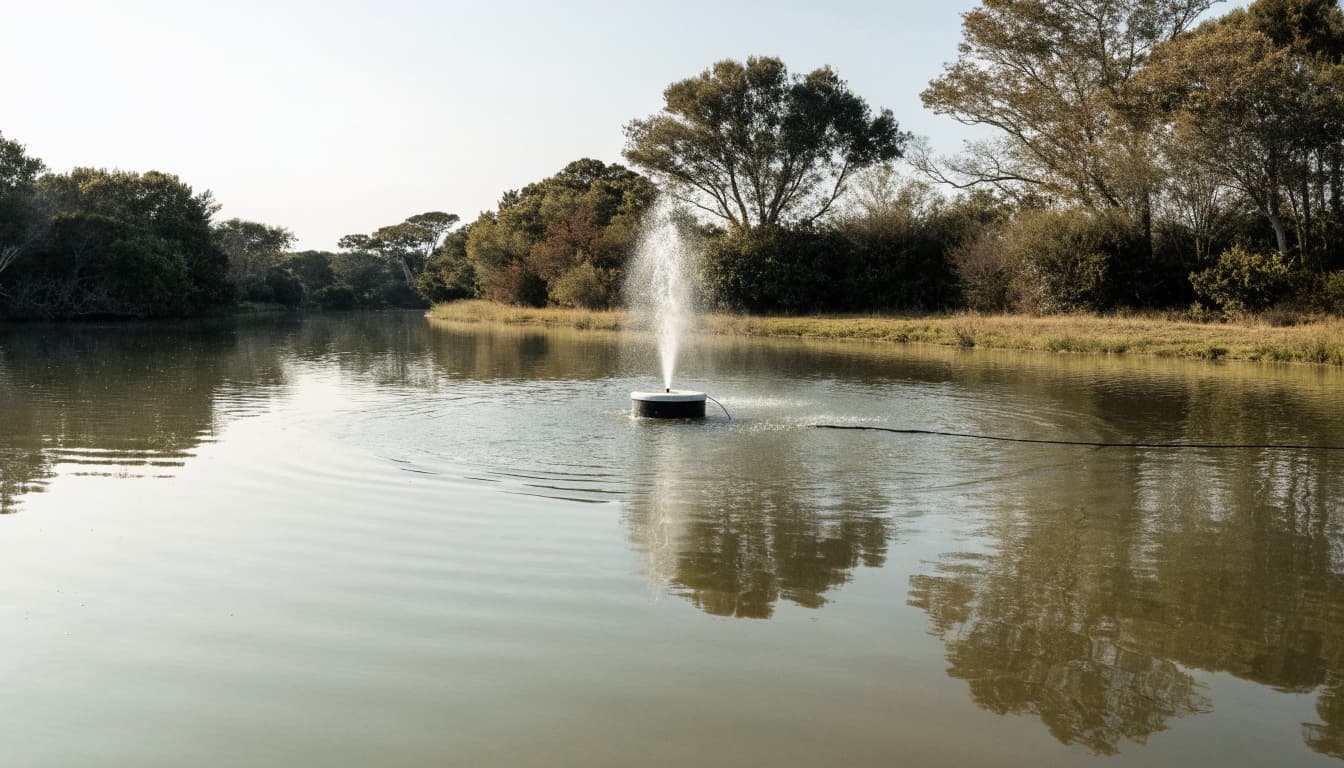
Check the visible float and mooring setup
After isolating power, look for a damaged float, a loose-looking mooring line, or a change in the fountain's position. A shifted anchor or line may allow unusual movement, but sight alone may not tell you what happened underwater.
Don't enter the lake or tug on lines to test them. If the unit is beyond safe access, a service crew can retrieve and inspect it. Technician checks for fountain repairs commonly include the float, mooring lines, intake screen, motor housing, and underwater cable.
Check the intake only when you can reach it safely
Leaves, algae, and other debris can collect around an intake screen. If the fountain has been safely removed using the manufacturer's procedure, inspect and clean accessible screens as directed. Avoid forcing a cover or reaching into a pump housing.
Also look for buildup around an accessible nozzle. Reinstall guards and components before any restart. If the fountain remains weak or noisy after basic cleaning, the problem may be inside the pump and needs a closer inspection.
Trace vibration through a fixed fountain
A fixed fountain stays in place, which makes it easier to notice where vibration reaches the structure. Sound may seem to come from a stone basin, pump platform, or pipe rather than the component that started it.
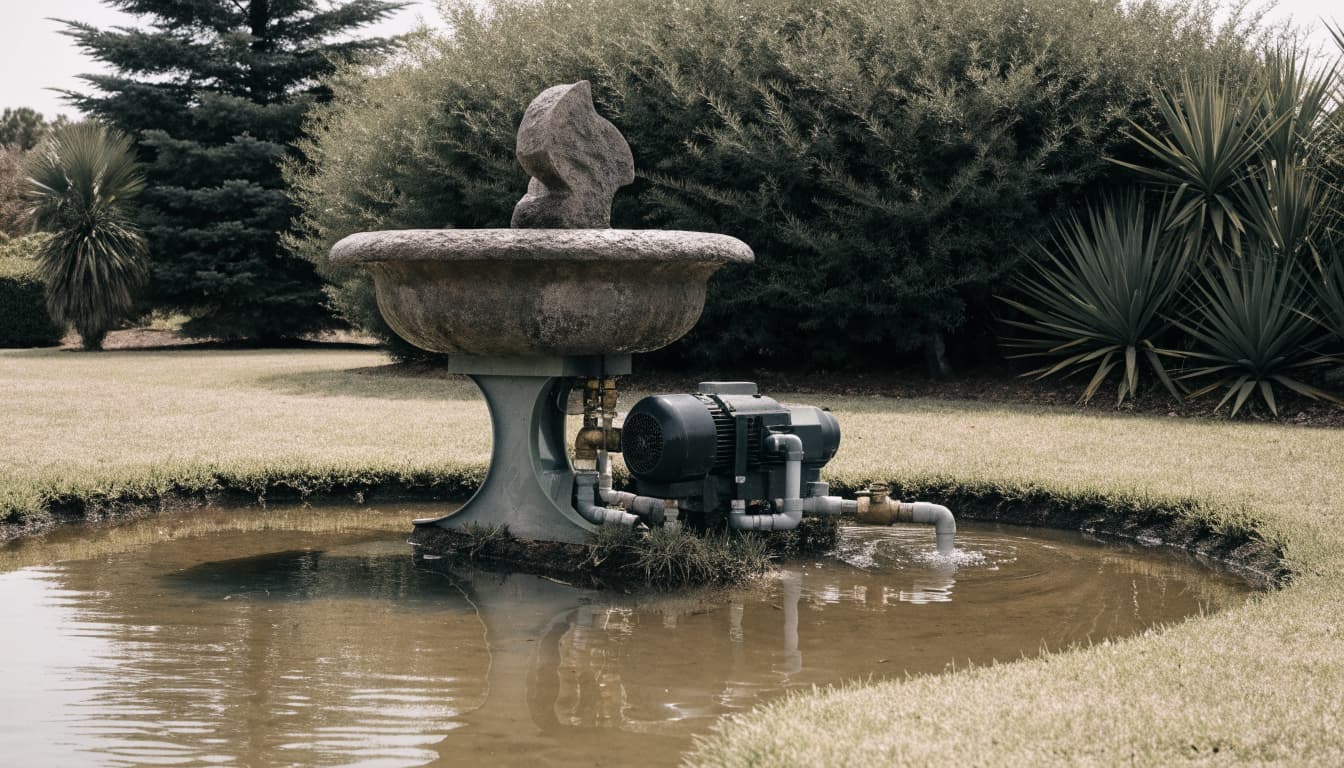
Inspect the mounting and nearby surfaces
With power isolated, check whether accessible pump supports, covers, and pipe brackets appear secure. Look for a new gap, a shifted component, or a pipe touching a hard surface. Loose hardware can transmit noise, but don't tighten unfamiliar fittings or alter the installation while you're still identifying the source.
Keep hands away from the basin until shutdown is complete. If the pump is in a separate equipment area, compare the sound you heard there with the sound at the fountain. That may help a technician trace where the vibration begins.
Follow the water path
Check the basin water level, accessible intake screen, and nozzle for obvious restrictions. A low level or blocked opening may affect pump flow. Mineral deposits and algae can also change a spray pattern, especially in warm Florida conditions.
For more on flow loss and pump problems, see the lake water fountain repair guide. If accessible cleaning doesn't restore normal flow, leave internal pump work to someone equipped to assess it. Don't run a pump dry to see whether the noise disappears.
Test once, then compare what changed
A short operating check can tell you whether a safe, basic correction helped. First, replace anything removed for cleaning and confirm the water level meets the manufacturer's instructions. Make sure no one is in the water or handling equipment.
Watch the first restart from a dry location
Restore power using the normal controls. Observe the spray and listen from the same location you used before shutdown. Compare the sound after startup with your earlier notes. A steady hum and familiar spray are more reassuring than a brief quiet moment followed by a returning rattle.
If vibration continues, shut the unit down. Repeated restarts aren't a substitute for inspecting an inaccessible intake, mounting point, or motor.
Record clues that make service faster
Write down when the sound began, whether it changed after a storm or cleaning, and whether the spray weakened at the same time. Photos of the float's position, visible lines, and spray pattern are useful. For fixed systems, note whether the noise seems strongest near the pump or basin.
This record helps separate a recurring fault from a one-time debris problem. It also prevents the next person from repeating a check you already completed.
Know when vibration requires repair
Schedule service for grinding, scraping, persistent unusual vibration, low flow that remains after accessible cleaning, or an uneven spray that keeps returning. Damaged cables, corroded hardware, drifting anchors, and repeated breaker trips also warrant professional attention. A Florida lake fountain maintenance checklist can help property managers track those changes between service visits.
A pump that runs with little water movement may have an intake blockage, an impeller problem, or internal wear. The visible symptoms can't settle which one is responsible. A technician can inspect the equipment without asking residents or maintenance staff to handle submerged electrical parts.
If a fountain serves a community lake, keep it off while arranging service when you suspect an electrical fault. Let residents know the display is temporarily out of operation rather than repeatedly trying to restart it.
Key takeaways for a safe first check
- Compare new sounds with the fountain's usual hum, spray, and position.
- Shut off and isolate power before touching water or equipment.
- Check accessible water levels, screens, nozzles, floats, and mounts without opening electrical components.
- Stop testing if a breaker trips, a cable looks damaged, or grinding continues.
- Give the technician photos and notes about when the change began.
Common fountain vibration questions
Can a fountain vibrate and still work normally?
Yes. Pumps produce some vibration during normal operation, and moving water makes noise. The useful comparison is with that fountain's established behavior. A new rattle, stronger shaking, or weaker spray deserves investigation even if water still comes out.
Does an uneven spray mean the pump has failed?
No single spray change proves pump failure. An accessible nozzle or intake may be blocked, while low water or an internal pump problem may also affect flow. Shut down, check what you can safely reach, and request service if the pattern doesn't recover.
Should I pull a floating fountain to shore to inspect it?
Don't pull it by the electrical cable or enter the water to reach it. Follow the manufacturer's removal procedure only if your property has trained people and suitable equipment. Otherwise, record what you can see from shore and arrange professional retrieval.
A safer way to resolve fountain vibration
A new rattle deserves attention, but it doesn't identify a failed part. Start with the change you can observe , isolate power, and check only what you can reach safely.
Floating systems call for a close look at position and mooring conditions. Fixed systems call for attention to mounting and nearby plumbing. If the noise persists or electrical warnings appear, leave the fountain off until a qualified professional can inspect it.
Latest posts
Read Our Blog
Tips, guides, industry best practices, and news.



Contact us
Get in touch
Our friendly team is ready to chat.