
How to Level a Floating Lake Fountain Safely
A tilted fountain can reduce spray quality, strain the pump, and leave part of a lake with less circulation. If you need to level floating lake fountain equipment , start by finding the cause instead of adding weight or pulling every anchor line tight.
Uneven loading, leaves, algae, changing water conditions, blocked intakes, and shifted mooring lines can all look similar from shore. Use the fountain manual for model-specific instructions, protect the warranty, and keep every inspection and adjustment controlled.
Key Takeaways
- Shut off the fountain at the controller and breaker before touching the unit, cables, floats, intake, nozzle, or mooring system.
- Never enter the lake or handle equipment while power is connected.
- Inspect the floats, intake screen, nozzle, motor housing, underwater cable, and mooring lines.
- Wind, waves, changing water levels, debris, and anchor tension can create a temporary tilt.
- A fountain that remains tilted, vibrates, loses flow, or trips a breaker needs professional attention.
- Make only small adjustments approved by the manufacturer. Avoid improvised ballast, drilling, altered floats, or modified anchor hardware.
Inspect the Fountain Before Making Adjustments
A fountain may appear uneven because the water is moving, not because the unit has a permanent problem. Watch it from shore for several minutes during calm conditions. Note which side sits low, whether the tilt changes with wind, and whether the spray pattern is also affected.
Record the normal spray direction, anchor locations, electrical shutoff, fountain model, and maintenance dates. This information helps a property manager or service technician compare a new problem with the system's normal position. These details also support better floating fountain placement tips when water levels change during the year.
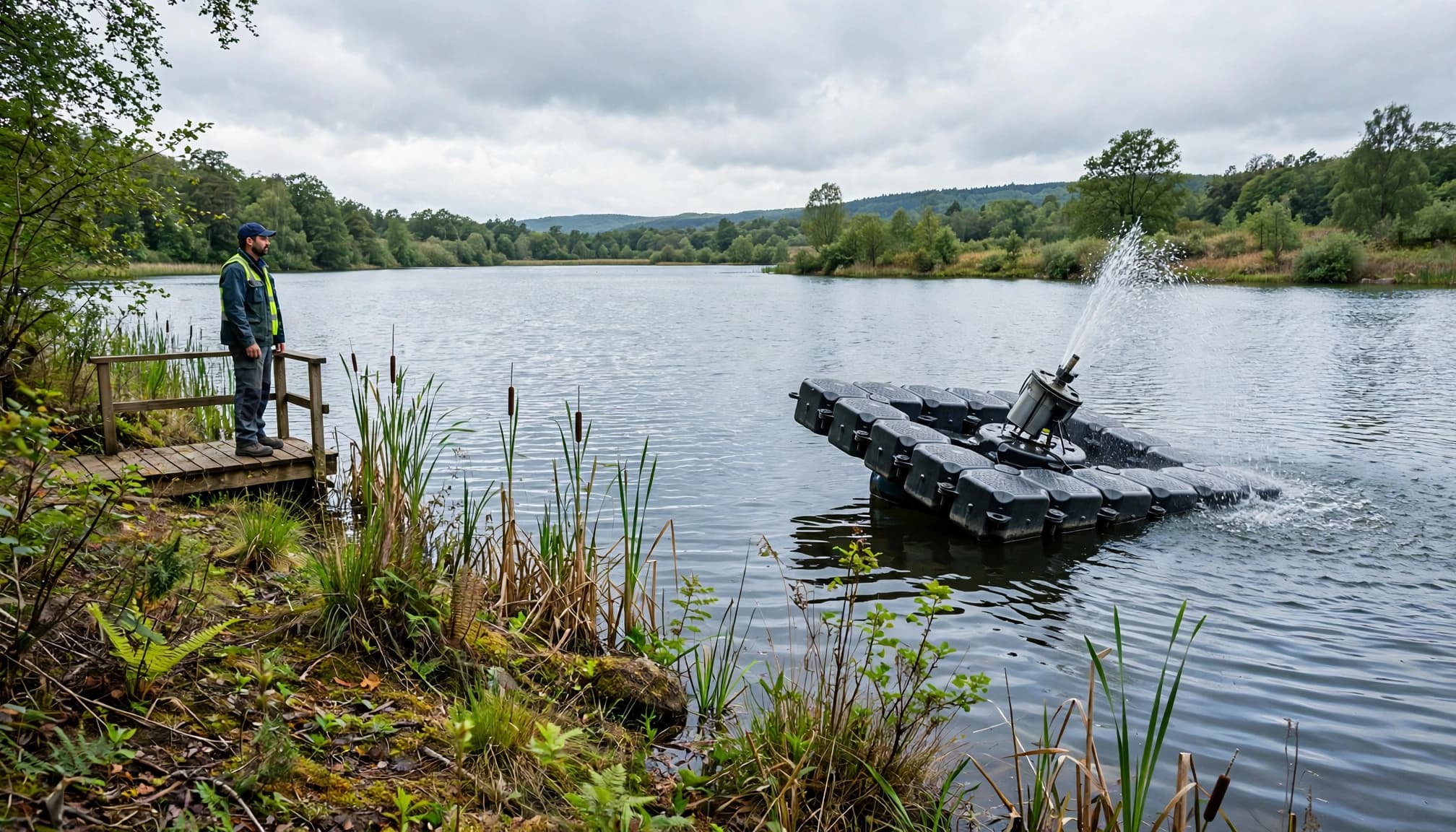
Look from a Safe Location
Stay on the bank or a stable dock. Keep swimmers, children, and boats away from the fountain and its lines. Never wade, swim, or lean over unstable ground to reach the unit.
If the fountain sits offshore, don't improvise a retrieval method. A qualified technician may need a boat or specialized equipment, depending on the lake and the installation. Offshore service access can expose people to deep water, submerged lines, slippery surfaces, and electrical hazards.
Confirm the Conditions Are Suitable
Postpone the inspection when lightning, heavy rain, strong wind, or rough water is present. Florida storms can move floating equipment, change line tension, and make a minor tilt appear worse.
Wait for calmer conditions before judging the fountain. If a storm or rapidly changing water level caused the issue, the unit may return closer to its normal position after the water settles. A repeated problem still requires a full inspection.
Shut Off Power Before Handling Anything
Use the normal controller or disconnect procedure in the fountain manual. Then turn off the circuit breaker that supplies the fountain. If the system has more than one control point, shut down each one according to the manufacturer's instructions.
Make sure the fountain has stopped completely. Keep the breaker off while anyone is near the equipment, and prevent another person from restoring power during the inspection. Never assume that a stopped spray means every component is safe to touch.
Do not handle underwater cables, motor housings, connectors, pump parts, or metal hardware while power is connected. Water and electricity create a serious shock risk, especially when insulation, seals, outlets, or connections have been damaged.
Before restarting the fountain, move everyone away from the unit and its mooring lines. Never test a suspected electrical fault by repeatedly resetting a tripped breaker. A breaker that trips when the pump starts can indicate moisture or equipment damage, not a minor inconvenience.
Identify What Is Making the Fountain Tilt
Leveling works only when you correct the actual cause. Start with the simplest explanation, then check the components that can affect flotation, water intake, spray, and movement.
Check for Uneven Loading and Debris
Leaves, branches, algae, and other material can collect around a float or intake. A damaged float can also sit lower than the others. Look for a visible difference in the waterline around the flotation body, unusual buildup, cracks, loose parts, or an object resting against the unit.
Never place concrete blocks, sandbags, scrap metal, or other makeshift weights on the fountain. Added weight can overload the floats, change the pump's position, reduce intake clearance, and void the manufacturer's warranty. Only use factory-approved parts and adjustments.
If you can remove light debris safely from shore without reaching into the water, do so with the power off. Leave anything caught under the unit or around an underwater component for a trained technician.
Compare the Spray With the Normal Pattern
A tilted spray doesn't always mean the floating platform is tilted. A clogged nozzle, algae buildup, mineral deposits, restricted intake, damaged impeller, or pump problem can redirect or weaken the display.
Look at the platform and the spray separately. If the fountain body appears level but the water plume leans, focus on the nozzle, intake, or pump rather than the anchors. If both the body and spray lean in the same direction, flotation or mooring may be involved.
The lake fountain maintenance checklist covers warning signs such as low flow, unusual vibration, persistent uneven spray, damaged lines, and repeated breaker trips.
Check Intake Clearance and Water Level
The pump needs enough water beneath the intake to draw properly without pulling sediment. Low water, drought, seasonal changes, or a shallow area can make the fountain sit differently and may restrict flow.
Compare the current water level with the level recorded during installation or previous inspections. Consider the lake's dry-season level when reviewing the placement. A floating fountain that works at one water level may show different behavior when the lake drops.
Do not move the fountain, extend an anchor, or alter the intake based on a guess. The correct clearance and placement depend on the model and site. Follow the manual or request a site assessment when the water level has changed substantially.
How to Level Floating Lake Fountain Equipment
Once the power is off and the cause is reasonably clear, make only the adjustment the manufacturer permits. Some systems allow changes to mooring-line position or tension. Others require a technician to inspect the float assembly, anchor, cable, or pump before any correction.
Adjust Mooring Lines Gradually
If the manual allows owner adjustments, inspect each accessible line for obvious slack, snags, abrasion, corrosion, or a shifted anchor. A line that is too tight can pull the fountain toward one side. A line that has loosened can let wind or current move the unit.
Adjust one line at a time and make a small change. Do not pull multiple lines tight at once, and don't use a vehicle, winch, or improvised extension to force the fountain into position. Keep hands away from pinch points and never stand where a stretched line could recoil.
The fountain should remain free to rise and fall with normal water movement. Anchor lines should guide the unit, not hold the flotation body underwater or force the intake toward the lakebed.
Recheck After Each Change
After each small adjustment, step back and let the fountain settle. Observe the platform from the same shoreline position. If the water is moving, wait for a calm interval before deciding whether the change helped.
Restore power only when everyone is clear and all tools are removed. Watch the fountain briefly, then shut power off again before making another adjustment. Stop if the tilt increases, the spray weakens, the unit vibrates, or a line begins to pull sharply.
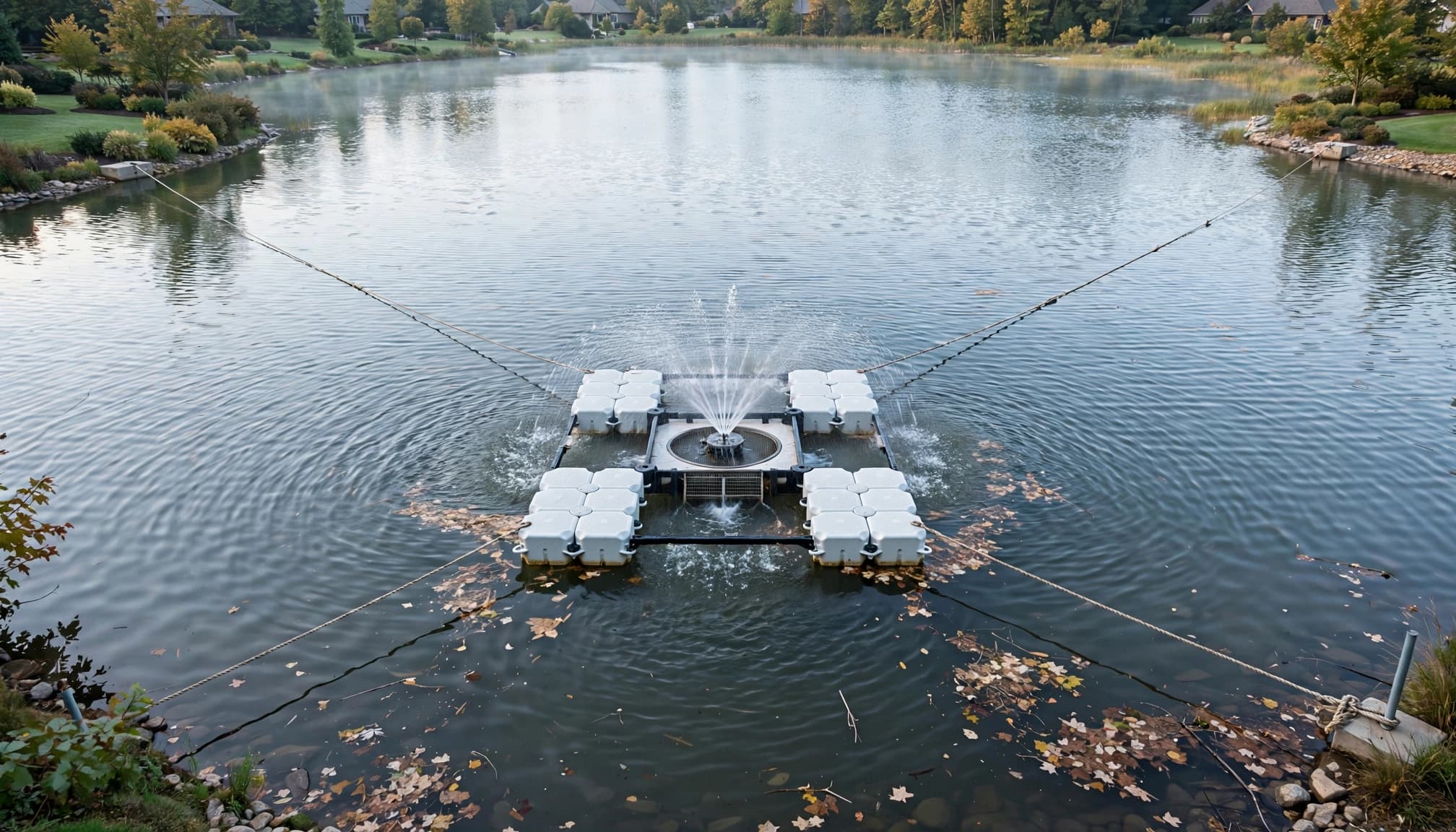
Floating Fountain Troubleshooting
Use the symptoms below to decide whether the problem may be a simple observation issue or a service concern.
| What you observe | Possible cause | Safe next step |
|---|---|---|
| The fountain tilts only during wind or waves | Temporary water movement or line tension | Recheck during calm water |
| One side sits low all the time | Uneven flotation, debris, damage, or anchor pull | Shut off power and arrange an inspection |
| The body is level but the spray leans | Clogged nozzle, intake restriction, or pump issue | Follow the manual's cleaning procedure |
| Flow is weak or inconsistent | Low water, blocked intake, algae, mineral deposits, or pump wear | Stop repeated testing and schedule service |
| The breaker trips | Moisture, cable damage, or electrical fault | Leave power off and call a qualified technician |
| The unit vibrates or shifts | Debris, motor trouble, damaged float, or anchor problem | Keep people and boats away; request evaluation |
When a Simple Cleaning May Help
Light surface debris can sometimes be removed from shore with the power off, provided you don't reach into the water or put yourself near unstable edges. Cleaning should follow the manufacturer's instructions. Never disassemble a pump, remove a motor housing, or disconnect an underwater cable without the proper training.
For broader diagnosis, use this floating fountain troubleshooting guidance to separate clogged components from pump, electrical, and water-level problems.
When Professional Service Is the Safer Choice
Call for service when the fountain remains uneven after calm conditions return, when the intake or floats cannot be inspected safely, or when lines, anchors, cables, and hardware are offshore. Professional help is also appropriate for persistent low flow, unusual noise, vibration, repeated breaker trips, or a spray pattern that stays uneven after cleaning.
A local provider can inspect the complete system rather than correcting one symptom. Trademark Water Systems provides lake fountain repair and installation for property owners who need help with installation, maintenance, or repairs.
Maintenance Tips That Help Prevent Tilting
Inspect the fountain on a schedule that fits the lake's debris, sunlight, nutrient levels, and water chemistry. Florida heat, rain, algae, and mineral deposits can shorten the time between cleanings.
Keep a simple site record with:
- The fountain model and installation date.
- Normal spray direction and appearance.
- Anchor locations and line condition.
- The electrical shutoff location.
- Water-level observations.
- Cleaning, inspection, and repair dates.
Remove visible debris before it gathers around the intake or floats. Watch for algae, mineral deposits, corrosion, frayed lines, damaged cables, and changes in spray height. Keep boats away from the fountain, underwater cables, and mooring lines.
Never modify the float assembly, add ballast, drill the frame, change electrical components, or relocate anchors without manufacturer approval. A small change can affect flotation, pump clearance, electrical safety, and warranty coverage.
Frequently Asked Questions
Can wind make a floating fountain look uneven?
Yes. Wind and waves can temporarily lower one side or pull the fountain against a mooring line. Observe the unit during calm conditions before changing anything. If the tilt remains, inspect the floats, debris, water level, and anchors.
Should I add weight to the high side?
No, not unless the manufacturer specifically provides an approved ballast system for that model. Improvised weights can overload the floats, interfere with the intake, and damage the fountain. A qualified technician should evaluate a persistent flotation problem.
Can I level the fountain while it is running?
No. Turn off the controller and breaker before touching the fountain, lines, intake, nozzle, or any related equipment. You may observe the spray from a safe location after restarting, but shut power off again before making another adjustment.
What if the fountain is offshore?
Don't swim, wade, use an unsecured small boat, or pull the unit toward shore with improvised equipment. Offshore inspection may require a trained technician with a safe retrieval plan, suitable equipment, and knowledge of the electrical system.
Conclusion
A floating fountain usually needs diagnosis before it needs leveling. Calm-water observation, a complete power shutoff, and a careful inspection can distinguish temporary wind movement from uneven flotation, blocked equipment, low water, or an anchor problem.
Make only small, manufacturer-approved changes, and stop when the issue involves electricity, deep water, damaged components, or persistent poor performance. Protecting the equipment and the people around it is the right way to restore a level, attractive spray.
Latest posts
Read Our Blog
Tips, guides, industry best practices, and news.


Contact us
Get in touch
Our friendly team is ready to chat.