
Lake Fountain Float Leaks: Find the Cause and Fix It
Leaks in a lake fountain float can reduce buoyancy, tilt the fountain, and place extra strain on mooring lines or electrical components. The visible symptom may be simple, but leaks in the float can come from cracked plastic, failed seams, damaged fittings, or waterlogged pontoons.
Before repairing anything, separate a float problem from a clogged intake, worn pump, damaged cable, or loose anchor. A careful inspection protects the equipment and helps you decide whether a temporary patch, permanent repair, or replacement is appropriate.
Key Takeaways
- Disconnect power before retrieving, touching, or inspecting a floating fountain.
- Never enter deep or moving water without a safe retrieval plan.
- Look for water inside the float, cracked seams, corrosion, cable abrasion, and shifted hardware.
- Use only repair products approved for the float material and continuous submerged service.
- A repeated breaker trip, damaged wiring, severe tilt, or unstable float requires professional attention.
- Follow the fountain manufacturer's instructions for removal, repair, storage, and reinstallation.
Why a Leaking Float Needs Diagnosis
A float keeps the pump, motor housing, nozzle, and related hardware at the correct height. When one pontoon loses buoyancy, the unit may sit low in the water or lean toward one side. That change can affect spray height, circulation, intake clearance, and the load on anchor lines.
Float symptoms can look like pump problems
A low or uneven spray doesn't automatically prove that the float is leaking. Debris around the intake, mineral deposits, algae, a worn impeller, or a control problem can create similar symptoms. The lake fountain pump troubleshooting process should consider these possibilities before anyone replaces a pontoon.
A fountain that runs but produces little movement may have an intake blockage or pump issue. A float leak becomes more likely when the assembly sits lower than usual, tilts, or contains visible water.
Small leaks can become equipment problems
Waterlogged floats add weight to the system. That extra load can pull on mooring lines and change the fountain's position. It may also bring the intake closer to sediment, leaves, or algae.
A tilted unit can vibrate, spray unevenly, or operate outside the position intended by the manufacturer. As a result, a small float defect deserves attention even when the pump still runs.
What to Inspect on a Floating Fountain
Start with the entire assembly, rather than focusing only on the suspected leak. A technician may inspect the intake screen, floats, mooring lines, nozzle, motor housing, and underwater cable during a floating fountain repair inspection.
Check the float and its connections
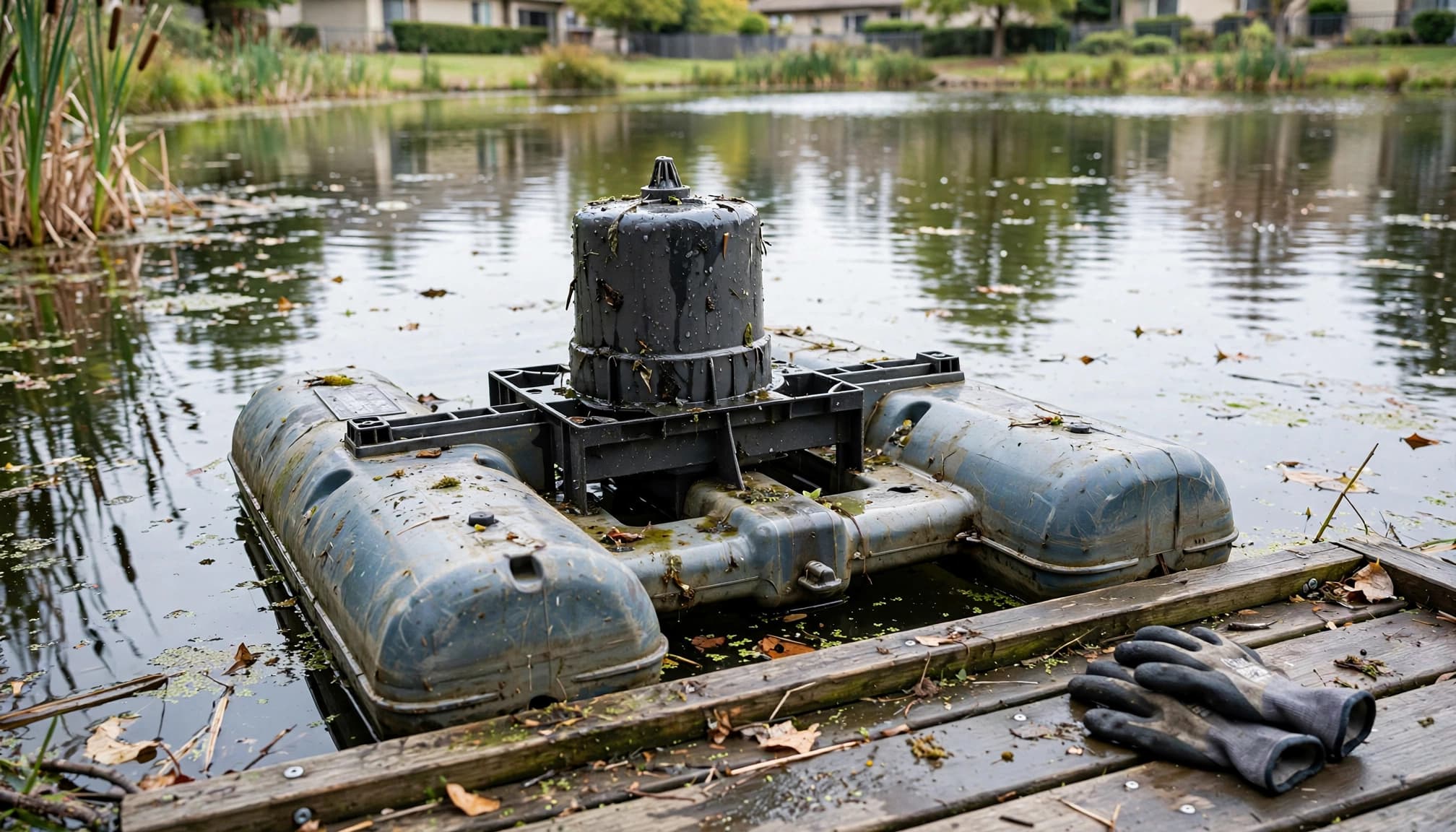
Look for cracks, splits, open seams, distorted plastic, loose fasteners, and damaged mounting points. Inspect around brackets and hardware because movement can stress the float where components attach.
If the design includes a drain plug or service opening, follow the manufacturer's instructions before opening it. Water inside a normally sealed float is strong evidence of a problem. Don't drill into a pontoon or remove a fitting that you can't replace correctly.
Also check whether corrosion has spread from metal hardware into the surrounding float material. Corrosion may weaken connections even when the plastic itself appears intact.
Inspect nearby components too
A proper inspection includes the cable route, mooring lines, anchors, intake, and nozzle. Look for cuts, abrasion, frayed areas, loose connections, displaced anchors, and debris that could restrict water movement.
Algae and mineral buildup can change spray performance without causing a leak. Keeping notes about the fountain's normal position and spray pattern makes changes easier to spot during routine maintenance.
How to Inspect a Leaking Float Safely
A floating fountain may sit far from shore, so retrieval can require a boat, approved waders, or specialized equipment. Don't swim out to a fountain, walk into unfamiliar water, or rely on a small personal watercraft that cannot safely support the equipment.
Disconnect power before touching the unit
Turn off the fountain at the designated disconnect and confirm that it cannot restart. Follow the manufacturer's shutdown procedure, especially if the system has timers, remote controls, or automatic controls.
Keep electrical connections, plugs, and control equipment dry. Never handle underwater cables, motor housings, or connectors while standing in water. If the breaker has tripped, leave the system off rather than resetting it repeatedly.
A breaker trip can point to moisture, damaged wiring, or another electrical fault. Electrical diagnosis belongs with a qualified technician.
Move the fountain to a stable work area
Retrieve the fountain with enough help and equipment to control its weight. Place it on a stable surface where it cannot roll, slide back into the water, or damage the cable.
Rinse away loose debris with clean water if the manufacturer permits it. Then dry the exterior and inspect seams, corners, mounting points, and fittings under good lighting. Take photographs before removing hardware or cleaning buildup. These records can help a service technician compare the condition with the fountain's normal setup.
How to Test for a Float Leak
Testing should be non-electrical and limited to procedures allowed by the manufacturer. The entire fountain should never be energized during a leak test, and the motor assembly should not be submerged beyond its approved operating position.
First, check for water inside an accessible float through an existing drain or service opening. If the design permits tipping or draining, collect the water and note its amount. A small amount of condensation may have a different meaning from a flooded pontoon, so avoid making a diagnosis from one observation.
For a suspected seam leak, clean and dry the area. Examine the seam with a bright light and use a dry paper towel around the suspected location. If the manufacturer allows an isolated pontoon to be placed in shallow water, a technician can watch for bubbles or seepage without exposing electrical parts.
Don't pressurize a float with an air compressor. Excess pressure can split a seam or distort the pontoon. Don't use dye, solvents, or household cleaners unless the manufacturer approves them for the material and the surrounding water environment.
Repair Options for Lake Fountain Float Leaks
The right repair depends on the float material, leak location, damage size, UV exposure, and the condition of the surrounding plastic. A product that sticks well when dry may fail after constant immersion, sunlight, temperature changes, and movement.
Temporary repairs
A temporary repair can help limit water entry while you arrange service or replacement. It should only use a patch or sealant labeled for the specific float material and submerged service. Follow the product's surface preparation, application, and curing instructions.
The repair area must be clean, dry, and free of algae, oil, mineral deposits, and loose plastic. A patch placed over dirty or wet material may appear secure but separate after the fountain returns to the lake.
| Situation | Sensible next step |
|---|---|
| Small, accessible seam defect | Consider an approved temporary patch while arranging inspection |
| Water inside a float | Drain only as directed, then identify the entry point |
| Cracked mounting point | Stop operation and request a professional assessment |
| Repeated patch failure | Replace the float or damaged assembly |
| Severe tilt or loss of buoyancy | Remove the fountain from service |
A temporary patch is not a substitute for checking why the damage occurred. Movement, rubbing hardware, UV exposure, ice, or repeated contact with debris may cause the same area to fail again.
Permanent repairs or replacement
A permanent repair requires compatibility with the float material and the fountain's operating conditions. Use a manufacturer-approved repair system, marine repair compound, or submerged-rated adhesive only when its label confirms suitability for continuous underwater use.
Replacement is often the better choice when the pontoon has widespread cracking, brittle plastic, major deformation, several repair areas, or damaged attachment points. It may also be the safest option when the original float is no longer structurally sound.

Protect Floats From Weather and Debris
Florida heat and strong sunlight can speed up UV damage, while heavy rain can move debris into the intake or push a fountain against its mooring system. Tropical weather preparation should happen before a storm threatens the area. Follow the manufacturer's instructions for removing, securing, or storing the equipment.
In colder regions, freezing water can expand inside a damaged or water-filled float. Ice can also shift a fountain, strain anchors, and damage fittings. Owners should account for winter storage requirements even if the fountain normally operates year-round.
Routine checks should include the float position, mooring lines, cable route, intake screen, nozzle, and visible hardware. A lake fountain maintenance checklist can help property managers document normal spray height, inspection dates, weather events, and recurring problems.
When to Call a Professional or Replace the Float
Some repairs involve more than a leaking pontoon. Professional service is the safer choice when the unit is difficult to retrieve, the lake is deep or hazardous, or electrical parts may have been exposed to water.
Warning signs that need service
Turn the fountain off and arrange an inspection if it repeatedly trips a breaker, makes grinding sounds, vibrates unusually, loses flow after cleaning, or develops a persistent uneven spray. Damaged wiring, frayed cables, corroded hardware, drifting anchors, and rapid algae return also need attention.
These symptoms can involve the pump, motor, control system, cable, anchor, or intake rather than the float alone. A technician can inspect the complete assembly and identify which component requires repair.
When replacement makes more sense
Replace a float when it has lost substantial buoyancy, shows damage in multiple locations, or has cracked attachment points. Replacement is also reasonable when the repair surface is brittle, distorted, or contaminated enough that a new patch cannot bond reliably.
Use the exact replacement specifications approved for the fountain. A float that looks similar may have a different capacity, mounting pattern, or operating height. The fountain manufacturer's instructions should control the repair and reinstallation process.
FAQ About Lake Fountain Float Leaks
Can I keep running a fountain with a small float leak?
Running it briefly may worsen water entry, tilt the unit, and increase stress on anchors or hardware. Keep the fountain off until you confirm that the float remains stable and the manufacturer allows continued operation. A visible change in buoyancy deserves inspection before regular use.
Can household silicone or waterproof tape repair the float?
Don't assume that a household product is suitable for constant submersion. Check the label for compatibility with the float material, continuous underwater use, UV exposure, and the expected temperature range. If those details are missing, use a manufacturer-approved product or ask a technician.
Does a low spray prove that the float is leaking?
No. A blocked intake, clogged nozzle, algae, mineral deposits, pump wear, electrical trouble, or a shifted anchor can also reduce or redirect the spray. Compare the fountain's position and buoyancy with its normal condition before choosing a repair.
Conclusion
Lake fountain float leaks need a careful diagnosis because the same uneven spray or low position can come from several components. Disconnect power, use a safe retrieval plan, inspect the float and surrounding equipment, and choose only repair materials approved for submerged service.
A small defect may justify a temporary patch, while widespread cracking, waterlogged plastic, damaged mounting points, or repeated repair failure points toward replacement. When buoyancy, wiring, breakers, or anchors are involved, professional lake fountain maintenance and repair from a qualified service provider can protect both the equipment and the people around the lake.
Latest posts
Read Our Blog
Tips, guides, industry best practices, and news.


Contact us
Get in touch
Our friendly team is ready to chat.