
Lake Fountain Installation for a Concrete-Bottom Pond
A floating fountain can work in a concrete-bottom pond when its size, placement, power supply, and mooring plan fit the site. The concrete floor needs to remain intact, while the fountain must stay in position as water levels and weather change.
For a successful lake fountain installation , start with the pond's operating conditions rather than the tallest spray in a catalog. A little planning also makes the equipment easier to reach for cleaning and repair.
Start With the Pond's Purpose
Decide what you want the fountain to accomplish before choosing equipment. A decorative fountain creates a visible display and moves water near the surface. It can also add oxygen near the top of the pond, but its spray won't circulate every corner or correct the cause of an algae bloom.
If deeper oxygen distribution is the priority, a bottom-diffused aeration system may be a better fit. Some properties benefit from both a fountain and a separate aeration system. The right choice depends on the pond's depth, shape, and water-quality concerns.
Look at the whole pond
Record the pond's approximate dimensions, shape, and typical changes in water level. Note coves, shallow areas, vegetation, and places where debris collects. A concrete floor doesn't prevent leaves and organic material from accumulating around an intake.
For an HOA or managed property, include the people responsible for the shoreline and drainage features in the planning process. A fountain location needs to work for maintenance crews as well as residents enjoying the view.
Set a realistic goal
A community may want a focal point near an entrance, while a homeowner may prefer a smaller display visible from a patio. Write down the main goal so appearance and operating needs guide the equipment choice.
If algae, odors, or stagnant areas are part of the concern, consider them separately. A larger spray won't remove the nutrients that feed algae or fix a drainage problem.
Choose the Right Fountain Size
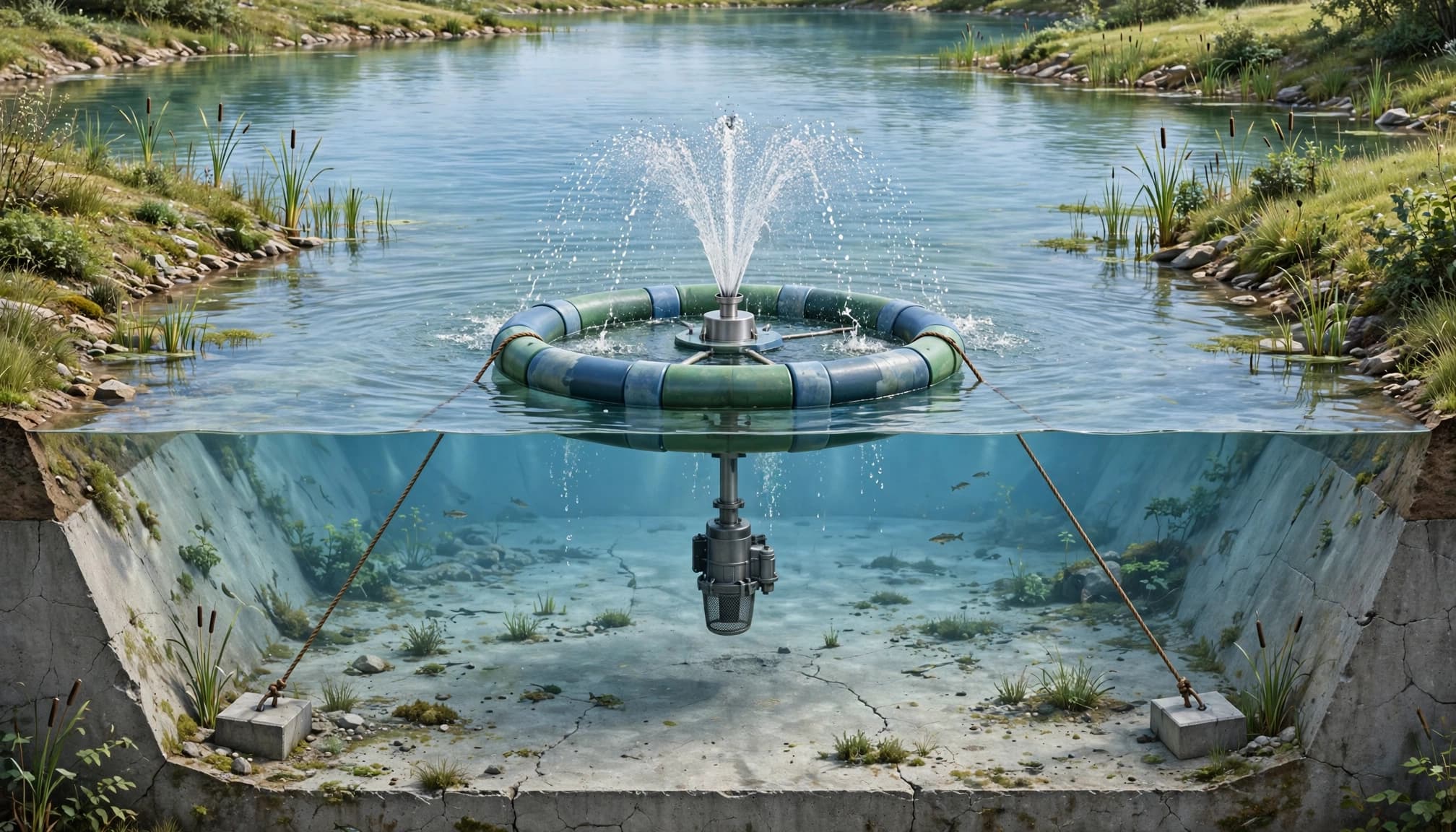
Pond acreage is a starting point for sizing, but it doesn't tell the whole story. Depth, pond shape, debris, and the intended display all affect the choice. A narrow pond may have plenty of surface area but limited room for a wide spray.
Match the spray to the space
Compare spray height and spray width as separate measurements. A tall plume may look attractive across a large lake, yet a wide pattern can drift onto a nearby path or seating area when the wind picks up.
Look at the proposed display from the places people will see it. For a community pond, those might include an entrance, clubhouse, or walking route. The goal is a display that fits the setting without sending water toward people or property.
Consider operating conditions
The fountain needs enough water around its intake to operate properly throughout normal water-level changes. It also needs a location where debris won't constantly collect around the pump.
Avoid choosing by horsepower or a generic acreage rule alone. Our guide to lake fountain sizing and site assessment covers the pond conditions that influence equipment choice.
For an HOA, the purchase decision should also account for operating hours and ongoing care. A larger display can require more electrical capacity and may cost more to operate and maintain.
Pick a Location That Works Beyond the View
The center of a pond may look like the obvious location, but appearance is only one consideration. The fountain also needs enough open water, access for service, and separation from areas where people use the pond.
Account for wind and nearby activity
Consider the prevailing wind and what lies downwind. Spray that stays over the water on a calm day may reach a sidewalk, road, or landscape bed in a breeze.
Keep the fountain away from swimming areas, docks, fishing spots, kayak launches, and boat paths. Residents shouldn't handle the equipment or its lines. Likewise, leave room around inlets, outlets, irrigation intakes, and protected vegetation so the fountain doesn't interfere with their use or maintenance.
Plan for water-level changes and access
A location that works at high water may become too shallow during a dry period. The operating area also needs enough room for the fountain to move within its mooring plan without reaching the bank.
Service access matters throughout the fountain's life. Screens and nozzles collect debris, and a technician may need to reach the unit for inspection or repair. Our lake fountain placement guide explains more about shoreline and wind considerations.
Plan Electrical Service Before Installation
Water and electricity require a professional installation plan. A qualified electrician should handle the electrical design and work, including the supply, grounding, protective devices, and outdoor components.
Choose a suitable power source
Electric fountains offer a consistent display and can operate on a timer or after dark. They can also support larger pumps than many solar units. Solar equipment can be useful where access to electrical service is difficult, although output depends on sunlight and the system's design.
The comparison of solar and electric lake fountains can help you weigh operating hours against the available power options.
For an electric system, the electrician should account for the fountain and any lights or controls. Other equipment on the same circuit can add to the load and contribute to trips.
Keep the electrical system accessible
The plan should identify the fountain's breaker, disconnect, and controls. Ground-fault circuit interrupter, or GFCI, protection is an important safety layer, but it doesn't make a damaged cable or wet connection safe.
Include the cord path and shore-side equipment in the site plan so the electrician can design for the pond and service access. Avoid relying on a temporary extension cord as a permanent supply. Never handle electrical components while standing in water.
Assemble and Moor the Floating Fountain
A floating fountain generally combines a float, pump, intake, and nozzle. The float supports the unit at the surface while the pump draws water through the intake. A mooring system keeps the fountain within its intended operating area.
The assembly and mooring plan should suit the selected fountain and the pond. On a concrete-bottom pond, protecting the existing surface is part of that plan.
Use a stable mooring arrangement
Mooring lines need secure anchor points and enough allowance for normal water-level changes. The design also needs to account for wind and wave exposure. A fountain in open water can experience more movement than one in a sheltered area.
Avoid relying on a tree, fence, dock rail, or lightweight landscape feature as an anchor. These may move or fail under load. A drifting fountain can reach shallow water or place strain on its electrical cable.
Keep future service in mind
The float should sit level, and the intake needs room to draw water without collecting debris at the bottom. Mooring hardware should remain accessible for inspection, since abrasion, corrosion, and loose connections can develop over time.
For community properties, record the fountain location and anchor points in the site file. That gives a new property manager or service crew a useful starting point if the unit shifts after a storm.
Test the Fountain and Troubleshoot Startup Issues
A startup test establishes what normal operation looks and sounds like. Once the installation is ready, observe the display from shore and note the spray pattern, float position, and any unusual vibration.
Keep people out of the water and away from the equipment during operation. If the fountain behaves unexpectedly, shut it down rather than leaving it running while you investigate.
If the fountain won't start
A timer or control setting may be preventing operation, while a tripped breaker or GFCI may indicate an electrical problem. A damaged pump, overloaded circuit, or wet connection can also interrupt power.
Don't repeatedly reset a tripping breaker. Shut the system down and arrange professional service. Our guide to lake fountain electrical and pump problems explains common causes.
If the spray is weak or uneven
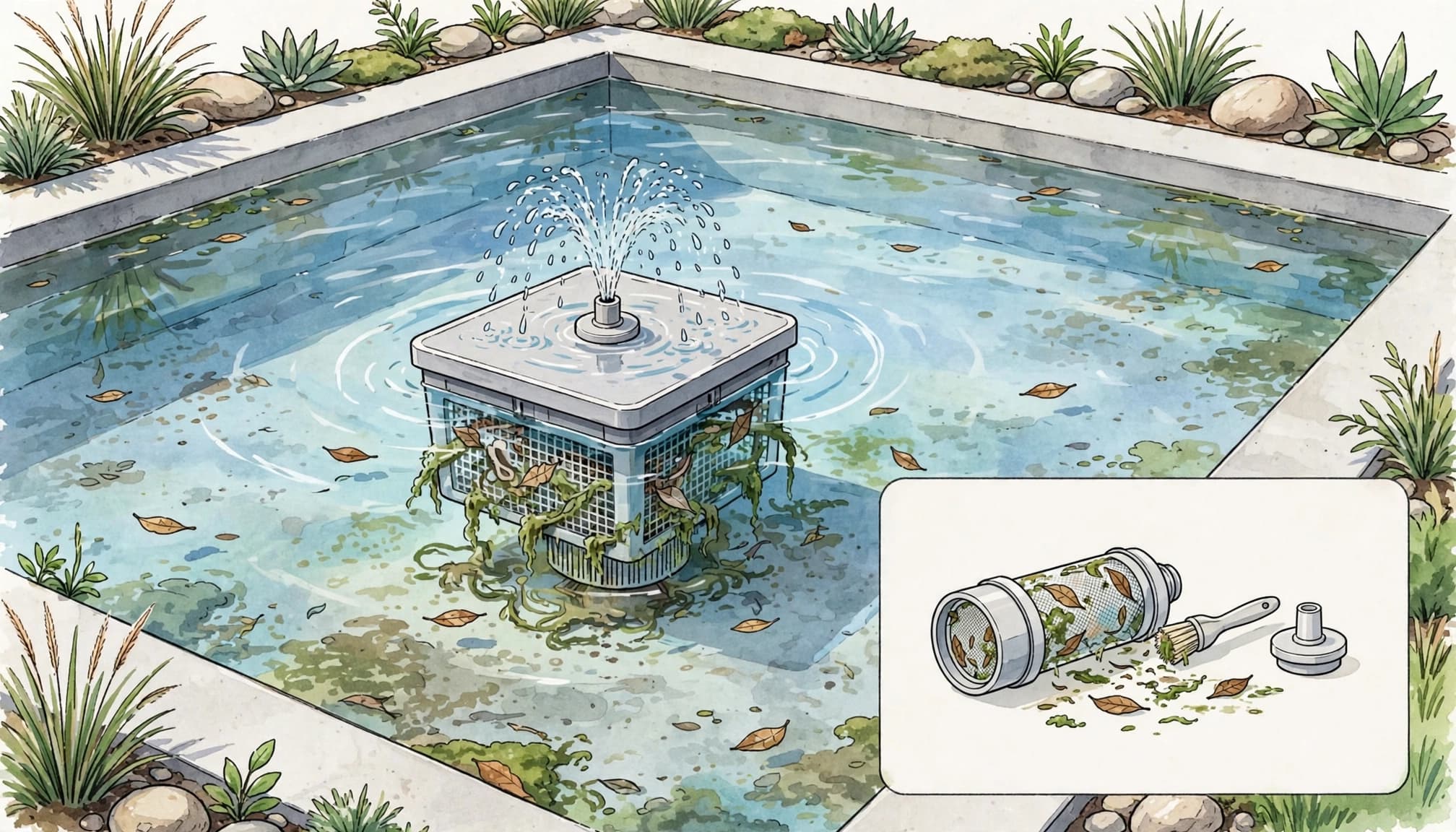
Leaves or algae around the intake can restrict flow. Buildup in a nozzle can also change the shape of the spray. A tilted float or a fountain that has moved out of position may affect the display.
Turn off the fountain circuit at the breaker before anyone handles the pump, float, or cable. If weak flow returns after basic cleaning, or the pump grinds or vibrates unusually, arrange service. Internal wear or an impeller problem may need a technician's attention.
Maintain the Fountain for Florida Conditions
Heat, rain, algae, mineral deposits, and storm debris can all affect a fountain. A routine based on the pond's conditions helps catch small changes before they interrupt operation.
Watch for changes between cleanings
Look at the spray and float position during normal property inspections. A weaker pattern, visible buildup, drifting unit, or unusual sound gives the maintenance team a reason to investigate.
Cleaning needs vary with sunlight, debris, water chemistry, and algae growth. Screens, nozzles, and floats may need attention more often in a pond with heavy leaf fall or persistent buildup. Our lake fountain maintenance checklist covers the components to include in a routine.
Prepare for storms and repairs
Set a storm procedure before hurricane season, including who is responsible for shutting down or removing equipment when needed. After severe weather, inspect the fountain and its surroundings before restoring operation. Keep people away from damaged electrical equipment and downed utility lines.
Keep a record of the fountain model, shutoff location, normal spray pattern, and maintenance dates. For Naples and Southwest Florida properties, we provide lake fountain installation and service when a system needs professional attention.
Protect the Pond and the Fountain
A well-planned floating fountain can add a display and surface movement while leaving the concrete pond bottom intact. The best fit starts with the pond's actual conditions and a clear goal for the feature.
Give the electrical system, mooring, and service access as much attention as the spray. With a reliable maintenance routine, changes in flow or position are easier to spot before they become larger problems.
Latest posts
Read Our Blog
Tips, guides, industry best practices, and news.


Contact us
Get in touch
Our friendly team is ready to chat.
