
Where to Install Whole-House RO Equipment in Florida
A good location for whole-house RO installation has enough space for the equipment, access to the home's plumbing, a suitable drain route, and room for future service. In many Florida homes, a garage, utility room, or protected outdoor area can work.
The RO membrane is only one part of the setup. You may also need pretreatment tanks, water storage, and a pump, so an empty corner alone doesn't guarantee a good fit.
Start by looking at the complete system and where its connections need to go.
What a Whole-House RO Installation Needs
Whole-house reverse osmosis equipment treats water before it reaches the fixtures connected to the system. Unlike an under-sink unit, it must support household use at several taps and appliances.
Pretreatment and the RO unit
Water typically passes through pretreatment before it reaches the membrane. Depending on the water test, that equipment may address sediment, hardness, iron, chlorine, or other conditions that could interfere with treatment.
A private well with sediment and hardness concerns may need more equipment than a home with a different water supply. Our guide to whole-house treatment for Florida well water explains how those stages work together.
The pretreatment equipment also needs enough capacity for the RO unit. A sediment filter that restricts flow can limit production, even when the membrane itself is large enough.
Storage and household pressure
RO makes treated water gradually, so many whole-house systems store it for use when the household needs it. An atmospheric storage tank is a common choice for full-home systems.
A repressurization pump then moves water from the tank into the house at usable pressure. The tank, pump, controls, and associated piping all need a place in the installation plan. A standard well pressure tank alone doesn't replace the storage and delivery arrangement an RO system may need.
Compare Installation Areas in Your Home
Garages, utility rooms, mechanical closets, and protected outdoor areas are common options. The right choice depends on the equipment design and the connections available at your home.
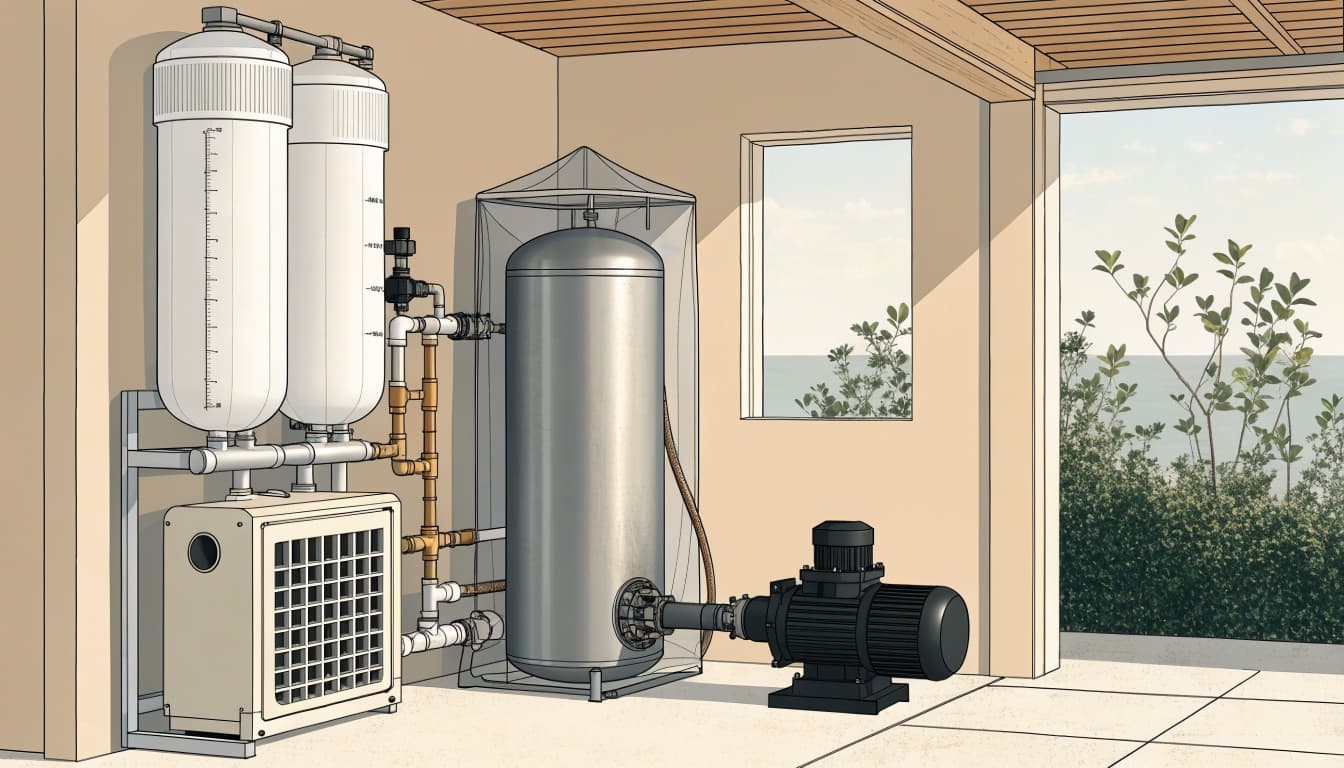
This comparison can help you narrow the options before a site visit.
| Location | Potential advantage | Main planning concern |
|---|---|---|
| Garage | Often has open floor space and access to plumbing | Vehicles and stored items can block service access |
| Utility room | Can keep equipment near other mechanical systems | Floor space and door width may limit tank choices |
| Mechanical closet | Keeps equipment contained | A tight doorway or low ceiling can complicate replacement |
| Protected outdoor area | May preserve indoor floor space | The enclosure and equipment must suit the proposed conditions |
The best location is the one that accommodates the complete system , including the connections and access needed after installation.
Garage or utility room
A garage can provide room for separate pretreatment tanks and storage. However, leave a clear path to the equipment rather than planning to move bikes, boxes, or a vehicle each time a filter needs service.
A utility room may offer convenient access to plumbing and power. Make sure the tank can enter through the doorway and that other equipment won't block the RO controls or shutoff valves.
Mechanical closet or outdoor area
A mechanical closet may suit a compact design, but the usable space extends beyond its floor area. Doors, shelves, water heaters, and overhead obstructions can all affect access.
An outdoor arrangement needs a suitable protective design for the selected equipment. Include the enclosure, plumbing route, electrical access, and space for servicing in the proposed layout.
Leave Room for Maintenance and Replacement
Equipment dimensions are a starting point, not the whole space requirement. A technician needs to reach components, remove parts, and work on connections without dismantling the room around them.
Access to filters, valves, and controls
Filter housings need enough room to open and remove cartridges. Treatment tanks may need access at the top for valve service, while gauges and controls should remain visible and reachable.
Leave the main shutoff and system bypass accessible. If a leak occurs or service is needed, you shouldn't have to move storage shelves to reach a valve.
Also consider ordinary tasks. A softener may need salt added, and pretreatment equipment may need periodic cleaning or replacement media. The location should allow those jobs without blocking a walkway.
Moving the tank and larger components
A storage tank must fit through the route into the installation area, including doors and turns. It also needs a stable, level support appropriate for its filled weight.
Plan for eventual removal as well. A tank that fits before cabinetry or shelving goes in may be difficult to replace later. Our guide to whole-house RO storage tank sizing covers the relationship between household demand and tank capacity.
Map the Plumbing Before Choosing a Spot
A whole-house system generally connects to the incoming water supply before the branches serving the fixtures you want treated. The equipment doesn't have to sit directly beside the entry point, but its location affects the piping needed to connect it.
Follow the water through the system
Start at the main supply or well equipment, then identify where water can enter pretreatment and the RO unit. The treated water travels to storage and then through the delivery pump to the household distribution line.
The existing well pump and pressure tank are part of the supply side. Their performance matters because pretreatment and the RO membrane need adequate incoming flow and pressure. Long pipe runs and restrictive filters can reduce the pressure available at the membrane.
The installer should also include shutoff valves and a bypass arrangement suited to the design. A bypass can make service possible without leaving the home without water, though bypassed water may not receive the same treatment.
Decide which fixtures need treated water
A whole-house design may supply indoor fixtures while leaving an irrigation line or another outdoor branch on untreated supply. That choice affects the plumbing route and the amount of water the RO system must produce.
Tell your installer which fixtures you want connected before the layout is finalized. Laundry, guest bathrooms, hose bibs, and irrigation can make a substantial difference to the storage and pump design.
Plan for RO Drainage
Reverse osmosis produces a concentrate stream as well as treated water. Pretreatment equipment may also discharge water during its cleaning or regeneration cycle. Both streams need a suitable destination.
Give the drain line a workable route
The drain connection should be part of the placement plan, not an afterthought. An area near the water supply may still be a poor fit if the discharge line has no practical route to an appropriate drain.
The design must account for the applicable plumbing requirements, including an air gap or other required backflow protection. Keep the drain connection accessible so it can be inspected and serviced.
A floor drain can help manage incidental water around equipment, but it doesn't automatically establish that the drain is suitable for RO concentrate or pretreatment discharge.
Account for the volume of discharge
The amount of reject water depends on the system and its operating conditions. A whole-house unit can send more water to a drain than a small drinking-water system because it produces water for more uses.
For homes with septic systems, the discharge plan needs particular attention. The installer should consider the existing system and applicable local requirements when designing the route. Drainage capacity can influence both equipment selection and placement.
Provide Power for Pumps and Controls
The proposed location needs appropriate electrical service for the equipment in the design. That can include RO controls, a feed pump, a delivery pump, or other treatment components.
Electrical components should be positioned and installed appropriately for the conditions and protected from plumbing leaks. A qualified electrician can provide any circuit or outlet work the system requires.
Feed pressure and delivery pressure are different
A feed booster pump increases pressure before water reaches the RO membrane when the incoming supply can't meet the unit's requirements. Not every installation needs one.
A repressurization pump performs a different job: it moves treated water from atmospheric storage into the household plumbing. Some systems need both types of pump, while others have a different arrangement.
These RO feed and delivery pump options explain why a pressure concern before the membrane needs a different solution from low pressure at household fixtures.
Include Service and Testing in the Plan
A location that looks tidy on installation day should also support routine work. Ask how the technician will reach the membrane, pretreatment equipment, tank controls, pump, and drain connections once all the piping is in place.
If the system treats a private well, a current water analysis helps determine the pretreatment design. Water quality can change, so testing provides a useful baseline for future service. After commissioning, treated-water testing also gives you more information than taste alone.
Keep the equipment manuals and service records in an accessible place. They help identify replacement parts and provide a record of filter changes, water tests, and repairs.
Location can affect the cost of installation, too. Additional piping, electrical work, or a longer drain route may change the scope of the job. Our overview of RO system cost factors in Florida explains what goes into a proposal.
Questions to Ask Your Installer
A written layout and equipment proposal make it easier to see how each part fits. Before work begins, ask:
- Where will the pretreatment equipment, RO unit, storage tank, and delivery pump go?
- Can each filter, valve, control, and tank be reached for service or replacement?
- Which household fixtures will receive RO water, and will any lines bypass treatment?
- Where will concentrate and pretreatment discharge go, and how is backflow addressed?
- What electrical work will the pumps and controls need?
- What protection does the proposed location need for Florida heat, humidity, coastal salt air, and flooding?
- How will you test the system's pressure and treated water after installation?
The answers should describe your home's layout and water use, rather than relying on a standard equipment package.
Choose a Location That Works Beyond Installation Day
The best place for whole-house RO equipment fits the full treatment system and gives you access to plumbing, drainage, power, and future service. Storage and the delivery pump deserve as much planning as the membrane itself.
At Trademark Water Systems, we offer custom reverse osmosis systems for well water in Naples and Southwest Florida. A site visit is a practical next step when you're ready to match a location to your home's water and equipment needs.
Latest posts
Read Our Blog
Tips, guides, industry best practices, and news.


Contact us
Get in touch
Our friendly team is ready to chat.
