
Lake Fountain Motor Overheating: Causes and Repair Steps
A lake fountain motor can feel warm during normal operation, but rising heat, weak spray, unusual noise, or repeated shutdowns point to a problem. Understanding the difference between normal warmth and lake fountain motor overheating helps property owners respond before the pump suffers more damage.
Most overheating problems involve restricted water flow, debris, mechanical wear, electrical faults, incorrect alignment, or failed thermal protection. Start with safety, then inspect the simplest causes before arranging model-specific repairs.
Normal Motor Warmth vs. Overheating
Electric motors produce heat while running. A motor housing that feels warm after operating may be normal, especially in Florida's hot weather. Warmth by itself does not confirm a failure.
Overheating becomes more likely when heat increases quickly or appears with other symptoms, such as:
- The fountain spray becomes weak, uneven, or intermittent.
- The motor shuts off and later restarts after cooling.
- A breaker or GFCI trips repeatedly.
- The pump makes grinding, humming, or rattling sounds.
- You notice a burning odor, melted insulation, discoloration, or smoke.
- The motor vibrates more than usual.
- Water movement drops even though the pump continues running.
Never touch a running fountain motor, submerged cable, or wet electrical component to judge its temperature. Disconnect power first, and follow the manufacturer's inspection instructions.
A fountain that runs but produces little water movement may have an intake blockage, impeller issue, or internal wear. These symptoms deserve attention before the motor overheats.
Safety Before Inspecting the Fountain
Water and electricity create a serious shock hazard. A safe repair begins before anyone removes a cover, reaches toward the pump, or retrieves a floating unit.
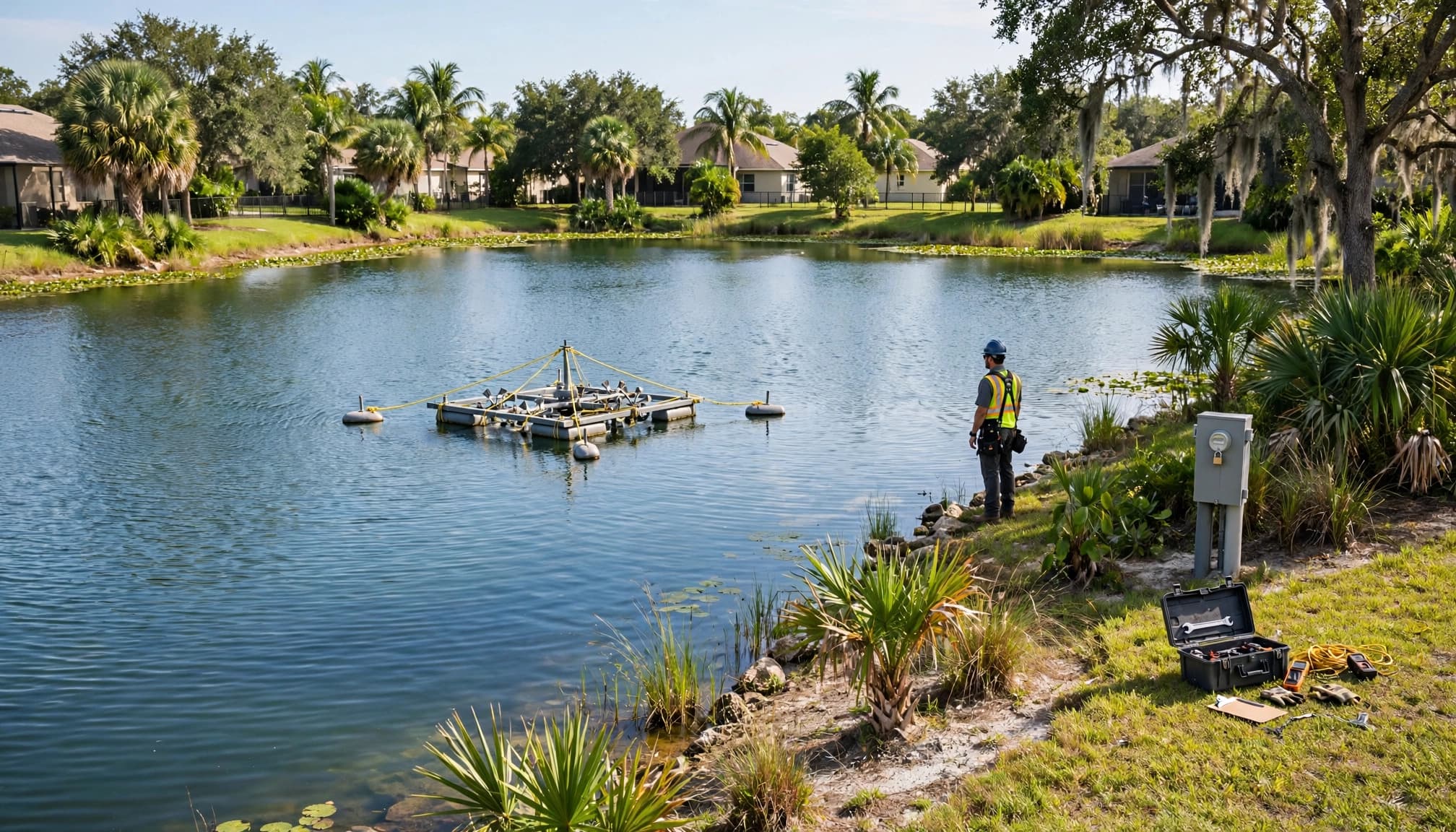
Disconnect and secure all power
Follow the fountain's manufacturer procedures and site lockout procedures before inspection. Turn off the equipment at the designated disconnect and circuit breaker. If the system uses a lockable disconnect, apply a lock and warning tag so nobody can restore power while work is underway.
A qualified person should verify that the equipment is de-energized with the correct test equipment. Do not rely on a control switch alone. Keep residents, pets, and maintenance workers away from the water during inspection.
Submerged components should be treated as energized until a qualified professional proves otherwise. Review these lake fountain electrical safety guidelines before planning any cable or underwater inspection.
Know when to stop
Do not enter a pond, pull a floating fountain by its power cable, or handle damaged wiring. A floating unit may require a boat, waders, lifting equipment, or another safe retrieval method.
Stop the inspection and call a qualified electrician or fountain technician if the breaker trips again, the GFCI will not reset, a cable is damaged, or the pump was submerged during a storm or flood. Repeatedly resetting protection can worsen equipment damage and expose people to electrical danger.
Common Causes of Lake Fountain Motor Overheating
The motor may be overheating because it is working harder than designed. The cause can be outside the motor itself, so replacing the motor without checking flow, mechanics, and wiring may not solve the problem.
Blocked intake or restricted water flow
Leaves, algae, plastic, sediment, and other debris can cover the intake screen or prefilter. As the opening becomes restricted, the pump may move less water and operate under abnormal conditions.
A low lake level can create a similar problem. If the intake is partly exposed, the pump may draw air, lose proper cooling, or run inconsistently. Check the water level against the equipment requirements, especially after drought, evaporation, or heavy maintenance.
Inspect the visible intake, prefilter, fountain head, and nearby water only after power is disconnected. The guidance on clearing pond fountain intake obstructions can help identify accessible blockage points.
Damaged impeller, bearings, or alignment
The impeller moves water through the pump. Debris, wear, corrosion, or a damaged impeller can reduce flow and increase mechanical load. A bent shaft or worn bearing may create vibration, grinding, or a high-pitched sound.
Alignment also matters. If the motor, pump, shaft, or coupling is misaligned, rotating parts can rub or place extra pressure on bearings. A fountain that shifts because of failed anchoring can also pull on the assembly, cables, or plumbing.
Do not force an impeller loose or open a sealed motor housing unless the service instructions specifically allow it. Exact parts and procedures vary by model.
Wiring, voltage, moisture, and overload
Loose connections, damaged insulation, water intrusion, an overloaded circuit, or incorrect supply voltage can cause heat at the motor or electrical connection. A pump that trips a breaker may have moisture damage, a failing motor, a damaged cable, or a circuit problem.
A fountain pump that keeps tripping needs diagnosis, not repeated resets. Electrical testing near water should be performed by a qualified professional with the proper equipment.
Step-by-Step Repair Checks
After power is isolated and the fountain is safely accessible, work through the checks in a logical order. Record what you find instead of replacing parts based only on the overheating symptom.
Check water flow and visible components
- Confirm the water level. Compare the current level with the manufacturer's required operating range. Do not run the fountain if the intake cannot remain properly submerged.
- Inspect the intake screen. Look for leaves, algae, plastic, sediment, or other material covering the opening. Clean it with the method recommended for the unit.
- Check the prefilter and fountain head. A blocked prefilter or nozzle can reduce output and make the pump work harder. Remove buildup only after disconnecting power.
- Inspect the impeller if the model permits access. Look for debris, cracks, looseness, corrosion, or signs that the impeller cannot turn freely. Do not reach into the pump while connected to power.
- Check for abnormal movement. Excessive vibration can indicate an impeller problem, worn bearing, loose mounting, obstruction, or alignment issue.
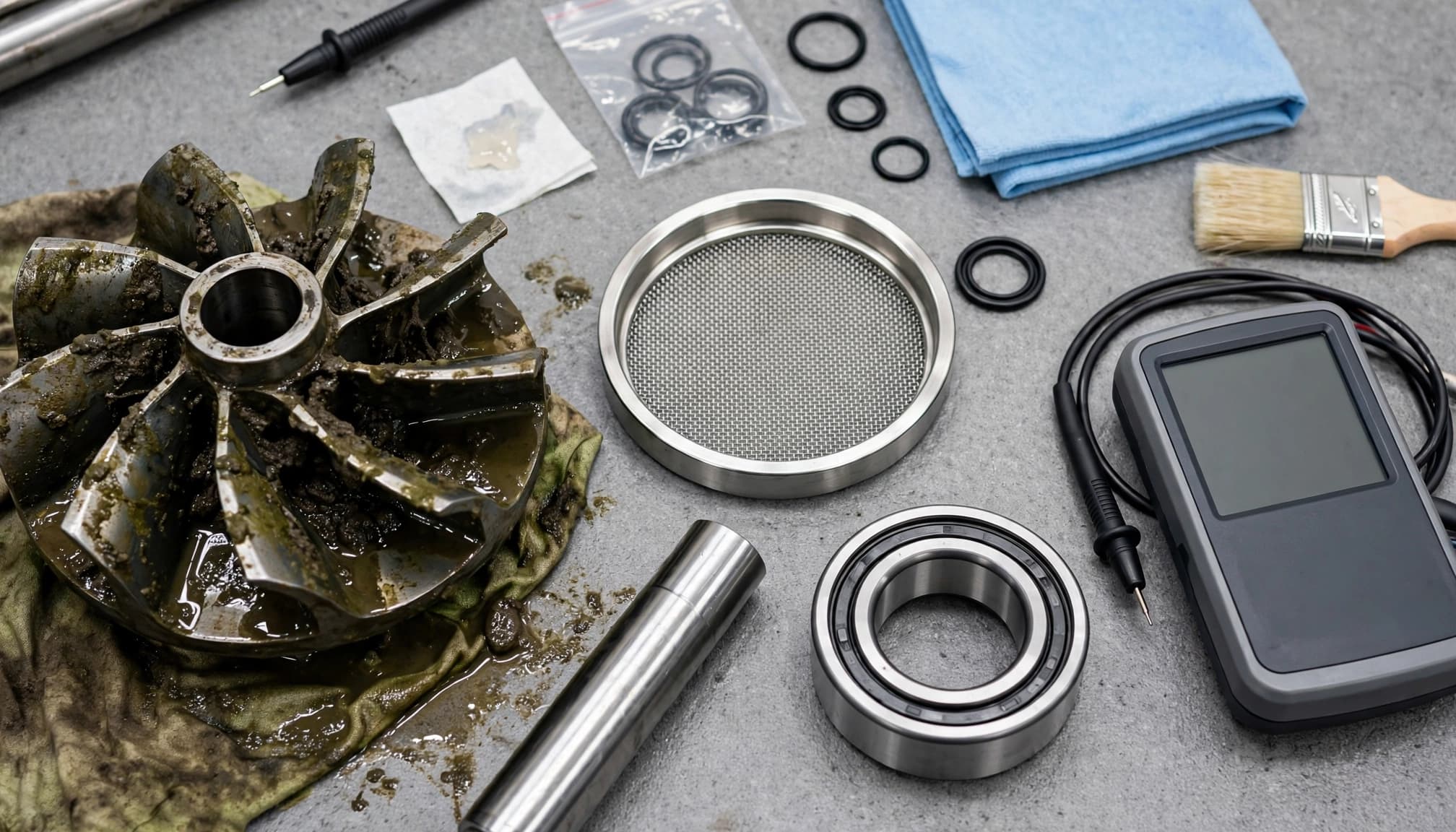
Inspect mechanical and electrical conditions
A technician may need to check shaft alignment, coupling condition, bearing resistance, motor insulation, cable integrity, and connection points. These tests require model-appropriate tools and procedures.
The supply voltage should match the motor's nameplate and installation requirements. A qualified person can test voltage under operating conditions and check whether the circuit drops or becomes unstable. Never test exposed live equipment yourself near the lake.
Thermal overload protection also needs inspection. This protection may shut the motor down when it becomes too hot, helping prevent more serious damage. Do not bypass, bridge, remove, or replace it with an incorrect device. If the overload trips repeatedly, find the cause instead of defeating the protection.
Motor repairs and replacement parts vary by manufacturer, model, horsepower, control system, seal design, and installation. A compatible impeller or bearing for one pump may be wrong for another. Use the equipment identification plate and manufacturer documentation when selecting parts.
When Cleaning Is Enough and When Repair Is Needed
Cleaning an intake screen or nozzle may restore normal flow when debris is the only problem. However, cleaning does not repair a worn bearing, damaged impeller, failing motor winding, compromised cable, or incorrect voltage.
Arrange professional service when the fountain still overheats after safe cleaning, loses flow repeatedly, vibrates, makes grinding sounds, or develops an uneven spray. A pump that runs but produces little movement can still have internal wear even when the visible intake looks clear.
The lake fountain maintenance checklist also identifies repeated breaker trips, frayed cables, shifting equipment, unusual vibration, and persistent spray problems as reasons to schedule service.
Property owners should also plan for safe access. Floating fountain retrieval can become difficult when the unit is far from shore, tangled in vegetation, or affected by shifting anchors. Use established floating fountain anchoring methods and do not improvise an underwater repair.
Preventing Future Overheating
Regular care reduces the chance that a small restriction becomes a motor failure. Maintenance should match the fountain's model, operating schedule, water conditions, and location.
Follow a practical maintenance routine
Inspect the water level, intake screen, prefilter, fountain head, and visible cables at a frequency suited to the property. Warm weather, algae growth, storms, leaves, and mineral-heavy water can increase maintenance needs.
Keep a record of cleaning dates, flow changes, breaker trips, unusual sounds, and repairs. A gradual decline in spray height may reveal a developing blockage or mechanical problem before the motor shuts down.
Routine service can include pump and nozzle cleaning, electrical connection inspection, spray adjustment, and replacement of worn components. Trademark Water Systems provides lake water fountain services for installation, maintenance, and repair in the Naples area.
Treat warning signs as useful information
A breaker trip, thermal shutdown, or sudden loss of flow is a protective warning. It tells you to stop and investigate safely, not to keep restarting the equipment.
A decorative fountain can support surface circulation and aeration, but it does not replace every pond's complete aeration plan. The correct fountain size, intake design, and operating schedule depend on the lake and the equipment.
Quick Troubleshooting Summary
| Symptom | Possible area to inspect | Safe next step |
|---|---|---|
| Weak or uneven spray | Intake, prefilter, nozzle, impeller | Disconnect power, then inspect accessible parts |
| Motor gets hotter over time | Restricted flow, bearing, alignment, voltage | Stop operation and arrange testing |
| Grinding or vibration | Impeller, shaft, bearing, mounting | Keep power off and schedule mechanical inspection |
| Breaker trips repeatedly | Moisture, cable, motor, circuit | Do not reset repeatedly, call a qualified professional |
| Motor shuts off and restarts later | Thermal overload or excessive load | Find the cause, never bypass protection |
The pattern matters more than any single symptom. A weak spray after heavy algae growth suggests a different first check than a burning odor with repeated breaker trips.
Key Takeaways
- Warm motor housing can be normal, but rapid heat buildup with weak flow, noise, shutdowns, or trips is not.
- Disconnect and secure power before every inspection.
- Check water level, intake blockage, prefilters, fountain heads, impeller condition, alignment, wiring, voltage, bearings, and overload protection.
- Never bypass thermal protection or work on live electrical equipment.
- Model-specific repair procedures and replacement parts must come from the manufacturer or a qualified technician.
- Repeated overheating usually needs diagnosis rather than repeated cleaning or resets.
FAQ About Lake Fountain Motor Overheating
Can a fountain motor be warm during normal operation?
Yes. Motors generate heat while running, and outdoor conditions can add to that warmth. Stable operation, normal spray, and the absence of unusual odors, noise, vibration, or shutdowns are more reassuring than temperature alone.
Should I reset the breaker if the fountain stops?
You can follow the equipment's approved reset procedure once only if the area is safe and there is no visible damage. Do not keep resetting a breaker or GFCI that trips again. Repeated trips can indicate moisture, cable damage, motor failure, or an overloaded circuit.
Can I clean the intake while the fountain is running?
No. Disconnect power first, follow lockout procedures, and verify that the equipment cannot restart. Keep people out of the water, and treat submerged parts and cables as energized until a qualified professional confirms otherwise.
Why does the motor overheat after I clean the intake?
The restriction may be deeper in the pump, at the prefilter, impeller, or fountain head. Mechanical wear, misalignment, bearing problems, voltage issues, or a damaged motor can also remain after visible debris is removed.
Should I replace the motor or the whole pump?
That depends on the fountain model and the failure. Some systems allow specific motor or pump components to be replaced, while others require a complete matched assembly. Use the manufacturer's parts information or have a technician identify the correct replacement.
Conclusion
Normal warmth is part of motor operation, but rising heat combined with weak flow, vibration, noise, shutdowns, or electrical trips needs attention. Start by isolating power and checking water level, intake restrictions, impeller condition, alignment, wiring, voltage, bearings, and thermal protection.
A safe diagnosis protects the pump and the people around the lake. When the issue involves submerged equipment, live electrical testing, repeated overload trips, or model-specific parts, professional service is the safer repair path.
Latest posts
Read Our Blog
Tips, guides, industry best practices, and news.


Contact us
Get in touch
Our friendly team is ready to chat.