
Lake Fountain Pump Cavitation: Signs and Common Causes
A fountain that suddenly sounds rough or loses its usual spray height needs attention before you keep it running. Lake fountain pump cavitation is one possible explanation, but clogs, air entering the intake, wear, and electrical faults can create similar problems.
The priority is a safe diagnosis , followed by a correction suited to the pump and its installation. Start by understanding what cavitation means, then look at the fountain's water supply, operating symptoms, and equipment condition.
What lake fountain pump cavitation means
Cavitation occurs when pressure inside a pump drops enough for small vapor bubbles to form in the water. Those bubbles collapse when they reach an area of higher pressure. This process can damage pump components if it continues.
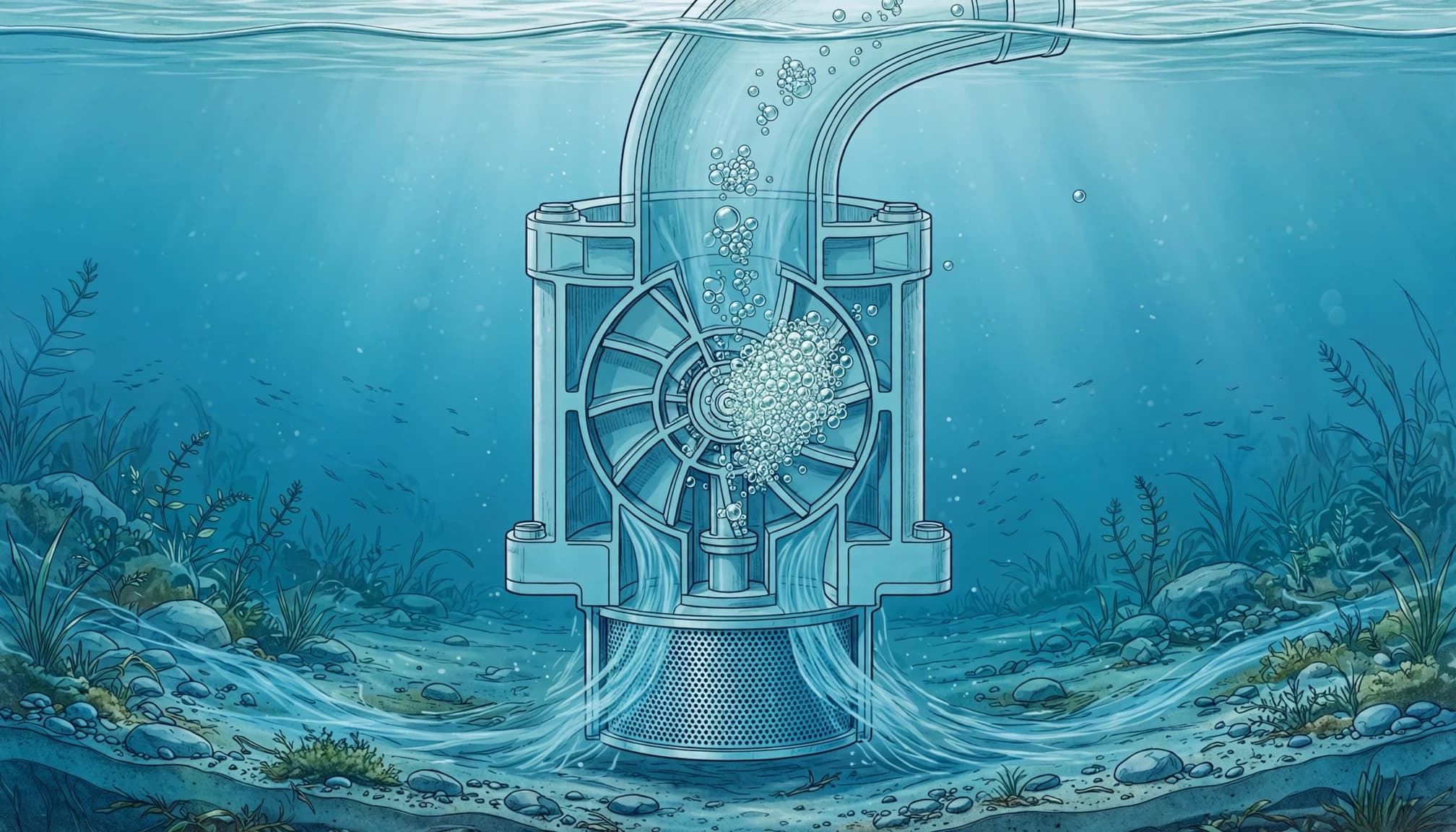
Vapor bubbles form inside the pump
The important distinction is where the bubbles originate. With cavitation, water changes into vapor because of local pressure conditions inside the pump.
A pump doesn't have to draw visible air through its intake for this to happen. Likewise, bubbles around a fountain don't establish that cavitation is occurring. Fountain spray naturally mixes air and water near the surface.
Because the process happens inside the equipment, shoreline observations alone won't establish the diagnosis. The pump's condition and operating setup matter more than a description of its sound.
Air entering the intake is a different problem
Air entrainment means outside air enters the water moving through the pump. An intake drawing air near the surface is different from vapor forming inside the pump.
Both problems deserve attention, but their corrections may differ. Treating either one as a generic "bubble problem" can lead to unnecessary equipment changes.
Also, ordinary splashing can sound louder when wind carries it toward nearby homes. Separate the sound of falling water from a new mechanical noise before assuming the pump has an internal problem.
Signs that may indicate a pump problem
Watch for changes compared with the fountain's normal operation. These symptoms justify inspection, but none proves cavitation by itself .
Weak flow or an uneven spray
A shorter plume, an uneven pattern, or very little water movement can indicate a restricted intake, clogged nozzle, impeller problem, or internal wear. Electrical problems can also affect pump operation.
Notice whether the entire display has weakened or only part of the spray looks different. That distinction helps describe the problem, although it doesn't identify the failed component.
Our lake fountain pump troubleshooting guide covers several causes of weak or absent water movement. A low-flow fountain needs that broader assessment before anyone attributes the problem to cavitation or replaces the pump.
New grinding sounds or unusual vibration
Grinding sounds and unusual vibration are reasons to stop operating the fountain and arrange service. Persistent uneven spray also deserves attention, especially when routine cleaning hasn't restored performance.
Describe what changed rather than assigning a diagnosis. For example, record whether the sound begins at startup or continues throughout operation. Note any movement of the float or a change in the fountain's position.
Meanwhile, distinguish mechanical noise from splash noise. Spray height, wind direction, and nozzle condition can affect what residents hear. A louder display doesn't automatically mean the pump is failing.
Common intake and water-level issues
The intake and surrounding water deserve early attention because they determine what reaches the pump. Several common fountain problems begin in this area.
Debris restricts the intake screen
Leaves, algae, and sediment can cover the intake screen. As material accumulates, less water reaches the pump, and the spray may weaken.
Screen condition matters too. A tear, loose attachment, or gap can allow debris to bypass the screen and enter the equipment. Cleaning a damaged screen won't restore its protective function.
Our intake screen maintenance guide explains why both cleanliness and screen integrity matter. Keep the screen installed during operation. Running the fountain without it, even briefly for a test, exposes the pump to material the screen normally blocks.
Low water changes the installation conditions
Low lake levels can affect some fountain pumps. A floating fountain may remain afloat while its intake has less clearance above sediment or less water around it.
Look for changes in the surrounding water and the fountain's position. A unit that has shifted toward a shallow area may face different conditions than it did at installation.
The manufacturer's minimum water depth and intake-clearance requirements govern placement. There isn't one depth rule for every fountain. Moving the equipment or changing its mounting without accounting for those requirements can create another operating problem.
Why the pump and fountain head must work together
A fountain's pump, intake, plumbing, and spray head work as one system. Changing one component can alter how the others perform.
For example, a protective intake cage or a long intake run can affect water delivery. A replacement fountain head also needs to match the pump's operating capabilities. An attractive spray pattern alone doesn't establish that the combination is suitable.
The manufacturer's flow-versus-head chart describes pump performance at different operating points. Pump horsepower alone doesn't describe that performance, so a larger motor isn't automatically the answer to a weak display.
Our guidance on shallow-water fountain intakes addresses the relationship between water depth, intake protection, and fountain-head selection.
Before making changes, assess the existing pump and follow its manufacturer's installation and operating guidance. That includes compatible fountain heads, water-supply requirements, and permitted adjustments.
An older installation deserves the same attention as a new one. Sediment accumulation, changing water levels, or replacement components can leave the current setup different from its original configuration. Address those conditions before choosing another pump.
How to approach diagnosis safely
A lake fountain combines electricity, water, and equipment that can be difficult to retrieve. Begin with observations that don't require touching it.
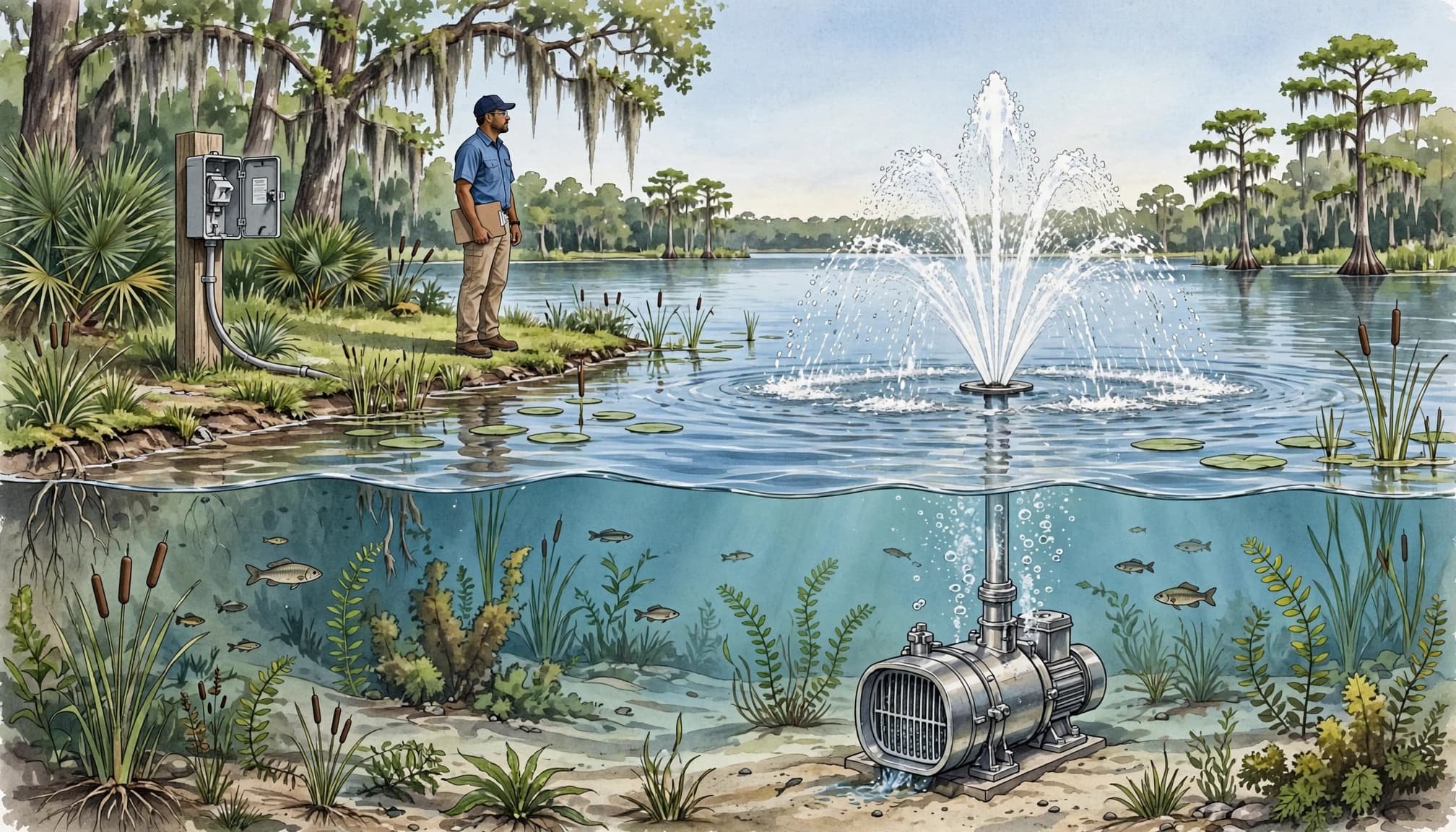
Record what you can see from shore
Note the spray pattern, water level, fountain position, and when the symptoms began. A short video from shore can document changes without bringing anyone near energized equipment.
Record recent events too. Heavy rain, visible debris accumulation, maintenance, or a component replacement can provide useful context. These details help narrow the investigation without turning an observation into a diagnosis.
Don't enter the water, reach toward the intake, or attempt to adjust a running fountain. Severe vibration, grinding, visible cable damage, or repeated protective-device trips call for shutdown and professional attention.
Inspect only after safe power isolation
Hands-on inspection starts with a safe shutdown:
- Turn off the fountain at its controls.
- Have qualified personnel isolate its electrical supply and prevent an automatic restart.
- Retrieve the equipment using appropriate access and lifting methods.
- Inspect the intake, nozzle, float, mooring hardware, and accessible components according to the manufacturer's instructions.
Keep electrical testing and damaged-cable assessment with qualified personnel. A timer setting or stopped spray doesn't establish that equipment is safe to handle.
Our safe fountain startup checklist also addresses abnormal noise, vibration, and protective-device trips. Never run a water-dependent pump dry to test whether it still works.
Practical fixes and preventive maintenance
The appropriate correction depends on the condition found. Start with the identified problem rather than changing several components at once.
Restore clean, protected water access
When debris restricts an accessible intake, manufacturer-approved cleaning may restore water delivery. Nozzle cleaning may also address a distorted spray pattern.
However, cleaning isn't a repair for every fault. A torn screen needs an appropriate replacement, and damaged attachments need attention before operation resumes. Persistent problems after cleaning can point to wear or another equipment issue.
Avoid improvised screen modifications or operating without intake protection. Also, don't assume a weak spray needs a larger pump. The existing equipment may simply lack adequate water access or have a component that needs repair.
Build inspections around Florida conditions
Florida heat, rain, algae growth, and sediment make regular fountain inspections worthwhile. Observe the display during routine property rounds, then schedule safe cleaning and equipment inspection before buildup becomes extensive.
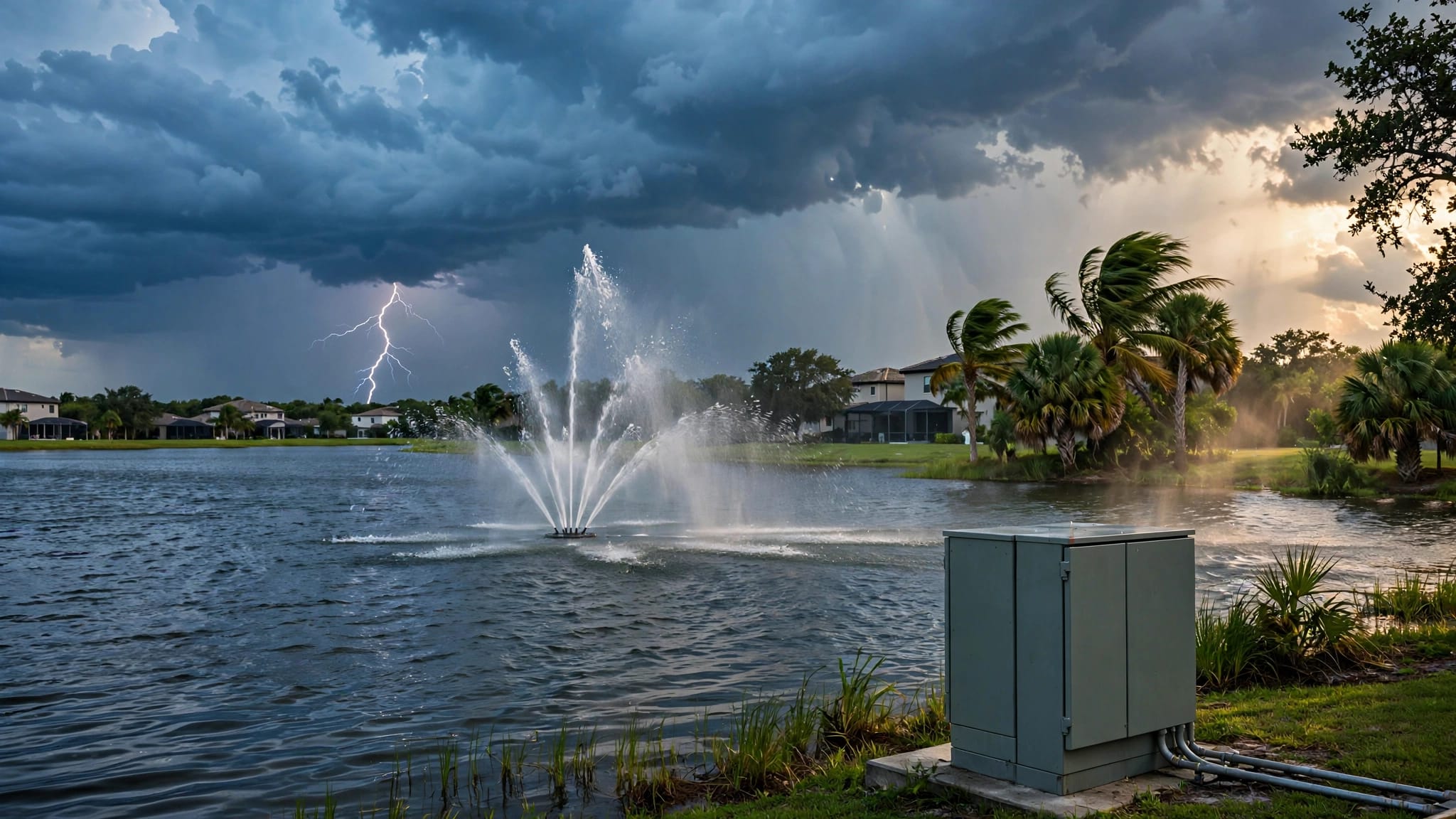
After storms, look from shore for displaced equipment, floating debris, or a changed spray pattern. Storm-related movement can affect mooring lines and the fountain's location.
Our Florida fountain maintenance checklist helps organize ongoing care. Keep a record of cleaning, repairs, water-level changes, and replacement parts so recurring problems are easier to recognize.
Consistent records also help distinguish a new fault from a condition that returns after each cleaning.
When to seek professional service
Arrange service when the fountain continues to produce weak flow after appropriate cleaning, makes grinding sounds, or vibrates unusually. Damaged cables, shifted equipment, and repeated breaker trips also require professional attention.
A tripping breaker is an electrical warning. Don't repeatedly reset it to keep the display running, and don't treat it as evidence of cavitation. Moisture, cable damage, or other electrical faults require a separate assessment.
Suspected lake fountain pump cavitation needs a full-system evaluation rather than a diagnosis based on sound alone. The assessment should account for the intake, impeller, water supply, fountain head, equipment position, and manufacturer's operating requirements.
We install, repair, and maintain lake fountains in Naples and across Southwest Florida. For service, call (239) 455-9496 .
Describe the symptoms and any recent changes when arranging the visit. Clear observations help direct the inspection, while the equipment assessment determines whether cleaning, repair, repositioning, or replacement is appropriate.
Keep the diagnosis grounded in pump condition
A rough-sounding or weak fountain deserves attention, but cavitation is only one possible explanation. The strongest starting point is a safe, complete inspection of the pump and the system supplying it with water.
Address restrictions and damaged components before making broader equipment changes. When symptoms persist, professional assessment and manufacturer-guided corrections offer a sounder path than repeated restarts or replacing parts on a guess.
Latest posts
Read Our Blog
Tips, guides, industry best practices, and news.
Contact us
Get in touch
Our friendly team is ready to chat.