
Fountain Commissioning Checklist for a Safe Startup
A new fountain can produce an attractive spray while still hiding a leak, wiring problem, or blocked intake. A fountain commissioning checklist helps you confirm safe operation before accepting the installation.
For homeowners and community managers, startup should include equipment checks, documented tests, and a clear maintenance handoff. Requirements vary between decorative basins, floating lake fountains, and other designs. Start with the manufacturer's instructions and the approved installation requirements.
Establish the Requirements Before Switching On
Gather the pump, fountain, lighting, filter, and controller manuals that apply to your installation. Confirm model numbers, required operating conditions, warranty information, and any outstanding inspections.
The installer should identify applicable local codes, permit requirements, and electrical inspection obligations. In Southwest Florida, approval requirements can vary with lake ownership, shoreline conditions, and the electrical work involved.
Compare the completed installation with the approved layout. For a lake installation, the findings from a lake fountain installation site assessment should carry through to equipment placement and service access.
Pass: Required documents are available, applicable approvals are resolved, and qualified personnel have cleared the installation for startup.
Fail: Missing instructions, unresolved inspection issues, or installation differences prevent a reliable acceptance decision. Correct these before energizing affected equipment.
Keep people away from the work area during testing. Don't let an attractive spray become the reason to overlook an unfinished safety check.
Fountain Commissioning Checklist: Acceptance Checks
Use these checks during the commissioning walkthrough. Record each result as pass, fail, or not applicable, with an explanation for anything excluded.
| Component | Pass condition | Fail or hold condition |
|---|---|---|
| Basin and piping | Water containment and connections meet the installation requirements. | Unexplained water loss, leakage, or damaged piping. |
| Pump and circulation | Pump operates within documented limits without abnormal noise or vibration. | Grinding, unstable operation, restricted intake, or repeated trips. |
| Water level and flow | Level, intake clearance, and spray match the approved design. | Dry-running risk, sediment intake, or unintended overspray. |
| Filtration | Installed screens and filters are clean, correctly fitted, and functioning. | Blockage, leakage, incorrect assembly, or abnormal readings. |
| Electrical components | Qualified electrician verifies required wiring and protection. | Damaged cables, failed protection, or unresolved electrical defects. |
| Controls | Start, stop, schedules, and installed protective functions work correctly. | Unexpected operation or failed shutdown functions. |
| Lighting | Installed fixtures operate correctly with intact seals and secure mounting. | Flickering, water intrusion, or exposed wiring. |
| Leaks | Static and operating checks show no unintended leakage. | Wet joints, equipment leaks, or unexplained level changes. |
| Safe operation | Access, shutoff, anchoring, and public protection are acceptable. | Unsecured equipment, trip hazards, or unsafe access. |
A passed visual inspection doesn't replace required measurements or electrical testing. Treat any safety-related failure as a stop condition until correction and retesting are complete.
Inspect the Basin, Piping, and Leak Points
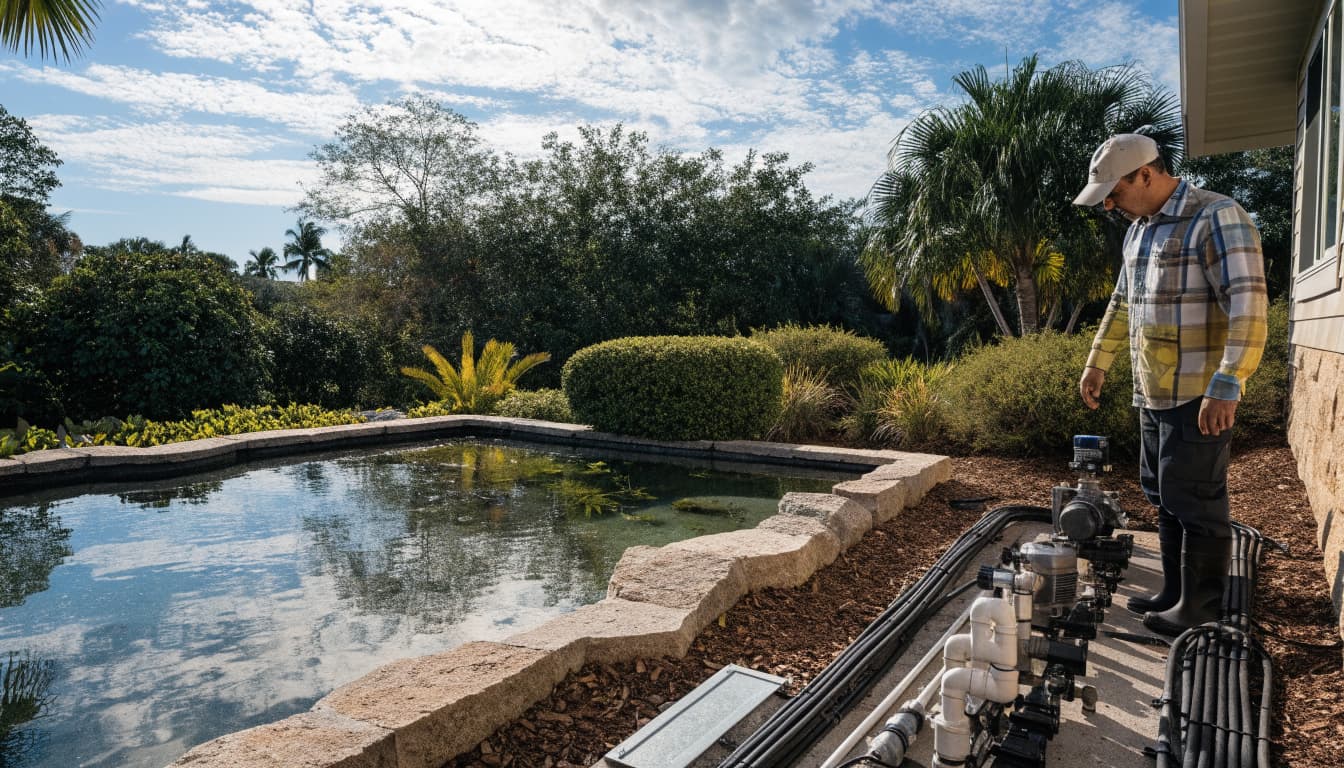
Confirm water containment
For a constructed basin, inspect the liner, waterproofing, drains, penetrations, and overflow. Confirm required curing is complete before filling. Remove construction debris that could damage the pump or clog a nozzle.
Perform the specified water-retention test. Record starting and ending levels, elapsed time, weather, and whether automatic makeup water operated.
Pass: The basin retains water within the project's acceptance criteria, without unexplained loss or visible leakage.
Fail: Damp areas, damaged waterproofing, or unexplained level changes remain unresolved. Automatic filling can conceal a leak, so account for it during testing.
Check connections under operating conditions
Inspect accessible piping, unions, valves, supports, and connections before startup. Confirm valve positions against the installation documentation rather than opening every valve indiscriminately.
Then check accessible joints while the system operates. Any pressure testing must follow the piping and equipment instructions, using qualified personnel where required.
Pass: Connections remain dry, piping stays supported, and valves direct water correctly.
Fail: Drips, movement, air leaks, or damaged fittings require correction. For a floating fountain without external piping, document that portion as not applicable and inspect its applicable connections instead.
Verify Pump Performance and Circulation
Start the pump according to its manual
Confirm intake screens are clear and the pump has the required water supply. Prime pumps that require priming. Never test a water-dependent pump by running it dry.
During startup, observe sound, vibration, and water delivery. Have qualified personnel record electrical readings where the manufacturer requires them. Compare readings with the equipment's documented limits.
Pass: The pump starts reliably and operates without abnormal noise, vibration, or protective-device trips.
Fail: Grinding, unstable output, overheating indications, or repeated trips require shutdown and investigation. Don't repeatedly reset a breaker to keep a new fountain running.
Check movement beyond the spray
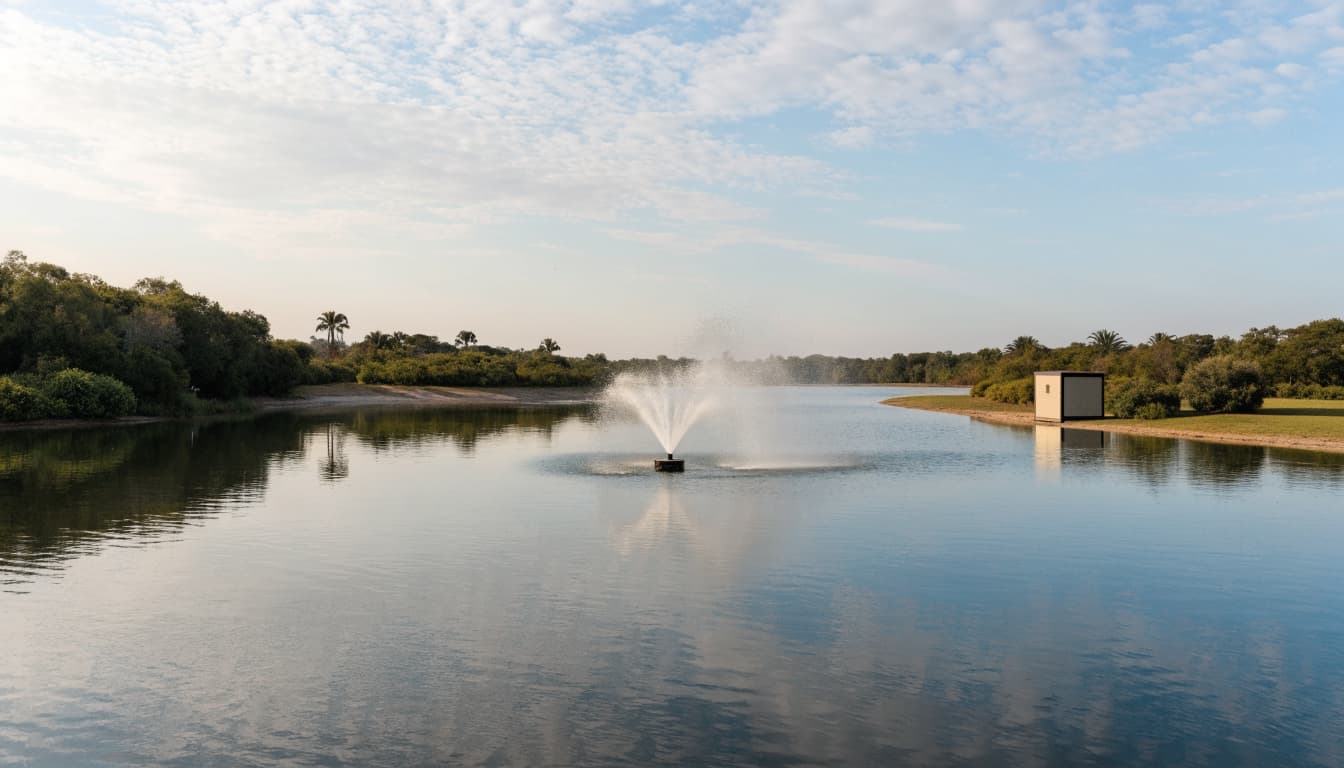
Watch for a consistent spray and unobstructed intake. For floating equipment, verify that floats, mooring lines, and anchors hold the intended position without stressing cables.
Pass: Water movement matches the approved design, and equipment remains stable.
Fail: Persistent uneven spray, drifting, or sediment entering the intake needs correction.
A lake fountain can support surface circulation and aeration. However, spray appearance doesn't prove adequate mixing throughout a pond. If oxygenation is an acceptance goal, use the project's specified assessment rather than judging the plume alone.
Confirm Water Level, Flow, and Filtration
Match water level to the installation
Verify operating level, nozzle alignment, overflow behavior, and makeup-water operation where fitted. Observe whether wind carries spray onto walkways, electrical equipment, neighboring property, or outside the basin.
For lake fountains, intake clearance must account for seasonal water changes. The Florida shoreline placement guide explains why dry-season depth matters.
Pass: Water supply and clearance meet manufacturer requirements, with the intended flow and contained spray.
Fail: The intake draws air or sediment, the basin overflows unintentionally, or excessive splash causes unacceptable water loss.
Record the accepted level and spray pattern for future comparison.
Inspect the filtration actually installed
Some fountains use intake screens; others include strainers, cartridge filters, or additional treatment equipment. Don't assume every fountain needs the same filtration arrangement.
Confirm correct assembly, clean elements, accessible service points, and leak-free housings. If gauges are installed, record baseline readings at the accepted operating condition.
Pass: Water passes through the intended equipment, with readings within its specified limits.
Fail: Clogging, incorrect valve positions, damaged seals, or abnormal pressure requires correction.
Choose cleaning intervals for the actual equipment and water conditions. Also, clear-looking fountain water isn't proof of drinking-water safety.
Have Electrical Components and Lighting Verified
Leave electrical acceptance to qualified professionals
A qualified electrician should verify supply characteristics, circuit protection, disconnects, cable suitability, grounding, and bonding as applicable. Ground-fault protection must meet the equipment instructions and locally adopted electrical code.
The electrician should test required protective devices using the prescribed procedure. Owners shouldn't open energized enclosures or improvise electrical tests near water.
Pass: Required inspections and tests are complete, results meet applicable requirements, and cables and enclosures are undamaged.
Fail: Exposed conductors, failed protection, damaged underwater cables, or unresolved moisture intrusion prevent acceptance.
A fountain that runs after a breaker reset has not passed commissioning. The cause of the trip still needs investigation.
Keep the affected circuit off until a qualified professional resolves the fault.
Test lighting separately
If lighting is installed, confirm fixture mounting, cable routing, seals, and suitability for the intended wet or submerged location. Check any required submergence before energizing fixtures.
Operate installed lighting modes and schedules. Inspect accessible equipment for flickering, loose mounting, or signs of water entry without opening energized components.
Pass: Lights operate consistently, remain secure, and meet their installation instructions.
Fail: Intermittent operation, damaged seals, exposed wiring, or suspected water intrusion requires correction.
For fountains without lighting, record the check as not applicable rather than leaving an unexplained blank.
Test Controls and Safe Operating Conditions
Prove normal and protective functions
Test manual start and stop, programmed schedules, and installed features such as level sensors, wind controls, or remote operation.
Verify protective functions through the manufacturer's approved test method. Don't create an actual dry-running condition to test a low-water shutdown. Also document what the system does after power returns.
Pass: Commands produce the intended response, protective functions work, and restart behavior matches the approved configuration.
Fail: Unexpected starts, failed shutdowns, or incorrect schedules require correction.
Never bypass a protective device to obtain a passing result. Confirm that authorized operators can identify the controls without guessing.
Check the public-facing installation
Walk the accessible shoreline, equipment area, or basin perimeter. Inspect cable routes, covers, footing, splash zones, and maintenance access. Observe noise from nearby homes or occupied areas during the agreed operating schedule.
Pass: Equipment is secure, access is appropriate, and cables and overspray don't create unacceptable hazards.
Fail: Loose covers, exposed trip hazards, unstable anchoring, or unsafe service access need correction.
For Florida properties, include an early storm-preparation plan. Define who authorizes shutdown and whether trained personnel must remove or secure equipment before severe weather.
Record Results and Complete the Owner Handover
Keep a usable commissioning record
The fountain commissioning checklist should identify the property, commissioning date, installer, equipment models, and serial numbers. Attach acceptance criteria and actual readings wherever measurements apply.
Record test conditions, including water level, weather, operating mode, and test duration. There is no universal commissioning run time; follow the equipment instructions and project requirements.
For every failure, document the correction, responsible party, retest date, and final result. Photographs of the accepted spray, equipment arrangement, and accessible connections provide a useful baseline.
Keep unresolved non-safety items on a written completion list. Safety defects must be corrected before releasing affected equipment for operation.
Show the owner how to operate it
Demonstrate normal controls and the accessible emergency shutoff. Explain which cleaning tasks the owner can perform and which require professional service.
Provide manuals, warranties, inspection records, maintenance instructions, and service contacts. For lake equipment, include anchor locations, cable routes, and the normal spray direction.
Base follow-up on debris, sunlight, nutrients, water chemistry, and equipment requirements. A Florida lake fountain maintenance checklist helps owners recognize changes that deserve attention.
Trademark Water Systems provides fountain installation, repair, and maintenance in Naples and Southwest Florida. Before handover, confirm the owner knows whom to contact for lost flow, unusual vibration, drifting equipment, or repeated breaker trips.
Accept the Fountain Only After Verified Checks
An attractive spray is only one part of a successful startup. Acceptance should rest on documented results , corrected defects, and safe operation.
Keep the completed checklist with the equipment records. A clear baseline and practical owner handover make future changes easier to identify, whether you're caring for a backyard feature or a community lake fountain.
Latest posts
Read Our Blog
Tips, guides, industry best practices, and news.


Contact us
Get in touch
Our friendly team is ready to chat.