
Shallow Pond Fountain Intakes for Reliable Circulation
A shallow pond can look full after a storm and still leave a fountain intake too close to mud, leaves, or the water's surface. A dependable shallow pond fountain needs more than an attractive spray pattern. Its intake must stay submerged, resist clogging, and remain accessible when conditions change.
The right setup depends on the pond's lowest water level, bottom condition, debris load, and the type of fountain you plan to run. Start with the intake, because circulation stops when the pump can't draw water freely.
Key Takeaways for Shallow Pond Fountain Planning
- Check water depth during the driest expected period, not only after seasonal rain.
- Keep the intake above soft sediment and away from areas where leaves collect.
- Use screening or a protective prefilter when debris, algae, or wildlife could reach the pump.
- Match the pump and fountain head to the manufacturer's required operating depth, flow, and clearance.
- Make maintenance access part of the installation plan, especially for community ponds and shoreline systems.
- Treat a breaker trip, damaged cable, or weak output as a safety and service concern.
A fountain moves surface water and adds visual interest, but it cannot correct poor intake placement. Reliable performance begins with a stable source of clean water reaching the pump.
Why Shallow Ponds Create Intake Problems
Shallow water changes faster than deep water. Heat, evaporation, irrigation demands, rainfall, wind, and seasonal conditions can all shift the operating environment around a fountain.
Low Water Can Expose the Pump
A submersible pump needs adequate water around its intake and motor. When the water level drops, the intake can begin drawing air, create erratic spray, or lose proper submersion altogether.
Measure the pond at its likely low point before choosing equipment. Also consider whether the fountain will sit in one fixed location or whether a floating arrangement can follow changing water levels. Fixed installations work well in formal ponds and narrow water features, but their intake position needs more attention when the pond level falls.
Sediment Sits Where the Intake Works
Shallow ponds often have soft muck near shorelines and on gradual shelves. An intake placed directly on the bottom can pull in silt, decaying plant matter, and fine debris. That material can restrict water movement and increase cleaning needs.
Leaves also move with wind and surface currents. Avoid corners, downwind edges, and places where landscaping runoff naturally deposits debris. A pond's prettiest viewing angle may not be its best intake location.
An intake that stays underwater but rests in soft sediment can still starve the pump of clean water.
Choosing a Shallow Pond Fountain Intake Configuration
The best intake configuration balances water depth, debris conditions, visual goals, and service access. There isn't one arrangement that works for every pond.
Submersible Pumps With Raised, Screened Intakes
A submersible pump can be practical when it has adequate water depth and a stable placement area. In a shallow pond, raise the intake off the sediment with a purpose-built support or base that keeps it level and stable.
A screened intake helps block larger leaves, twigs, and aquatic debris before they enter the pump. However, every screen needs routine inspection. A finer barrier may catch more debris, yet it can also clog sooner in algae-heavy water.

Intake Extensions and Shoreline Arrangements
An intake extension can move the water pickup away from the fountain display or away from a muddy section of pond bottom. This can help when the ideal spray location doesn't have dependable depth or clean water.
Still, extensions add plumbing connections and make placement more important. The route must remain protected from damage, and the equipment must be sized according to the pump manufacturer's requirements. Shoreline-mounted components may also simplify service, especially where maintenance crews need safe dry access.
For a broader comparison, review floating versus fixed pond fountains before committing to a permanent layout.
Size the System Around the Pond, Not the Spray Height
A tall display can be appealing, but it isn't a reliable guide to circulation. Pond shape, depth, volume, sediment, and the distance water must travel all influence equipment selection.
Start With Water Volume and Shape
Measure the pond's length, width, and several depth points. Irregular shorelines, narrow coves, and shallow shelves can leave areas with limited water movement even when the central fountain looks strong.
For a community retention pond, acreage alone doesn't tell the full story. A broad, shallow basin may have different needs than a smaller pond with a deeper center. Clarify whether the priority is surface appearance, circulation near a problem area, aeration, or a combination of those goals.
Match the Pump, Intake, and Fountain Head
The pump's flow capability must work with the fountain head, plumbing path, intake protection, and available water depth. A protective cage or long intake run can change how the system performs, so don't select components in isolation.
Use the manufacturer's stated limits for minimum water depth, intake clearance, and compatible fountain heads. If you are replacing an older unit, inspect the full system instead of assuming the existing pump size still fits the pond's current condition.
| Pond condition | Intake priority | Planning focus |
|---|---|---|
| Stable, clear shallow water | Proper submersion | Confirm manufacturer depth requirements |
| Soft bottom or heavy sediment | Intake elevation | Keep the pickup above muck |
| Leafy shoreline | Debris protection | Allow easy screen and prefilter cleaning |
| Large seasonal level changes | Adaptable placement | Review fixed and floating options |
The strongest choice is the one that keeps water moving through expected low-water and debris conditions, not only on installation day.
Keep Sediment, Leaves, and Algae Out of the Intake
Warm Florida water can encourage algae, while storms and landscaping can add leaves and sediment. These materials often collect at the intake before the fountain's display shows any obvious problem.
Use Protective Prefilters Wisely
A prefilter cage, coarse screen, or other pump-approved protective barrier can reduce the amount of debris reaching the impeller. Place it where water can approach from multiple sides rather than pressing it against a wall, stone edge, or dense planting.
Protection should never make the intake inaccessible. If staff or homeowners can't reach it safely, minor debris can become a full blockage. Select a configuration that allows routine inspection without entering deep water or stretching across an unstable bank.

Read Changes in the Fountain's Output
A fountain that runs but produces less movement may have an intake obstruction, an impeller issue, or internal pump wear. Reduced height, uneven spray, unusual noise, and intermittent operation all deserve attention before the unit stops.
First, disconnect power according to the equipment instructions. Then inspect the visible screen, prefilter, fountain head, and surrounding water for debris. If the issue continues after safe cleaning, arrange service rather than repeatedly restarting the pump.
A regular Florida lake fountain maintenance checklist helps property owners track these checks through heat, heavy rain, and algae season.
Protect Wildlife, People, and Electrical Components
A pond fountain combines water, moving equipment, and electricity. Intake protection has a safety role as well as a maintenance role.
Build Wildlife Protection Into the Layout
Fish, turtles, frogs, and small animals may approach a shallow intake. A secure pump-approved guard helps prevent larger animals and debris from reaching moving parts. Keep the intake away from nesting areas, dense shoreline cover, and places where wildlife often gathers.
Avoid makeshift barriers that restrict water flow or use materials that can break apart underwater. The manufacturer or qualified fountain installer can confirm whether a protective intake accessory is compatible with the specific pump.
Treat Electrical Warnings Seriously
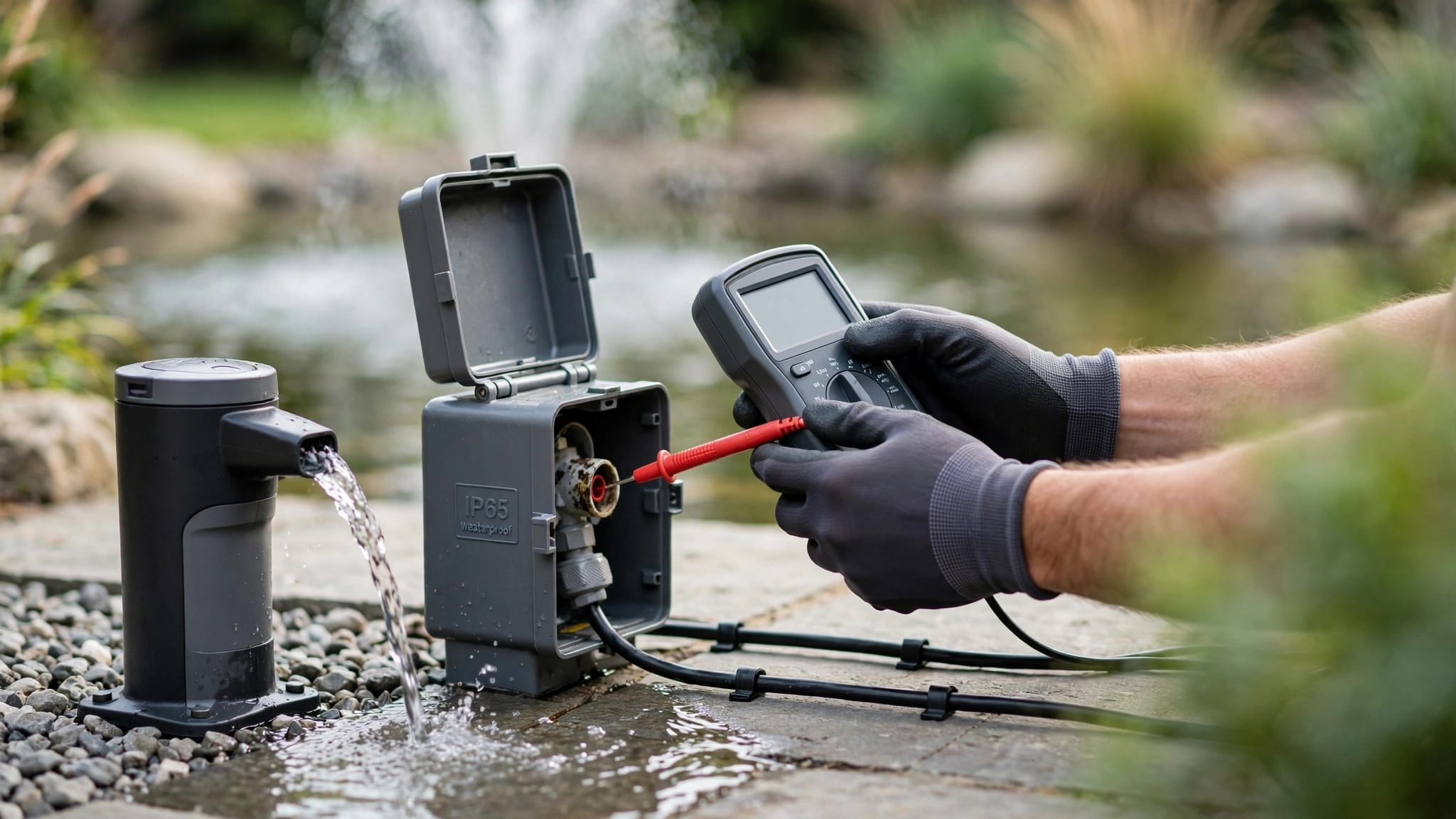
Keep power connections, controls, and cords protected from standing water, mower damage, and shoreline foot traffic. A licensed electrician should confirm the circuit protection, grounding, disconnect method, and local code requirements for the installation.
A breaker that trips when the fountain starts isn't a nuisance to work around. Moisture intrusion, cable damage, a failing pump, or an electrical fault can create a shock hazard. Shut the system off and have it inspected before returning it to service.
Plan for Dry Season, Storms, and Routine Service
Shallow ponds need a maintenance schedule that reflects local weather rather than a calendar alone. Check water level and intake condition more often during hot, dry stretches, after major storms, and when leaves or algae increase.
Inspect Before the Problem Reaches the Pump
Look for accumulated debris around the screen, a tilted intake support, exposed cables, reduced spray, or water that has become much shallower near the intake. Clear only what you can reach safely after disconnecting power.
For properties with recurring sediment or floating debris, document when and where buildup appears. That pattern can reveal a better intake location or show that the pond needs a different protective approach.
Prepare for Severe Weather
Heavy rain can raise water levels and shift floating debris. Tropical weather can also test anchors, cables, and control equipment. Secure or service the fountain early when severe weather is expected, following the equipment manufacturer's directions.
Placement should also respect shoreline access, visibility, local rules, and seasonal water movement. Use this Florida lake fountain placement guide when evaluating a new site or correcting a troublesome intake.
Frequently Asked Questions
Can a fountain operate in a very shallow pond?
It may, but only if the fountain and pump meet the manufacturer's depth and intake-clearance requirements at the pond's lowest expected water level. A shallow shelf that appears suitable after rain may not provide enough submersion during a dry period.
Should the intake sit directly on the pond bottom?
Direct bottom placement can expose the intake to mud, silt, and decaying organic material. A stable raised arrangement often provides cleaner water access, provided it remains adequately submerged and uses pump-compatible support and protection.
Is a floating fountain better for changing water levels?
A floating fountain stays near the water surface, so it can be useful where levels change. It still needs correct anchoring, protected cables, safe access, and enough water beneath it. A fixed system may suit formal ponds when the intake has reliable depth.
When should a pond owner call for repair?
Call for professional help when the pump repeatedly trips the breaker, the spray stays weak after safe cleaning, cables show damage, or the unit shifts from its intended position. A lake water fountain repair guide can help identify common service concerns.
Reliable Circulation Starts at the Intake
A well-planned shallow pond fountain keeps its intake clear of sediment, protected from debris, and submerged through expected water-level changes. The display above water matters, but the equipment below the surface determines whether it keeps running.
Choose an intake arrangement that fits the pond's actual depth and debris conditions. Regular inspection and prompt service protect circulation, equipment, and the people and wildlife around the water.
Latest posts
Read Our Blog
Tips, guides, industry best practices, and news.

Contact us
Get in touch
Our friendly team is ready to chat.