
Lake Fountain Corrosion: Prevention in Coastal Florida
A fountain can keep spraying while corrosion weakens the hardware holding it together. For coastal Florida communities, preventing lake fountain corrosion starts with matching equipment to local exposure , then checking the parts you can't judge from shore.
Salt-laden air, humidity, and lake water each deserve attention, but living near the Gulf doesn't mean your lake is salty. Start by separating coastal air exposure from the water conditions surrounding your fountain.
How Coastal Conditions Affect Lake Fountain Corrosion
Florida fountains face moisture above and below the waterline. However, those environments don't always create the same maintenance needs.
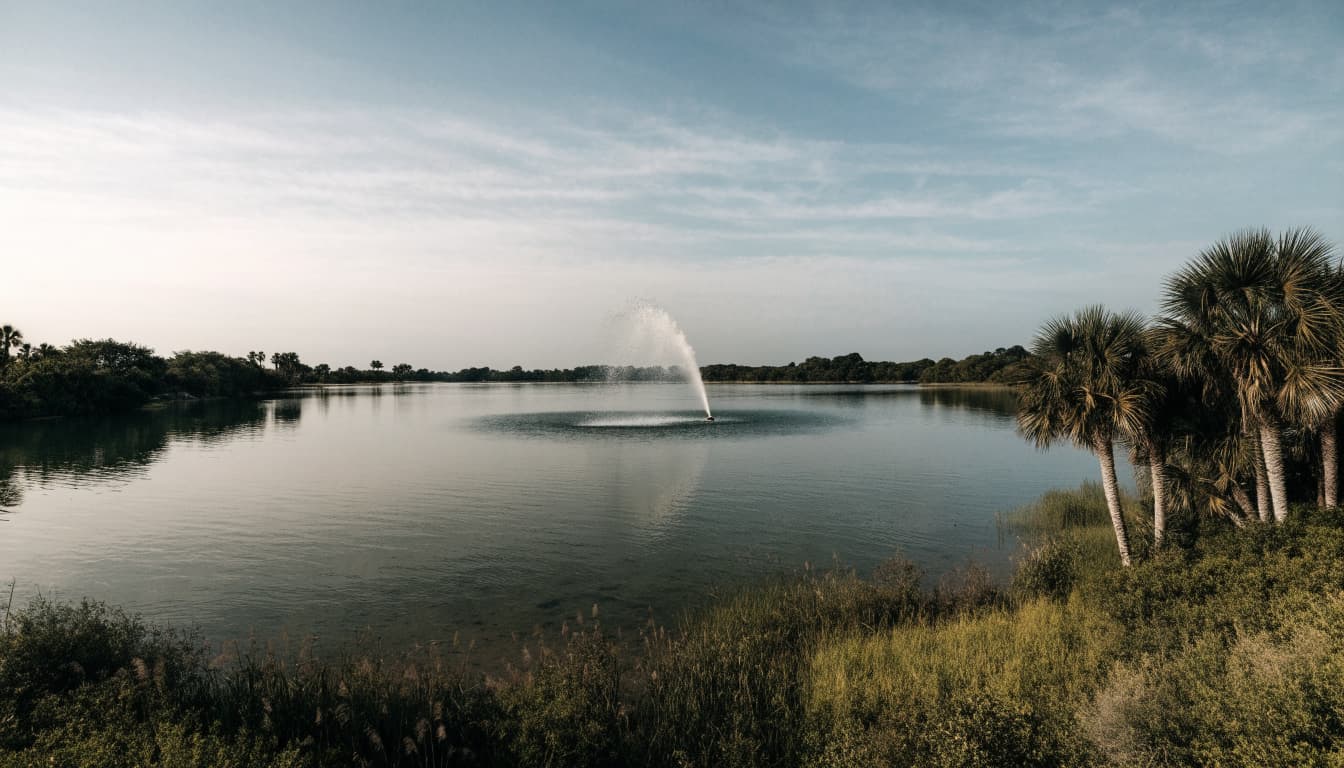
Humidity and salt-laden air affect exposed components
Coastal humidity and standing moisture can corrode metal fittings and electrical connections. Salt-laden air adds another exposure, particularly where wind carries deposits onto shoreline equipment or fountain hardware.
A pump assembly may spend much of its life underwater, while its control enclosure faces rain and humid air. Meanwhile, connections near the waterline repeatedly encounter splash and wet surfaces.
Because these locations differ, an inspection should cover the entire system. Checking only the nozzle leaves mooring hardware, cable connections, and shoreline controls out of view. Record where corrosion appears rather than treating every affected part as the same problem.
A coastal freshwater lake isn't seawater
Many coastal community lakes and retention ponds contain freshwater. Their location alone doesn't establish salinity, chloride levels, or the suitability of a particular fountain.
Direct seawater exposure requires a different equipment assessment than freshwater operation near salty air. Therefore, don't assume that a nearby lake's equipment specifications fit your property.
If the lake has a possible tidal connection or has experienced coastal flooding, ask whether water testing is appropriate. Describe that history to the technician, but don't label the lake saline without evidence. The water and the surrounding air need separate consideration.
Check Water Chemistry Before Choosing a Remedy
Southwest Florida water chemistry varies between properties. Your neighbor's pond may have different conditions, even when both lakes look alike.
Chlorides and other measurements provide context
Chlorides deserve attention when assessing possible salt exposure. However, a chloride measurement alone doesn't establish why a fountain component failed.
Ask the technician which measurements would help assess your lake and equipment. Depending on the concern, that discussion may include salinity, conductivity, pH, alkalinity, and chloride testing.
Keep results with the fountain's service records. If conditions change after flooding or other events, those records give the technician useful context.
Avoid treating one result as a universal instruction to replace hardware or add chemicals. Equipment condition, material compatibility, and the manufacturer's requirements still matter.
Mineral deposits aren't proof of corrosion
White crust on nozzles, fittings, or floats can come from hard water. Iron can also leave orange-brown stains that resemble rust.
In addition, mineral deposits can restrict small openings and make a spray pattern uneven. That problem needs a different assessment than weakened metal hardware.
Orange-brown staining and metal deterioration can occur together, but the stain alone doesn't prove that the fountain hardware is corroding.
Have deposits and the underlying component evaluated separately. Household water-treatment advice also shouldn't become a treatment plan for an entire lake. Avoid adding products intended for home plumbing without guidance for the pond and its equipment.
Choose Compatible Materials at Every Connection
Material selection includes much more than the pump housing. Fasteners, mounting brackets, shackles, and replacement fittings all belong in the same compatibility review.
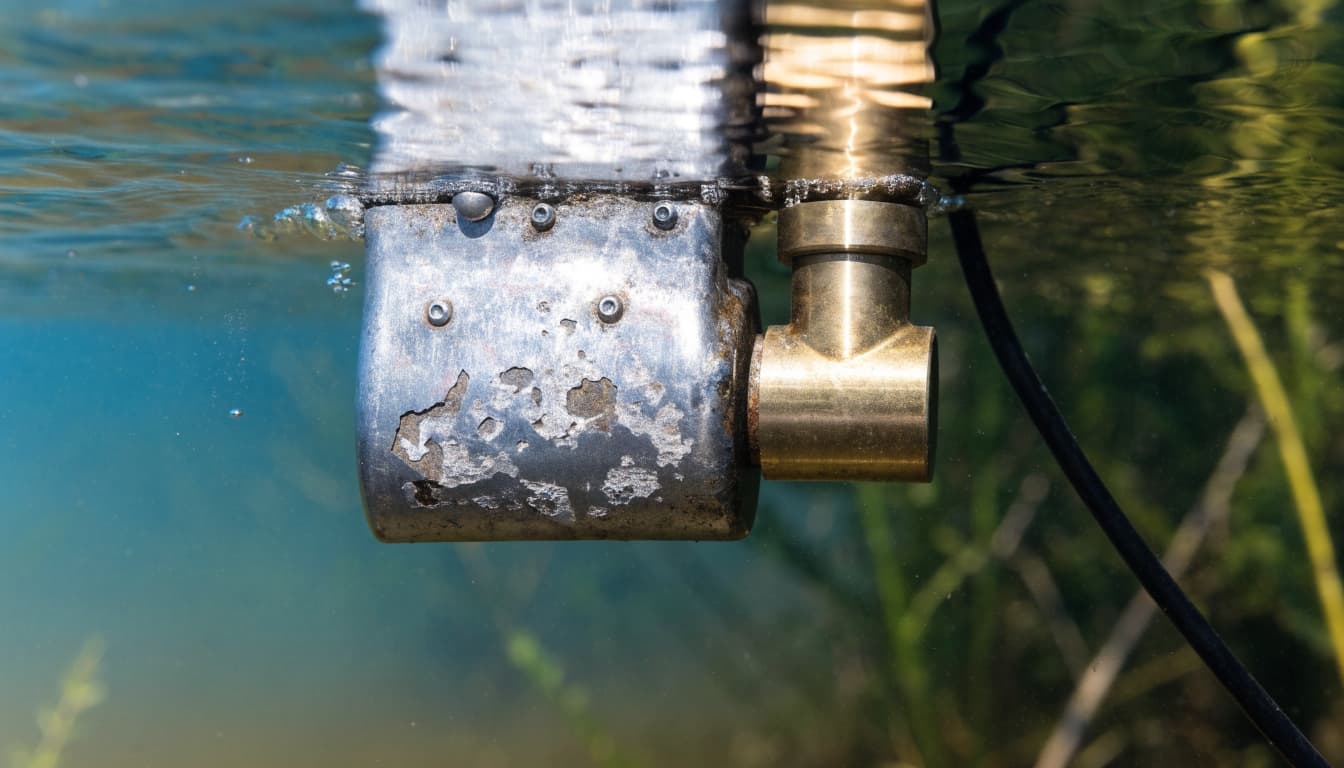
Replace hardware according to the equipment specifications
Mixing metals or installing unsuitable fasteners can accelerate corrosion. A replacement that fits the hole may still be wrong for the assembly.
Before approving a repair, identify the fountain model and the manufacturer's replacement requirements. Ask whether the proposed hardware suits both the lake water and the surrounding exposure.
Don't select parts by appearance alone. A shiny fastener doesn't establish its composition or compatibility with neighboring components.
For existing equipment, document previous repairs when possible. A technician may need to review replacement parts added over time, particularly where deterioration appears around a repaired connection.
Review adjoining parts as an assembly
Dissimilar metals deserve attention wherever components meet. However, don't assume that every mixed-metal connection explains the corrosion you see.
The technician should review the complete connection, including fasteners and any specified washers, sleeves, or other separating components. Follow the original design rather than improvising a material combination.
Mooring hardware needs the same care as the fountain itself. Trademark Water Systems' guidance on retention pond fountain anchoring addresses hardware suitability and connection-point inspections.
Replacing one damaged part without reviewing its adjoining components can leave the underlying compatibility question unresolved.
Inspect Coatings Without Assuming They're a Cure
A surface finish deserves attention during inspection, but painting over corrosion isn't a complete repair plan. First, determine whether the component remains suitable for service.
Look for damaged finish, lifting edges, and deterioration around attachment points. Record those locations so the technician can inspect the underlying hardware.
Then check the manufacturer's instructions before applying a coating or refinishing a part. Products suitable for one surface may be inappropriate for another component or operating environment.
Avoid covering cable damage, deteriorated connectors, or weakened mounting hardware. A fresh-looking surface can make later inspection harder without addressing the damaged part.
Also consider whether surface preparation would affect seals, identification markings, or adjacent materials. Those details belong in the service decision, especially around a sealed motor housing.
Use the approved repair process for the equipment. When a component has lost its structural integrity, discuss replacement rather than assuming a coating will restore it. Keep a record of the work and the materials used so future service doesn't depend on guesswork.
Installation Should Account for Moisture and Movement
Good installation planning considers the lake, shoreline, electrical supply, and anchoring system together. It also leaves a practical route for future inspection and repair.
Assess the shoreline and electrical equipment
A professional lake fountain site assessment can identify existing moisture, corrosion, cable damage, and equipment problems before installation or repair begins.
Give the technician information about flooding, changing water levels, and previous breaker trips. These observations help define the site's needs without assuming a single cause.
Have a qualified professional select and install the electrical equipment for the location and fountain requirements. Don't improvise enclosure repairs or cable connections to compensate for a wet site.
For community installations, keep the shutoff location and equipment identification accessible to authorized staff. Clear records reduce confusion when service becomes necessary.
Plan anchoring and cable routes together
Corrosion at shackles, cable fittings, or attachment points can weaken the anchoring system. Therefore, those connections need inspection even when the fountain remains upright and its spray looks normal.
Lines should stay clear of the intake, pump housing, float structure, and electrical cable. Repeated cable abrasion at one location may indicate an anchoring or routing problem.
Allow for normal water-level changes while keeping the fountain within its intended operating area. Also consider how technicians will access the unit safely.
After installation, record anchor locations and the fountain's normal position. That makes unexpected movement easier to recognize during shoreline checks.
Build Maintenance Around Your Lake's Conditions
Lake fountain corrosion prevention depends on regular observation and equipment-specific service. A universal calendar can't account for every pond's debris, sunlight, algae, water chemistry, and weather exposure.
Use the manufacturer's recommendations and a technician's assessment to set the schedule. Then adjust it when inspections reveal recurring buildup or deterioration.
A Florida lake fountain maintenance checklist can help organize checks across the pump, spray components, exposed hardware, and electrical system.
During routine observation:
- Compare the spray with its normal pattern, and record persistent changes.
- Look for deposits, corrosion, loose hardware, or damaged mounting points where you can inspect safely.
- Note changes in the fountain's position, unusual vibration, or visible cable abrasion.
- Report breaker trips and damaged electrical components instead of repeatedly restarting the system.
Photographs make these records more useful. Take views of the same accessible components during service so technicians can compare changes over time.
Cleaning also needs to follow the equipment instructions. Don't scrape, scrub, or apply cleaners without checking their suitability for the component and finish.
Finally, plan for tropical weather early. Florida fountains combine electricity, water, and anchoring hardware, so storm preparation shouldn't wait until conditions become unsafe. Arrange any needed inspection or removal before severe weather arrives, then have the system checked if storm damage is suspected.
Recognize When Cleaning Isn't Enough
A weaker spray doesn't automatically mean corrosion. Debris, mineral deposits, pump wear, and electrical issues can produce overlapping symptoms.
However, visibly weakened hardware, damaged mounting points, and deteriorated connections deserve a repair assessment. Cleaning the nozzle won't resolve those conditions.
Trademark Water Systems' lake water fountain repair guide outlines common pump and electrical symptoms. Share your observations and maintenance records when requesting service so the technician can evaluate the equipment and site together.
Repeated breaker trips require particular care. Stop restarting the fountain and arrange professional service. Don't enter the water, handle damaged cables, or open electrical equipment to investigate.
If removal is necessary, confirm who will isolate the power and retrieve the assembly safely. A heavy fountain, steep bank, uncertain lifting point, or difficult mooring connection can make owner removal unsafe.
For an HOA, ask for a repair recommendation that identifies the affected components and any related installation concerns. Also request guidance on what should be inspected after the work.
Trademark Water Systems provides lake fountain installation, repair, and maintenance in Naples and Southwest Florida. Its broader water-treatment experience supports conversations about water-quality concerns, while fountain repairs still require an equipment-specific assessment.
Prevent Corrosion With Site-Specific Care
Coastal location alone doesn't tell you whether lake water is saline or why a fountain component is deteriorating. Separate air exposure, water chemistry, and equipment condition before choosing a remedy.
Compatible replacement parts, manufacturer-approved surface care, sound installation, and documented inspections give your community a practical prevention plan. They also help distinguish ordinary buildup from damage that needs repair.
A fountain's spray is only one sign of its condition. Protecting the connections, controls, and underwater hardware keeps small problems visible before they become larger service needs.
Latest posts
Read Our Blog
Tips, guides, industry best practices, and news.
Contact us
Get in touch
Our friendly team is ready to chat.