
Floating Lake Fountain Spray Weak? Find the Cause Safely
A weak spray is often the first visible sign that a floating lake fountain needs attention. The change may come from a clogged intake, low water, a blocked nozzle, pump wear, or an electrical problem.
Before inspecting anything, disconnect power at the proper shore-side disconnect and follow the manufacturer's instructions. Never enter the lake to reach a fountain or handle submerged equipment. Use the checks below to separate simple maintenance issues from problems that need trained service.
Key Takeaways
- Turn off and isolate power before touching an intake screen, nozzle, cord, or control component.
- Leaves, algae, sediment, and mineral deposits can restrict intake flow or distort the spray.
- A pump that runs with little water movement may have an impeller problem, internal wear, or a restricted intake.
- Low water and a shifted float can change the spray pattern even when the pump is working.
- Repeated breaker trips, grinding sounds, unusual vibration, damaged cables, and persistent weak spray call for professional inspection.
- Keep records of spray changes, storms, repairs, electrical problems, and cleaning dates.
How a floating lake fountain shows weak flow
A fountain rarely fails in one obvious way. The spray may gradually lose height, develop gaps, lean to one side, or produce a wider and less defined pattern. Sometimes the pump continues running, but the water movement becomes noticeably smaller.
Reduced height and uneven patterns
Compare the current spray with its normal appearance. A shorter plume often points to reduced water flow. An uneven pattern may indicate a partially blocked nozzle, debris at the intake, algae growth, mineral buildup, or a fountain that has shifted position.
Wind can also change how the spray looks. However, if the pattern remains weak during calm conditions, the cause is more likely mechanical, hydraulic, electrical, or related to the water level.
A fountain that moves less water may also provide less surface circulation and aeration. That makes prompt diagnosis useful for both appearance and lake care.
Why a gradual change matters
A sudden spray loss after heavy rain or a storm may indicate floating debris, a damaged cable, a shifted anchor, or water entering a component. A gradual decline often points to buildup, wear, or a restriction that has worsened over time.
Record when the problem began and whether it affects the entire spray or only one section. This information helps a technician distinguish between a nozzle issue and a pump or power problem.
For additional background on common symptoms, see this lake water fountain repair guide.

Common causes of weak spray from a floating lake fountain
Several problems can create the same symptom. Start with visible conditions, but don't assume cleaning will solve the issue if the spray remains weak.
Clogged intake screens and organic debris
Leaves, grass, sticks, sediment, and algae can cover an intake screen. The pump then receives less water, which reduces spray height and may cause it to work harder.
Warm Florida weather, rain, and nutrient-rich water can increase algae and debris between service visits. Floating material may also collect around the fountain after a storm.
Only inspect an intake from a safe access point with power fully disconnected. Don't pull a floating unit toward shore unless the manufacturer specifically permits that procedure and the equipment is designed for it.
Blocked nozzles, mineral deposits, and damaged parts
A nozzle opening can become restricted by algae, sediment, or mineral deposits. A damaged nozzle may spray unevenly even when the pump supplies adequate flow. Small changes in the opening can alter the entire display.
Pump components can also cause weak spray. A worn or damaged impeller may spin without moving the expected amount of water. Internal pump wear can produce low flow, vibration, or unusual noise.
A nozzle that looks clean from shore may still have an internal blockage. Avoid inserting tools into submerged fittings unless the manufacturer provides a safe, approved procedure.
Low water, restricted power, and shifted equipment
Low water can reduce the amount available to the pump and may expose equipment to operating conditions it wasn't designed to handle. Check the lake level against the fountain's operating requirements and consult the manufacturer's instructions.
Restricted power can also limit performance. A tripped breaker, GFCI problem, damaged cord, loose connection, or control fault may prevent the pump from reaching normal operation. Never bypass a protective device or repeatedly reset a breaker.
Finally, inspect the fountain's visible position from shore. A loose mooring line or shifted float can change the spray direction and make a normal flow appear weak. A lake fountain site survey can include the intake, floats, mooring lines, nozzle, motor housing, and cable.
Safe inspection and troubleshooting steps
Safety comes before restoring the display. Water and electricity create conditions that require strict boundaries, especially on community lakes and large retention ponds.
Disconnect power before inspection
Turn off the fountain using the designated disconnect, then follow the manufacturer's shutdown procedure. Don't rely only on a remote control, timer, or visible pause in the spray.
If the system has more than one electrical supply or control point, identify each one before beginning. Keep people away from the equipment during inspection, and don't work on wet electrical connections.
After power is isolated, inspect only components that are safely reachable from shore or an approved access area. Look for visible debris, algae, damaged cords, displaced floats, and changes in the spray pattern. Never enter the water to service, retrieve, or reposition the fountain.
Check accessible components only
With power off, a qualified person may inspect an accessible intake screen or removable nozzle according to the manufacturer's instructions. Use the cleaning method recommended for that equipment. Avoid force, sharp tools, and chemical treatments that could damage fittings or affect lake water.
Check the water level and compare the float's position with its normal location. Look at shore-side cords, covers, disconnects, and controls for visible damage, but don't open electrical enclosures unless a qualified professional is handling the work.
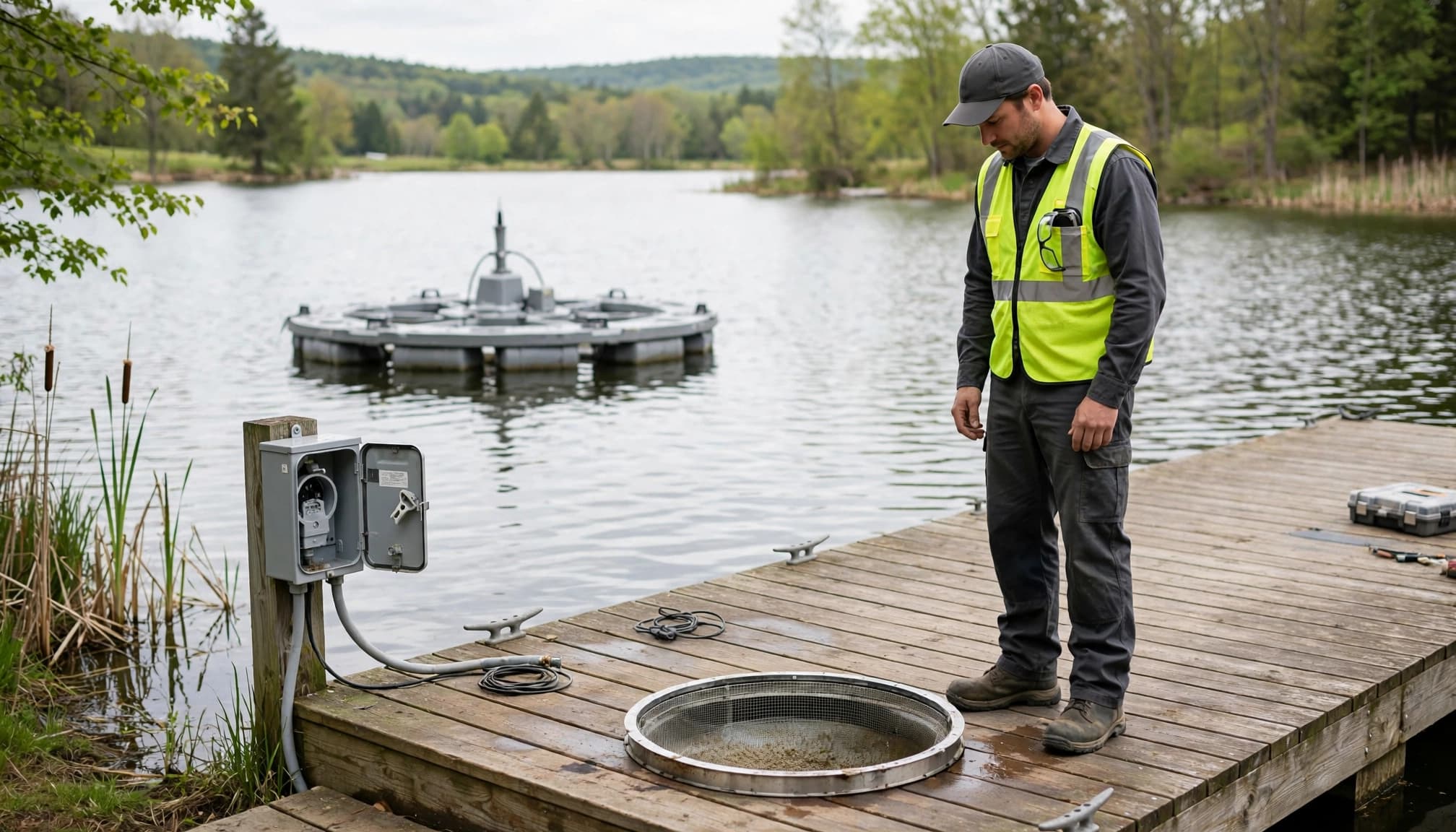
A concise weak-spray troubleshooting checklist
Use this checklist before requesting service, while keeping all electrical and submerged work within professional boundaries.
- Confirm that the spray is weaker than its normal pattern, not only affected by wind or lighting.
- Disconnect power at the designated shore-side disconnect.
- Check the lake level against the fountain manufacturer's operating requirements.
- Look for leaves, algae, sediment, and other material around the visible intake area.
- Inspect accessible nozzles for buildup or visible damage, following the equipment manual.
- Look for a shifted float, loose mooring line, or changed spray direction.
- Examine shore-side cords, covers, disconnects, and controls for visible damage without opening energized equipment.
- Note grinding, humming, unusual vibration, breaker trips, or a pump that runs with little movement.
- Restore power only according to the manufacturer's procedure and stop if the problem continues.
- Arrange professional service for persistent weak spray or any electrical, submerged, or mechanical concern.
A single cleaning may solve a restriction, but recurring symptoms point to a deeper problem.
Preventive maintenance for lake fountain owners
Routine care reduces the chance that a small restriction becomes a pump or electrical failure. The right schedule depends on debris, sunlight, nutrient levels, and water chemistry.
Inspect more often during Florida's harsh conditions
Hot weather, heavy rain, algae growth, and mineral-heavy water can change maintenance needs. Add visual checks after storms and during periods when leaves or algae collect around the float.
Look for weaker or uneven spray, unusual vibration, mineral deposits, damaged lines, and changes in the fountain's position. A seasonal review is a sensible starting point, but a heavily used community lake may need more frequent attention.
Property managers should keep the fountain model, normal spray direction, electrical shutoff location, anchor positions, and service contacts in one accessible record. A lake fountain maintenance checklist can help organize these inspections.
Keep a simple service history
Record cleaning dates, spray changes, storm exposure, breaker trips, repairs, cable replacements, and electrical test results. Add photographs of visible cable routing, shore-side equipment, and the fountain's usual position.
These records help identify patterns. For example, repeated spray loss after storms may point to debris or movement, while gradual loss after cleaning may indicate pump wear or a nozzle problem.
Follow the manufacturer's maintenance intervals and replacement guidance. Don't substitute a different nozzle, impeller, cable, or control component without confirming compatibility.
When weak spray requires professional service
Call a qualified fountain technician when cleaning the accessible intake or nozzle doesn't restore normal flow. Professional inspection is also appropriate when the pump runs but produces little movement, because the cause may be an impeller issue, internal wear, or a restriction that cannot be safely reached.
Arrange service for grinding sounds, unusual vibration, repeated breaker trips, a GFCI that won't reset, damaged cables, frayed lines, or equipment affected by flooding. Don't operate a fountain with visibly compromised electrical parts.
A technician can inspect the pump, motor housing, nozzle, floats, mooring system, cable, controls, and intake with the right equipment. Trademark Water Systems provides lake fountain maintenance and repairs for property owners who need installation, repair, or ongoing service.
If the fountain sits far from shore, retrieval and lifting may require specialized equipment. Never improvise by entering the lake or pulling on underwater cables.
Frequently asked questions
Can I clean the intake while the fountain is running?
No. Disconnect power before touching an intake screen, nozzle, float, cord, or other component. A fountain can start unexpectedly through a timer or control system, and water near electrical equipment creates a serious hazard.
Follow the manufacturer's shutdown and cleaning instructions. If the intake cannot be reached safely from shore or an approved access area, schedule professional service.
Why does the pump run when the spray is weak?
The pump may be receiving restricted water because debris or algae covers the intake. A blocked nozzle, low water level, worn impeller, internal pump damage, or restricted power supply can create the same symptom.
Listen for changes in sound and watch for vibration, but don't open the motor housing or handle submerged parts. Continued operation with poor flow can worsen an existing equipment problem.
How often should a lake fountain be inspected?
There is no single schedule for every lake. Debris, sunlight, water chemistry, algae growth, weather, and the fountain's location all affect service needs.
At minimum, inspect the system visually on a regular schedule, after severe weather, and whenever the spray changes. Communities should keep written records so maintenance staff can compare current conditions with the fountain's normal operation.
What signs mean I should stop troubleshooting?
Stop and call a professional if the breaker trips again, the GFCI won't reset, a cable looks damaged, the pump makes grinding sounds, the fountain vibrates unusually, or the equipment may have been submerged during a storm or flood.
Persistent uneven spray also deserves service, especially after the intake and accessible nozzle have been checked. A lake fountain electrical safety guide covers warning signs that should not be ignored.
Conclusion
A weak spray can come from a simple intake restriction, but it can also point to a damaged nozzle, low water, pump wear, restricted power, or shifted equipment. Start with a safe visual check, disconnect power before inspection, and stay out of the lake.
Regular records and post-storm inspections make changes easier to spot. When the problem persists or involves electrical, submerged, or mechanical components, professional service protects both the fountain and the people around it.
Latest posts
Read Our Blog
Tips, guides, industry best practices, and news.



Contact us
Get in touch
Our friendly team is ready to chat.