
Outdoor Fountain Inspection After a Storm: Safe Steps
A fountain can look normal from shore while storm debris blocks its intake or water reaches an electrical connection. Your first priority in an outdoor fountain inspection is to shut off power, not test the spray.
Once the storm has passed and the area is safe to approach, a few visual checks can help you decide what needs cleaning and what needs professional service. Follow the steps in order, and leave the fountain off whenever its condition is uncertain.
Step 1: Shut off power before inspecting the fountain
Turn off the fountain's circuit at the breaker before approaching its equipment. A timer or fountain switch may stop the display, but it shouldn't replace shutting off the circuit for an inspection. If you're unsure which breaker controls the fountain, don't guess or open equipment to find out.
Check whether the breaker is safe to reach
Stay out of standing water, even if the breaker panel appears close. If the panel, its surroundings, or the path to it is wet or damaged, keep your distance and contact a qualified electrician. Don't touch a panel or switch while standing on wet ground.
Wait until lightning and other immediate storm hazards have cleared. Look for downed lines, unstable branches, and damaged structures before moving toward the fountain. If a utility line may be involved, stay back and report it to the utility.
Keep the inspection visual
With power off, you can observe the site and accessible exterior parts from dry, stable ground. Don't open electrical enclosures, handle wet plugs, or pull a pump out by its cable. Those tasks can expose damage you can't assess by sight alone.
For a floating lake fountain, stay on shore. Entering the lake or hauling on underwater wiring is not a safe way to speed up an inspection.
Step 2: Survey the site and clear reachable debris
Wind can move branches into the spray path, push floating debris against an intake, or shift equipment. Start with the surrounding area before looking closely at the pump.

Look from a safe distance first
Check whether the fountain sits where it normally does. A floating unit that has moved toward a bank, dock, or drain may have a loose mooring line or anchor. Look for branches tangled around the display, displaced landscaping, and debris collected at the water's edge.
Photograph anything unusual before removing it. Photos give a service technician a clearer picture if wind or water later moves the debris again. For community properties, they also help managers record the condition after the storm.
Remove only what you can reach safely
If footing is dry and stable, clear loose leaves and small branches from accessible basin edges. Wear gloves for sharp debris. Don't reach through murky water to find a submerged intake, and don't tug on a branch that's tangled with a cable or mooring line.
After the storm response, return to routine lake fountain maintenance so smaller restrictions don't linger until the next heavy rain.
Step 3: Check the basin, water level, and structure
A residential fountain basin and a community lake call for different checks. In both settings, inspect the water's edge and supporting structure before considering a restart.

Compare the water level with normal conditions
Heavy rain may raise a small basin's water level, while a cracked basin or displaced hose can leave it unexpectedly low. Look for overflow, a newly exposed pump, or a waterline that doesn't match the fountain's normal level. Check the equipment instructions or marked operating range rather than relying on a universal fill depth.
Don't run a pump that lacks adequate water. If the water level keeps falling, leave power off until someone finds the leak. For a lake installation, note unusual shoreline erosion or a fountain stranded in shallower water.
Inspect visible stonework and supports
Look for new cracks, separated joints, tilted decorative pieces, loose mounting hardware, and soil washed away beneath the basin. A heavy top piece or unstable rim can fall while you're cleaning.
You can photograph a suspected crack without touching it. Leave lifting, leveling, pipe repairs, and work beneath an unstable fountain to a qualified service provider. If stormwater has brought mud or other contaminants into a small basin, avoid splashing it while you assess the cleanup needed.
Step 4: Review the pump, intake, and filtration equipment
Storm debris can restrict water flow even when the fountain looks intact. Keep power off while checking parts you can see without entering water, opening a motor housing, or disturbing wiring.
Look for restrictions without dismantling the pump
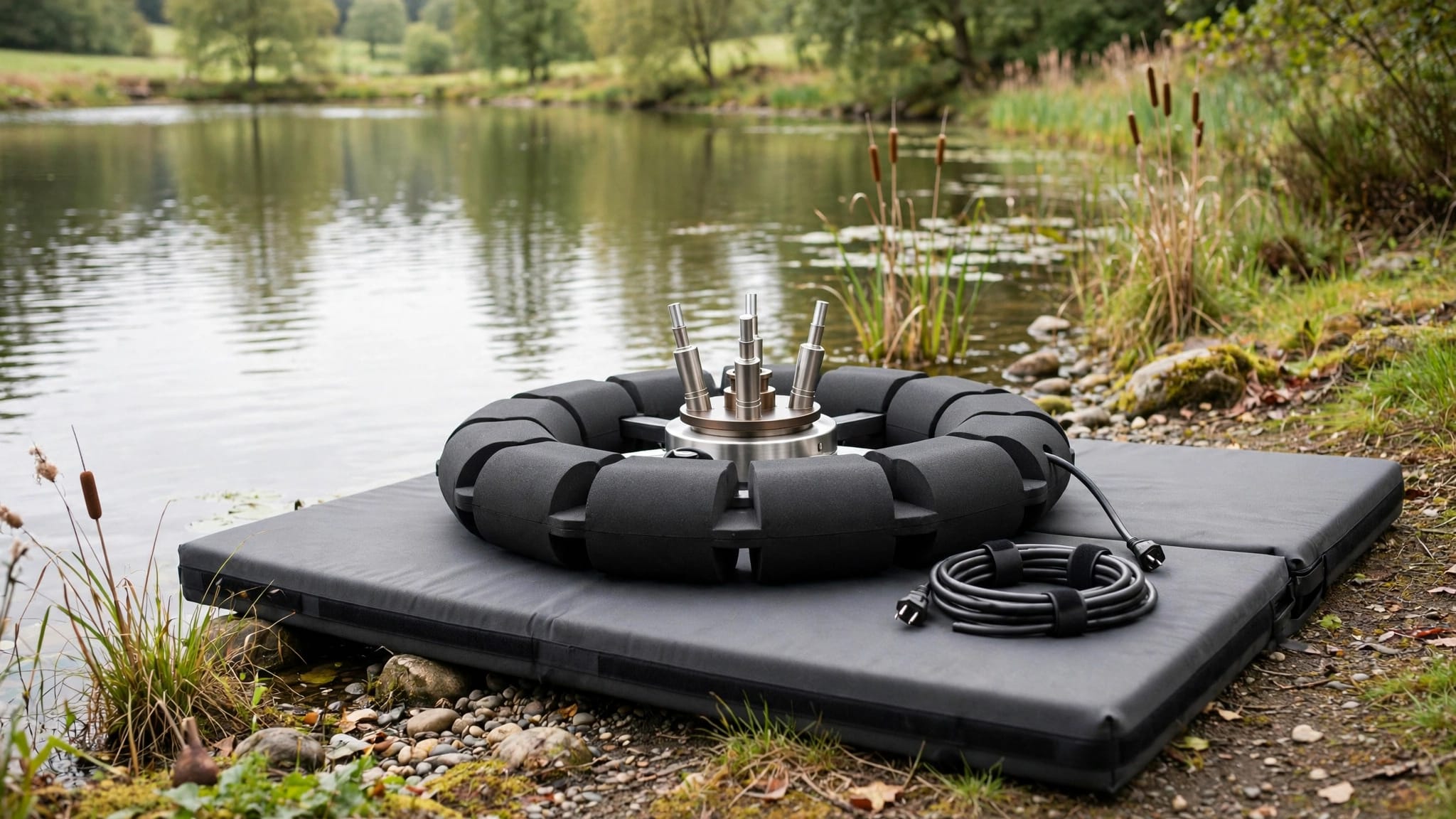
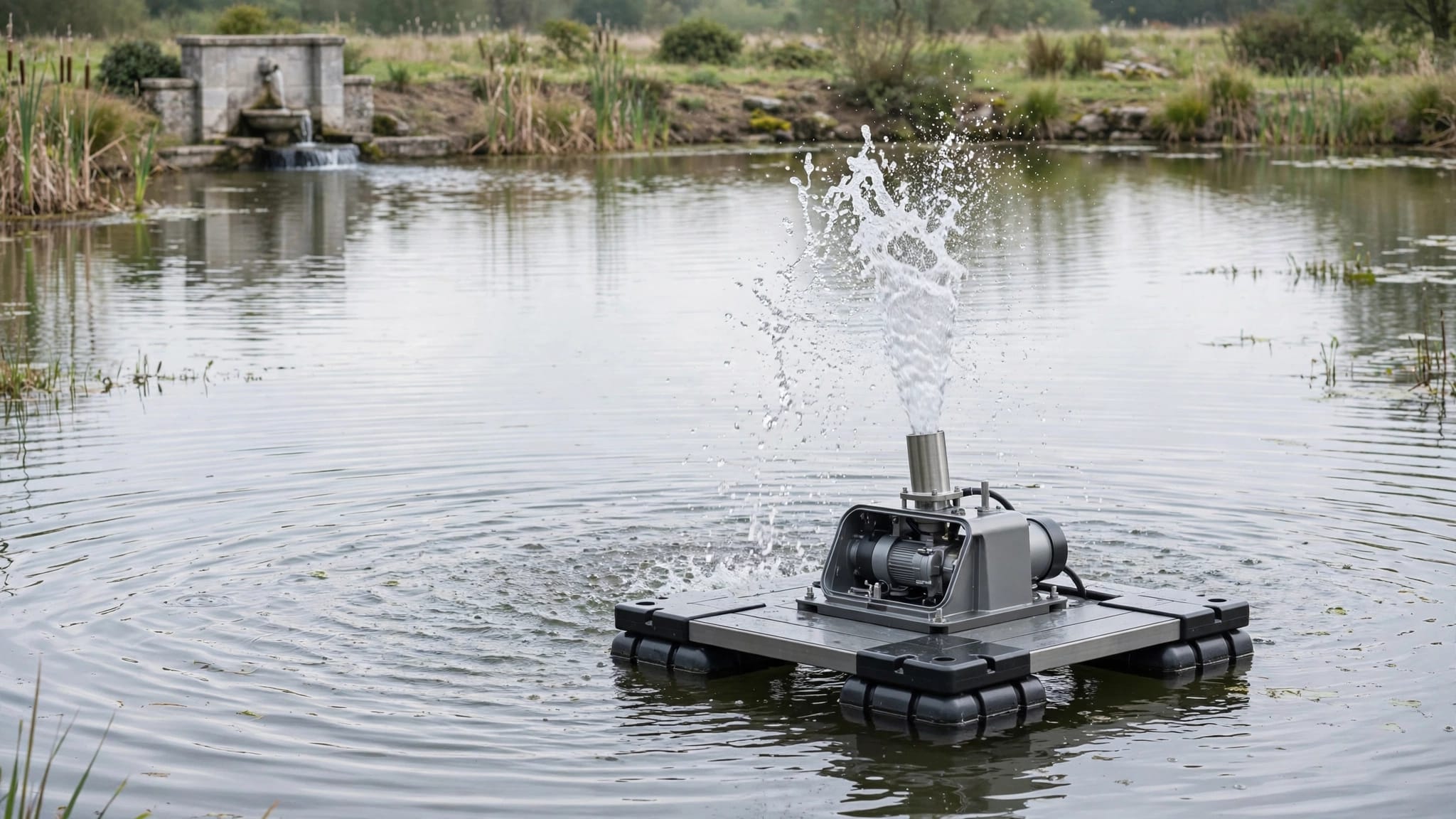
From a safe position, inspect the visible intake screen and nozzle for leaves, algae mats, or twigs. On a floating unit, note the position of the floats and mooring lines. A shifted float may tilt the spray; a loose line may let the unit drift.
Clean an accessible screen only if the fountain's instructions allow it and you can do the work from dry, stable ground. The lake fountain intake screen guide covers when cleaning is appropriate and when a persistent restriction needs service. Leave underwater screens and tightly lodged debris to a technician.
Check any separate filter components
Some small decorative fountains have a filter or prefilter that traps debris before it reaches the pump. Look at accessible housings for cracks, displaced lids, or leaks. Don't open a pressurized housing or force a fitting that has shifted.
A clogged screen isn't the only possible cause of weak flow. An impeller problem, a blocked nozzle, or pump wear can produce similar symptoms. If damage is visible or the pump cannot be checked safely, stop at observation rather than attempting a repair.
Step 5: Treat electrical warning signs as a stop point
Electrical damage may appear as a frayed cord, a cracked enclosure, a broken conduit, or a receptacle exposed to flooding. You may also see a tripped breaker or a ground-fault circuit interrupter (GFCI) that won't reset. Leave the circuit off and don't touch affected parts.
Never test a questionable connection
Dry-looking equipment isn't proof that water stayed out of a motor, control box, or connection. Don't unplug wet equipment, open a control panel, splice a cable, or repeatedly reset a tripped breaker. A breaker that trips more than once needs professional attention; so does a pump submerged by floodwater.
For more detail on these symptoms, see lake fountain electrical troubleshooting. A qualified electrician or fountain technician can inspect the circuit and equipment without asking a property owner to work near energized water.
If water reached a connection or cable damage is visible, a normal-looking spray is no reason to restore power.
Step 6: Decide whether the fountain is ready to run
A restart comes after the site, structure, water level, and accessible equipment pass visual inspection. If any check raises doubt, leave the breaker off and arrange service.
Confirm the basic operating conditions
Clear the spray path and any safely reachable debris first. For a basin fountain, confirm that the water level meets the equipment's operating requirements. Make sure no structural piece is loose and no electrical component appears wet or damaged.
If the fountain had flooding, a tripped breaker, a damaged cable, or a shifted floating assembly, don't use a restart as a diagnostic test. Have the affected equipment inspected before power returns. An outdoor fountain inspection cannot establish that hidden electrical parts are safe after water exposure.
Observe a safe restart from a distance
When there are no warning signs and the equipment is ready under its instructions, restore power from a safe, dry location. Watch the spray without reaching into the water. An uneven pattern, weak flow, grinding noise, unusual vibration, or a new leak means the fountain needs another assessment.
Switch it off if it operates abnormally. Don't keep cycling power to see whether the problem clears. Guidance on weak lake fountain spray can help you describe the symptom when requesting service.
Step 7: Record the problem and arrange the right service
Note what you observed, when the storm occurred, and whether the fountain was running when the problem appeared. Include photos of visible debris, basin damage, a shifted lake unit, or an uneven spray. If a breaker tripped, record that fact without resetting it again.
A technician can assess components that a property owner should not retrieve or open, including a floating fountain's motor housing, underwater cable, mooring system, and pump. The site's fountain inspection guide describes the equipment a service visit may cover.
For Naples-area property owners, Trademark Water Systems offers lake fountain installation and service. Describe any flooding or electrical warning signs when you call so the technician knows what conditions to expect.
Key takeaways
- Shut off the fountain's power at the breaker before inspection, but don't approach a wet or damaged panel.
- Check the site, debris, basin, water level, and visible equipment from safe ground. Leave underwater work and electrical repairs to qualified professionals.
- Keep the fountain off if you find damaged wiring, flooding, structural instability, or signs of pump trouble. Restart only when the equipment is safe to operate.
Frequently asked questions
Can I turn on my fountain after clearing storm debris?
Only if you can also confirm that its accessible parts are intact, its water level is suitable, and there are no electrical or structural warning signs. Clearing leaves won't fix a damaged cable or a pump affected by flooding. If you're unsure, leave the circuit off and request service.
Should I reset a breaker that tripped during the storm?
Don't repeatedly reset it or treat the trip as proof that the breaker itself is faulty. Moisture, cable damage, or a pump problem could be involved. Keep the fountain off and ask a qualified electrician or fountain professional to investigate, especially if the breaker trips again or a GFCI won't reset.
What if a floating fountain has moved across the lake?
Leave it where it is until a fountain technician can assess the mooring lines, anchors, floats, and cable. Don't enter the lake, pull on the power cable, or tow the unit from shore. Record its position and any nearby hazards so the service team can plan a safe retrieval.
The safest finish to a post-storm inspection
A fountain that looks clear after a storm may still have a blocked intake or hidden electrical damage. Power off first gives you room to check what is visible without turning a small problem into a dangerous one.
If the equipment has been flooded, damaged, or shifted, leave it off until a qualified professional confirms it is safe to run.
Latest posts
Read Our Blog
Tips, guides, industry best practices, and news.

Contact us
Get in touch
Our friendly team is ready to chat.