
Tannin Removal Systems for Florida Well Water: A Testing-First Guide
Yellow or tea-colored well water can leave stains, affect taste, and make everyday water use frustrating. The right tannin removal systems depend on what else is in the water, not only on its color.
Tannins are natural organic compounds created as plants and vegetation decay. Florida wells may pick up tannins from surrounding soil and groundwater, but iron, manganese, sulfur, sediment, or low pH can create similar symptoms. Testing should come before equipment selection.
Why Florida well water turns yellow
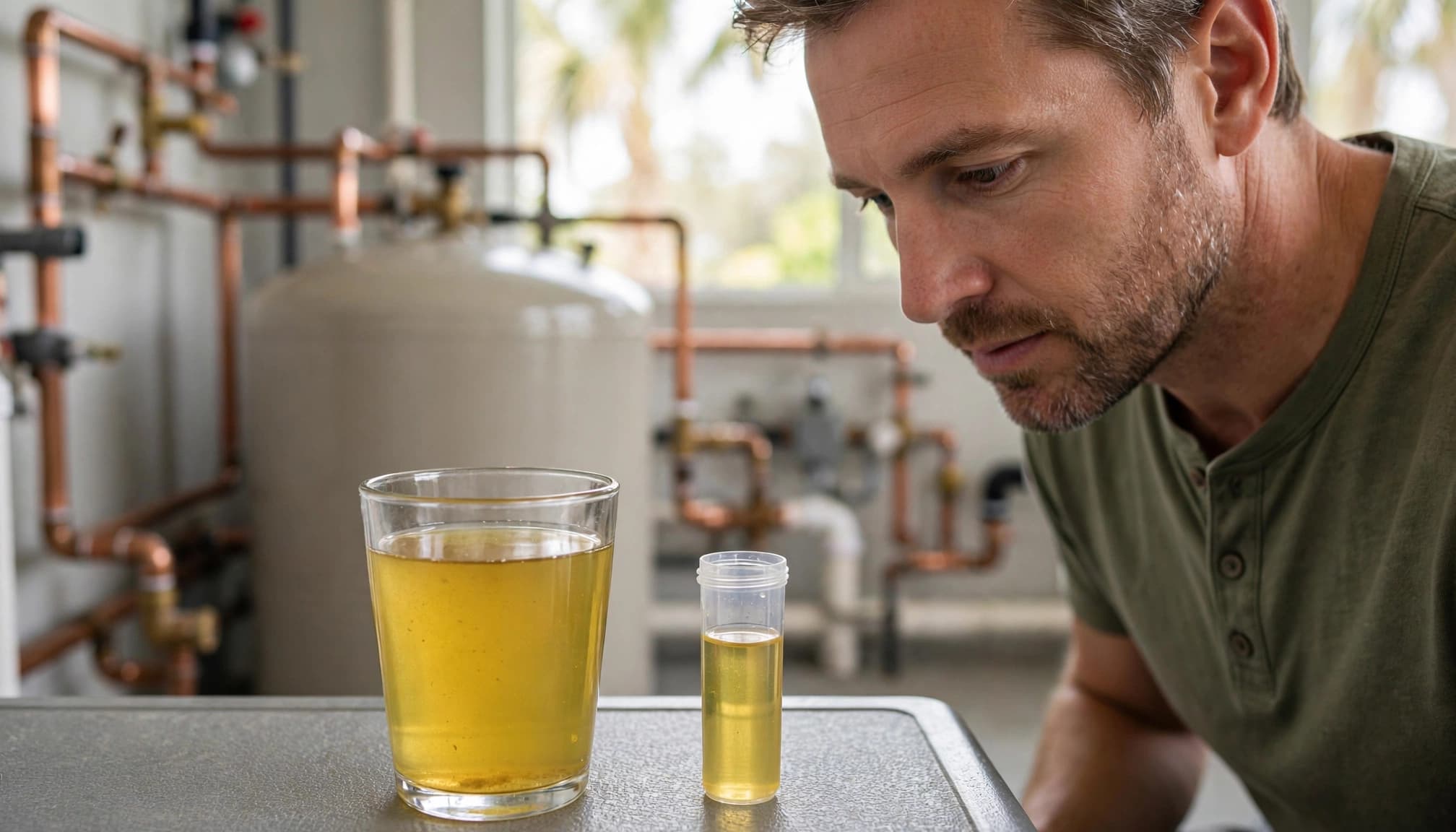
Tannins usually create water that looks evenly yellow, amber, or tea-colored. They stay dissolved, so the water may remain tinted even after sitting in a glass. However, color alone can't identify the cause.
Many homeowners first notice the issue in laundry, toilets, showers, or white sinks. Tannins can also affect taste and may make water appear less clean, even when the color comes from natural organic material. You can read more about how tannins affect well water and your home.
Tannins versus iron, manganese, and sulfur
Iron often produces orange, red, or brown staining. Manganese may create darker staining, while sulfur commonly causes a rotten-egg odor. These problems can occur alongside tannins, which is why a tannin filter may not solve every well-water complaint.
pH matters, too. Acidic water can increase corrosion and affect how treatment media performs. Hardness can cause scale, while sediment can clog cartridges and control valves. A complete system may need several treatment stages, with each one handling a different problem.
The overnight glass test has limits
Fill a clean glass with untreated well water and leave it undisturbed overnight. If particles settle to the bottom or the color changes as the water stands, iron, manganese, or sediment may be involved. If the water stays uniformly tinted, tannins become more likely.
This test only provides a clue. It can't measure tannin concentration or rule out other contaminants. A certified laboratory test remains the better basis for system design.
What to test before buying a system
Start with a sample of raw well water collected before existing filters or softeners. Testing treated water can hide the conditions that a new system must handle.
A Florida well-water report should give you more than a simple tannin number. The results should help explain the color, identify competing contaminants, and show whether the well can support the required treatment flow.
Test tannins and related chemistry
Ask the laboratory about tannins, organic color, iron, manganese, hardness, pH, alkalinity, chloride, sulfate, sodium, and total dissolved solids. Bacteria and nitrate are also part of broader private-well testing, especially when the goal is to evaluate overall water quality.
Tannin concentration gives useful direction. A Florida treatment guide groups water below 0.5 milligrams per liter as slightly yellow, while readings between 2 and 5 milligrams per liter may appear yellow-brown or tea-colored. Levels above 10 milligrams per liter can look dark amber or nearly opaque.
Those ranges help describe severity, but they don't replace equipment sizing or a complete diagnosis. You can also review how to understand a Florida well water test.
Measure flow, pressure, and household demand
A treatment tank must deliver enough water when several fixtures operate at once. Record the well pump's flow, pressure-switch settings, pressure-tank condition, and recovery rate if available.
Household demand also matters. A two-person home with one bathroom has different requirements from a large family using multiple showers, irrigation, appliances, and outdoor fixtures. Low flow can prevent a filter from working correctly, while an undersized tank can cause pressure loss or untreated water during peak use.
The well's sediment load and iron level also affect pretreatment. These details belong in the design conversation, not as an afterthought during installation.
Tannin removal systems compared
Different treatment methods address different water problems. A regular water softener, for example, is designed mainly for hardness minerals. It shouldn't be sold or selected as a dependable tannin solution by itself.
Anion exchange for moderate tannin levels
Anion-exchange media is the main whole-house approach for many moderate tannin problems. The resin attracts negatively charged organic compounds and removes them as water passes through the tank.
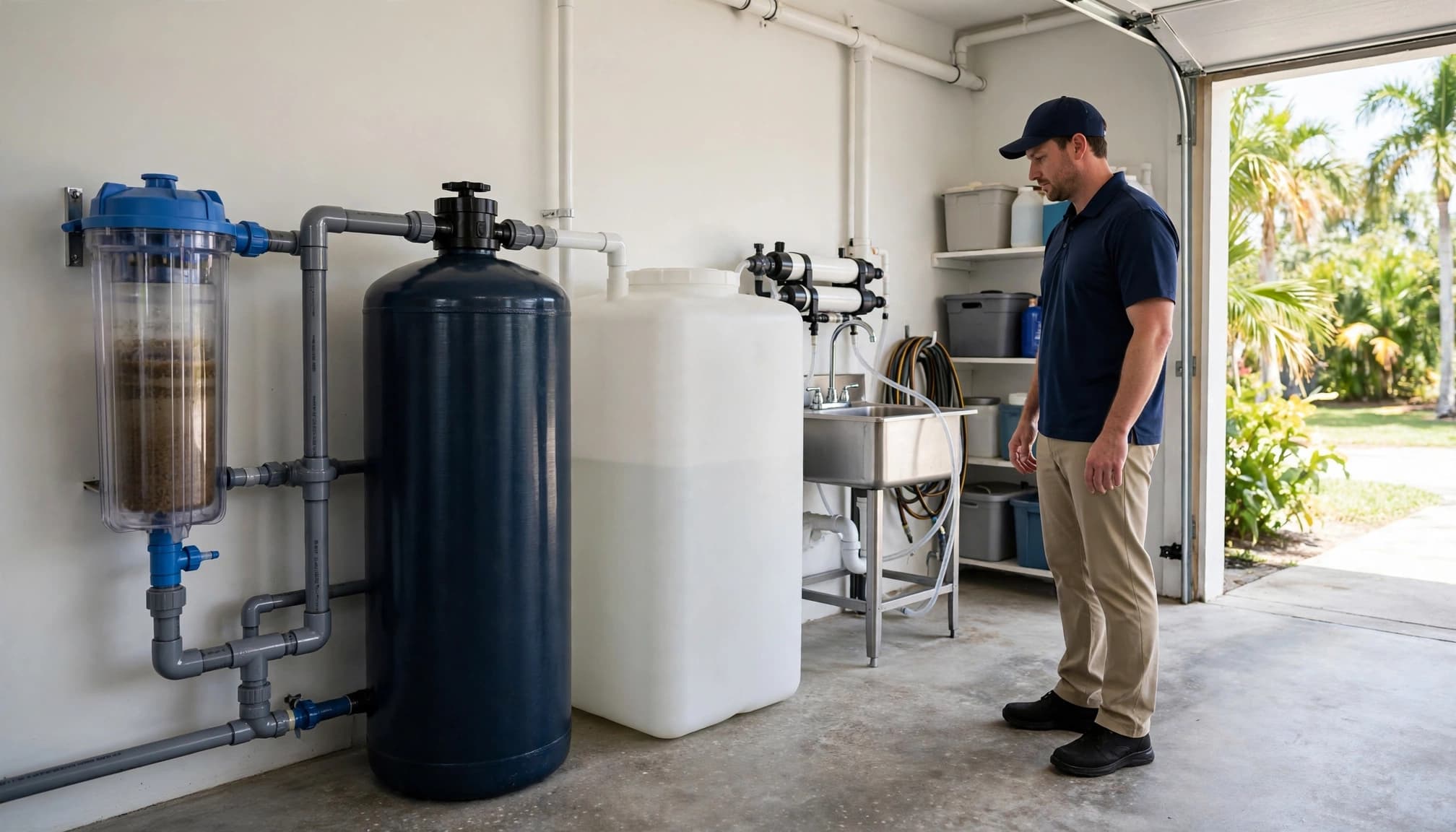
These systems commonly regenerate with salt solution. They need a control valve, brine tank, drain connection, and enough space for service access. Iron can foul anion resin, so pretreatment is often necessary when testing shows elevated iron.
One Florida treatment guide warns that iron above 0.3 milligrams per liter can permanently damage tannin-removal resin. The exact design still depends on the resin, concentration, flow rate, and other chemistry.
Activated carbon for limited color and taste
Activated carbon may help with a slight yellow tint, taste, or odor. It can be useful as a polishing stage, but it isn't a universal answer for moderate or high tannin levels.
Carbon media generally requires replacement rather than salt regeneration. A tank may continue passing water even after the media has lost capacity, so maintenance records and water-quality checks matter. Carbon can also become less effective when sediment or iron reaches it first.
Oxidation and filtration for other contaminants
Oxidation systems can convert dissolved iron and manganese into particles that a filter can capture. They can also help address sulfur odor in a properly designed system.
Oxidation isn't the primary tannin-removal method. If tannins are the main cause of the color, an iron filter alone may leave the water yellow. Likewise, a tannin resin won't solve sulfur odor or heavy sediment without suitable pretreatment.
Reverse osmosis for point-of-use polishing
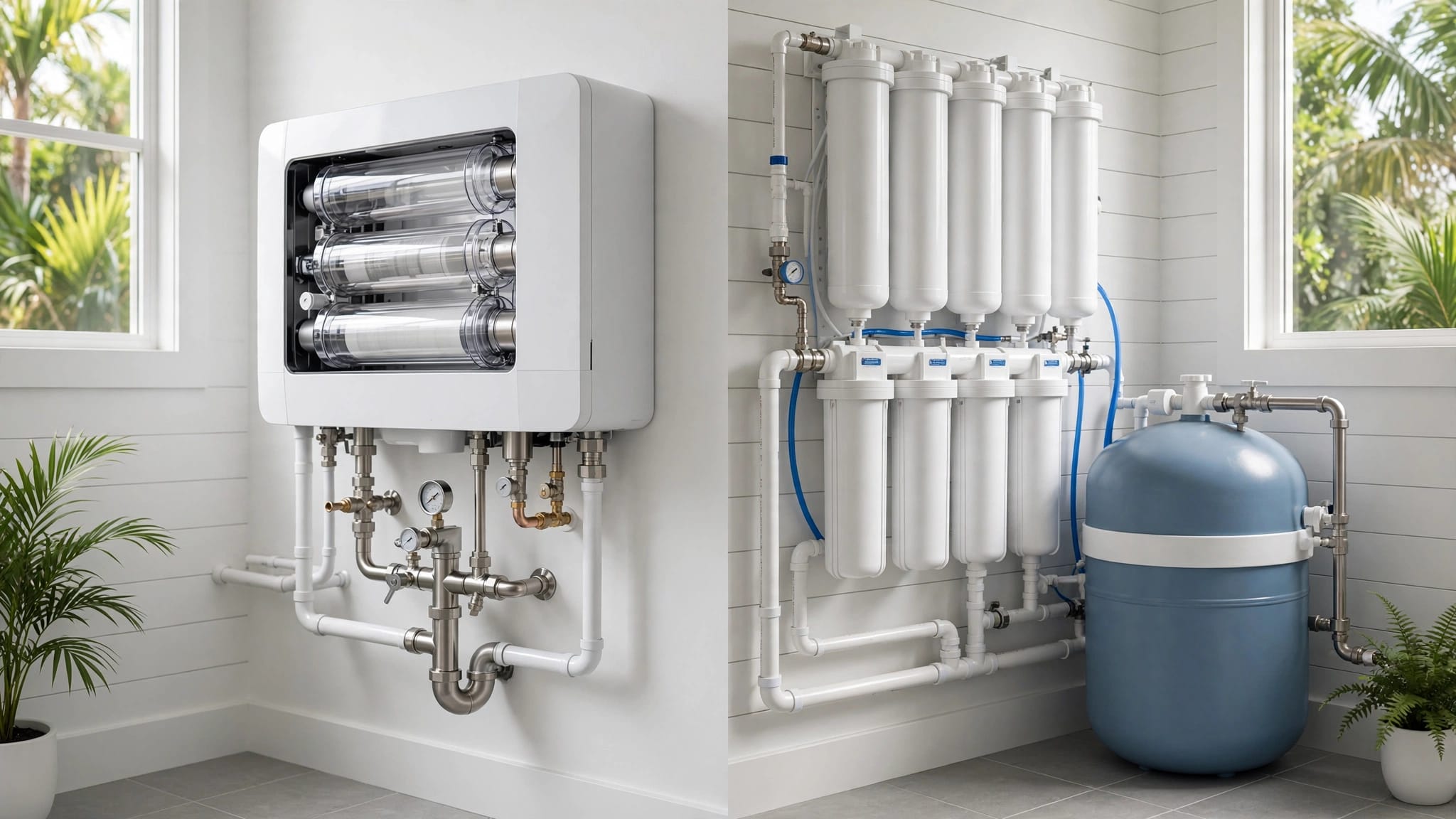
Reverse osmosis can improve drinking water at a kitchen faucet and reduce many dissolved substances. It is often better suited to point-of-use treatment than to supplying every shower, toilet, appliance, and outdoor fixture in a high-demand home.
A whole-house RO system requires more space, storage, pretreatment, maintenance, and a plan for reject water. It may fit a particular property, but it shouldn't be treated as the default answer to tannins. For many homes, whole-house treatment addresses staining while a kitchen RO system improves drinking-water taste and clarity.
How to match the treatment stages
There is no universal equipment order for every Florida well. The correct sequence depends on raw-water chemistry, media requirements, pressure, flow, and the specific control equipment.
Remove sediment and iron before sensitive media
Sediment filters protect valves and downstream tanks from sand, silt, and suspended particles. Iron and manganese treatment may come before tannin media when those contaminants could foul or overload the resin.
The best sequence can change with the equipment. Some designs place tannin treatment before a softener, while others use iron or sulfur treatment, softening, and then tannin-specific treatment or carbon. A water professional should explain the proposed order and connect it to your test report.
Separate hardness treatment from tannin treatment
A softener exchanges hardness minerals such as calcium and magnesium. Anion media handles tannins through a different process. One tank may not perform both jobs well unless it is specifically designed for that purpose.
If the water has both hard water and tannins, the system may include a softener plus a separate tannin tank. Proper sizing also matters because regeneration frequency depends on capacity, water use, and contaminant loading. Guidance on sizing a water softener for a private well can help homeowners understand the flow and demand questions involved.
Installation and maintenance details
Tannin treatment is a working water system, not a set-it-and-forget-it appliance. Installation should leave room for bypass operation, media service, brine filling, drain routing, and future repairs.
Plan for regeneration and media replacement
Anion-exchange systems need a reliable salt supply and a drain that can handle regeneration discharge. The control valve must be programmed for the household's actual water use and tannin load.
Carbon systems don't regenerate with salt. Their media eventually needs replacement, although the timing varies with concentration, flow, and usage. Sediment cartridges also need attention when pressure drops or the manufacturer's service guidance calls for a change.
Keep records of salt use, regeneration, pressure changes, staining, and filter replacements. Those observations can reveal a failing component before the water problem becomes severe.
Check pressure, bypasses, and drain lines
A professional installation should verify inlet pressure, peak flow, drain routing, electrical requirements, and the location of shutoff and bypass valves. The system should remain accessible for service instead of being crowded against a wall or buried behind stored items.
After installation, test the water again. A change in appearance is useful, but laboratory confirmation provides a better check on performance. Local service teams can also inspect related pumps, pressure tanks, softeners, filters, and reverse-osmosis equipment. Trademark Water Systems provides Naples water conditioning services for installation, repair, and maintenance throughout Southwest Florida.
Common installation mistakes to avoid
Many frustrating results come from choosing equipment before understanding the well. A correct diagnosis usually costs less trouble than replacing an unsuitable filter later.
Buying a softener alone
A softener may reduce hardness scale, but it won't reliably remove tannins. If the water stays yellow after softener installation, the system may be doing exactly what it was designed to do while leaving the main color problem untreated.
The same mistake occurs when homeowners buy a small carbon cartridge for water with moderate or high tannin concentration. Carbon may polish slight color, but it can exhaust quickly when the organic load is high.
Skipping pretreatment and peak-flow calculations
Iron, sediment, and manganese can shorten the life of tannin media. Ignoring them may lead to fouling, pressure loss, and frequent service.
An undersized system can also regenerate too often or fail to supply treated water during peak demand. Before choosing a tank, confirm the well pump's output and the household's simultaneous water use. Include irrigation and outdoor fixtures if they share the treatment line.
Key takeaways
- Tannins are natural organic compounds that can make Florida well water yellow, amber, or tea-colored.
- Color alone can't distinguish tannins from iron, manganese, sulfur, or sediment.
- Test untreated water before choosing equipment.
- Anion exchange is a common whole-house tannin treatment for moderate levels.
- Carbon may help with slight color or taste, while oxidation mainly addresses iron, manganese, and sulfur.
- A water softener doesn't replace a tannin-specific system.
- Iron, pH, hardness, sediment, flow rate, and household demand all affect design.
- Regeneration, salt, drain connections, media replacement, and regular service should be part of the plan.
FAQ about Florida tannin treatment
Are tannins dangerous in private well water?
Tannins are generally treated as a color and taste concern, but yellow water can occur with other contaminants. Test for bacteria, nitrate, iron, manganese, and other relevant conditions instead of assuming the color identifies the water's safety.
Will boiling remove tannins?
Boiling isn't a practical whole-house treatment for tannins. It also doesn't address staining in showers, laundry, toilets, or appliances. A system must treat the water as it enters the home.
Can a water softener remove tannins?
A standard cation water softener is not a reliable tannin-removal system. It treats hardness. Homes with both problems may need separate softening and tannin-treatment equipment.
How often does a tannin filter need service?
There is no single schedule for every well. Service depends on tannin concentration, iron, flow, household demand, regeneration settings, salt use, and media type. Test results, pressure changes, and visible staining can help determine when inspection is needed.
Should I install a whole-house RO system?
Whole-house RO may fit certain water-quality goals, but it requires space, pretreatment, storage, maintenance, and reject-water planning. Many homeowners use whole-house treatment for staining and point-of-use RO for drinking water.
Choose treatment from the test results
Yellow well water deserves a measured diagnosis, especially in Florida, where tannins may appear alongside iron, sulfur, hardness, sediment, and acidic water. The strongest treatment plan matches each problem to the right media and sizes the system for the well and household.
When a glass of water reveals a color problem, start with laboratory testing rather than a guess. Tannin removal systems work best when the water chemistry, equipment order, maintenance plan, and daily demand all fit together.
Latest posts
Read Our Blog
Tips, guides, industry best practices, and news.


Contact us
Get in touch
Our friendly team is ready to chat.