
Whole-House RO Systems: Tankless vs Tank-Based in Florida
Choosing among whole-house RO systems is not only a question of tankless versus tank-based equipment. Florida homeowners also need to consider water hardness, dissolved minerals, well conditions, available utility space, household demand, and the pretreatment required to protect the membrane.
A tankless design produces treated water as the home uses it. A tank-based design makes and stores treated water for later use. Both can work well, but the better choice depends on your water test, plumbing layout, pressure, and expected peak demand. Start with the water conditions, then compare the equipment format.
Tankless vs. tank-based whole-house RO systems
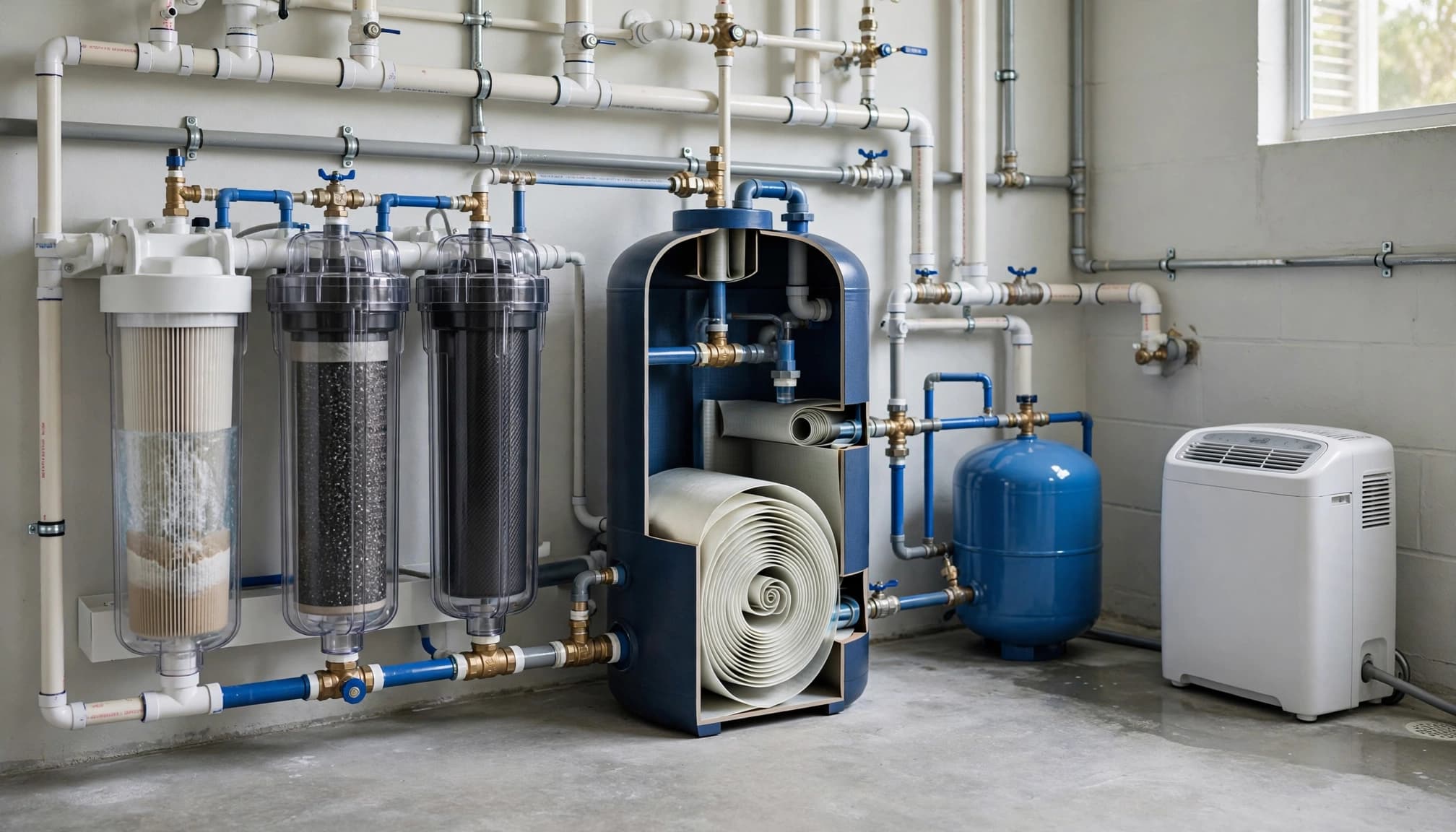
Reverse osmosis, or RO, pushes water through a semipermeable membrane. The membrane reduces dissolved solids and other substances that ordinary sediment or carbon filters may not remove. Whole-house RO sends treated water to multiple fixtures, while a point-of-use RO unit usually serves one faucet.
Where treatment happens
A tankless system generally treats water as demand occurs. Its membrane, pump, controls, and pretreatment stages must keep up with showers, laundry, toilets, kitchen use, and other fixtures that may operate together.
That design can save floor space because it doesn't depend on a large treated-water reservoir. However, a smaller footprint doesn't remove the need for correct sizing. If the system cannot match peak demand, flow may drop or treated water may not be available at the rate your home requires.
Where treated water is stored
A tank-based system fills a storage vessel, then supplies the home from that reserve. The membrane can produce water at a controlled rate instead of responding instantly to every fixture opening.
Storage can help manage short periods of high demand. It may also provide some treated water during a brief interruption, depending on tank level, pressure, pump controls, and the rest of the home's plumbing. It isn't a guaranteed emergency supply, especially during a long power outage or when the tank is empty.
Florida water conditions determine the design
Florida homes don't all have the same water. A municipal connection in Sarasota County has different starting conditions from a private well near Naples, Jupiter Farms, or The Acreage. Even nearby properties can need different treatment because of water source, plumbing, and household use.
Municipal water versus private wells
Municipal water has already received treatment, but local hardness and dissolved mineral levels still vary. Some homeowners may need softening or additional filtration, while others may mainly want better taste at the kitchen sink.
Private wells require more investigation. Well water can contain hardness, iron, hydrogen sulfide, sediment, or high total dissolved solids. In parts of Palm Beach County, untreated well water has been described in the range of 180 to 250 parts per million, but that figure shouldn't be applied to every Florida property.
A recent laboratory water analysis is the starting point. It should guide the system's pretreatment, membrane selection, storage, and maintenance plan. Choosing the right whole-house RO system size requires more than counting bathrooms.
Hardness, TDS, iron, and sulfur
Hard water can create scale on fixtures, appliances, heaters, and RO membranes. A softener can reduce hardness, but it doesn't perform the same job as RO and doesn't remove total dissolved solids in the same way.
High TDS can affect membrane performance, pump requirements, recovery, and operating expense. Iron and sulfur may cause staining, odor, fouling, or premature membrane problems. Sediment can restrict flow and load the prefilters quickly.
Why pretreatment comes first
Pretreatment protects the RO membrane. Depending on the test results, a system may include sediment filtration, carbon, iron or sulfur treatment, scale control, or a water softener before the membrane.
A whole-house RO system installed without suitable pretreatment may produce disappointing flow and require more frequent service. Read more about whole-house reverse osmosis versus a water softener before deciding which equipment should handle each water problem.
When a tankless whole-house RO system makes sense
Tankless RO can suit homeowners who want treated water throughout the property but have limited room for a large storage vessel. The equipment still needs room for filters, membrane housings, controls, plumbing, and service access.
Potential advantages
A tankless system can provide a compact installation and produce water when the home needs it. It may fit better in a narrow utility area, garage, or mechanical room where a large tank would limit access.
Because water isn't held in a large reservoir, the system may also appeal to homeowners who prefer production based on current demand. Yet tankless does not mean maintenance-free. Prefilters, membranes, pumps, valves, and controls still need inspection and service.
The system must also match the home's peak flow. A family using several showers, a washing machine, and a toilet at the same time places a different demand on RO equipment than a two-person household.
Wastewater, flow, and backup concerns
Every RO design creates a concentrate stream that carries rejected minerals away from the membrane. Tankless equipment does not automatically eliminate wastewater. Recovery and drain flow depend on membrane design, pressure, pretreatment, controls, and manufacturer specifications.
Ask how the proposed system handles reject water and whether the drain connection can support it. Also ask what happens when demand exceeds production, when incoming pressure falls, or when power is interrupted. Those answers are more useful than assuming every tankless system performs the same way.
When a tank-based whole-house RO system makes sense
Tank-based equipment adds a treated-water reservoir to the system. That storage can be useful when the membrane produces water more slowly than the home consumes it during busy periods.
Storage helps manage changing demand
A storage tank allows the system to make water ahead of time. When several fixtures open together, the home can draw from stored water while the membrane continues producing more.
This design can reduce the pressure placed on the membrane during short demand spikes. It may also offer limited access to treated water when the treatment pump isn't running, but the available reserve depends on tank size, fill level, pressure, and plumbing design.
Storage doesn't automatically lower wastewater or operating costs. A larger tank also doesn't solve poor pretreatment, low incoming pressure, or an incorrectly sized membrane. Whole-house RO storage tank sizing should account for demand, floor support, drainage, overflow protection, and service access.
Space and Florida utility rooms
A full storage tank can weigh several hundred pounds or more when filled, depending on its size. It needs a stable, level surface and enough room for inspection and replacement work.
Florida utility areas can be warm and humid, so choose a location with practical ventilation, drainage, and protection from avoidable leaks. Keep the equipment accessible rather than placing it behind permanent walls or crowded storage. A technician needs to reach filters, valves, pumps, and tanks without dismantling the room.
Comparing tankless and tank-based RO systems
The table below shows the main decision points. Actual results depend on the equipment specifications and the home's water test.
| Consideration | Tankless system | Tank-based system |
|---|---|---|
| Treated-water supply | Produces water as demand occurs | Produces and stores water |
| Peak demand | Must be sized for simultaneous use | Storage helps cover short demand spikes |
| Floor space | Usually less space for storage | Requires room for the reservoir |
| Wastewater | Depends on recovery and controls | Depends on recovery and controls |
| Power interruption | Production stops when required equipment loses power | Stored water may remain available for a limited time |
| Maintenance | Filters, membrane, pump, and controls need service | Same components need service, plus the tank and related controls |
| Best fit | Limited space and predictable demand | Variable demand and need for a reserve |
Neither format wins every category. Tankless equipment often appeals to space-conscious homeowners, while tank-based systems can make high-demand homes easier to supply. Water quality and pretreatment matter more than the label on the system.
Which setup fits your Florida home?
The right choice depends on what you want treated, how much water the household uses, and what the water analysis shows.
Choose whole-house treatment for a whole-house problem
Whole-house RO may fit a property where the goal is consistent treated water at showers, laundry fixtures, kitchen taps, and other points of use. It can also suit homes with high dissolved solids or water-quality concerns that a softener alone cannot address.
However, whole-house RO is a larger installation than an under-sink unit. It may need pretreatment, a pump, drain access, electrical power, storage, and more regular monitoring.
Consider point-of-use RO for drinking water
A point-of-use system treats water at one faucet, usually in the kitchen. It can be a more practical choice when the main concern is drinking and cooking water rather than every fixture in the house.
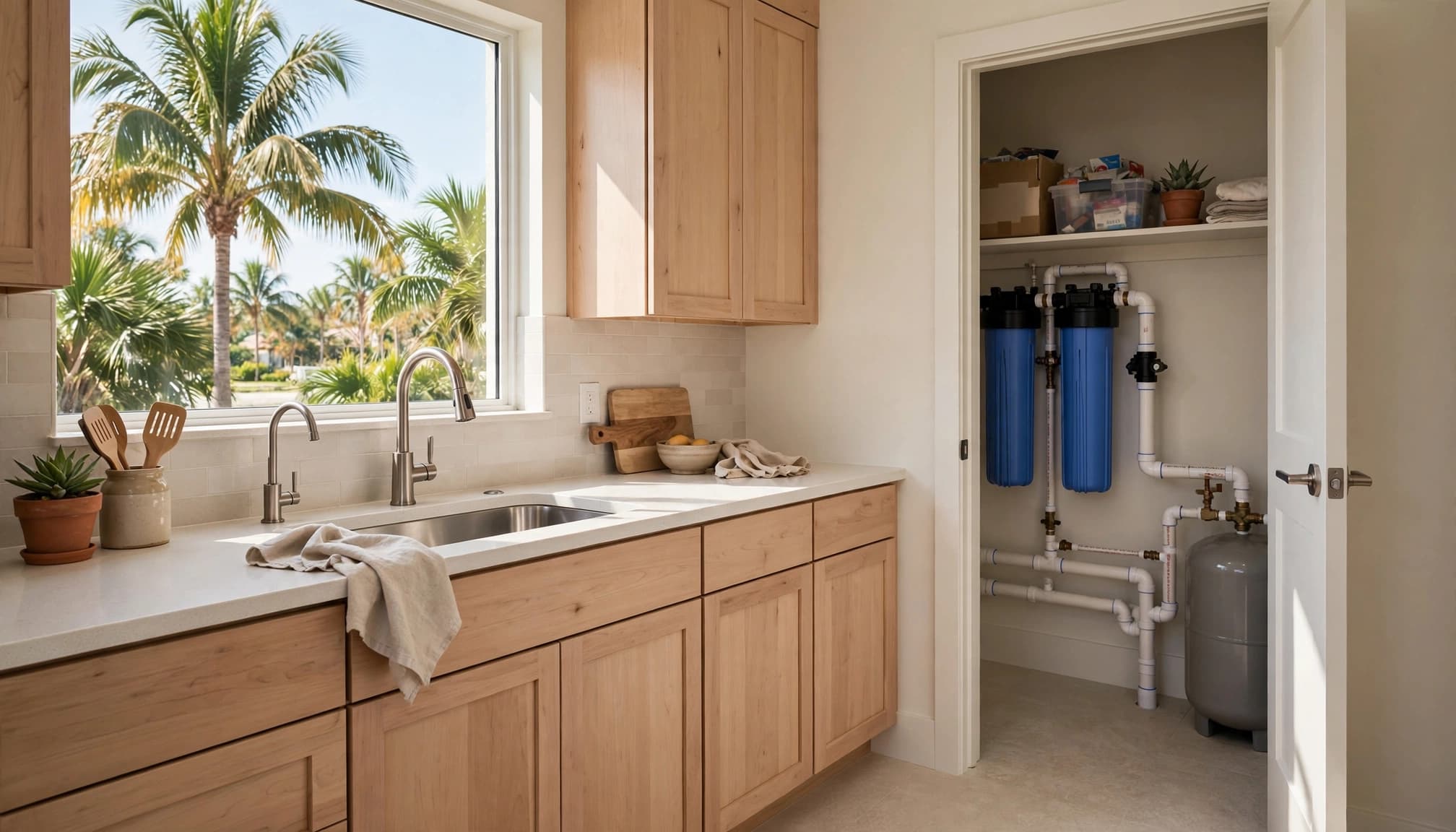
Many Florida homes may benefit from a combination of equipment. A softener can address hardness for household plumbing, while point-of-use RO handles drinking water. A private well with iron, sulfur, sediment, or high TDS may need additional treatment before either approach works reliably.
Maintenance and operating questions to ask
The tank format doesn't determine the complete maintenance plan. Both systems depend on clean pretreatment, correct pressure, functioning controls, and a membrane that performs within its design range.
Prefilters may need replacement more often when a well carries sediment, after plumbing work, or when water use rises. The appropriate interval depends on pressure drop, incoming water quality, and cartridge condition. Use this whole-house RO prefilter replacement schedule as a starting point, not a universal rule.
Ask the installer to explain:
- How often the system should be tested and serviced.
- Which readings show membrane performance.
- How reject water will be managed.
- What happens during low pressure or a power outage.
- Whether the tank, pump, and controls have service access.
- Which parts are expected to wear first.
Rising treated-water TDS, falling flow, unusual pump cycling, pressure changes, or new taste and odor can indicate a pretreatment or membrane problem. These signs your whole-house RO system needs service should receive attention before performance declines further.
Key takeaways for Florida homeowners
- A water-quality test should come before equipment selection.
- Tankless RO saves storage space but must meet peak demand.
- Tank-based RO can provide a reserve for short demand spikes.
- Neither format automatically eliminates wastewater.
- Well water may require sediment, iron, sulfur, carbon, or hardness treatment before RO.
- A softener and an RO system solve different water problems.
- Whole-house RO and point-of-use RO serve different household goals.
- Utility space should allow drainage, ventilation, and technician access.
- Ask for system-specific recovery, flow, power, maintenance, and operating details.
FAQ
Is tankless RO better than tank-based RO for a Florida home?
Neither is universally better. Tankless equipment may fit a home with limited space and predictable demand. Tank-based equipment may work better when several fixtures operate at once or when a stored reserve is useful.
Does whole-house RO remove hard-water scale?
RO reduces dissolved minerals, but the complete result depends on the incoming water and system design. A softener or scale-control stage may still be needed before RO to protect the membrane and plumbing.
Does a tankless system waste less water?
Not automatically. Both formats can send concentrate to the drain. Compare the proposed system's recovery and reject-water specifications instead of relying on the tankless label.
Can a storage tank supply water during a power outage?
It may provide some treated water if the tank is full and the plumbing can deliver it without powered equipment. It isn't a guaranteed supply for the entire home or for an extended outage.
Conclusion
The best whole-house RO system for a Florida home starts with the water source and household demand, not with a preference for tankless or tank-based equipment. A test can show whether the property needs pretreatment for hardness, iron, sulfur, sediment, or high TDS.
Choose tankless when compact design and on-demand production fit the home. Choose tank-based when stored water and demand management matter more. In either case, proper sizing and pretreatment will have a greater effect on long-term performance than the tank format alone.
Latest posts
Read Our Blog
Tips, guides, industry best practices, and news.



Contact us
Get in touch
Our friendly team is ready to chat.