
Florida Pond Fountain Electrical Requirements for Retention Ponds
A fountain can brighten a retention pond, but its power cable spends its working life beside or beneath water. If you're planning an installation or repair, electrical safety starts at the shoreline , not at the spray nozzle.
Florida pond fountain electrical requirements depend on the equipment, the wiring route, site conditions, and the authority having jurisdiction. A community pond may also have stormwater or utility restrictions. Before anyone trenches, orders a pump, or resets a tripping breaker, establish what the site needs.
Which Florida pond fountain electrical requirements apply?
The statewide code provides a starting point. The installation details determine how its provisions apply to a particular pond.
Start with Florida's adopted code
The Florida Building Code, 8th Edition (2023), took effect on December 31, 2023. Its electrical-code basis is the 2020 National Electrical Code, also called NEC 2020 or NFPA 70. Confirm applicable supplements and local requirements with the building department before finalizing plans.
NEC provisions address more than the pump. The supply circuit, protection devices, controls, wiring, and equipment near water all need review. A contractor should also follow the fountain manufacturer's installation instructions and the approved plans.
Determine how the water feature is classified
NEC Article 680 includes provisions for fountains, while Article 682 addresses electrical installations associated with bodies of water such as lakes and lagoons. A fountain floating in a retention pond raises a different set of questions than a decorative basin beside a building.
The applicable provisions depend on how the equipment and water feature are classified. Have the electrical designer and local authority review the actual configuration rather than assuming every pond follows one article. This distinction matters when selecting protection, wiring methods, and equipment.
Confirm permits and site permissions before work begins
An electrical approval doesn't automatically authorize changes to a pond. An HOA or property manager may need answers from several organizations.
Ask the building department about the electrical permit
Florida regulates electrical contracting through Chapter 489, Part II, of the Florida Statutes, subject to statutory exemptions. Use an appropriately qualified electrical contractor for the proposed work and ask the local building department which permits, plans, and inspections it requires.
A new circuit, replacement control panel, or changed cable route may receive different treatment than routine equipment service. The department can identify the process for that job. Don't assume a repair is exempt, and don't energize new work before required inspections and approvals are complete.
Check pond ownership and outside approvals
A retention pond may be part of a permitted stormwater system. Confirm who owns or maintains it before placing anchors, changing the shoreline, or routing cable through a drainage area. An HOA board may need to approve the location, while a water-management district or other stormwater authority may need to review work that changes a regulated system.
Also check recorded easements and the electric utility's requirements if the project needs a new service or changes existing service equipment. A lake fountain site survey can document shoreline access, water depth, existing power, and likely service locations before design decisions become expensive.
Design the power supply around the actual pond
A pump's electrical needs can't be settled by pond acreage alone. Its motor, distance from the supply, and operating schedule shape the design.
Match the circuit to the equipment
Give the electrician the pump and control-panel specifications before selecting a circuit. The review should cover nameplate voltage and current, starting characteristics, manufacturer instructions, available capacity, and any lighting or timer loads. Long shoreline runs also call for a voltage-drop assessment so the motor receives suitable voltage while operating.
If a community plans to upgrade its fountain later, discuss that before trenching. An undersized supply or poorly placed panel can make the next repair far more disruptive. Lake fountain installation and maintenance also depend on reliable access to the pump and controls after installation.
Choose a route that can survive shoreline work
The shortest cable path isn't always the safest one. Shorelines are mowed, planted, eroded, and repaired. A route may cross areas where vehicles or maintenance crews work, or where seasonal water levels change.
Mark existing utilities before excavation, then have the contractor plan the permitted raceway and cable methods for each part of the route. Keep future access in mind: a buried connection that crews can't locate creates problems when a fault develops. Safe lake fountain placement and wiring begin with the pond edge as well as the desired spray position.
Review GFCI protection, grounding, and bonding
Water makes a wiring fault especially dangerous. These protections have different jobs, so the design needs to address each one.
Confirm where GFCI protection applies
A ground-fault circuit interrupter detects an imbalance in current and interrupts the circuit. An ordinary breaker primarily protects against overloads and short circuits; it isn't a substitute for required GFCI protection.
Ask the electrician to identify the applicable GFCI provisions for the pump, receptacles, and associated equipment under the installation's code classification. Confirm that the selected device suits the equipment and that personnel can reach it for testing. If it repeatedly trips, leave the fountain off until someone identifies the fault. Resetting it over and over can leave a damaged cable or wet connection in service.
Keep grounding and bonding distinct
An equipment grounding conductor provides a fault-current path. Bonding connects applicable conductive parts so dangerous differences in voltage are less likely to develop between them. Neither can be assessed by glancing at an outdoor panel.
The electrician needs to identify which metal components require bonding for this design, verify the grounding path, and inspect connections exposed to moisture and corrosion. Pond hardware, floating equipment, and shoreline structures vary. That is why Florida pond fountain electrical requirements need a site-specific review rather than a generic sketch copied from a pool project.
Place disconnects and wiring where crews can service them
A safe installation also has to remain workable during cleaning, storms, and repairs.
Provide a practical way to shut down power
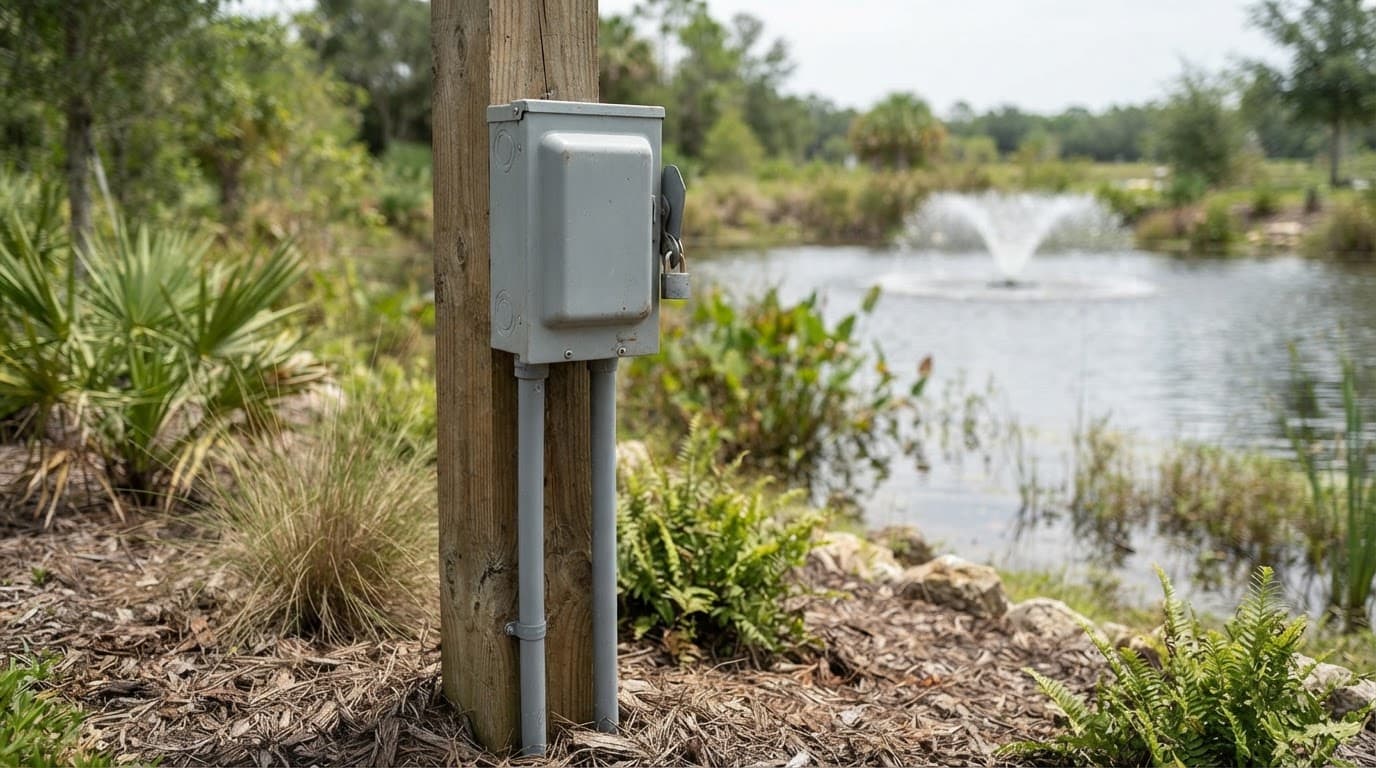
The contractor should identify the required disconnecting means under the applicable code and equipment instructions. Its location must meet those requirements and allow authorized crews to shut off the correct equipment before service.
A control point surrounded by standing water after heavy rain is a poor service location. The site plan should account for splash, drainage, flooding, and access without treating any one mounting height or distance as a rule for every pond. Clearly identified circuits help crews avoid shutting off unrelated property equipment.
Use approved wiring methods along the full path
An outdoor installation can pass through several environments: a dry equipment area, wet ground, the shoreline, and open water. The wiring method must suit each portion under the applicable NEC provisions and approved design. A loose extension cord isn't a permanent supply for a fountain.
Protect cables against abrasion where they leave raceways, cross the bank, or move with a floating unit. Don't splice or repair an underwater cable using materials that lack approval for that application. During maintenance, lake fountain cable inspection and electrical safety deserve the same attention as the visible spray.
Choose equipment for its exposure, then watch for faults
Outdoor-rated equipment and submersible equipment face different conditions. Buying a weather-resistant box doesn't make every component inside a pond suitable for immersion.
Check wet and submerged equipment markings
The electrician and fountain supplier should verify that the pump, cable, connectors, controls, and enclosures suit their intended locations. Check manufacturer markings and instructions for submersible use where needed, along with voltage, cable limitations, and permitted installation conditions.
Shoreline enclosures also need to suit their exposure to rain, spray, and possible flooding. A component that worked in a sheltered location may be inappropriate at an open pond edge. Keep product instructions and equipment details with the property records so replacements match the approved arrangement.
Treat repeated trips as a repair signal
Florida heat, storms, shifting water levels, and shoreline maintenance can expose weak points over time. Reduced flow may come from debris or a clogged intake, but a tripping protective device can indicate moisture, cable damage, or motor trouble. Don't enter the water or handle floating equipment while it may be energized.
Shut down the system using its proper controls, keep people away, and arrange a qualified inspection. Record when the trip occurs and whether it follows rain or pump startup. A lake fountain maintenance checklist helps property managers track both routine upkeep and warning signs.
Key takeaways for property owners
Before approving installation or repair, make sure the responsible parties can answer these questions:
- Which Florida code provisions and local approvals apply to this specific pond and fountain?
- Who will design and perform the electrical work, and which inspections are required?
- How will the design address GFCI protection, grounding, bonding, disconnects, and the complete cable route?
- Are all components suitable for their actual exposure, including any submerged sections?
Keep the answers, approved plans, and equipment instructions where future maintenance crews can find them.
Common questions about pond fountain electrical work
Does every retention pond fountain need the same permit?
No single permit path fits every project. The local building department determines the electrical permitting and inspection process for the proposed work. Separately, pond ownership, stormwater approvals, easements, and utility requirements may affect where equipment can go. Check those before work starts.
Are solar fountains exempt from electrical safety rules?
Don't assume they are. A solar setup can still include panels, wiring, controls, batteries, and a powered pump near water. Its design and location determine which requirements apply. Ask the electrical contractor and authority having jurisdiction to review the actual system.
Can maintenance staff reset a tripped fountain breaker?
A single trip warrants attention, and repeated trips call for diagnosis rather than repeated resetting. Keep the fountain off if the cause is unknown, especially after flooding or visible cable damage. Have qualified personnel inspect it before returning it to service.
A safer fountain starts with a site-specific plan
The spray may be the part everyone sees, but the supply and underwater equipment determine whether crews can operate it safely. Confirm the code classification and approvals first , then design protection, wiring, and access for the real pond.
That approach gives a community a fountain it can maintain with confidence, rather than an electrical problem hidden beneath the water.
Latest posts
Read Our Blog
Tips, guides, industry best practices, and news.

Contact us
Get in touch
Our friendly team is ready to chat.